





 Portuguese
  English
  Spanish
  6 min of reading
  0 comments


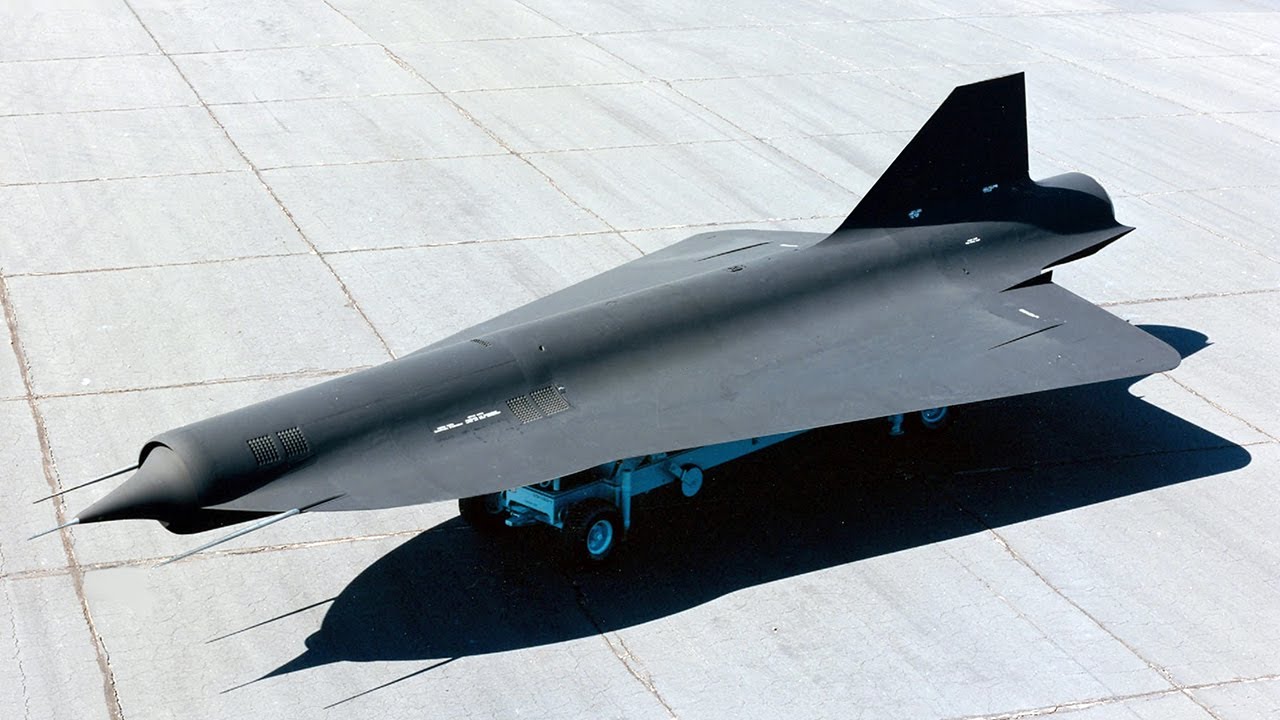
Ultrasecret drone of the Cold War, the D-21 flew at over Mach 3.3 at almost 29 thousand meters and crossed thousands of kilometers without a pilot.
At the height of the Cold War, the Skunk Works division of Lockheed Martin began developing one of the most advanced and least known projects in aviation history: the D-21, a strategic drone created for reconnaissance missions at high speed, high altitude, and without a pilot on board. According to records from the National Museum of the U.S. Air Force and Lockheed Martin itself, the goal was clear: to create a machine capable of flying over hostile territories, capturing images of highly protected areas, and completing the mission without exposing a human crew member inside the aircraft.
This concept gained traction after the U-2 spy plane piloted by Francis Gary Powers was shot down over the Soviet Union on May 1, 1960, an episode that laid bare the political and military risks of deep reconnaissance missions with human crews. According to the official history of the CIA regarding the U-2 incident, that was the last mission of its kind over all of Russian territory, and the episode helped solidify the search for alternatives capable of reducing the diplomatic cost of such operations.
The result was an aircraft that looked like it came from a futuristic scenario but already combined rare characteristics even by much later standards in the 1960s. According to the National Museum of the U.S. Air Force, the D-21 was powered by a ramjet engine, could exceed Mach 3, had a range of about 3,000 miles, and flew at approximately 95,000 feet, combining autonomy, extreme speed, and strategic reconnaissance in an uncrewed platform decades before this concept became common in military aviation.
-
A gigantic project in the Netherlands is using the sediment from a degraded lake to create artificial islands, improve water quality, and restore natural shorelines.
-
After seeing a 100% automated factory in Shanghai, the president of Honda exclaimed, “we don’t stand a chance”; China accelerates electric cars, cuts costs, and exposes the brand’s crisis worldwide.

-
A giant half-ton ring fell in Kenya from space, and more than a year later, scientists still do not know where it came from.
-
Dubai eliminates the term “housewife” from official documents and adopts “generation builder,” redefining the role of mothers and changing the way society views motherhood.

Speed above Mach 3.3 and altitude near the atmospheric limit
The D-21 was designed to operate in an extremely aggressive flight regime. The aircraft was capable of exceeding Mach 3.3, equivalent to over 4,000 km/h, and flying at altitudes between 87,000 and 95,000 feet, approximately 26 to 29 kilometers above sea level.

These numbers placed the drone in an operational range practically inaccessible to interceptor fighters of the time, as well as significantly reducing the effectiveness of anti-aircraft defense systems. In practical terms, the D-21 operated in a zone where the air was already extremely rarefied, requiring aerodynamic and structural solutions far beyond the conventional.
The combination of speed and altitude was not just a technical differential. It was the heart of the strategy. The faster and higher, the smaller the enemy’s reaction window.
Ramjet propulsion and operation in extreme regime
Unlike conventional aircraft, the D-21 used a ramjet engine, which only operates efficiently at high speeds. This means that the drone could not take off by itself. It needed to be launched already at high speed for the engine to come into operation.
Initially, the launch was done from a modified A-12 aircraft, a version of the famous SR-71 Blackbird. Later, the system was adapted for use with B-52 bombers, which launched the drone in flight.
After launch, the D-21 accelerated to reach hypersonic speeds within the ramjet regime, maintaining sustained flight for thousands of kilometers.
This type of propulsion eliminated complex moving parts and allowed for extreme performance, but it also made the system highly dependent on specific launch and operational conditions.
Range of up to 4,800 km and fully automated mission
One of the most impressive features of the D-21 was its range. The drone could travel up to 3,000 miles, about 4,800 kilometers, without direct human intervention.
During the mission, it followed a pre-programmed route, using inertial navigation systems that did not depend on external signals like GPS, a technology that did not yet exist operationally at the time.
While flying over the area of interest, the D-21 used high-resolution cameras to capture strategic images. After completing the mission, the system released a capsule with the collected data, which descended by parachute and was recovered in the air by specialized aircraft.
This process transformed the drone into a completely autonomous intelligence platform, capable of operating in environments where human presence would be unfeasible or politically sensitive.
Structure designed to withstand extreme heat
Flying at over Mach 3 generates a critical phenomenon: intense aerodynamic heating. Friction with the air can raise the temperature of the aircraft’s surface to hundreds of degrees Celsius.
To cope with this, the D-21 was built with advanced materials, including titanium and heat-resistant alloys, similar to those used in the SR-71. The design was also highly optimized to reduce drag and distribute heat evenly.
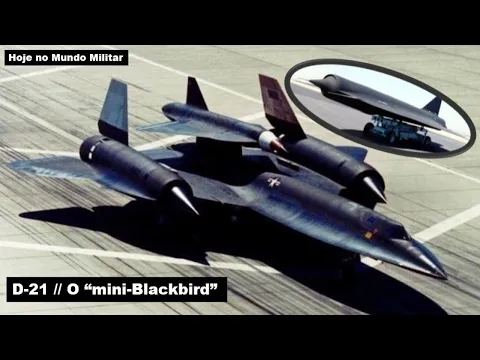
The elongated and minimalist shape of the drone was not aesthetic. It was a direct result of the need to survive in an environment where heat could literally destroy the structure in flight.
One of the most advanced and also most problematic projects of the Cold War
Despite all the technological advancements, the D-21 program faced various challenges. One of the most serious incidents occurred during a launch test from the A-12, when a failure resulted in the loss of the aircraft and the death of one of the crew members.
After this event, the system was adapted for launch via B-52, increasing operational safety. Still, real missions faced difficulties.
Several drones were lost during operations, either due to technical failures, navigation errors, or the inability to recover the data capsules. In some cases, the vehicles simply disappeared after launch.
These problems, combined with high costs and the evolution of reconnaissance satellites, ultimately limited the operational use of the D-21.
The end of the program and the rise of spy satellites
By the early 1970s, the advancement of reconnaissance satellites began to render strategic drone missions like the D-21 obsolete.
Satellites could observe enemy areas without the risk of physical loss of equipment and without relying on data recovery. Moreover, they offered continuous coverage, something impossible for single-mission drones.
The D-21 program was officially terminated in 1971, after a limited number of operational missions.
The silent legacy of the D-21 in modern aviation
Even with a short lifespan, the D-21 left a profound legacy. It anticipated concepts that are now central to modern warfare, such as:
- Use of unmanned vehicles in high-risk strategic missions
- Autonomous operations based on inertial navigation
- Integration between aerial platforms and intelligence collection systems
- Pursuit of extreme speeds as a means of operational survival
Decades later, modern military drones incorporate many of these principles, albeit with much more advanced technologies.

A machine that seemed impossible for the time
The D-21 was not just a drone. It was a demonstration of how far aerospace engineering could go when pressed by extreme strategic needs.
An unmanned aircraft, flying at over Mach 3, at almost 30 thousand meters altitude, crossing entire continents autonomously and returning with strategic intelligence was not just a technical advance. It was a glimpse into the future.
What do you think of a machine that invaded entire countries without anyone inside?
Projects like the D-21 show that many of the technologies that today seem modern were already being tested over half a century ago, in a context of intense global competition.
Do you think hypersonic drones like this still have a place in the current landscape, or have satellites and digital systems completely taken over this role?







Seja o primeiro a reagir!