





 Portuguese
  English
  Spanish
  4 min of reading
  10 comments


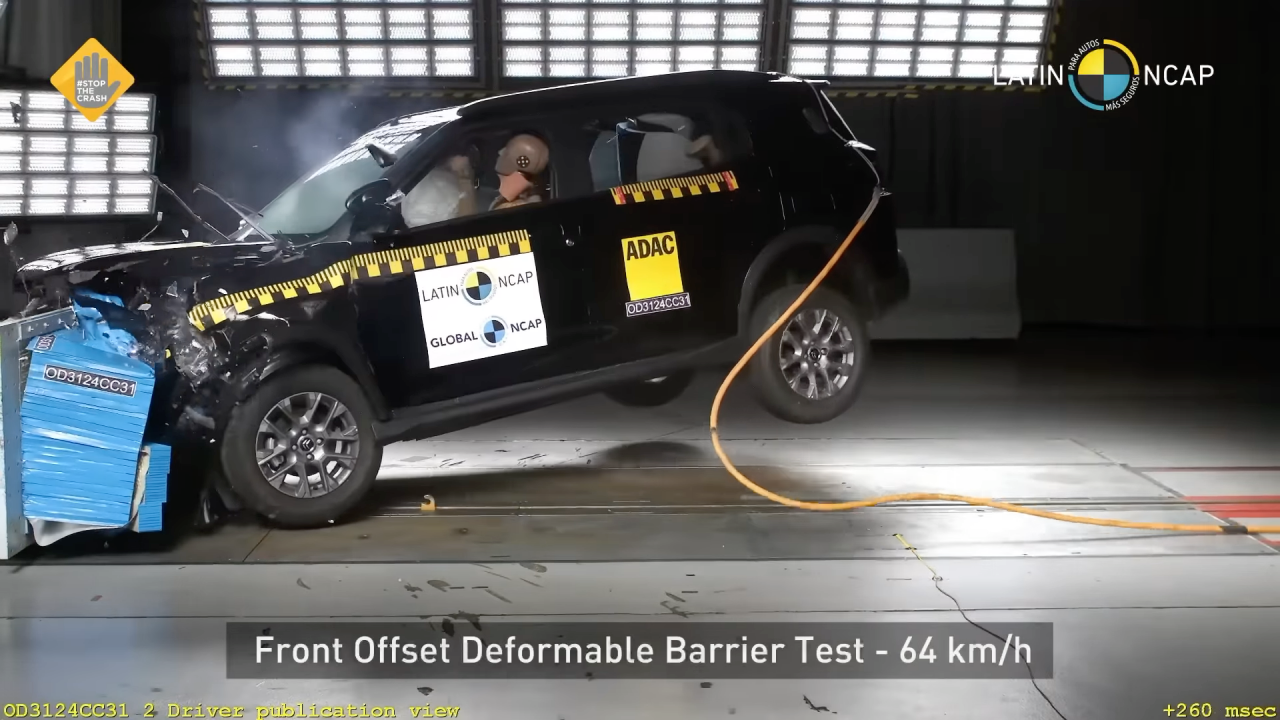


Alert About the Citroën C3 Aircross: Car Launched in Brazil Receives Zero Rating in Safety with Serious Failures
Safety is one of the essential pillars in choosing a car today. Tests conducted by institutions such as the Latin NCAP are crucial in assessing whether vehicles meet the expected standards. However, the Citroën C3 Aircross, launched in Brazil, produced a concerning result: it failed the safety evaluations, not achieving even one star.
Latin NCAP Tests Reveal Serious Failures: Manufactured in Brazil, the Citroën C3 Aircross showed unsatisfactory performance in various tests conducted by the Latin NCAP. The evaluations included frontal impact, side impact, whiplash, pedestrian protection, and electronic stability control (ESC). The numbers are alarming:
- 33.01% in adult occupant protection;
- 11.37% in child occupant protection;
- 49.57% in pedestrian and vulnerable road users protection;
- 34.88% in safety assistance systems.
The Absence of Basic Protection Items Was Also Highlighted. The side impact test with a pole, for example, was not performed, resulting in zero points due to the lack of side airbags for the head, both in the front and rear seats. Even as options, these items are not available.
-
Less than a Tera TSI, up to 710 km of range and charging in 9 minutes: the new BYD Song Ultra expands the Chinese brand’s bet on increasingly faster, more technological, and competitively priced electric SUVs.

-
With a 1.0 engine producing 75 hp and costing less than R$ 70,000, Fiat’s car returns to the podium as the cheapest in the country; a temporary promotion for the 2026 Like version reduces the price of the Fiat Mobi.
-
With a mild hybrid system of 48 V, 176 hp and a price of R$ 175,990 in the Sahara version, the new Jeep Renegade changes mostly on the inside, improves slightly in fuel consumption, and remains almost the same car.
-
With a 293.5 cm³ engine and a range of up to 400 km with a 14.1-liter tank, the Honda CB 300F Twister 2026 has up to 24.7 hp, an initial price of R$ 25,150, and already exceeds R$ 29,000 in the Fipe Table.

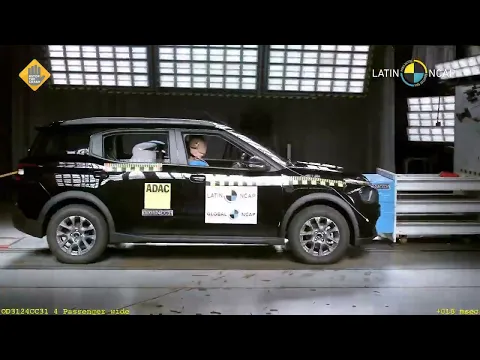

Frontal and Side Impact: The Biggest Dangers
In the frontal impact tests, the protection offered to the front passenger’s chest was deemed weak, increasing the risk of injury in an accident. The side impact test revealed significant intrusion into the cabin, further compromising occupant safety.
Additionally, in the whiplash test, the car received a rating considered deficient for adults’ necks, raising concerns about the model’s performance. These results raise a red flag for consumers who prioritize safety when purchasing a vehicle.
Child Safety Compromised in Citroën’s Car
In terms of child safety, the Latin NCAP identified serious problems. The tested child restraint systems (CRS) showed failures, and the car did not score in this category. Among the reasons are the inadequate signaling of the Isofix anchorage points, which do not meet the minimum requirements of the entity. Another concerning point is the inability to deactivate the front passenger airbag when using a rear-facing CRS, putting children’s safety at risk.
Pedestrian Protection and the Absence of Advanced Systems
When it comes to pedestrian protection, the Citroën C3 Aircross received varied results, with ratings ranging from marginal to weak. The areas of the hood, where a pedestrian’s head could impact, showed limited protection, with few points rated as good.
Moreover, the model does not offer modern safety systems such as autonomous emergency braking, lane-keeping assistance, or speed assist. These features, which are already standard in many competitors, are not even available as options on the C3 Aircross.
Latin NCAP Demands Changes from Citroën
Stellantis, the group responsible for the Citroën brand, was criticized by the Latin NCAP for offering vehicles with basic safety levels in markets such as Brazil. Alejandro Furas, the entity’s secretary-general, urged the company to take measures to improve the safety features of its cars and suggested that they voluntarily submit the models for evaluation, demonstrating greater commitment to consumers.
According to Furas, while competitors invest in safety, Citroën maintains standards that are deemed insufficient, calling into question its responsibility to users.
Stellantis’ Response Regarding the C3 Aircross
In an official statement sent to Olhar Digital, Stellantis defended the model and emphasized that all its vehicles comply with current regulations. The company highlighted that safety is considered from the initial development phase and pointed out that the CMP platform used in the C3 Aircross provides a robust structure and occupant protection.
Despite the justifications, the numbers from the Latin NCAP show that the model still falls short of expectations, especially when compared to other vehicles available on the market.
Safety in Focus: Consumers Need to Stay Alert
The results of the Citroën C3 Aircross in the Latin NCAP safety tests highlight the importance of thorough research before purchasing a car. More than design or price, safety should be a priority. In this case, the model’s unsatisfactory performance indicates the need for significant changes by the manufacturer to meet global safety standards.
When purchasing a vehicle, it is essential to consider the evaluations of entities such as the Latin NCAP, which play a vital role in informing and protecting consumers. In the case of the C3 Aircross, the warning is clear: below-average safety is a factor that can make the difference between life and death in emergency situations.
Do you own a Citroën C3 Aircross or are you considering acquiring this model? After learning about the test results from the Latin NCAP, what is your opinion on the safety offered by this car? If you don’t own it yet, do these evaluations impact your buying decision? Share your perspective and participate in this constructive discussion about vehicle safety!








O mesmo **** que deu nota máxima para o falecido mode VW UP
Quem faz a segurança do carro é a peça que fica atrás do volante, os Detrans deveriam fazer uma reciclagem obrigatória a todos estes. Levar a sério os que se envolvem em acidentes. O Citroën é uma opção relativamente possível a um custo mais baixo. Claro que no valor da concorrência ele perde o sentido
SEMPRE A FIAT. IMPRESSIONANTE NÉ. E O PIOR: SO FAZEM ISSO ONDE MAIS LUCRAM – PQ UMA CARROÇA DESSA NUNCA SERIA APROVADA E LANÇADA NA EUROPA. PORQUE ELES FAZEM ISSO EM MERCADO EMERGENTE? PIOR AINDA: UM CARRO VOLTADO PARA O USO FAMILIAR COM ATÉ 7 LUGARES EM QUE NÃO HÁ SEGURANÇA NEM PARA MOTORISTA E PASSAGEIRO, IMAGINE PRAS CRIANÇAS QUE NORMALMENTE VAO ATRAS OU NA TERCEIRA FILEIRA E NAO CONTAM NEM COM AIRBAG DE CORTINA E ISOFIX FORA DO PADRAO. STELLANTIS AKA FIAT, CRIMINOSA.