





 Portuguese
  English
  Spanish
  4 min of reading
  0 comments


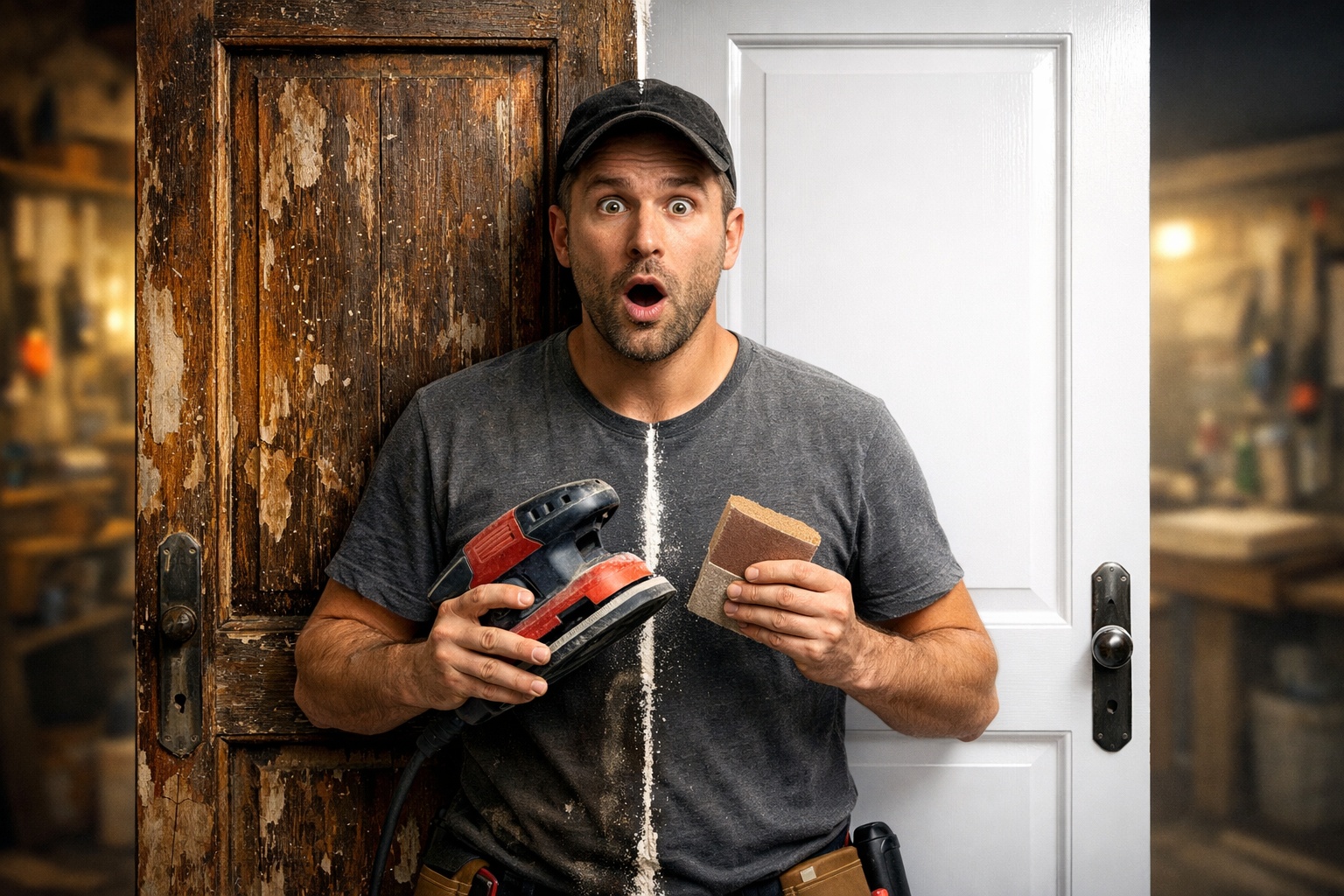
Old Door Can Be Revitalized with Progressive Sanding, Filler Corrections, and Synthetic Enamel Painting, Maintaining the Original Frame and Reducing Costs Compared to Complete Replacement.
Replacing an interior door may involve not only purchasing a new door slab but also adjustments to the frame, changing hardware, finishing, and additional labor. In many cases, when the wood structure is still intact, revitalization becomes a viable technical alternative. The process involves three main stages: surface preparation, correction of imperfections, and application of appropriate finish.
Recovery of wooden doors with progressive sanding, leveling with filler, and synthetic enamel painting is a common practice in carpentry and building maintenance. When executed correctly, it can restore appearance and functionality without the need for complete replacement.
Initial Assessment of the Door
Before starting any intervention, it is necessary to check:
-
The lack of welders, electricians, and operators becomes a structural threat in 2025, with the construction industry and manufacturing already suffering from delays, cost pressures, and labor shortages in Brazil.
-
Brazil and Paraguay are just 46 meters away from a historic union on the bioceanic bridge that promises to revolutionize trade between the Atlantic and the Pacific.

-
With 55 km over the sea, a cost of US$ 20 billion, and enough steel to build 60 Eiffel Towers, China’s largest project has connected Hong Kong, Zhuhai, and Macau in a colossal bridge that defies the logic of engineering.

-
A trick with joint compound transforms a Styrofoam ceiling into a plaster-like ceiling: leveled panels, wires and mesh at the joints, sand, paint, and change the environment while spending little today.

- Whether the wood is structurally sound
- Whether there is deep rot
- Whether the frame remains aligned
- Whether the hinges are properly secured
Doors with superficial damage, scratches, peeling paint, or small chips are suitable candidates for revitalization. The structural integrity is the determining factor in deciding between renovation or replacement.
Step 1: Progressive Sanding of the Surface
Sanding has two main functions: removing the old finish and creating adhesion for the new paint. The procedure typically follows a sequence of grits:
- 80 grit for removing loose paint or larger irregularities
- 120 grit for intermediate leveling
- 220 grit for fine finishing and final preparation

Sanding should be done along the wood grain to reduce visible marks. After this step, the surface should be uniform, non-glossy, and free of loose residues. The quality of sanding directly influences the final result of the painting.
Step 2: Correction of Imperfections with Filler
Old doors often exhibit:
- Small holes
- Superficial cracks
- Minor dents
- Screw marks
The application of wood filler or plastic filler corrects these defects. After drying, fine sanding is required to level the repaired area.
The goal is to ensure that the surface is homogeneous before painting, preventing the enamel from highlighting irregularities.
Step 3: Preparation for Painting
On exposed wood or areas where the previous paint has been removed, it is recommended to apply a sealer or primer. This layer:
- Uniforms absorption
- Improves adhesion
- Reduces paint consumption
After the primer dries, a light fine sanding is performed for finishing.
Application of Synthetic Enamel Paint
Synthetic enamel is widely used on doors due to its:
- Good coverage
- Cleaning resistance
- Uniform finish
The application can be done with a high-density foam roller or appropriate brush.
Typically, two coats are applied, respecting the drying time indicated by the manufacturer. Uniform application avoids roller or brush marks, ensuring a refreshed look.
Maintenance of the Original Frame and Hardware
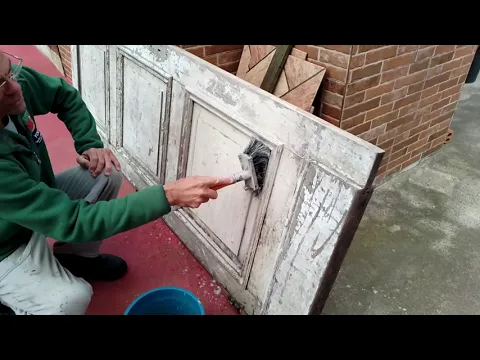

Maintaining the frame reduces costs and avoids the need for wall breaking. As long as it is aligned and firm, the frame can simply be sanded and painted in the same process. This choice eliminates additional expenses with:
- Removal of moldings
- Gap adjustment
- Plaster correction
Worn hinges can compromise the door’s functionality. Replacing them with new models is simple and improves:
- Stability
- Smooth opening
- Alignment
The same applies to locks and door handles, when necessary. Small updates to hardware can transform the final result.
Durability of the Finish
When preparation is adequate and paint is applied correctly, the finish can show good durability in indoor environments. Maintenance basically consists of cleaning with a damp cloth and avoiding abrasive products.
Interior doors tend to be less exposed than exterior doors, which favors the finish’s preservation. Revitalization is not recommended for:
- Structurally compromised wood
- Warped doors
- Areas with active infiltration
In these cases, replacement may be necessary.
The revitalization of an old door with sanding, correction of imperfections, and application of synthetic enamel shows that it is possible to renew appearance and functionality while maintaining the original frame.

With proper surface preparation, correct use of sanding grits, and uniform application of paint, the finish can achieve an appearance similar to that of a newly installed piece.
The process mainly depends on the quality of wood preparation, as this stage is responsible for the aesthetic performance and durability of the final result.
When the structure is intact, renovation presents itself as a viable technical alternative to complete replacement, concentrating efforts on recovering the existing material.









Seja o primeiro a reagir!