





 Portuguese
  English
  Spanish
  3 min of reading


Swiss Company Developed A Saltwater-Powered Car That Could Revolutionize The Automotive Market. The Vehicle Has A Range Of 1,000 Kilometers And Can Go From 0 To 100 Km/H In 5 Seconds
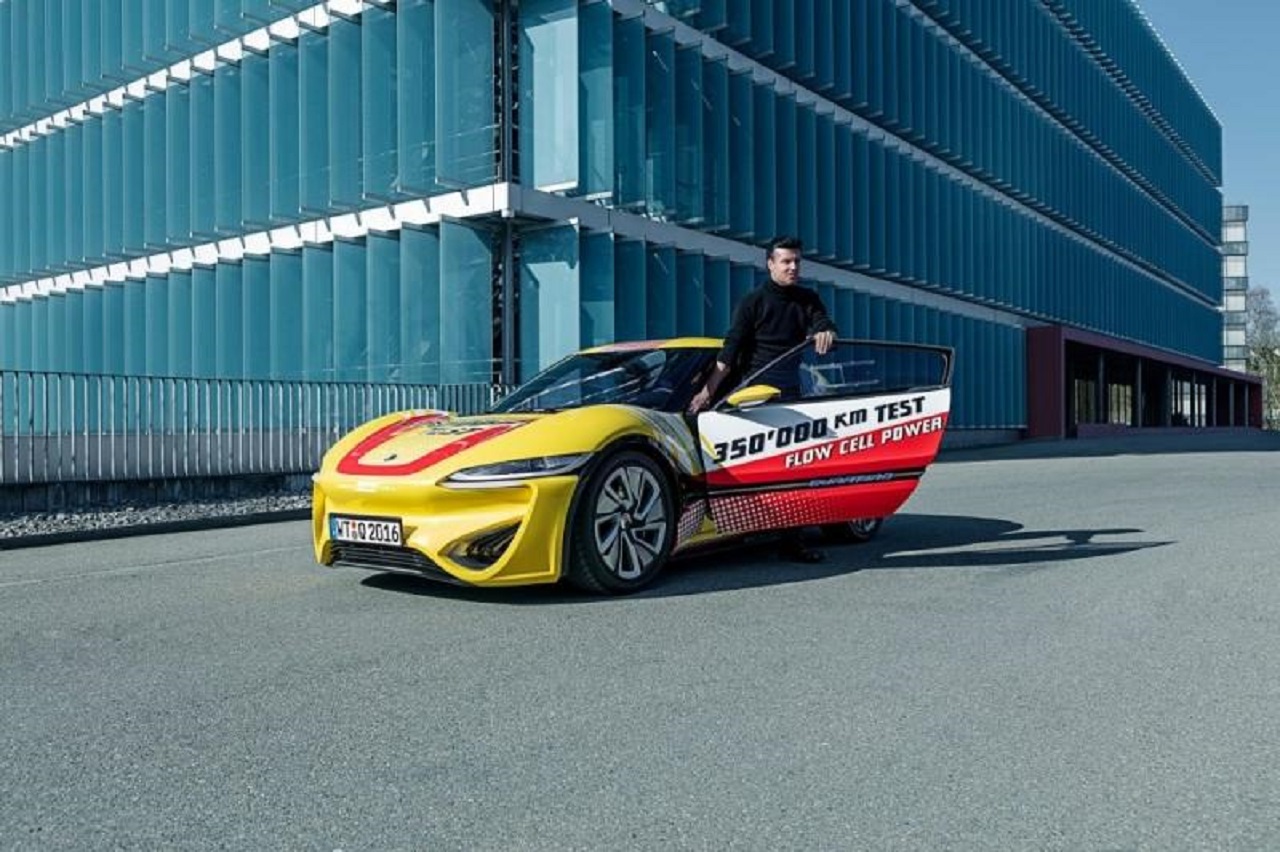
A NanoFlowcell reached a new milestone with its technology focused on the automotive sector, completing 350,000 kilometers with the Quantino 48 Volt car, which is powered by saltwater without any issues. Thus, inventor Nunzio La Vecchia now hopes that his technology, which essentially consists of using a type of saltwater to accumulate electrical energy, will start to be noticed by the automotive industry as a more viable, cheap, and efficient alternative than others, such as lithium-ion batteries or hydrogen fuel cells, which also do not generate any type of pollutant emissions or noise.
Saltwater-Powered Car Operated For Over 10,000 Hours
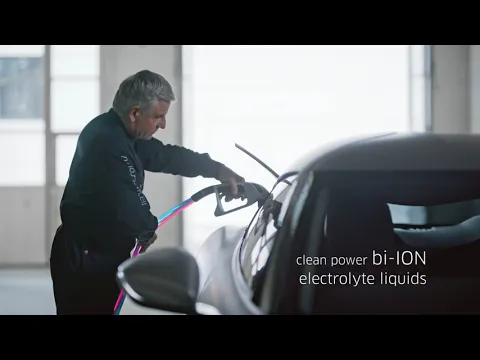

The saltwater-powered car serves as a technological demonstration of how the technology can be adapted to a vehicle aimed at urban areas and low cost, which was chosen for several test batteries.
In the last three years, the prototype of the saltwater-powered car built in Switzerland has already surpassed 250,000 km driven on open roads, of which about 100,000 were conducted for laboratory tests. It is important to note that the special components of the Quantino functioned without any problems.
-
It surpassed the T-Cross, Creta, and Tracker: with nearly 8,000 units sold, the Volkswagen Tera was the best-selling SUV in March 2026.
-
Honda performs miracles in fuel consumption with a hatch that marks 13.2 km/l in the city and 15 km/l on the highway, leaving Polo, HB20, 208, and Onix behind and becoming a reference among compact cars without resorting to turbo or hybrid systems.

-
Six diseases that seem common but can prevent the renewal of the driver’s license for the elderly throughout Brazil and surprise experienced drivers — could any of them affect you without showing clear signs?

-
With 122 hp, fuel consumption of up to 17.7 km/l, and a trunk capacity of 440 liters, this hybrid SUV impresses even though it costs up to R$ 47,000 more than the Yaris — meet the Toyota Corolla Cross.


In total, all components operated for more than 10,000 hours, which is even longer than the normal lifespan of a vehicle. Regarding the characteristics of the saltwater-powered car, which could revolutionize the automotive market, the vehicle has an 80 kW electric motor, equivalent to about 109 horsepower. The model can carry up to four people on its chassis and weighs a little over 1,400 kg. Still, with these characteristics, the saltwater-powered car can go from 0 to 100 km/h in just 5 seconds.
How Does The Quantino 48Volt Work?
The operation of the saltwater-powered car is similar to that of a fuel cell, but using saltwater instead of hydrogen. Therefore, positive ions are separated from negative ones, as they pass through a membrane and interact and mix, and it is this interaction that generates the electrical energy that allows the vehicle to move.
The final result of the mixture of ions generates water, just like the hydrogen fuel cell, but has the advantage of allowing the saltwater-powered car to operate without emitting any carbon, in addition to quick refueling.
The company that developed the vehicle has been in the market for some time, and since 2014, NanoFlowcell has been creating prototypes with the aim of using saltwater as the main fuel.
Other Prototypes Developed By The Swiss Company
Several prototypes of the saltwater-powered car have been developed, such as the Sports e-Sportlimousine, the Compact Quantino, and the Crossover Quant F. These three models were tested on the road, but it was the Quantino that first showcased the true capability of the “fuel.”
Another major highlight of the vehicle zero CO2 emissions is the fact that it traveled 1,000 kilometers in eight hours and 21 minutes straight, meaning that during the entire journey, it did not stop to refuel, which also proves its great autonomy.
The Swiss company aims to start final production of this prototype model in the short term. If successful, it will be a significant advancement in the sector, considering that, in this way, drivers can go to the beach to refuel.










Seja o primeiro a reagir!