





 Portuguese
  English
  Spanish
  4 min of reading
  0 comments


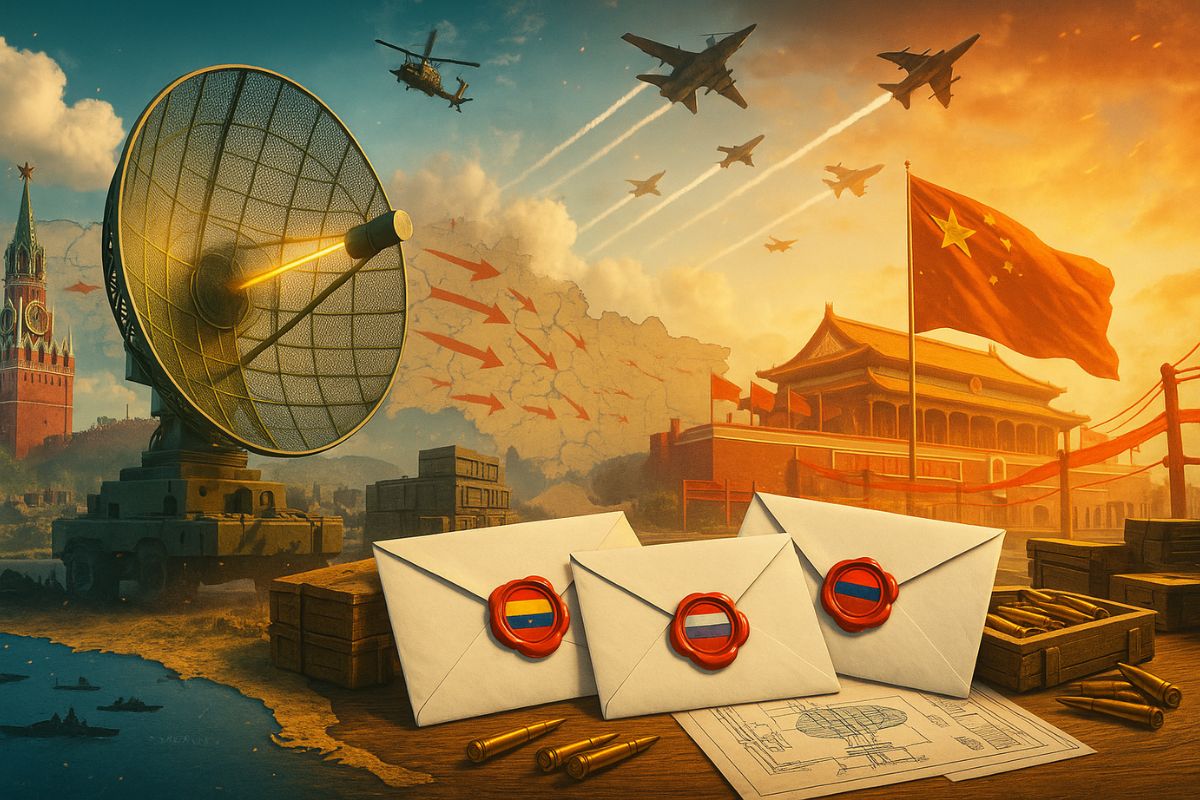
Maduro’s Letters to Vladimir Putin and Xi Jinping Request Urgent Reinforcement in Weapons, Ammunition, Maintenance of Fighters and Radars, but Russian Military Overload in Ukraine and China’s Cautious Stance Indicate That Help Would Be Limited in the Face of Possible American Attack
Maduro’s letters sent to Putin and Xi request immediate material and logistical support to strengthen air defense and deterrence of the regime. The package includes aircraft restoration, anti-ship missiles, ammunition, and on the Chinese front, the expansion of long-range radar supply. The assessment is straightforward: the Venezuelan government seeks to elevate military readiness in light of what it classifies as an increasing risk of American action.
The central problem lies in the capacity and willingness of allies. Russia is operating at the limit with the war in Ukraine and faces sanctions that compress production, financing, and logistics. China, in turn, calibrates geopolitical risk and economic exposure, preferring gradual steps. The joint calculation suggests that, even with Maduro’s letters in an urgent tone, the transfer of critical means tends to be partial and slower than desired by Caracas.
What the Letters Request and Why
The requests in Maduro’s letters target two bottlenecks: availability of vectors and situational awareness.
-
Masterpiece in Spain, under construction since 1882, receives 4.8 million visits in a year and impresses with its gigantism and architecture.

-
Attracting around 250,000 people a year, a lighthouse 200 meters from the sea, on a 60-meter high cliff, on the North Sea coast in Denmark, becomes one of the most impressive examples of how nature can threaten historical buildings.

-
The narrowest house in the world is only 63 centimeters wide, but inside it can accommodate a bathroom, kitchen, bedroom, office, and even two staircases.

-
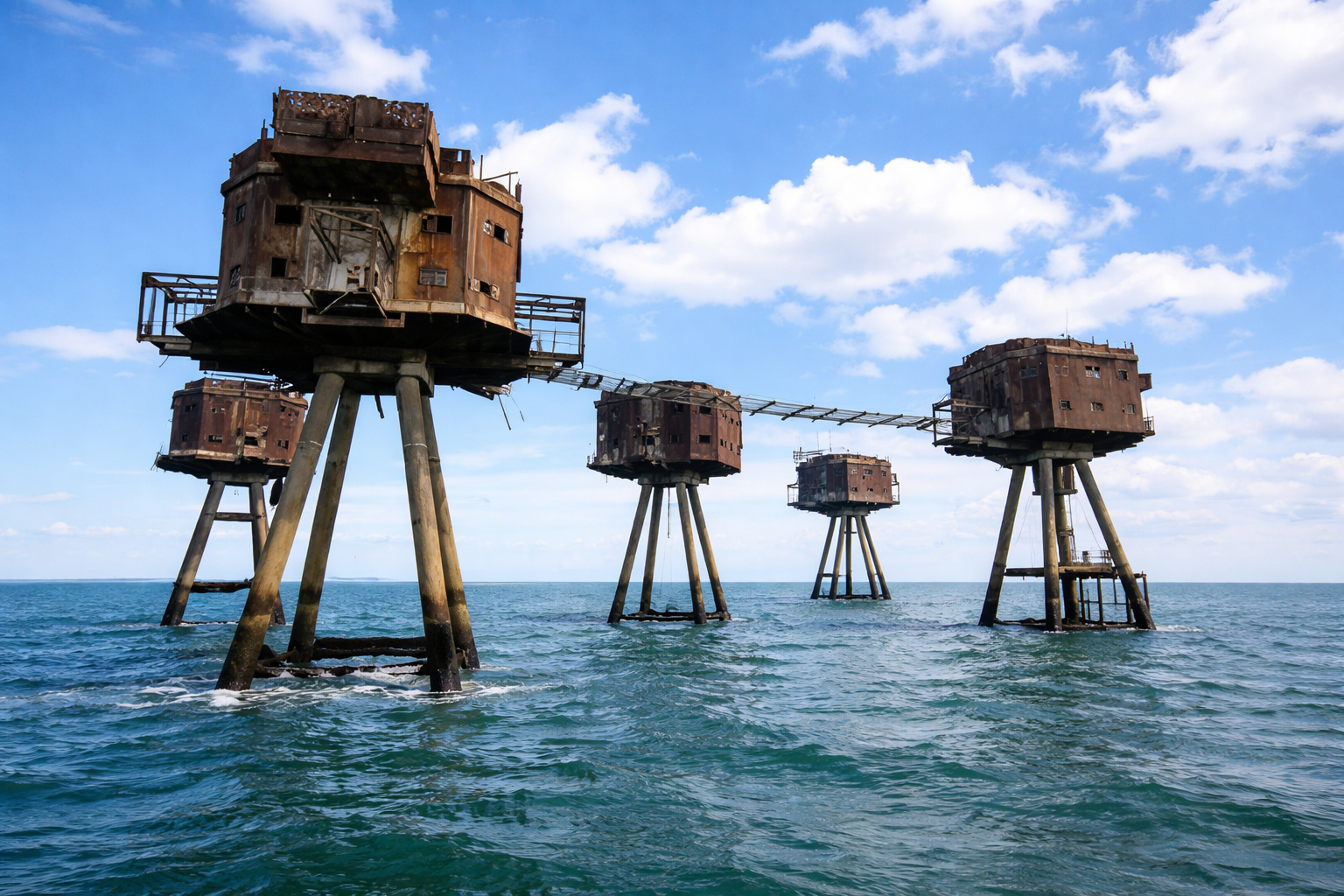
In the middle of the sea, these enormous concrete and steel structures, built by the British Navy to protect strategic maritime routes, look like they came straight out of a Star Wars movie.

From Moscow, the focus is on maintaining Su-30MK2s, missiles, and replenishing ammunition to restore response capacity.
The priority is to recover readiness and extend operational autonomy in case of crisis.
With Beijing, the emphasis is on radars and technical cooperation for air surveillance.
The strategic reading is that sensor coverage and integration enhance warning time and raise the cost of any external action.
Maduro’s letters thus seek deterrence through visibility and minimal area denial capability.
Russian Capacity: Limitations of Industry and Logistics
Even with historical affinity, Russia faces a rigid priority regime.
Production directed to the front and maintaining strategic stocks reduce the margin for urgent exports.
The logistical window to the Caribbean is long and sensitive to sanctions, which delays schedules and raises the cost of each shipment.
Beyond industry, the maintenance overload and demand for parts make a broad package unlikely in the short term.
In such scenarios, timely deliveries and remote technical assistance are more feasible than bulk transfers, even though Maduro’s letters insist otherwise.
Chinese Stance: Geopolitical Risk and Radars as a Possible Vector
On the Chinese side, pragmatism dictates the pace. Beijing tends to favor surveillance technologies and system integration, segments with less direct military visibility and greater commercial elasticity.
This explains why radars and technical support appear as a likely axis of response to Maduro’s letters.
Yet, the timing and scale remain contained. In moments of tension with Washington, China avoids triggers that heighten friction.
The likely response to Maduro’s letters combines gradual increases in capabilities with maintaining economic channels, without compromising the narrative of caution.
The Precedent That Weighs: When Promises Do Not Turn Into Combat Power
The reference to Iran illustrates the mismatch between pacts and deliveries.
The lack of materialization of geographically proximate requests highlighted Russian limitations of projection under sanctions and war.
Transposing this to the Caribbean adds distance and risk, further reducing the viability of robust packages, even with Maduro’s reiterated letters.
In practice, alliances do not eliminate industrial, financial, and political bottlenecks.
Promises may sustain rhetoric, but combat power depends on schedule, parts, and training, elements rarely compressible in the time a crisis demands.
Short-Term Scenarios and Regional Impacts
In the most likely scenario, Caracas receives technical support and selective batches of equipment, focusing on radars, maintenance, and small shipments of ammunition.
This raises the cost perception for third parties but does not change the structural correlation of forces.
Maduro’s letters may yield marginal deterrence effects, not a leap in capability.
In escalation scenarios, logistics becomes the balancing factor. Without sustained air bridges or reliable maritime corridors, replenishment would be irregular, affecting the real availability of means.
For neighbors, the greater risk is volatility, with windows of tension becoming more frequent, not necessarily leading to open conflict.
What to Observe Next
Three vectors indicate the direction: movement of sensitive loads, signs of radar integration, and aircraft maintenance pace.
If all three advance, Maduro’s letters will have yielded incremental operational gains.
If they stagnate, the effect will be primarily political, without concrete translation into capability.
For now, the convergence of Russian limitations and Chinese caution suggests that aid will not match the urgency expressed in the letters. The situation remains fluid, but logistical inertia weighs heavily.
Maduro’s letters seek to accelerate a military reinforcement that is difficult to implement at scale and speed.
The Russian overload and Chinese caution indicate a more restrained support, emphasizing sensors and maintenance, insufficient to alter the strategic balance in the short term.
Do you think that a radar and maintenance-focused package already changes the risk calculation, or without vectors and ammunition in volume nothing really changes?








-

-

2 pessoas reagiram a isso.