





 Portuguese
  English
  Spanish
  7 min of reading
  15 comments


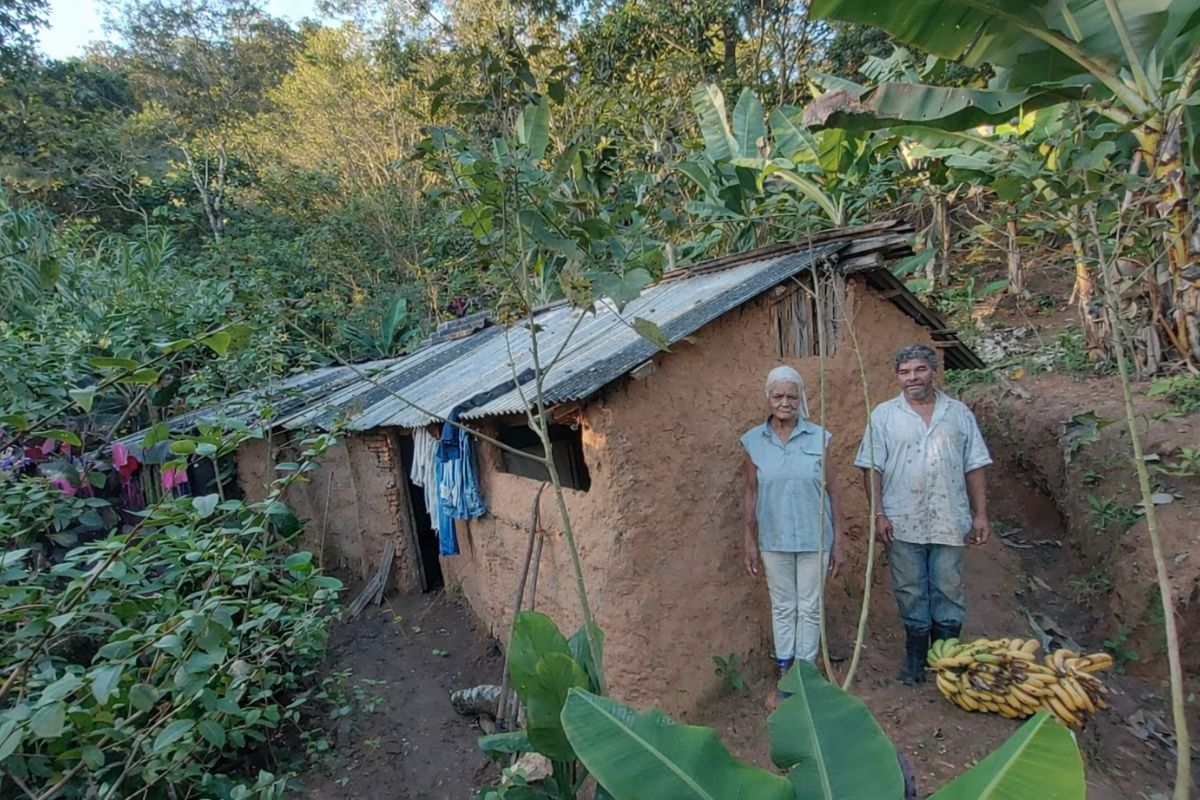


No Light, No Fixed Income and Difficult Access, Couple Lives Isolated in Clay House in the Woods, Survives on What They Plant and Sell and Now Counts on Solidarity to Regularize Documents and Try Dona Maria’s Retirement
A few kilometers from a simple village, but already with electricity, church, and commerce, an elderly couple lives isolated on top of a hill, in the midst of the forest, as if they were in another century. Without electricity, without a fixed income, and without any basic comfort, Dona Maria and her Sebastião face old age with what they harvest from the land and carry on their backs down to the “low” area, where they trade bananas, yam, corn, and beans for groceries in the market.
The reality only came to light when a resident of the region decided to record the visit. The video shows the long ascent, the closed trail, the risk of jaguars and venomous creatures until reaching the small clay house. There, among plants, banana trees, and a wood stove, it becomes evident that this couple lives isolated not by choice of comfort, but due to a lack of alternatives, support, and access to basic rights, such as the retirement that Dona Maria should have been receiving for years.
A Couple Living Isolated on Top of the Hill
Those who watch the beginning of the video imagine just a stroll through the countryside. But it soon becomes clear that Dona Maria and her Sebastião live isolated on top of the hill, well above the village, in a place where even cars have difficulty reaching.
-
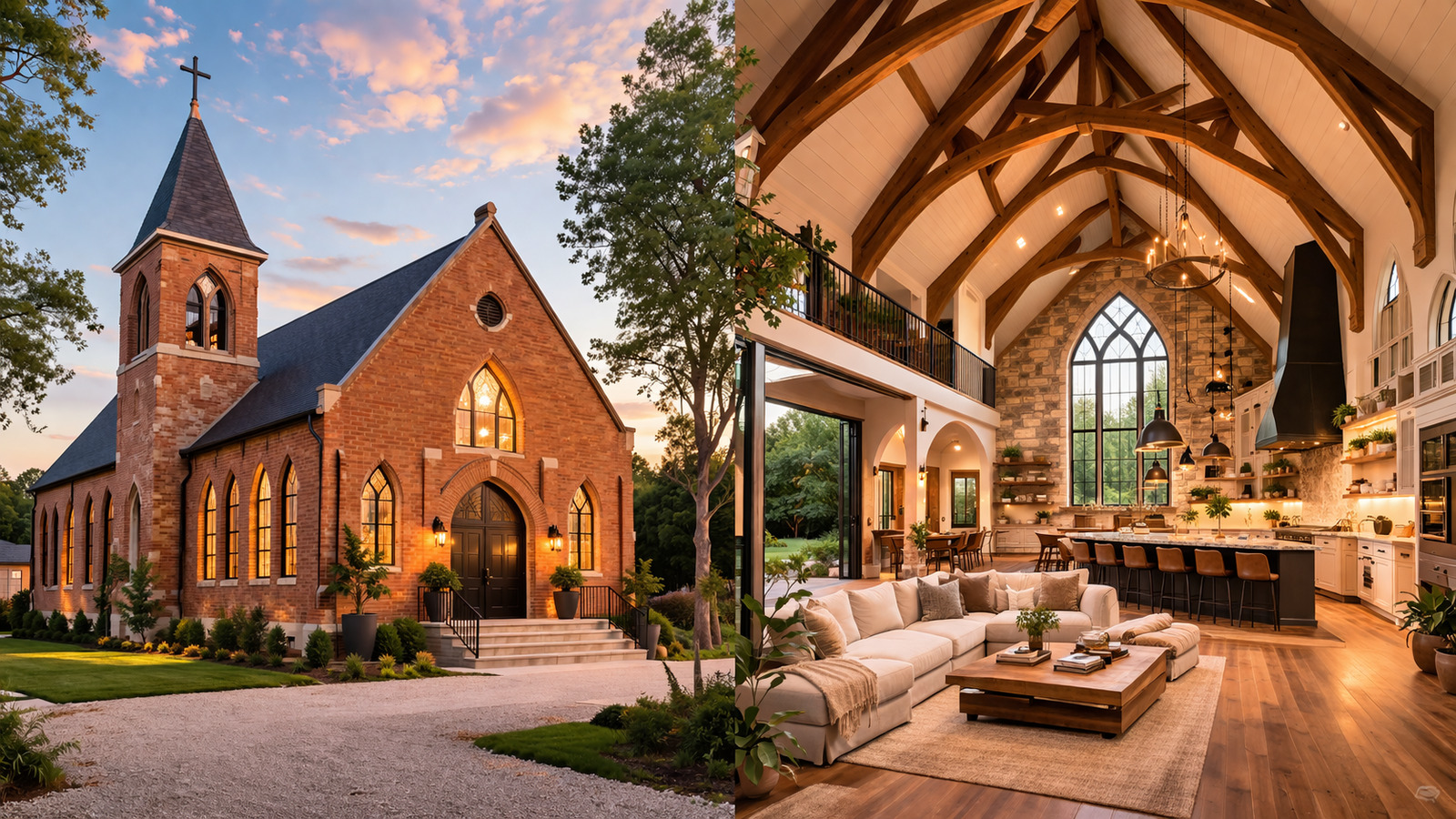
Church from 1888 becomes a mansion of over 330 m² in Canada after a renovation of R$ 3.4 million and is eventually sold for nearly R$ 4.3 million.
-
How an innovative city combines high technology, well-being, and sustainability to become the largest reference in clean energy on the planet.

-
Couple buys 1846 church in ruins for R$ 660,000, invests R$ 3.2 million in renovations, transforms it into a millionaire mansion, and even preserved a historic cemetery with over 300 graves.

-
He started running at 66 years old, broke records at 82, and is now a subject of study for having a metabolic age comparable to that of a 20-year-old, in a case that is intriguing scientists and inspiring the world.


From a certain point, it is only possible to continue on foot, on narrow trails covered by vegetation and mud.
The reporter states that he knew the area “from when he was a child,” but admits he no longer knew where the house was.
Even the neighbors in the village don’t seem to have a real idea of how this couple lives isolated, hidden among ravines, springs, and thickets, in such a remote area that the visit begins almost like an expedition.
The Walk to Those Who Live Isolated from the City and Services
The climb is long. The couple recording the video takes a wrong turn, backtracks, tries another trail, asks for help, shouting for assistance, and hears responses from afar.
The access to the house of those living isolated depends on small hints: a more worn path, a bamboo grove, a trace of a trail in the bush.
In the middle of the journey, the narrator begins to understand what this means in Dona Maria’s daily life. To take a single bunch of bananas to the village, she needs to climb up and down a steep hill, carrying weight in her arms or in a simple cart, without a road, without pack animals, without any facilities.
He recalls that, the day before, he saw the elderly woman “very tired,” with a haggard face, and it moved him enough to promise: the next day, he would climb up there to see the reality up close.
As he climbs, he remembers that Dona Maria lives isolated there, without family nearby, coming from Minas Gerais, with no education and without a support network to help her with basic things like buses, information, and documentation.
Every detail of the path reinforces a point: if it is difficult for a young visitor to climb once, it is even harder for an elderly couple to do so whenever they need to buy or sell something.
Clay House, Wood Stove, and Candlelit Nights

When he finally finds Sebastião in the midst of the forest, the path to the house becomes even narrower.
The trail passes under branches, between roots and trunks, until the small structure of mud walls appears, a simple clay house surrounded by banana trees, flowers, and subsistence crops.
Inside, there is no electricity, no connected refrigerator, no light bulbs. At night, everything is lit by candles. The stove is wood-fired, closed to retain heat on cold days. The sink is improvised from a repurposed laundry tub.
Part of the walls is still wet from freshly applied clay, trying to protect a little more from the wind and rain. When it rains heavily, Dona Maria says that “it kisses a lot” inside the house, with dripping and humidity.
In the bedroom, the bed reminds the narrator of his childhood: simple structure, wooden floor, all very basic but functional.
Without a wardrobe, the couple transforms an old, unplugged refrigerator into a closet for storing clothes, as they cannot use the appliance to refrigerate anything.
Even so, Dona Maria and Sebastião’s speech is marked by gratitude and faith, which contrasts with the visible precariousness.
How They Live: Farming, Trade, and a Lot of Physical Effort
All their sustenance comes from the land. The couple lives isolated but intensely connected to farming, planting bananas, cassava, corn, yams, sweet potatoes, and other crops they manage to maintain on the steep mountain soil.
They plant on land granted by a neighbor, in a partnership arrangement, harvesting what they can sell and consume.
A large, heavy bunch of bananas that requires strength to cut, carry, and descend hillward, usually sells for about ten reais.
Many times, the bananas overripen and are lost because they cannot always get everything to the village in time or find buyers. The same goes for corn, beans, and other crops, sold when “they are lucky” or when the harvest is good.
Animal attacks also disrupt their efforts. Sebastião reports the presence of jaguars in the region, which have even entered the shed and attacked in the kitchen, in addition to armadillos that dig up the ground and damage crops like sweet potatoes.
Out of fear of predators, the couple avoids raising chickens near the house, which could enhance their diet but would increase the risks.
Documents, Retirement, and the Right Not to Live Isolated from Public Services

Amidst all this, there is a central point: Dona Maria lives isolated not only geographically but also from the social protection system that should reach her.
With old documents, CPF issues, and a lifetime spent on the farm, she has long surpassed the retirement age but has never managed to organize the benefit application process by herself.
According to her account in the video, she would be 68 years old today, registered as born in 1955, approaching 69 and soon to be 70 years old, but still without retirement.
There’s no lack of work history; there’s a lack of guidance, access, and support. She herself says that she has already asked for help, but “nobody wants to help me,” and that many times she misses the bus or cannot find someone to accompany her to the town of Barra do Turvo to face lines, paperwork, and technical explanations.
The narrator is outraged to discover that a representative from social services, identified as Marcelo, has already been to the location, collected documentation, and never returned with answers, according to the couple’s account.
After this visit, he promises to use his limited free time to accompany them to the assistance agency, seek a lawyer, inquire about the process, and try to ensure that at least Dona Maria’s retirement comes through.
The idea is simple yet powerful: those living isolated at the mountain’s peak cannot continue to be isolated from their own rights.
Faith, Gratitude, and a Notebook of Requests

Despite all the difficulties, Dona Maria keeps a notebook where she writes down requests she makes in prayer. In one of them, she wrote that she asks God to send a “disciple of Jesus” to help.
Upon seeing the visit arrive, climb the hill, and enter the house, she interprets that moment as an answer to that request and gives thanks several times.
During the conversation, she recalls that she did not study, that she left Minas Gerais as a young woman, that she has no family nearby, and that, for this reason, she relies on faith and perseverance.
She does not complain bitterly, but makes it clear the physical and emotional fatigue of continuing to climb and descend the mountain every day to survive.
In the end, the narrator apologizes for taking so long to visit the couple and recognizes that many people in the village have no idea how they live.
He also highlights that many complain about the house they live in or minor daily problems, not knowing that there are those who live only with the bare minimum and still thank God and smile.
Why the Story of Those Living Isolated on the Hill Matters
Stories like that of Dona Maria and her Sebastião should come out of anonymity. Showing the reality of those living isolated helps expose that there are still Brazilians aging without electricity, without fixed income, without full access to health and social assistance, even living relatively close to a city.
More than just moving, this story raises questions: who is monitoring whether social assistance truly reaches those who need it most?
Why do documents get lost along the way? Who looks after the elderly living in remote rural areas, without family nearby?
By recording on video the routine, the house, the farm, and the effort of this couple, the narrator also invites other residents and authorities to take action. Not everyone can solve everything, but someone can make a call, share, pressure, accompany, and demand.
Every small gesture can be the difference between continuing to live isolated in invisibility or, for the first time, having rights recognized and some relief in old age.
And you, after learning about the story of Dona Maria and her Sebastião, do you think that the government is doing enough for the elderly living isolated in rural areas or do you feel we are still far from achieving the minimum justice for these people?





Discussing
No! The government doesn’t do enough for us older people they treat us as burden to the system.
when we go to get health care the Doctors and workers have no Empathy 🙏
These old person should be removed and cared for! before animals eat them.
There strength is failing and how much longer can they descend the mountain or fight off snakes and Animals? OMG!!! SOMEONE OUT THERE HELP THEM 🥺😭
Every country that defunds their military/industrial complex in favor of caring for its people has done better. The people deserve it and it benefits the country too. I judge a people by how they care for the weak, old, voiceless or vulnerable. Margaret Meade said she thought the definitive sign of a culture was a healed femur, an injury that requires help to heal. So care for all is the most primal integral part of an advanced culture.