





 Portuguese
  English
  Spanish
  5 min of reading
  0 comments


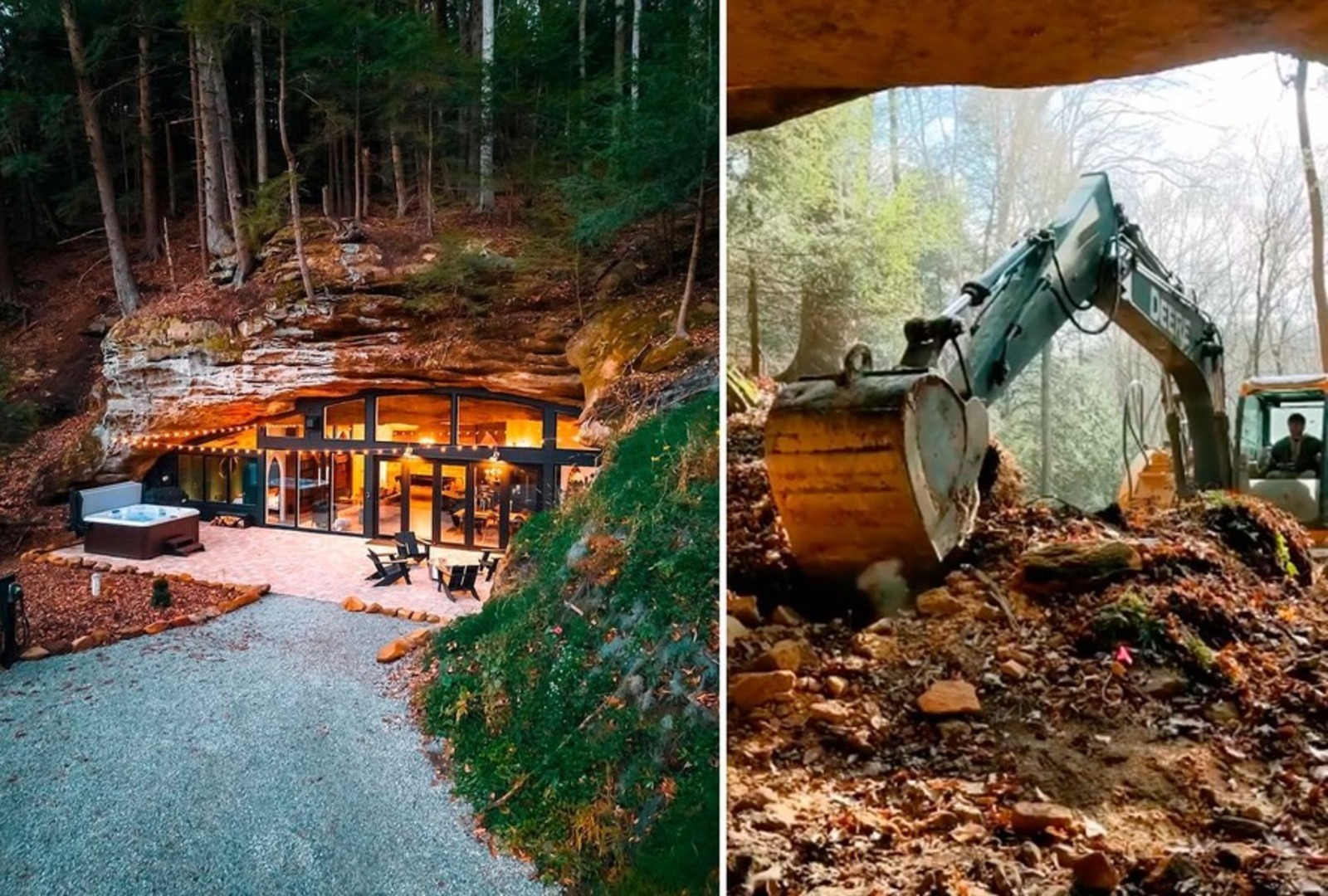
What Was Once a Simple Cavity Hidden Beneath a Slope in Ohio Has Been Transformed by a Couple Into a Luxurious 140 m² Retreat, Featuring a Fireplace, Hot Tub, and Modern Design Integrated With Nature, Attracting Guests From Across the Country
Bryant and Amy bought a vacation home in Hocking Hills State Park, in the United States, when they discovered a “hidden” cave on their property. The idea of turning it into a luxury retreat came about spontaneously.
“I remember thinking: could we really build the greatest fort in the world inside of it?,” Bryant told the Tiny House Giant Journey channel.
To ensure safety, the couple hired a geologist and an engineer.
-
Sleeping at different times each day can be a bomb for your heart and even double your risk of having a heart attack.

-
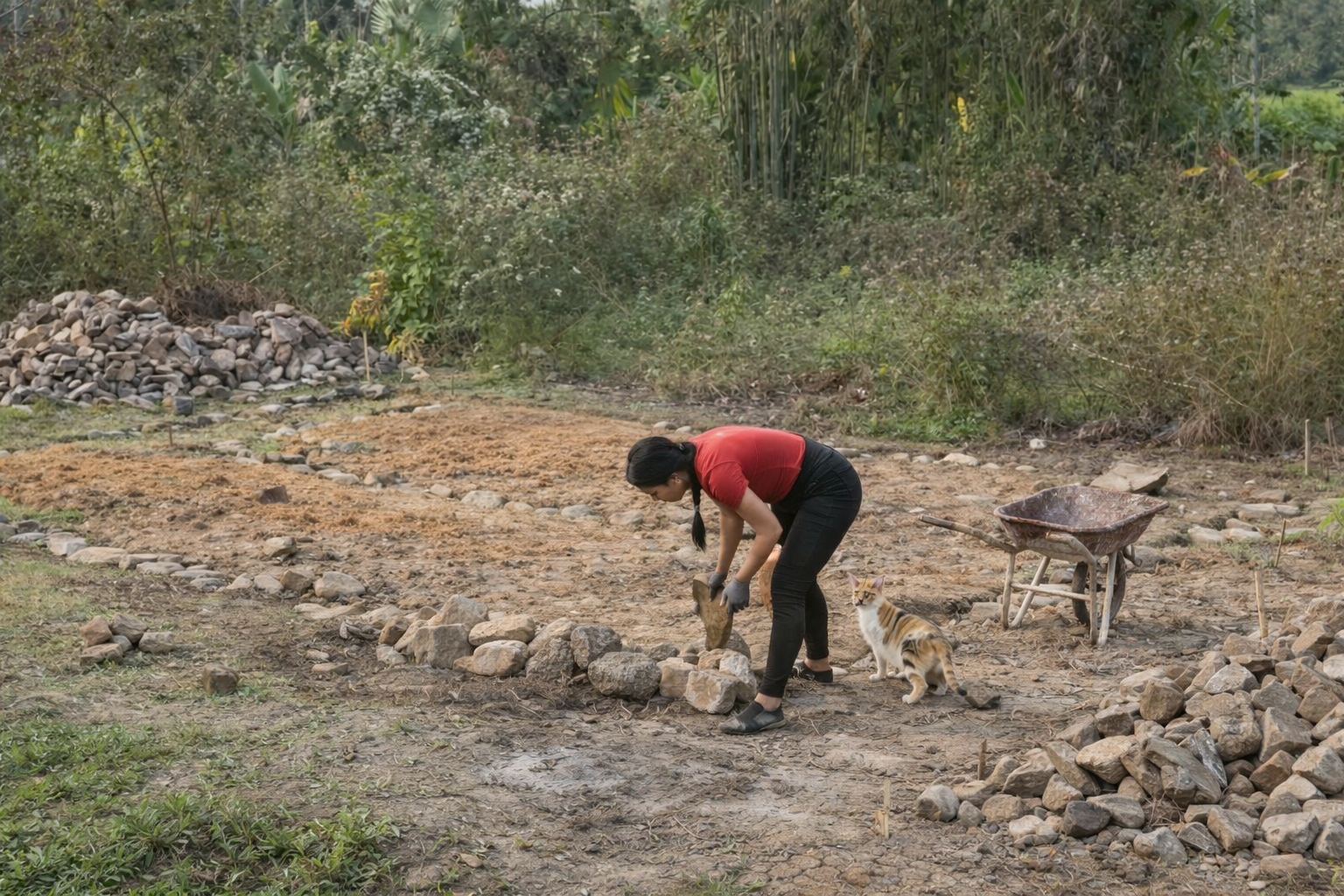
Without help and without heavy machinery, a woman builds a house from scratch with stone, wood, and cement, erects a chimney, creates a complete leisure area, and transforms an empty lot into her dream home.
-
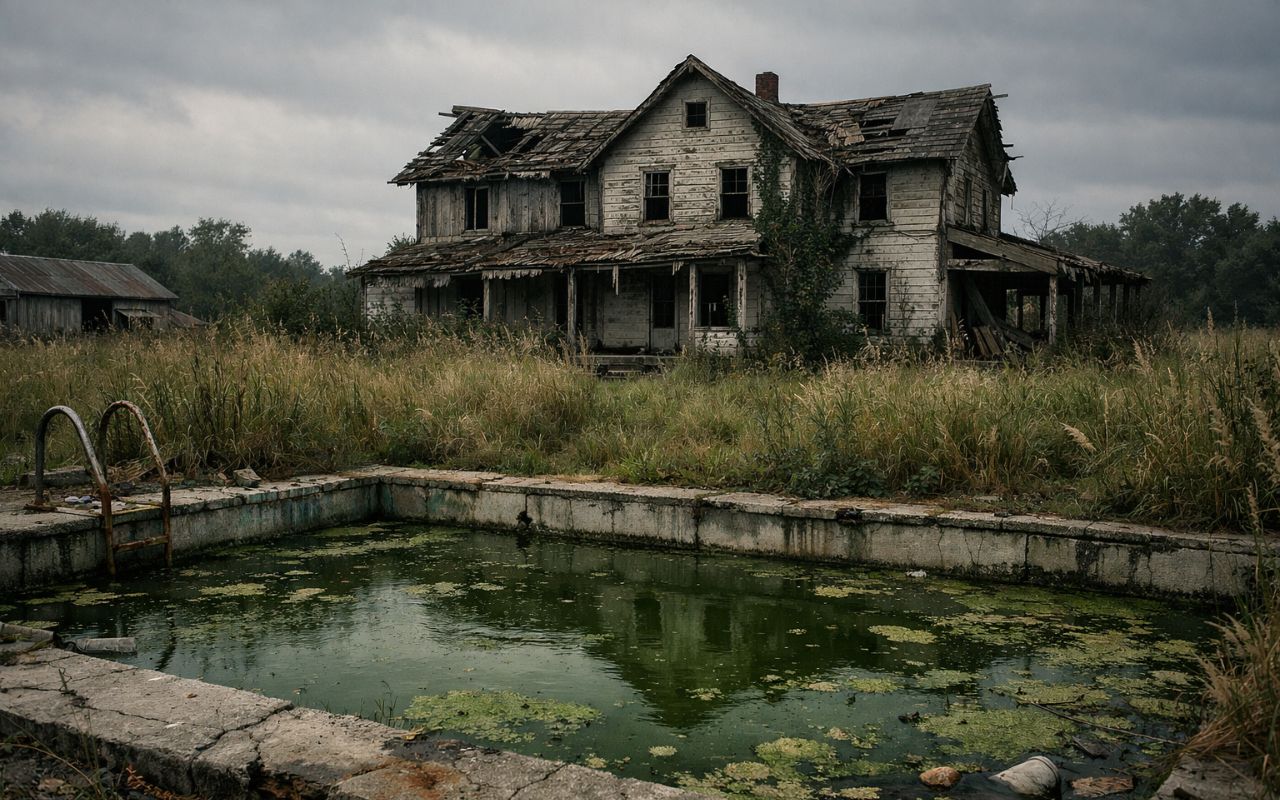
Couple transforms abandoned house after years of being closed; residence was overgrown with weeds, had a green pool, and a deteriorated structure in the interior of Rio de Janeiro.
-
Hidden marks on the walls of the site associated with the Last Supper of Jesus for centuries have been deciphered in Jerusalem, revealing medieval inscriptions left by pilgrims, European nobles, and travelers from the Middle East.


The construction took seven months and was completed in November 2022.
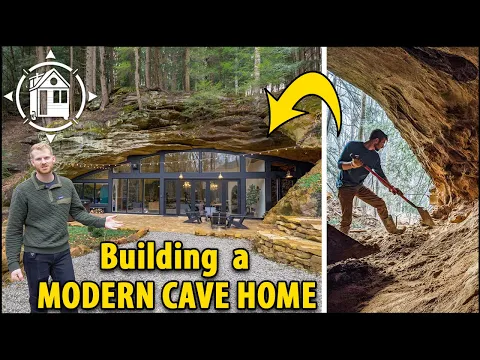

A Retreat That Became a Success
Named The Cave, the house has become a hit among tourists. The rental cost was up to R$ 3,000 per night at the time, rising to R$ 4,600 in December. Overall, the property generates around R$ 140,000 per month for the owners.
The project is part of the Dunlap Hollow property, which also includes other structures, such as The A-Frame and The Cottage.
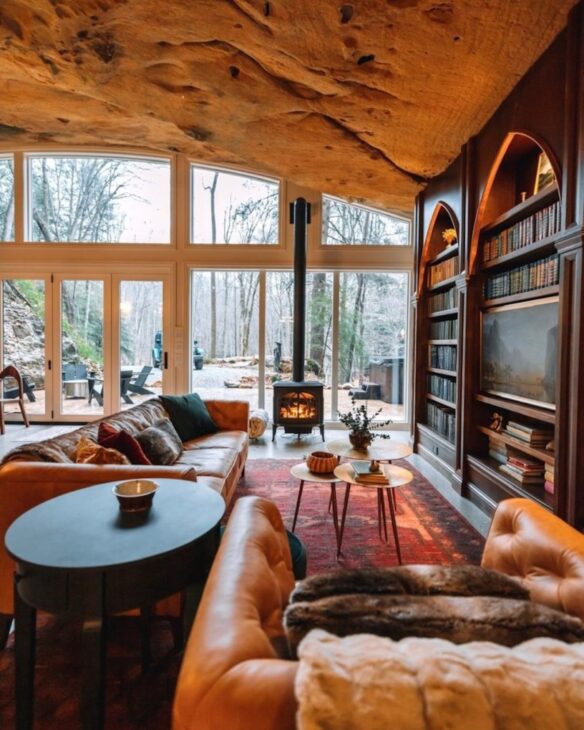
Structure and Design Impress
With 140 m², The Cave accommodates up to six people, offering two bedrooms with king-size beds, two single beds, and two bathrooms.
There is also a full kitchen, hot tub, outdoor patio, fireplace, pool table, trails, and Wi-Fi.
The decor blends luxury and rusticity, with exposed rocks and glass windows that let natural light in.
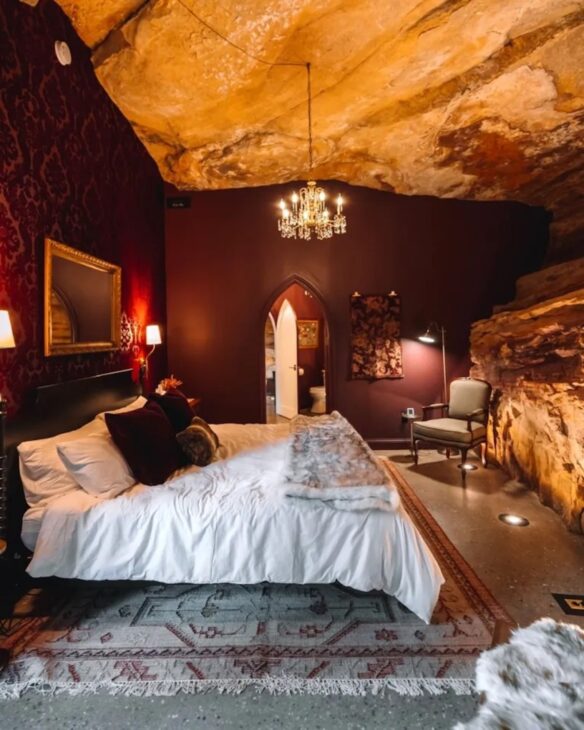
Sustainable and Creative Construction in the Cave
According to the couple, the project of the house in the cave consumed about R$ 486,000 in materials. Videos posted on TikTok showcase all stages of the construction, from excavation to finishing installation.
Today, what was once a simple cavity in the ground has become one of the most impressive retreats in the United States.
With information from Casa Vogue.
You May Also Like: Man Digs a Labyrinth House in a Cliff for Half a Century, With Rooms and Colorful Art — and May Be Evicted by the Government
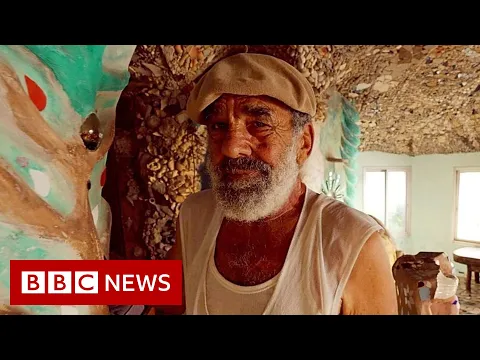
The “Hermit’s House” is a collection of rooms carved into the rock. The space functions like a labyrinth, with rooms connected by tunnels and stairs, according to AP News. The exterior is coated with stones, pebbles, and repurposed materials, as described by Atlas Obscura.
The Origin and Life in the Cave House
Kahlon, now 77 years old, began sleeping by the sea before starting to dig the cliffs ascos in 1973. He told New Lines that he lived in a tent after fleeing an arranged marriage.
When the police tried to evict him, he decided to build a refuge.
The dwelling grew over time. Initially a simple cave, he expanded rooms over the decades.
The space was made and filled with recycled material, Kahlon told AP News. “With the stones I extract, I make a mold and build a wall. There is no waste here, only material,” he stated.
Construction Details
Images show a multi-level property accessible by a staircase leading down from the beach.
The interior walls have texture and curved ceilings. Narrow, arched doors almost don’t allow Kahlon, who is of short stature, to pass through.
Simple tools, such as an iron spear he forged himself, shovels, and spatulas, were used in sculpting the space, according to New Lines Magazine.
He also carved shelves into the stone walls to store his belongings, and has some furniture inside.
Artistic Touches of the Cave House
The interior mixes colorful glass shards, mosaics, and ceramic fragments. Kahlon made these mosaics with old tiles he collected from dumpsters in Tel Aviv, according to AP News. Some rooms showcase walls, windows, and paintings in vibrant tones.
Despite its rustic appearance, the house has plumbing and a telephone line. Additionally, many rooms receive electricity, AP News reported.
The Risks and Losses
The sea has destroyed the exterior of the house on two occasions. The first occurred in the early 1980s, and the second at the end of the 1990s, when the construction of the Marina of Herzliya caused erosion on the beach, reports Atlas Obscura.
Herzliya is about 13 kilometers north of Tel Aviv, and the house is near the seaside neighborhood known for upscale hotels and villas.
Threat of Eviction
Now, after nearly half a century, Kahlon faces an eviction order from the Israeli government. The Ministry of Environmental Protection states that the cave has caused “significant damage to the cliff, posed a danger to the public, and reduced public beach access,” as reported by AP News.
Kahlon rejects the accusation. “I have worked here for fifty years without pay. What have I done? Killed, stolen, raped? No!,” he told New Lines magazine. For him, the house is a museum and should be recognized, not demolished.
The man admitted that he never had official permission to build the structure. Still, he claims local authorities connected his cave to the power grid years ago.
In 1974, he received a demolition order that was never enforced. Since then, he says he has only faced recent opposition.
Authorities maintain that they offered Kahlon alternative housing. He, however, states he has no intention of leaving. “I will not leave here. I’m ready to be buried here,” he declared to AP News. “I have nowhere to go, I have no other home.”
The Legal Battle
With support from friends and relatives, Kahlon raised funds to hire a lawyer for the legal proceedings that will take place in court, New Lines Magazine reported.
He questions why he is being evicted now, after decades of living there.
The community and cultural groups watch the dispute closely, as many value Kahlon’s creativity but also fear concrete risks to the coast and stability.
The story highlights the clash between personal heritage and public regulations. Since the house emerged from an individual’s need and ingenuity, many see cultural value in it.
Thus, the case raises doubts about who defines what constitutes public space and what deserves protection.
Not everyone agrees. Moreover, erosion and security risks are arguments that authorities use to justify their action.
With information from Business Insider.









-

-

-

-

-

-

68 pessoas reagiram a isso.