





 Portuguese
  English
  Spanish
  8 min of reading
  0 comments


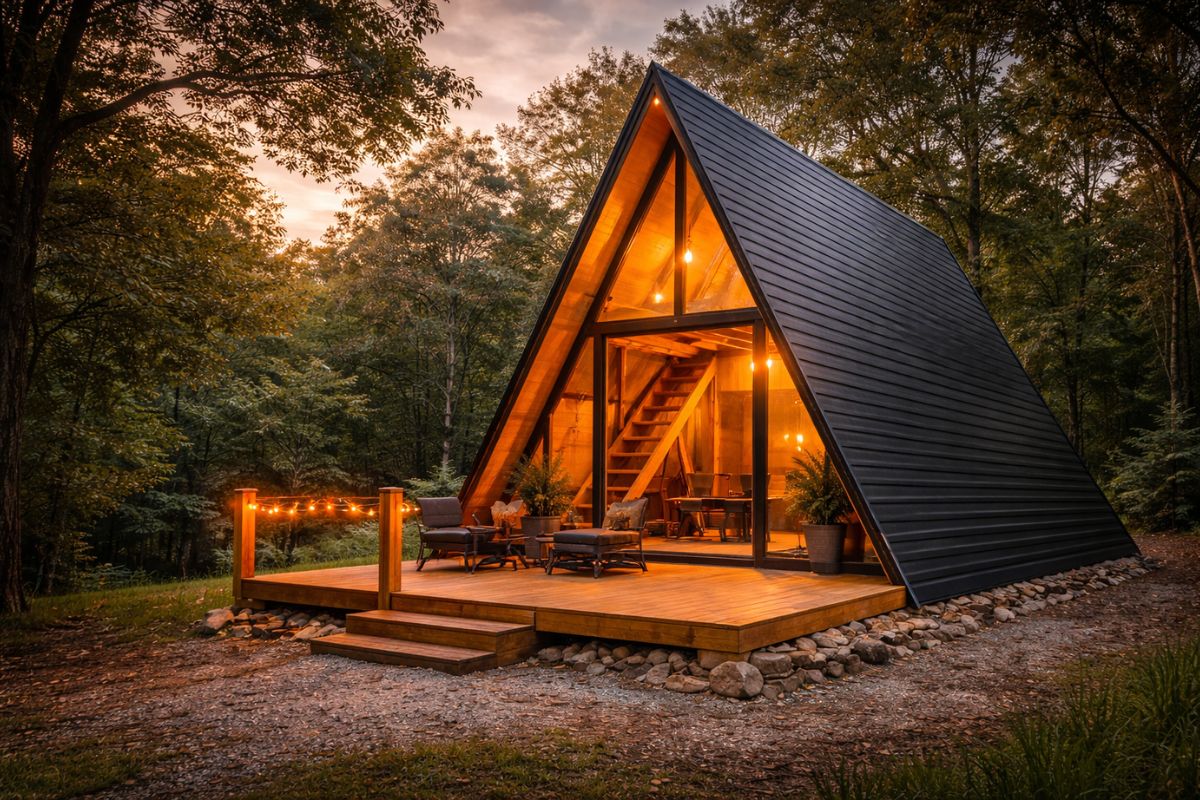
With 35 m² and a Mezzanine, the Chalet is Built in Timed Stages: Anchoring on the Slab with Parabolts, Waterproof Membrane Against Moisture, Black Roof with Polyurethane Insulation and Wooden Flooring, While the Timeline Tries to Hold the Construction Until the Birth, Without Breather Even with Rain and Delayed Materials.
The chalet that the couple is building on their own land by the beach has turned into a public experiment of pace and method: within days, the structure went from paper to a volume of 35 m² with a mezzanine, with technical decisions being taken under intermittent rain and a familial countdown. The promise of “closing” quickly depends not only on willpower but on the sequence of tasks.
The project is presented as the “fastest chalet in Brazil,” a phrase used by the couple itself to translate the ambition for speed in a real construction, with deadlines and unforeseen challenges. The additional pressure comes from the family calendar, which aims to have the chalet protected before the baby’s arrival, reducing exposure to moisture, wind, and dust during the most sensitive time.
In the area of the ranch “Other Areas,” where there is already a barn house, the Babitonga Cabin and a trailer for rent, the new chalet serves as an expansion piece of the space and, at the same time, as a test of light construction logistics. When the deadline approaches, each step becomes a measurable bottleneck: material, tools, labor, and weather.
-
A rare storm transformed part of the Gulf into an unlikely scene of hail, extreme rain, and tornado risk in the middle of the desert, with volumes that exceeded the annual average in a single day.

-
Brazil catches the world’s attention with ships powered by ethanol and biodiesel that have lower emissions, an unprecedented certification with advantages in chartering, and a revolution in cabotage.

-
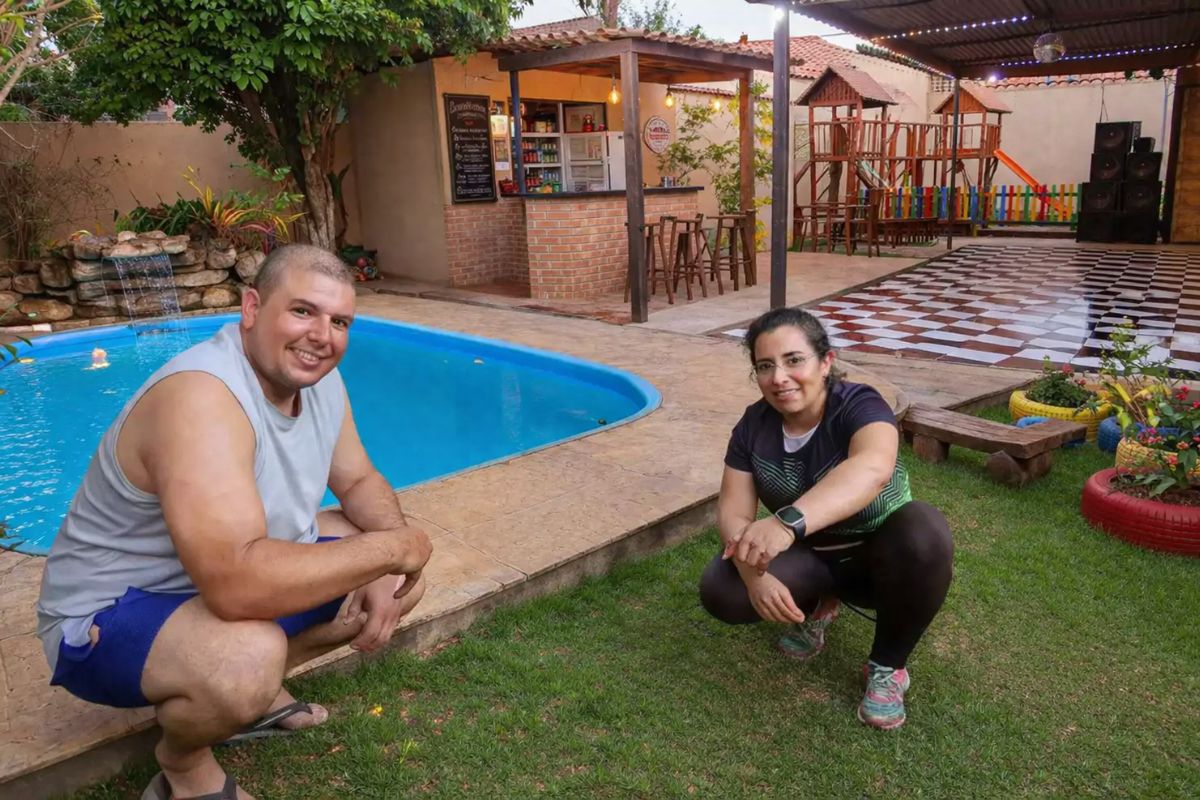
A couple who only has Sundays free has built a hand-dug pool, a hamburger joint, a dance hall, and a playground in their own home without hiring a mason, and even with breaks due to accidents and the pandemic, the work has never truly stopped.
-
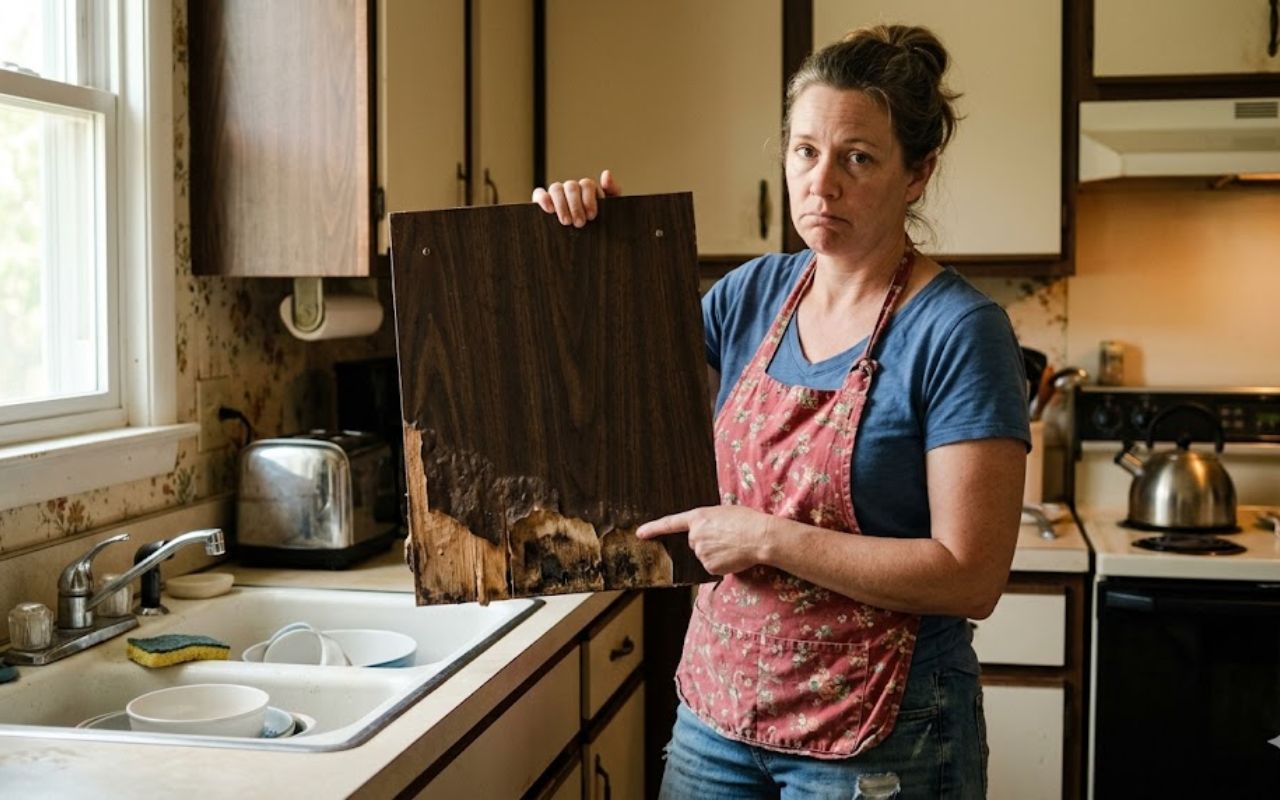
Furniture made with aluminum and glass does not warp and has become an alternative to replace MDF in Brazil.

Compressed Timeline and Decisions That Don’t Show Up in the Photo

The stated plan is to complete the chalet in less than 30 days, but the more aggressive cut is to finish the external closure in less than 7 days.
The countdown starts on Saturday, and by Wednesday, the couple counts four days of progress, with three days left to finish the outside, even after two days of rain that slowed down the routine.
In this type of construction, anxiety does not come only from the clock.
The final stage of pregnancy adds a second timeline, and the goal becomes to have the chalet “fully closed” before the baby arrives, even though the total completion will have to wait.
The result is a site where planning and execution go hand in hand, even with furniture selection, measurements, and purchasing organization happening in parallel.
The compression of the timeline also exposes a classic risk: a delay of an apparently simple item can halt the entire sequence.
An example arises when the couple mentions forgetting to order the material for the back of the chalet, which pushes a closure stage to the following days, even with the roof and floor progressing.
In fast construction, a list error results in immediate delay.
Securing on the Slab and the Stage That Consumes the Most Energy

Before any closure, the structure needs to be anchored to the ground.
The securing of the chalet on the slab is done with parabolts, a type of mechanical anchor: drilling into the slab, inserting the piece, and, when tightened, the lower part expands and locks, transferring load and reducing the risk of displacement.
This is the least “beautiful” stage and the most determining for safety.
The preparation includes removing temporary parts of the formwork and “cleaning” the assembly so that the anchoring can occur without interference.
Next comes the repetitive routine of drilling, positioning, and tightening, point by point, until the entire structure is secured.
The builder himself describes this moment as the most stressful and time-consuming of the cycle thus far.
The important detail is that it is not a single anchorage point: the repetition of parabolts across various supports of the structure creates redundancy and limits slack.
On a plot by the beach, this interacts with the reality of wind and varying humidity, which tend to demand more discipline in anchoring and squaring to avoid noise, movement, and rework.
Waterproof Membrane and Moisture Control as a Preventive Decision
With the structure secured, a layer that is often underestimated in fast construction comes into play: the waterproof membrane.
It works as a barrier against moisture and incidental rain, and also as protection in case of infiltration due to a possible roof tile failure or a localized leak in the roof.
The logic is simple: the cost of fixing later is usually greater than protecting beforehand.
The couple mentions that the waterproof membrane is widely used in the United States and acknowledges that for some people, it may seem like an “exaggeration” in such a chalet.
Still, the choice is treated as technical insurance: reducing the chance of internal moisture and creating a second line of defense, especially at a stage when the construction does not yet have internal closure and any water intrusion can compromise finishing and comfort.
The application is planned to work alongside the securing of the tiles since the roof screws penetrate the layers and consolidate the assembly.
The described method prioritizes continuity and correct overlap because water does not respect aesthetics: if the membrane does not follow the direction of drainage, infiltration appears in the ceiling and is only revealed when the damage is already done.
Roof, Tile and Joints: Speed Only Exists with Repetition


The roofing is treated as the “most fun part,” but it is also the biggest accelerator of the timeline.
The couple describes a system of black tiles with joints, light and fast, and reports the use of a model called Thermosing, with polyurethane for acoustic and thermal insulation and an aluminized membrane on the inside to reduce heat incidence.
When the roof closes, the construction site shifts phases.
The installation follows the logic of bottom to top, with overlap to prevent water entry, and securing happens at specific points on the edge with screws.
The procedure is tested with a first piece to validate difficulty, and then it becomes repetition: fit, align, overlap, and screw.
The couple highlights the matte black color and notes that the lower parts still receive finishing and protection later.
To gain momentum, help comes from close friends: Facundo assists in the installation of the tiles on the first day, and neighbor Silvestre is called for the following day, when the height increases, and a larger ladder becomes an operational requirement, not comfort.
There is also a practical protection strategy: keeping material plastics longer to avoid dirt and damage before the finishing stage.
Floor, Cuts and the Design of Environments That Starts Early
While the roof progresses, the interior already receives flooring, in a strategy to shorten the work by overlapping fronts.
The couple separates two patterns: a wooden floor for most of the chalet and a rougher floor for the bathroom, chosen to reduce slip risk in wet areas.
There is also mention of large pieces, such as a 70×70 floor in the bathroom, which reduces joints and cuts and tends to speed up installation.
The flooring execution is entrusted to a professional who has previously worked on the floor of the land house, and the project gains spatial reading when the floor defines partitions and circulation.
From there, the conversation shifts to finishes, electrical work, and internal closure, with the expectation of continuing to evolve as soon as the missing material arrives to complete the back part.
The flooring also anticipates the use of the chalet as lodging: with the floor ready, it becomes easier to plan furniture, guest circulation, and maintenance.
The couple also discusses external implementation ideas, such as separating areas by environments, thinking about privacy, and even debating future social points, in an effort not to treat the chalet as an isolated piece of the land’s ensemble.
Structure, Finishing, and Privacy as Part of the Land Project
Even with the rush of the timeline, the couple incorporates long-term decisions into the design of the space.
The idea is for each unit to have “its place”: cabin, chalet, and house, with hedges to define privacy, in addition to common areas for guest interaction when there is an opportunity for socialization.
This type of organization tries to solve a practical hosting problem: shy people tend to withdraw, and the design of space can facilitate both meeting and retreat.
Behind the scenes, task division becomes a productivity strategy.
While heavy labor concentrates on drilling, securing, and roofing, the planning part continues on the screen, with selection of items, measuring checks, and purchasing organization.
This is project management on a domestic scale, where every decision saves trips to the supplier and avoids stopping due to the lack of a component.
In finishing details, there is a list of typical pending items at the end of roofing: ridge, corner trims, and painting visible parts of the structure in black, with concern not to stain the roof and floor during application.
This is where fast construction starts to reveal its classic risk: the faster the shell, the greater the temptation to rush the finishing.
At the end of the second day of roofing, the described feeling is one of mission accomplished, with a significant part of the roofing completed and the internal floor already installed.
The chalet progresses as a system, where structure, membrane, roof, and flooring are not isolated chapters, but interconnected dependencies that need to fit at the right time for speed to be real.
At the same time, the very dynamic shows that speed has physical limits: rain delays, height requires the correct ladder, and the sequence of material delivery dictates what can be done that day.
The real challenge is not to rush, but to not lose technical control while racing.
The question that remains is not just if it’s possible to build a chalet in 7 days, but what technical price is paid when weather, logistics, and finishing get in the way. If you’ve ever experienced a construction with a tight deadline, which stage would you refuse to cut in a chalet: structure, membrane, roof, or flooring, and what was the reason in your experience?







-

-

-

4 pessoas reagiram a isso.