





 Portuguese
  English
  Spanish
  5 min of reading
  0 comments



Beavers Return to the Rivers of the United States in Relocation and Reintroduction Projects, Build Dams with Mud and Branches, Recreate Wetlands and Help Degraded Basins to Recover Water and Life.
Beavers Return to the Rivers of the United States at a time when rivers and streams receive, day after day, a toxic load that is not immediately visible but gradually depletes biological life. The scenario is one of continuous wear, with waterways from the Mississippi to streams in the west suffering from pollution and physical alterations to the landscape.
The turnaround begins with a decision that seems small to those looking from afar: returning beavers to areas where they have disappeared.
Beavers Return to the Rivers of the United States and begin to do what they have always done, without permits, funding, or machinery: build dams.
-
Technology developed to protect military communications in the 1940s scrambled voices and today gives rise to the robotic sound that dominates current music.

-
If you look at the sky this Wednesday, you will see the Pink Moon shining at its peak at 10:11 PM, but before you get disappointed, know that the name has nothing to do with the color and instead refers to flowers that bloom at this time in the United States.

-
Discovery at USP reveals how Brazilian arnica can revolutionize the production of silver nanoparticles with less environmental impact.

-
Harvard scientists have created a tissue exoskeleton that does not look like an exoskeleton, with no rigid parts and reduced weight, using flexible cables and miniaturized motors to assist the ankle and hip, reducing the effort of walking by up to 23% in controlled tests.


However, in practice, these structures change the dynamics of water, reconstruct swamps, hold sediments, and help the ecosystem bounce back from the brink.
Why the Water Problem in the USA Is Not Just “Lack of Rain”
The base material describes an invisible weight on the basins: millions of tons of agricultural chemicals saturate farmland and wash into rivers and streams.
Moreover, there is a global pressure of waste that reaches waterways routinely, pushing previously stable systems into a difficult-to-reverse decline.
In the Mississippi, this impact becomes more evident: the river drains an enormous part of the territory and carries wastewater from dozens of states.
The cited result is the transport of large volumes of nitrogen and phosphorus to the Gulf of Mexico, where a dead zone with a lack of oxygen forms.
When water becomes a “pollution corridor,” the basin loses resilience, and any extreme event causes more damage.
What a Beaver Does That Changes the Hydrology of an Entire Basin
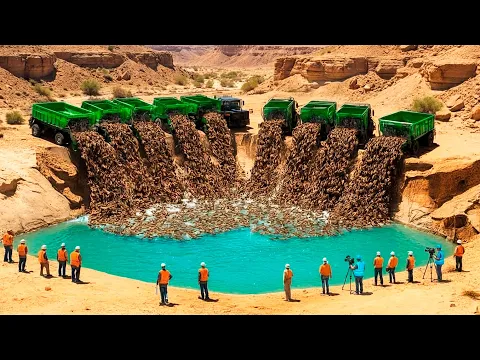

The text describes beavers as ecosystem engineers. The dam may seem like a blockage, but it functions as a hydraulic slowdown system: the water escapes laterally, saturates the surrounding soil, and creates new wetlands.
With the slowed water, sediments are retained, and nutrients accumulate. Reeds, willows, and poplars establish themselves on the newly formed banks.
Insects return, birds and mammals use the ponds as strategic stops, and small fish find refuge among submerged branches.
It’s restoration through basic physics, repeated hundreds of times along a valley.
The Collapse of the Beaver and the Return That Reopens the Path to Recovery
According to the base, tens of millions of North American beavers were hunted nearly to extinction for centuries, driven by the demand for fur and castoreum.
In the early 1900s, some states reportedly had only hundreds of isolated survivors in remote wetlands.
The resurgence gains momentum when ecologists recognize the direct connection between the absence of beavers and the worsening of the water cycle: streams dry up faster, wetlands disappear, and fires spread easily.
The text mentions a project launched in 2008, featuring humane traps, health assessments, and the relocation of beavers from residential areas to degraded basins that “needed them.”
It is at this point that beavers return to the rivers of the United States as a deliberate strategy for environmental recovery.
When Nature Delivers in Weeks What Bureaucracy Holds Up for Years

The base also presents a symbolic contrast: a dam project in the Czech Republic had a defined budget but remained stuck for years due to permits. Meanwhile, a colony of beavers built a structural barrier at the exact site, recreating swamp conditions that the human project sought.
The message of this passage is simple: the beaver does not “replace engineering,” it creates ecological engineering where the system needs still water and infiltration, and it does so quickly.
Natural Dams That Become Reservoirs and Recharge Aquifers
The material describes scale gains that help explain why the strategy is taken seriously. In a decade of reintroduction in a specific basin, the beavers reportedly created hundreds of new lakes and natural reservoirs, which would cost millions to replicate artificially.
There is also an explanation of the mechanism: the dam does not completely block the water; it spreads and encourages infiltration. This allows for the recharge of groundwater and sustains waterways for longer during droughts, slowly releasing water throughout the season.
The difference appears on the ground: where there are beavers, the grass stays green for longer, and the stream does not turn into bare rock at the end of the season.
Wildfires and the “Water Shield” That Reduces the Advancement of Fire
The base text connects warming and increased fire risk: forests become drier, turn into fuel, and a spark can quickly become a catastrophe. In this logic, stored water in the valley becomes protection.
The central idea is that dams and ponds create wet depressions and cold mud, hindering the spread of fire.
The material mentions that in surveys in states like Washington and Idaho, valleys with beavers remain as green oases in landscapes ravaged by drought, and firefighters have even used water from these natural reservoirs to combat flames.
The beaver does not extinguish fires, but it creates a less flammable territory.
Fish, Shade, and Cold Water: Why Dams Help Salmon
The base highlights that salmon populations have faced intense pressure in recent decades, with streams warming and losing quality.
The beaver structures decrease flow velocity, create ponds, provide shade, and stabilize temperature, opening essential refuges.
In described initiatives, beavers have been relocated to streams considered “dead,” with documentation of the return of juveniles in previously degraded locations.
The text reinforces the change in perception: from “pests that fell trees and flooded backyards” to strategic resources for ecosystem reconstruction.
What This Story Proves About Water Crises
The conclusion that the material pushes is clear: beavers are not a magic solution for all pollution or for any river, but they are a tool for ecological restoration that addresses the heart of the problem: retention, infiltration, flow stability, and reconstruction of wetlands.
When beavers return to the rivers of the United States, they do something that isolated projects do not always achieve: create a distributed network of small natural reservoirs, repeated in chain, with an accumulated effect on the basin.
If beavers return to the rivers of the United States and manage to recover water and life with natural dams, do you think other countries should invest more in “nature engineering” than in heavy construction?





-

-

-

8 pessoas reagiram a isso.