





 Portuguese
  English
  Spanish
  5 min of reading
  0 comments


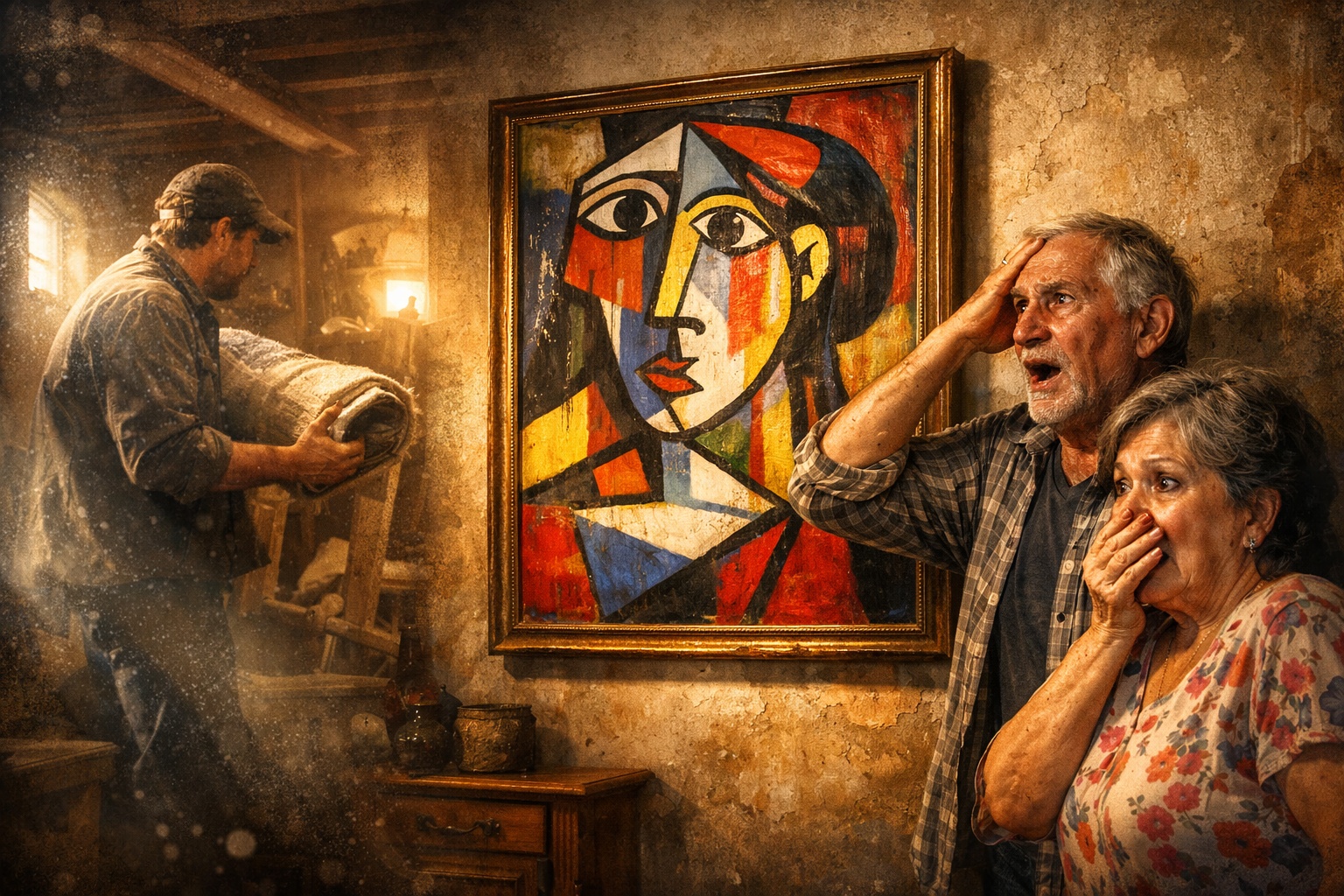
Collector Finds Possible Original Picasso in Capri in 1962; Forensic Report from 2024 Indicates Authenticity and Artwork May Be Worth Up to €12 Million After Official Certification.
In 1962, Luigi Lo Rosso was 24 years old and worked as a scrap collector in the Pompeii region of southern Italy. His job involved entering old houses, abandoned warehouses, and forgotten basements to separate what could still be sold at the family thrift store from what was just trash. It was an invisible, repetitive trade, distant from the world of museums and international galleries. It was during one of these jobs that his life intersected, unbeknownst to him, with one of the most valuable names in the history of Western art: Pablo Picasso.
While emptying the basement of a villa on the island of Capri, Luigi found a rolled canvas covered in dirt, lime, and accumulated debris. The painting was dirty, apparently discarded alongside broken furniture and household waste.
He unrolled the canvas.
-
Hidden beneath the dense forest of the Sierra Nevada, Betoma emerges in a neighbor of Brazil as the greatest archaeological discovery of the century, revealing a colossal ancestral city covering over 18 km², with 8,334 stone structures and the potential to rewrite the history of South American civilizations.

-
Goodbye iron: new technology from Xiaomi promises to revolutionize the way we iron clothes with 500 kPa steam, continuous flow of 120 g/min, heating in 65 seconds, and six smart modes for different fabrics.

-
Rio Pardo, the most mysterious city in Rio Grande do Sul: untouched Pampas castle, the missing treasure of the Devil Boy, bride’s saint, invisible tunnels, and a 200-year curse today.

-
China retires the J-7 fighter after years of military protection and can now transform military items into drones, following more than 60 years of operation of the J-7, derived from the MiG-21, with thousands of units produced and strategic use in the PLAAF and PLANAF.


What he saw was a distorted female face: asymmetrical eyes, fragmented features, intense colors — blue, red, angular lines that seemed to ignore any traditional anatomy. In the upper left corner, a handwritten signature: Picasso. Luigi had no idea who Picasso was.
Not understanding the possible artistic value, he rolled the canvas up again, took it home to Pompeii, cleaned it superficially, and placed it in a simple frame. He gave the painting to his wife, who reacted with a grimace. She called the painting “horrible” and referred to it as il graffio, “the scribble”. The canvas was hung on the wall of the living room. And there it remained for decades.
Picasso in Capri: Historical Records Supporting the Hypothesis of Authenticity
For a long time, the painting was just an eccentric piece in the Lo Rosso family home. The turnaround began in the 1980s when Andrea Lo Rosso, Luigi’s eldest son, opened a school art history book and found an image that left him paralyzed.
It was a portrait of Dora Maar, muse and companion of Picasso in the 1930s and 1940s. The resemblance was disturbing.
Andrea began to research and discovered that Picasso had visited Capri several times between the 1930s and 1950s. There are photographic records of the painter on the island, which was then a cultural hub frequented by European artists, intellectuals, and aristocrats.
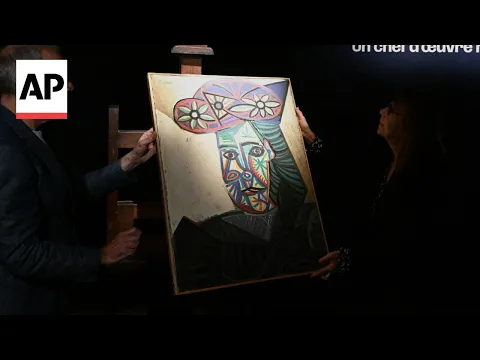

The hypothesis began to gain plausible contours: what if that canvas found in the basement had been painted right there? What if it had been forgotten after the artist’s stay?
The family began a long journey of consultations with art dealers, historians, and experts. Most dismissed the authenticity. Some even suggested buying it for modest sums, raising suspicions about their true perception of the work.
The Picasso Foundation, based in Málaga and the central authority on recognizing works by the artist, was contacted several times over the years. There was no formal response.
The Authentication Process for a Possible Original Picasso
In the international art market, the authentication of a work attributed to Picasso requires extreme rigor. A signature alone is not enough. A similar style alone is not enough.
The process involves:
- Forensic analysis of the signature
- Study of pigments and materials
- Dating of the support
- Technical comparison with cataloged works
- Verification of historical provenance
In September 2024, the Lo Rosso family received the report they had been awaiting for decades. Cinzia Altieri, a graphologist consultant for the Court of Milan and a member of the scientific committee of the Arcadia Foundation, analyzed the signature on the canvas. Conclusion: the handwriting matches that of Pablo Picasso.
The opinion was reinforced by Luca Gentile Canal Marcante, honorary president of the Arcadia Foundation, who compared the work with Tête de Femme (1949), registered in the Picasso Project of Sam Houston State University.
According to the experts, the pictorial characteristics are compatible with the artist’s late period. The preliminary assessment estimated the value of the work at €6 million. If it receives formal certification from the Picasso Foundation in Paris, the value could reach €12 million.
Dora Maar and Picasso’s Most Political Period
Dora Maar was more than a muse. A respected surrealist photographer, she was part of the Parisian artistic circle and documented the creation process of Guernica, a mural that became a symbol of the horrors of the Spanish Civil War.
Picasso painted dozens of portraits of her, often depicting her with fragmented features and intensely emotional expressions.
If the canvas found in Capri is confirmed as authentic, it could be part of this historical set of portraits marking a decisive phase in the artist’s oeuvre.
The Million-Dollar Market for Picasso Works
Picasso is one of the most valuable artists in history. In 2015, the work Les Femmes d’Alger was sold for US$ 179 million at auction. In 2023, new sales surpassed the US$ 100 million mark.
Even smaller-scale works often reach values between €5 million and €20 million, depending on certification and artistic phase. A work valued at €6 million represents a significant entry into the international art market.
The Almost Tragic Detail: Washing with Detergent
For years, Andrea’s mother treated the found canvases as common objects. She spread them on the floor and washed them with detergent, as if they were rugs.
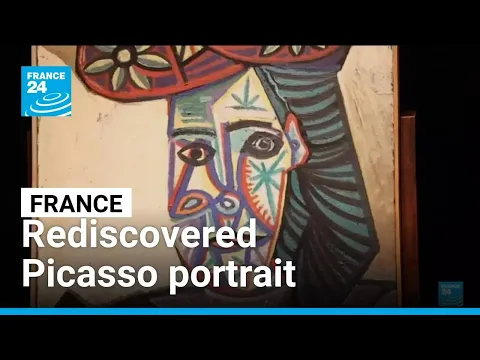
Only one of the two canvases was signed. The fate of the second remains unknown.
The fact that the work survived decades in a common domestic environment, without climate control, and still maintained an intact signature adds an improbable layer to the story.
Luigi Lo Rosso and the Decision Not to Sell
Luigi passed away in 2021 without seeing the conclusion of the story. Before he died, he left a clear request: not to sell the work without official recognition. Andrea keeps that promise.
The canvas remains stored in a safe in Milan, awaiting a definitive position from the Picasso Foundation.
One of the Most Unlikely Stories in the European Art Market
If officially authenticated, the work:
- Will enter the official Picasso catalog
- Could be auctioned for millions of euros
- Will reinforce Capri as an artistic setting of the 20th century
- Will transform the history of the Lo Rosso family into an emblematic case of artistic rediscovery
Luigi Lo Rosso spent decades believing he had only a “horrible scribble” on the wall. Behind that scribble was potentially one of the most valuable signatures of the 20th century.








-

Uma pessoa reagiu a isso.