





 Portuguese
 Spanish


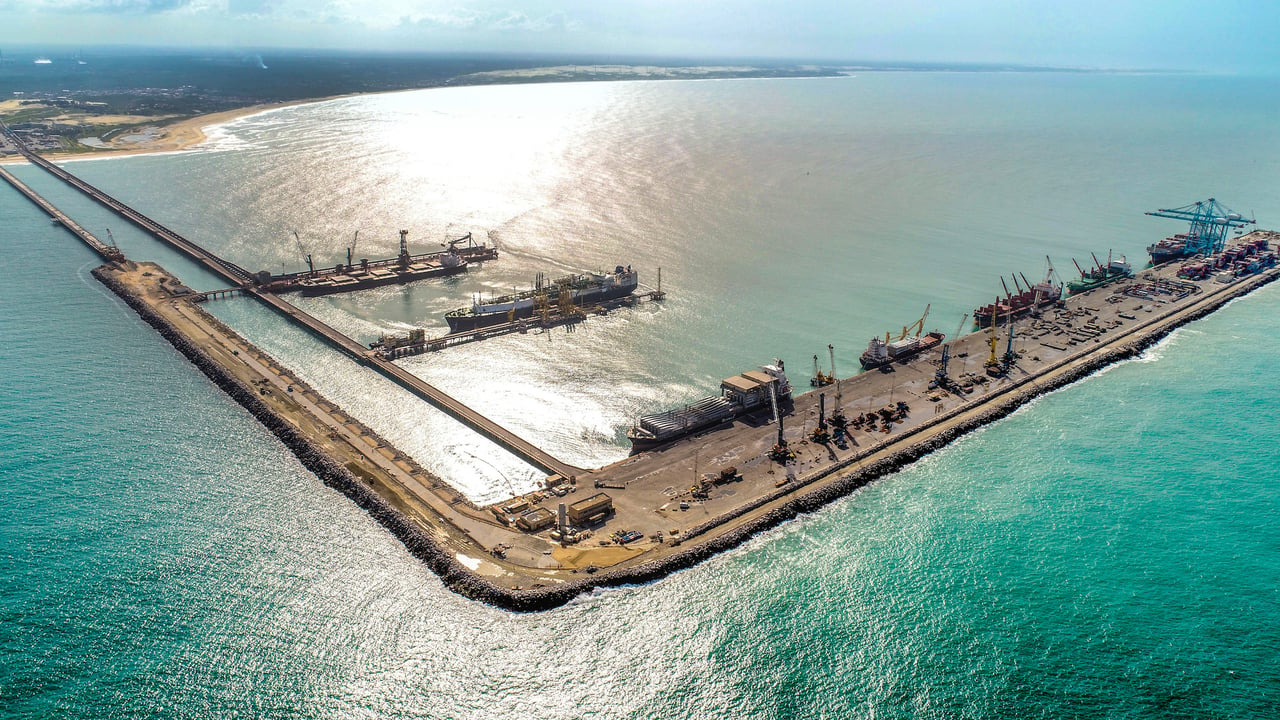

India makes final investment decision on $3.6 billion green ammonia plant, with production slated for 2029. In Ceará, R$71.7 billion in projects remain in development without that formal decision.
Ceará has spent years attracting billion-real projects to turn wind and solar power into green hydrogen and green ammonia, but a crucial step remains before the large-scale plants can be built. While six projects in the state represent R$71.7 billion in planned investment, an Indian company announced on November 18, 2026, its final investment decision on a $3.6 billion green ammonia plant slated to begin production in 2029.
ACME Group’s facility will be developed in Paradip, in India’s Odisha state, and is expected to produce 760,000 metric tons of green ammonia a year. The announcement came days after a survey by Diário do Nordeste found that, as of the report’s publication, none of the six major Ceará projects tracked by the industry association had reached a final investment decision.
Indian plant is expected to produce 760,000 metric tons a year
ACME Group said it had approved the final investment decision, or FID, for its green ammonia plant. The project calls for an industrial system capable of producing about 2,200 metric tons of ammonia a day, using technology designed by Germany’s Thyssenkrupp Uhde.
-
After eight years of growth, global solar installations may fall in 2026 as China reports nearly 55% fewer new installations in the first nine months

-
R$395 million in power from small generators went uncounted in electricity accounts; Aneel changes 2027 rule without affecting Brazilians’ solar energy credits

-
Up to 100% of solar generation could be curtailed at selected plants: Aneel considers 24-month pilot with five utilities and no specific compensation for reduced output
-
Sulgás begins truck deliveries of natural gas and biomethane to JTI factory in Santa Cruz do Sul before building 190-kilometer pipeline in Rio Grande do Sul


The company is targeting commissioning by 2029. The decision commits it to moving into the investment’s execution phase, but the plant must still be built, equipped and tested before it can begin operations and reach its planned commercial output.
The project is expected to use renewable electricity to produce hydrogen through water electrolysis, then combine it with nitrogen in an industrial process that produces ammonia. The product can be used to make fertilizer and serve markets seeking lower-carbon alternatives.
Companies in India and Japan are already among the expected buyers
Long-term purchase commitments help explain the project’s progress in India. ACME said it had secured agreements to supply 370,000 metric tons of green ammonia to Indian fertilizer companies through the Solar Energy Corporation of India (SECI), which is linked to federal hydrogen incentive programs.
Another 83,000 metric tons are expected to go to Japan’s IHI under agreements disclosed by the company. The group also cited European buyers, though its announcement did not detail the volumes allocated to each market.
Supply contracts help investors estimate a plant’s future revenue, an important consideration for facilities that require substantial upfront investment. In September, Brookfield announced a commitment of up to US$600 million to support ACME’s green molecules platform, which brings together several projects. The amount is for the project platform and should not be confused with the total financing for the new Odisha facility.
Six Ceará projects total R$71.7 billion in investment, with thousands of jobs projected
In Brazil, the Brazilian Green Hydrogen Industry Association (ABIHV) identified six projects in Ceará with estimated investments of R$71.7 billion and the potential to create 25,520 construction jobs. The figures were presented in a survey published by Diário do Nordeste on November 10 and updated on November 12.
The initiatives are linked to the Pecém Industrial and Port Complex in São Gonçalo do Amarante. Four were projected to begin operations between 2028 and 2033; the other two had no set schedule. Combined, the projects were expected to produce 4.8 million metric tons of hydrogen and ammonia annually, two separate products.
The jobs are projected for the construction phase and are not positions that have already been opened. Likewise, the multibillion-real investment figure reflects plans under development that still depend on contracts, financing, energy supply conditions and company decisions.
Pecém Port Complex cites R$63 billion, but its project list is different
Pecém Complex President Max Quintino told Diário do Nordeste that six preliminary agreements to reserve sites in the Export Processing Zone (ZPE) totaled R$63 billion. The list includes Fortescue, Casa dos Ventos, Auren, FRV, EDF Renewables and Fuella.
That total is not equivalent to ABIHV’s R$71.7 billion figure. The surveys cover different groups of companies: Qair’s project, for example, is outside the area reserved in the ZPE, while Auren and Fuella are not on the association’s published list. Comparing the two figures as if they simply showed a reduction in investment would lead to an incorrect conclusion.
The port complex said its most significant projects remain in preparation, including engineering studies, permitting, institutional planning and infrastructure negotiations. The port has not set a single timeline for the start of operations at the future facilities.
Producing green hydrogen requires energy, water, buyers and port access
Green hydrogen is produced when electricity from renewable sources powers equipment called electrolyzers, which split water into hydrogen and oxygen. Green ammonia is made by combining that hydrogen with nitrogen at industrial facilities.

A factory operating at scale requires a continuous electricity supply, water suitable for the process, industrial equipment, safety measures and logistics. A region may have abundant sun and wind yet still face challenges in delivering that energy to the site where the hydrogen will be produced.
Ceará has abundant renewable resources, industrial land and an important maritime connection for exports. The partnership between the Port of Pecém and the Port of Rotterdam in Europe is also part of a plan to develop trade corridors for lower-emission fuels and raw materials.
In 2023, EDP brought a green hydrogen pilot facility online in Pecém. The equipment demonstrated the technology at an experimental scale, but its existence does not mean the large commercial complexes announced for the region have already been built.
Why India reached a final investment decision while Ceará projects are still negotiating
The difference lies in the documented stage of development. ACME announced a final investment decision tied to contracted technology and supply commitments for identified buyers. The Ceará projects, according to the November survey, were still negotiating essential elements of their business models.
Experts interviewed by Diário do Nordeste cited the high cost of renewable hydrogen, the need to expand power grids, financing conditions and the difficulty of securing long-term offtake contracts. Some of the projected demand from European industry also took time to turn into firm commitments.
The Pecém Complex said it is working to develop logistics infrastructure and the so-called utilities corridor, designed to serve future industrial plants. Financing discussions and international partnerships are underway, but their impact on construction of the projects will depend on subsequent steps.
Global market cut forecasts and began demanding firmer contracts
The challenge is not limited to Brazil’s Northeast. In its Global Hydrogen Review 2026, the International Energy Agency said global production estimates for low-emissions hydrogen by 2030 had fallen from 49 million to 37 million metric tons per year, compared with earlier projections.
The volume already in operation or backed by a final investment decision would reach only 4.2 million metric tons per year in 2030, far below the ambitions announced at the start of the decade. The agency linked the revision to high costs, demand uncertainty, slow infrastructure development and regulatory changes.
Recent investment decisions show that some projects continue to move forward, especially as buyers, technology and financing become more clearly defined. Industrial execution, however, remains a multiyear process.
What the new Indian plant’s progress could mean for Ceará
ACME’s announced decision in Odisha, India, sets a commercial benchmark for green ammonia projects competing for international buyers. Its capacity of 760,000 metric tons per year cannot be directly compared with the 4.8 million metric tons estimated for Ceará, a figure that combines projected hydrogen and ammonia output from different ventures.
The next milestone for Ceará’s hub will be confirmation of final investment decisions, accompanied by contracts and construction schedules. The Pecém Complex said it expects developments by the first half of 2027, without identifying which project could move forward first.
Brazil continues to have natural advantages for producing renewable energy at scale, but developing an export industry will depend on willing buyers, viable financing and delivered infrastructure. Those are the steps that will separate memorandums and preliminary contracts from future plants.
Can Ceará turn its green hydrogen projects into plants and jobs before the end of this decade? Comments are open, and the report can be shared with those following renewable energy investments in the Northeast.


