





 Portuguese
  English
  Spanish
  3 min of reading
  0 comments


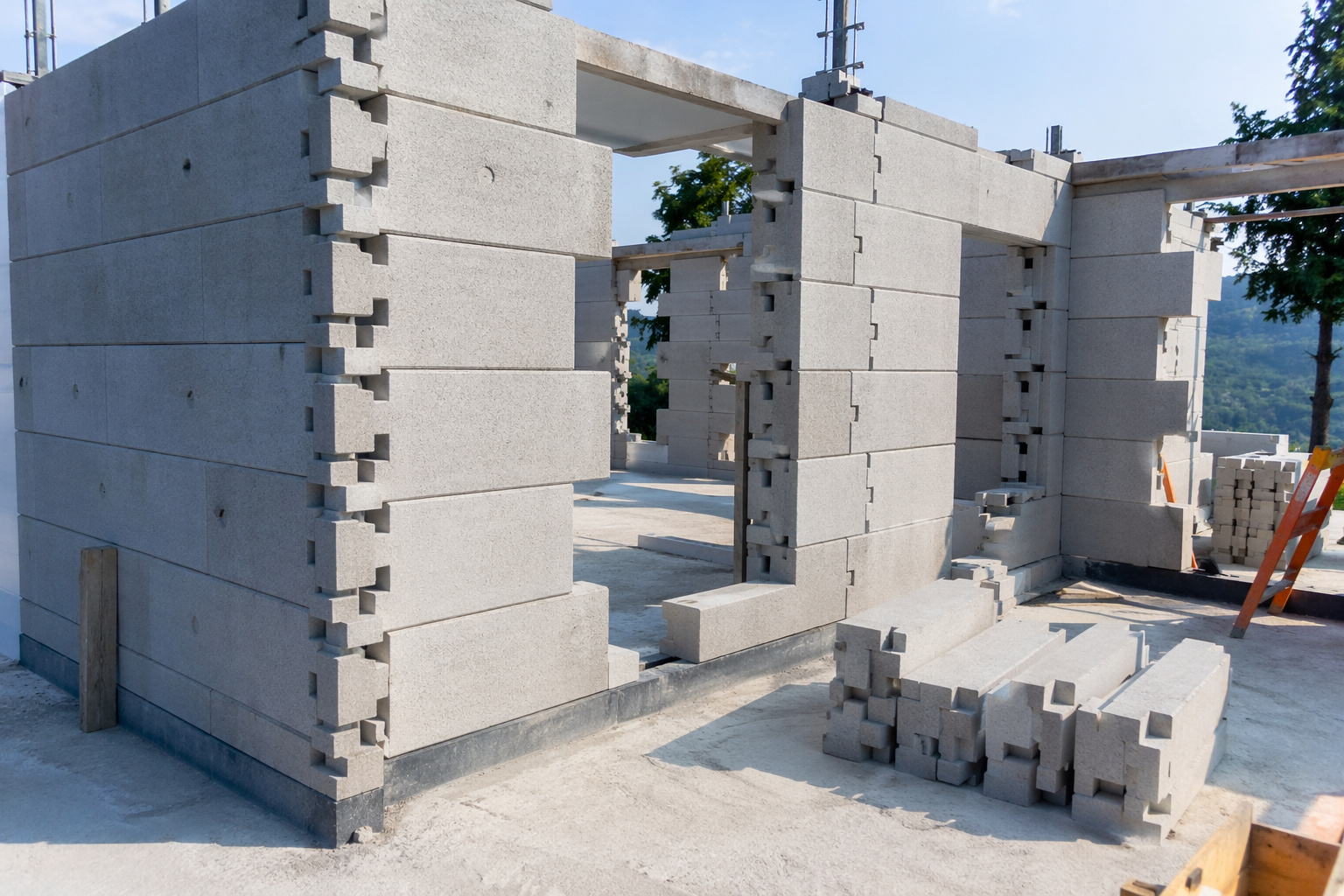
The smart interlocking system eliminates mortar, reduces waste, and transforms the time, cost, and execution of modern works
A relevant innovation in civil construction has started to gain prominence as technical studies began to highlight its practical results.
The mortar-free interlocking system allows for the assembly of walls with interlocking blocks, eliminating the use of mortar and simplifying traditional construction stages, which reduces execution time.
According to an analysis published by Springer Nature, this technique shows structural efficiency and economic viability.
As a result, a series of advantages has begun to directly impact residential and commercial projects by reducing waste and optimizing resources.
This advancement demonstrates a reorganization in the construction model, focusing on precision, speed, and sustainability.
Technical functioning of the mortar-free interlocking system
The functioning of the system is based on blocks designed with interlocking mechanisms that ensure structural stability without the use of cement.
These pieces have notches, protrusions, and compatible surfaces, allowing for a firm and aligned fit during assembly.
According to a scientific review, performance depends on geometric precision and material quality.
Additionally, materials such as concrete, composites, and lightweight elements are used to ensure strength and durability.
This process requires careful manufacturing, as millimetric alignment guarantees stability and load-bearing capacity.
Technical features that ensure the system’s performance
The system presents fundamental elements that ensure its efficiency and safe operation.
Among them, the proto interlock stands out, with grooves that allow for a perfect adjustment between the pieces.
Moreover, the mechanical interlocking replaces mortar and guarantees structural firmness.
Another important factor is the millimetric fitting precision, which maintains the correct alignment of the walls.
These characteristics make the system consistent, stable, and suitable for different applications in construction.
-
At 359 m above the river and with a span of 467 m, the highest railway bridge in the world has withstood winds of 266 km/h, featuring modular steel, a filled arch, and sliding tracks in historic Indian Kashmir.

-
With over 3 km in total length, the mega bridge costing R$ 400 million will be delivered this month after years of waiting, featuring 4 lanes, 211 lighting poles, and ending 50 years of ferryboat crossings on the coast of PR.

-
Paper houses that withstand earthquakes, last more than a decade, and cost less than a high-end smartphone: the brilliant invention of a Japanese architect that is changing post-disaster reconstruction around the world.

-
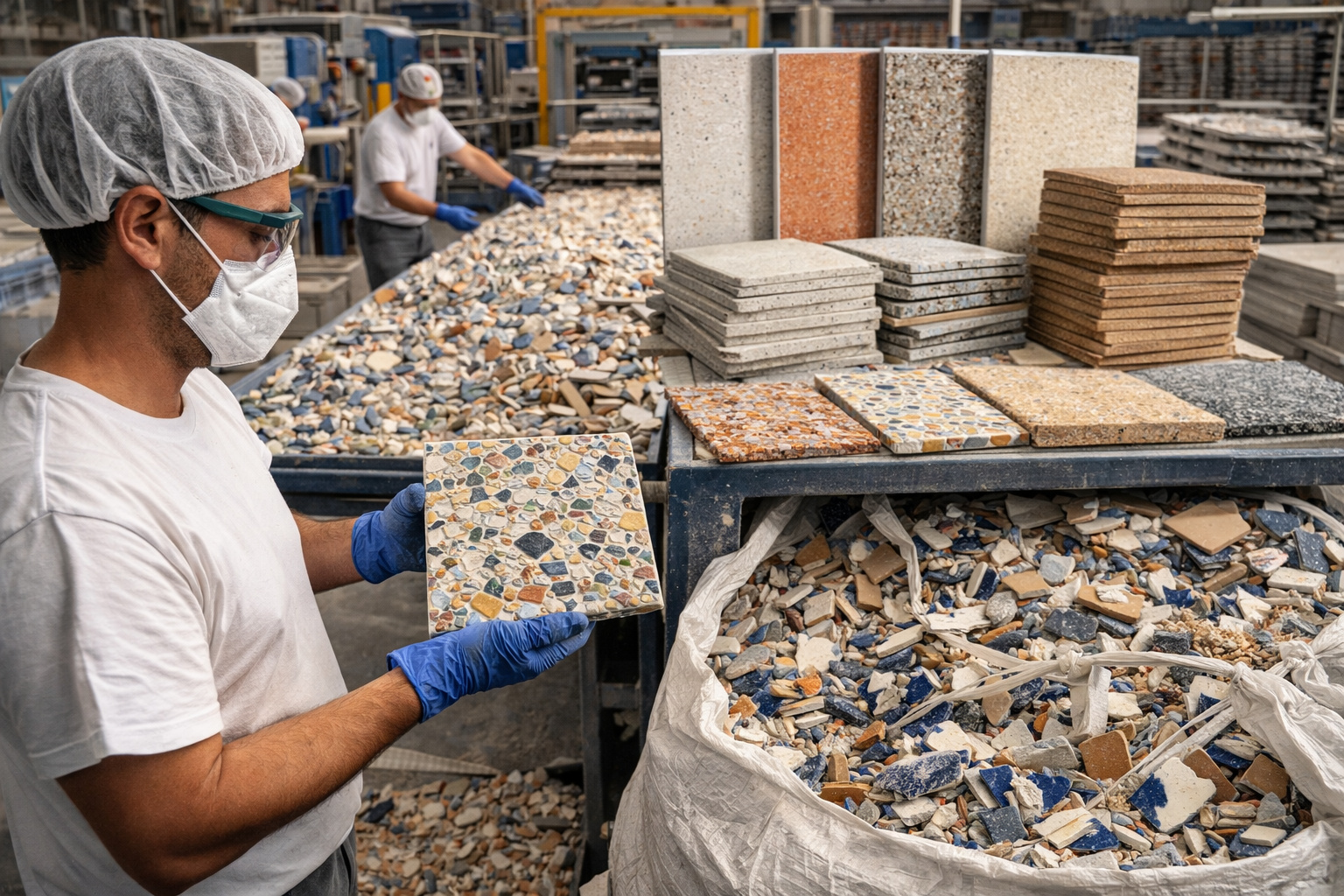
The Portuguese industry reuses broken tiles and waste from its own factory to create new coatings with up to 94% recycled material, produces more than 1,400 tons, and uses only 6% new raw material.
Operational advantages and impact on the execution of works
One of the main advantages is the significant reduction in construction time, as there is no need for mortar curing.
This makes the stages of the work faster, more organized, and predictable, improving the overall schedule.
The elimination of wet materials reduces environmental impacts and facilitates transportation and storage.
Another relevant point is the lesser need for specialized labor, which simplifies project execution.
This set of factors contributes to more efficient, sustainable, and economically viable works.
Cost reduction and financial gains in construction
Although the system requires an initial investment in pieces produced with high precision, the gains offset this cost over time.
The elimination of mortar reduces expenses with cement and the labor needed for its application.
Additionally, the shorter construction time decreases operational costs with teams and equipment.
In comparison to the traditional method, the system presents a lower total cost and greater productive efficiency.
This scenario highlights a change in the relationship between initial investment and financial return.
Current applications and expansion of the interlocking system
Currently, since 2022, the mortar-free interlocking system has been applied in social housing projects and modular constructions.
Moreover, its use extends to internal walls of commercial buildings and fast-execution works.
In developing countries, this technology has been adopted to accelerate emergency constructions.
As a result, architects, engineers, and builders are expanding its adoption in different contexts.
This expansion indicates that the system is consolidating as an efficient and sustainable alternative in civil construction.
The advancement of cement-free construction in the current scenario
The growth of this technology accompanies the search for more efficient and sustainable solutions in the construction sector.
By reducing waste and optimizing processes, the system responds to demands for greater productivity and economy.
Additionally, its application reinforces the importance of innovation in a traditionally conservative sector.
This movement demonstrates that new techniques can redefine construction standards and expand possibilities.









Seja o primeiro a reagir!