





 Portuguese
  English
  Spanish
  5 min of reading
  6 comments


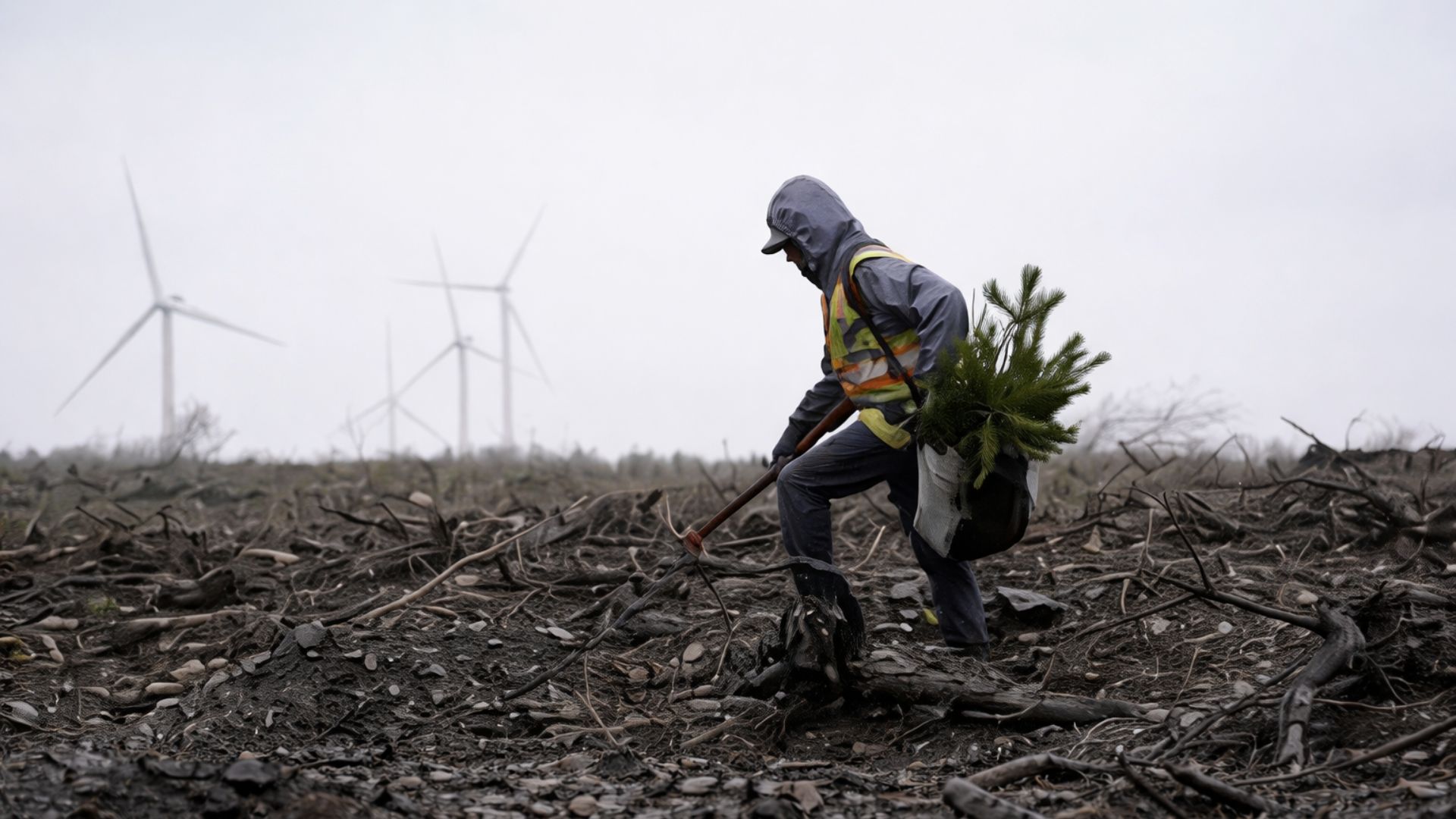


Coal Mine Reclamation in the Appalachians Progresses with Deep Soil Decompaction Technique and Large-Scale Planting, Allowing Millions of Native Trees to Return to Previously Considered Unrecoverable Areas from a Forestry Point of View.
The reclamation of abandoned open-pit coal mines in the Appalachians has gained scale with a simple and labor-intensive strategy: undoing the compaction left by machines, opening the soil to depth, and only then planting native trees in large degraded areas.
This type of mine, common in parts of the eastern United States, often becomes an ecological “dead end” after the closure of activities because the terrain is leveled and the soil becomes hard, poorly porous, and unable to sustain the rooting of seedlings.
In restoration projects associated with this approach, one of the key contributors was described as “stubborn” for insisting on “bringing the forest back,” even when local consensus viewed the return of trees as unlikely under the conditions left by mining.
-
The Brazilian colonial city that stopped in time and shares territory with a rocket launch base.
-
79-year-old woman challenges limits, visits 193 countries in the world after 56 years of planning and reveals the behind-the-scenes of a global journey that few have managed to accomplish.

-
These are the drivers who may stop paying tolls on highways in a project that promises to reduce costs for those who live from transportation in Brazil.

-
(Video): Italian pilot lands plane on moving train at 120 km/h and achieves unprecedented feat in aviation, even with a narrow runway and without direct visual contact.

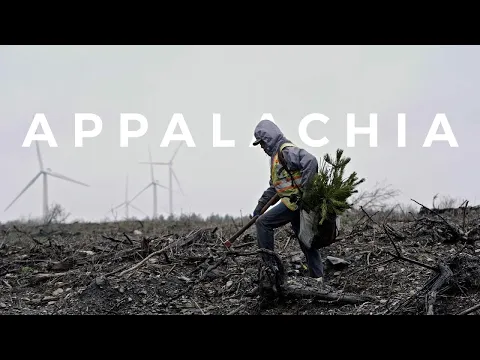
Abandoned Coal Mines and Compacted Soil in the Appalachians
In many mined areas, traditional reclamation prioritized stabilizing the landscape and reducing erosion, which led to intense substrate compaction and the establishment of grasses that tolerate shallow roots and do not require a deep soil profile.

When the surface becomes “sealed,” water tends to run off more easily, infiltration decreases, and nutrients circulate less, stalling ecological succession in a landscape dominated by low vegetation and invasive species.
Furthermore, the material returned after mining usually has low organic matter and poorly structured layers, limiting aeration and hindering microbial life, factors that together slow the path to a forest ecosystem.
Even where there is sufficient rainfall, the combination of compaction and competitive ground cover prevents young roots from penetrating the hardened layers, creating a cycle where the trees do not establish, and the soil remains unimproved.
Forestry Reclamation Approach and Soil Recovery
To confront this physical blockage, the Forestry Reclamation Approach (FRA) has gained traction, advocated by the Appalachian Regional Reforestation Initiative, a cooperation that brings together public agencies, universities, companies, and civil entities linked to the reclamation of mined areas.
The central principle of the FRA is to rebuild a suitable rooting medium, avoiding compaction, ensuring material favorable to growth, and controlling cover that can suffocate seedlings, with the aim of forming a productive forest within the existing regulations.
In practice, the technique may require reversing the old pattern of “tightening” the terrain because the stability gained through compaction came with an ecological cost: the area may “green up” with grass but does not support trees.
Decompaction at Three Feet and Planting Millions of Trees

One of the organizations most associated with this work is Green Forests Work, which claims to apply a modified version of the FRA in sites rehabilitated before the approach was disseminated, precisely where historical compaction is deepest.
According to the public description of the method, the process includes controlling invasive vegetation and creating furrows with “cross-ripping” to at least three feet deep, creating channels for water and roots to advance in a previously impermeable profile.
Only after this step does planting begin with a mix of native trees and shrubs, done by trained teams and also by volunteers mobilized to participate in the efforts, in logistics that depend on nurseries and field planning.
The U.S. Department of Agriculture reported that, with regional funding, over 9,000 volunteers linked to the project have planted more than one million trees across nearly 2,000 acres since 2009 on lands previously mined.
Scale of Reforestation and Ecosystem Services
In international promotional materials, the initiative has already been presented as responsible for planting over 3 million trees across nearly 5,000 acres since 2009, a snapshot that helped popularize the “before and after” of mining areas.
On the other hand, the organization itself has started to disclose higher numbers over time, claiming it has surpassed 7.5 million trees and reached nearly 15,000 acres accumulated since 2009, expanding the reach beyond the initial projects.
The difference between counts may reflect the periods considered, the areas included, and the partnerships accounted for, but the logic remains: without correcting the soil, planting becomes a gamble with low survival rates because the seedling encounters a physical barrier just below.

Proponents of the FRA relate reforestation to the recovery of ecosystem services linked to water, soil, and habitat in a region that historically relies on slopes and valleys with tree cover to regulate infiltration and reduce runoff.
As young trees form a canopy, they alter the microclimate, increase shade and humidity, and begin to produce litter, which, over time, helps to rebuild organic matter and improve soil structure.
Meanwhile, the heterogeneity of species and heights creates conditions for the return of fauna associated with wooded areas, replacing the homogeneity typical of grasses and invasives that dominate many mined plateaus.
There are also operational impacts cited by institutional and promotional materials, such as the demand for nurseries, equipment operators, and planting labor, along with volunteer work that transforms reforestation into a recurring community action.
Still, the results depend on consistent execution because species selection, land preparation, and management of ground cover directly influence survival, especially in areas where compaction is deep and water does not find natural pathways.
If an abandoned mine seemed a “dead end” for the forest, which other degraded territories could still change their fate when recovery begins with soil structure, and not just the seedling?






Excelente matéria, parabéns ao autor 👏👏👏
Maravilha. Bravo
Excelente matéria. O homem tem capacidade de recuperar o que destruiu em épocas anteriores