






 Portuguese


Chevron Joins Foz do Amazonas Race with 9 Blocks, Begins Search for Oil About 130 km from Morpho Discovery
According to Folha de S.Paulo, in a report published on September 21, 2026, Chevron has begun its exploratory campaign in the Foz do Amazonas Basin, where it controls nine blocks in partnership with China’s CNPC. The initial step does not involve a drilling platform piercing the Atlantic seabed. Prior to that, specialized ships need to emit sound waves and record the echoes returning from the rock layers hidden beneath the sea.
The seismic survey is scheduled for an area approximately 130 kilometers from the Morpho well, where Petrobras discovered hydrocarbons and initiated a new phase in the race for oil potential off the coast of Amapá.
Chevron Begins with Nine Blocks Acquired in 2025
The American company acquired this set of areas during the auction held by the National Agency of Petroleum, Natural Gas and Biofuels in June 2025. A consortium led by Chevron and including the Chinese state-owned CNPC secured nine blocks in the Foz do Amazonas Basin.
-
Bank of America Raises Oil Price Forecast to $95, Sees Risk of Brent Surpassing $150 If Supply Worsens

-
Global Diesel Crisis May Extend Into 2027 as U.S. Stocks Hit Lowest September Levels Since 1982 and Wars Pressure Refineries and Transportation
-
Halliburton Enters Agreement with Brazilian Eneva, Owner of 9 Million m³ Daily Gas Production Capacity, to Pursue New Oil and Gas Projects in Venezuela

-
How Long Will Current Oil Supplies Last? Petrobras and Other Giants Prepare for the Next Big Challenge


In the same round, Petrobras and ExxonMobil also expanded their positions. A consortium led by Petrobras acquired five blocks, while another, commanded by ExxonMobil and also involving the Brazilian state-owned company, took home five more.
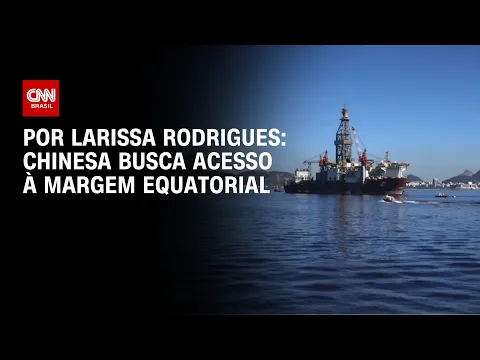

Chevron, therefore, did not enter an empty area alone. It began sharing one of the most watched exploratory frontiers in the country with some of the world’s largest oil companies.
The First Seismic Blast Marks the Beginning of the Search
Kevin McLachlan, Chevron’s global exploration vice president, discussed the operation during ROG.e in Rio de Janeiro. On Monday, September 21, he stated that suppliers were about to begin the seismic survey in Amapá.
McLachlan noted that he hoped to announce that the first blast had already taken place. There was no confirmation at that time, but the executive stated that the activity would begin that afternoon or in the following days.
This blast is not an explosion aimed at opening a well. It is part of the process used to examine geological structures without first drilling.
Seismic Imaging Shows What Exists Beneath the Sea
Research vessels navigate predefined paths while equipment sends acoustic waves towards the ocean floor. These waves pass through different rock layers and return with varying responses.
Sensors capture the signals. Then, computers convert a massive amount of data into three-dimensional images of the subsurface.

Geologists search for folds, faults, sealing layers, and other structures capable of trapping oil or natural gas. It’s a way to reduce risk before spending hundreds of millions of dollars on a drilling campaign.
Shearwater had previously reported that it worked on reprocessing over 7,000 km² of seismic data from the Foz do Amazonas Basin, utilizing models to enhance the interpretation of structures beneath the seabed.
The vessels will operate about 130 km from Morpho
The proximity to Morpho transforms a technical stage for Chevron into a bigger story.
According to SLB, as cited by Folha, the survey will take place approximately 130 kilometers from the well drilled by Petrobras.
In offshore exploration, 130 kilometers does not imply that the two areas belong to the same reservoir. Much less does Petrobras’ results guarantee oil in the neighboring blocks.
What changes is the level of geological interest. A real discovery provides new data about rocks, petroleum systems, and the characteristics of that portion of the basin.
Chevron will have its own data to determine if any of these conditions exist within the nine concessions it controls.
Morpho changed the climate around the Foz do Amazonas
In August 2026, Petrobras announced the presence of hydrocarbons in the Morpho well, drilled in block FZA-M-59. The site is located about 175 kilometers off the coast of Amapá, in water depths of 2,886 meters.
The discovery still needs to be delineated. Finding oil in a well does not mean a commercial field is ready for production.
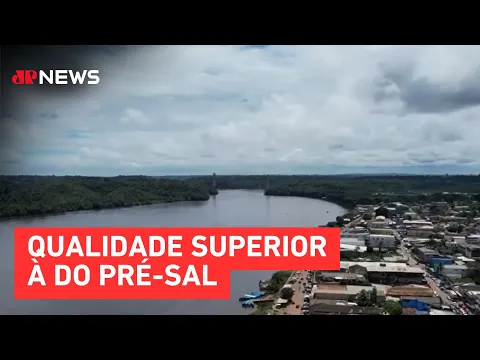
However, Morpho delivered something that did not previously exist in that campaign: direct evidence of an operational petroleum system in that area of the basin.
Later, Petrobras executives stated that samples revealed light, high-quality oil. The state-owned company intends to use new wells to understand the extent, volume, and economic viability of the accumulation.
Chevron claims it was already on its way before the discovery
The American company did not decide to enter the region because Petrobras found oil. Its nine blocks were acquired in the auction in June 2025, and Chevron itself states that the seismic survey was already part of the minimum exploratory program anticipated in the contracts.
Morpho appeared later.
The difference is that a planned campaign in a little-known geological frontier is now taking place alongside a discovery that delivered new information about the same basin.
The risk does not disappear. Expectations change.
SLB and Shearwater join the operation before drilling
The survey was commissioned with SLB and Shearwater, two companies specializing in technology and services for oil and gas exploration. The operation also serves ExxonMobil, which has interests in the region.
This phase may take months for acquisition and processing.
Once the data is received, geophysical teams analyze thousands of kilometers of seismic lines until they find targets with sufficient size, geometry, and characteristics to justify a well.
This is where the decision becomes expensive.
A seismic vessel can study a large area without touching the rocks. A drilling rig needs to reach a specific point and traverse kilometers of water and subsoil without any guarantee of finding a commercially viable reservoir.
The Foz do Amazonas Basin has 28 active blocks
The competition for the basin is not limited to Petrobras and Chevron. According to data cited by Folha, there are currently 28 blocks with active concession contracts in the Foz do Amazonas. Petrobras operates 11 of them, while Chevron holds nine in partnership with CNPC.

ExxonMobil appears in another five alongside Petrobras. Brava Energia and PRIO also hold concessions in the region.
In practice, companies competing in some areas might share risks in others. This approach is common in the offshore industry because a single campaign can consume billions of dollars before producing a barrel of oil.
The next step will be to choose where it’s worth drilling
The work that starts now serves precisely to avoid drilling in the wrong place.
When the seismic images are processed, Chevron will be able to compare different structures within its nine blocks. Some may be discarded. Others may rise on the list.
If a target meets technical and economic criteria, another phase begins: well design, rig contracting, offshore logistics, and environmental licensing.
Only then does the drill come in.
Even so, drilling will remain exploratory. The first objective will be to discover whether hydrocarbons exist, what the thickness of the reservoir is, and what type of fluid is stored there.
Amapá starts feeling the industry’s arrival before the first barrel
There is still no commercial oil production in the Foz do Amazonas. Nevertheless, preparations for campaigns are already moving services on land.
Wandenberg Pitaluga, the Secretary of Economic Development of Amapá, told Folha that the state is starting to see new investments and increased attention to infrastructure in cities like Macapá and Oiapoque.
Oiapoque serves as a support base for Petrobras’s activities in block 59.
If other companies move forward with drilling, the supply chain will likely need support vessels, air transport, accommodation, fuel, storage, maintenance, and specialized labor.
It still depends on commercial discoveries. For now, the momentum is at the research phase.
Nine blocks are now waiting to see what the seismic data will reveal
Chevron entered the Foz do Amazonas Basin with nine concessions and a Chinese partner. One year later, it begins to turn contracts and maps into real data from the seabed.
About 130 kilometers away, Morpho has already demonstrated that oil exists.
However, Chevron’s seismic surveys need to tell the story of the company’s own blocks. They will indicate where the rocks fold, where there are potential traps, and which locations may justify the cost and risk of sending a drill into deep waters.
The map is already divided among giants. Now begins the phase where each company must prove what lies beneath its squares.


