





 Portuguese
  English
  Spanish
  5 min of reading
  0 comments


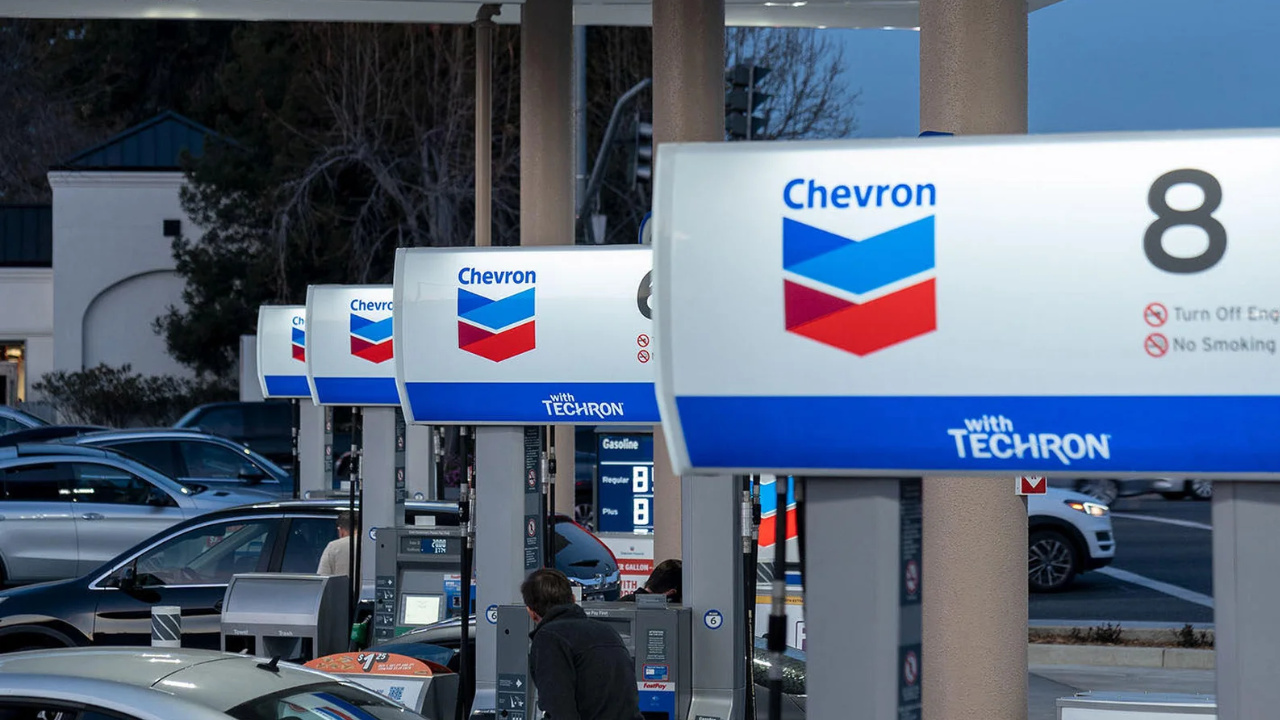
With A Century-Long History, Continuous Presence, and Logistics Integration with The USA, Chevron Emerges As A Protagonist In The Possible Reopening Of The Oil Sector In Venezuela Amid Sanctions, Geopolitical Disputes, and Billions In Investments.
The possible reopening of the oil sector in Venezuela to private capital encounters an unequal scenario among large international oil companies. In this context, Chevron stands out as the best-positioned company to quickly expand its operations in the country. The differential lies in its continuous presence, even in the face of sanctions, regulatory changes, and deep political crises.
While direct competitors left Venezuelan territory in 2007, Chevron chose to stay. The decision came when Hugo Chávez’s government imposed new rules on contracts, stipulating that the state-owned PDVSA would have to hold at least 60% participation in projects. ExxonMobil and ConocoPhillips opted to exit. Chevron, on the other hand, continued to operate.
This choice, according to the company’s CEO, Mike Wirth, in an interview with the Wall Street Journal in December, was strategic. The goal was to create a long-term competitive advantage. This bet is now beginning to show relevance in the ongoing discussions about the resumption of oil production in Venezuela.
-
A study confirms that the natural gas sector will reduce greenhouse gas emissions in Brazil by 0.5% and accelerate the energy transition by 2026.

-
Petrobras implements a severe adjustment and confirms a 55% increase in the price of aviation kerosene with a proposal for installment payments for the companies.

-
The rise in oil prices could ensure an extra revenue of R$ 100 billion for the Federal Government, indicates a recent economic study.

-
Naturgy begins an investment of R$ 1.6 million to expand the gas network in Niterói and benefit thousands of new residences and businesses.

Active Production Keeps Chevron Ahead Of Competitors
Currently, Chevron is the only American company present in Venezuela. The company produces about 300,000 barrels of oil per day in the country, a significant volume in a market marked by a sharp decline in production over the last decade.
Operations are carried out through partnerships with PDVSA in five main areas: Petroboscan, Petroindependiente, Petropiar, Petroindependencia, and Ioram. Despite this, Venezuelan production accounts for about 3% of the company’s global output.
In the third quarter of 2025, Chevron processed an average of 4.3 million barrels of oil equivalent per day worldwide. Even though this is a relatively small share of the total, Venezuela maintains strategic relevance within the company’s portfolio.
Additionally, the company employs approximately 3,000 people in the country, equivalent to 6.5% of its global workforce, estimated at 45,000 employees.
Sanctions and Licenses Shaped The Business Model In The Country
The continuity of Chevron’s operations in Venezuela was only possible due to special licenses granted by the U.S. government. The authorizations allowed the company to operate without violating the financial sanctions imposed on the Venezuelan regime.
To circumvent the restrictions, the oil company adopted alternative mechanisms. One of them was using its own oil as a bargaining chip to facilitate payments and receipts. This operational model, although complex, kept assets, teams, and infrastructure functioning.
This continuous operational history reduces risks in the event of an opening scenario. While other companies would need to start from scratch, Chevron already knows the fields, partners, and local regulatory limitations.
Venezuelan Oil Fits Into The U.S. Refining Capacity
Another central factor for Chevron’s privileged position is the type of oil produced in Venezuela. Venezuelan oil is heavier, a characteristic that fits perfectly with the configuration of various U.S. refineries, especially in the Gulf of Mexico.
A significant part of the U.S. refining capacity was designed specifically to process this type of oil, primarily used in diesel production. This compatibility creates relevant logistical synergies.
Chemron’s strategy connects exploration in the Caribbean with refining operations in the Gulf of Mexico. This integration is already applied in projects in the region and could be quickly expanded if Venezuelan production begins to grow again.
Resumption Of Production Requires Billions In Investments
Despite the operational advantage, increasing oil production in Venezuela will not be simple. Experts point out that the country’s assets have suffered significant wear due to a lack of investments over recent years.
Ali Moshiri, who led Chevron’s operations in Latin America until 2017, estimates that around US$ 7 billion would be needed to raise national oil production from 1 million to 1.5 million barrels per day within 18 months.
Maintaining this proportion, Chevron could increase its production in the country from 300,000 to 400,000 barrels daily with investments of around US$ 1.4 billion in the same period. Nevertheless, the historical potential is much greater. Venezuelan wells have previously produced more than 3.5 million barrels per day.
Potential Revenues Reinforce Economic Appeal
Although Chevron does not disclose detailed financial numbers for its Venezuelan operations due to accounting peculiarities, estimates help gauge the impact.
Considering an average barrel price of around US$ 60, the current production of 300,000 barrels per day would represent annualized revenues close to US$ 6.5 billion. For comparison, this amount would correspond to about 3.4% of the company’s global revenue, which totaled US$ 192 billion in 2024.
Even though it is not decisive for the consolidated balance sheet, Venezuelan oil gains strategic significance when combined with logistics and regional integration.
Global Investment Plan May Accommodate Venezuela
Before any formal change in the Venezuelan political scenario, Chevron had already announced a robust investment plan for 2026. The program foresees investments of up to US$ 19 billion, with US$ 17.3 billion allocated to oil exploration and production.
Of this total, US$ 9.2 billion is planned for the United States, while US$ 8.1 billion will be directed towards international operations. Projects in Guyana, the Eastern Mediterranean, and the Gulf of Mexico appear as priorities.
Analysts believe that if the opening of the Venezuelan oil sector to external capital is confirmed, Chevron will need to revise this planning. Resources could be increased or redirected, including from projects in Guyana.
The company’s long-term plan, according to corporate documents, allows for an annual investment ceiling of up to US$ 21 billion. This flexibility creates room to absorb new investments without compromising the global strategy.
Chevron’s Historical Relationship With Brazil
Chevron’s international operations also extend to Brazil. The current company is the result of the merger between Chevron and Texaco, completed in 2005. This history explains the company’s relationship with the former Texaco fuel network, which was sold to the Ultra group in 2008 and gave rise to the current Ipiranga brand.
Today, Chevron holds stakes in 17 exploratory oil and gas blocks in deep waters off the coasts of Rio de Janeiro and Rio Grande do Sul. Furthermore, it operates an additive manufacturing plant for lubricants in Mauá, São Paulo.
The company also participates in the joint venture Iconic Lubrificantes, focused on the production of lubricants and industrial greases. This presence reinforces the company’s regional strategy and its integration with Latin American markets.
Oil, Venezuela, and Geopolitics At The Center Of Decisions
The possible reopening of the Venezuelan oil sector occurs amid geopolitical disputes, energy interests, and the reconfiguration of global supply chains. In this scenario, Chevron emerges not only as a company ready to invest but as a player already embedded in the system.
The combination of historical persistence, operational assets, active licenses, logistical integration, and industrial compatibility places the company in a unique position. While other oil companies observe from a distance, Chevron already operates, produces, and understands the challenges of the Venezuelan environment.
Therefore, should Venezuelan oil attract large-scale international capital again, the starting line tends to be unequal. And, based on recent history, Chevron is already several steps ahead.







-

3 pessoas reagiram a isso.