





 Portuguese
  English
  Spanish
  7 min of reading
  0 comments


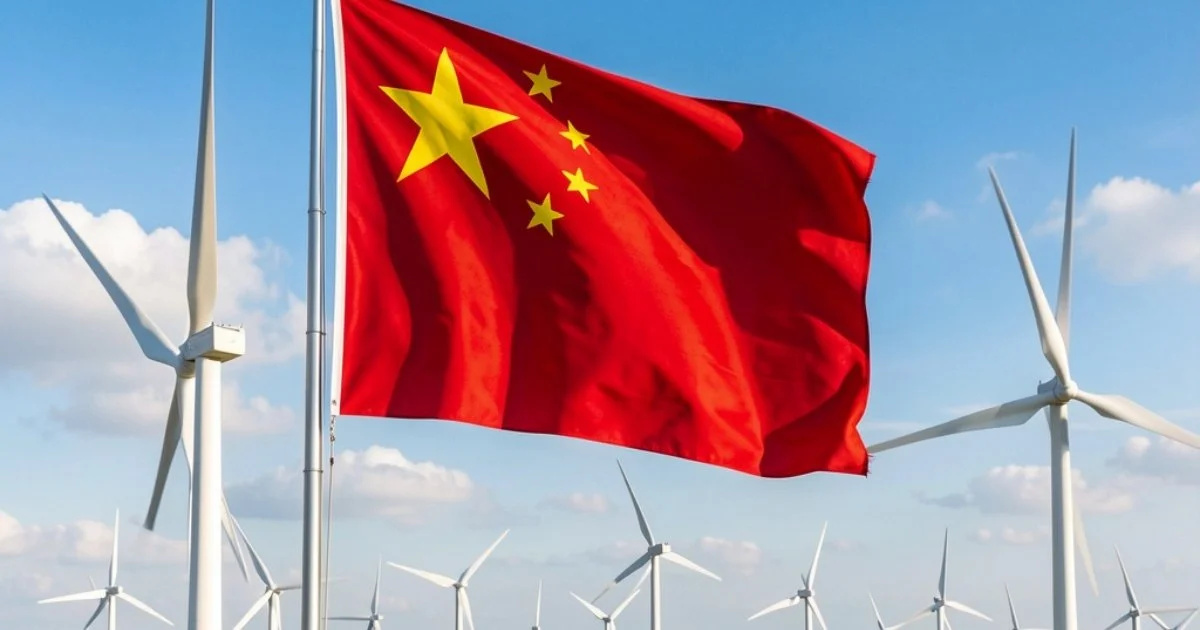
The Chinese government massively expands its maritime industrial parks and accelerates offshore wind energy with giant turbines that ensure energy sovereignty and a drastic reduction of carbon emissions.
China accelerates offshore wind energy at an unprecedented pace, installing more generation capacity in the oceans than the rest of the world combined in the last twelve months. This technological and industrial advance allows the country to consolidate its leadership in the global energy transition, surpassing environmental goals ahead of the 2026 deadline.
Chinese state-owned and private companies now operate offshore wind complexes in deep waters, using turbines with blades that exceed 120 meters in length to capture stronger and more consistent winds.
This strategic move reduces dependence on coal in highly industrialized coastal provinces, such as Guangdong and Fujian, where electricity demand reaches record levels daily.
-
Giant of the winds in Rio Grande do Norte: Serra do Tigre Wind Complex receives new investments and accelerates the expansion of clean energy generation to supply millions of Brazilian homes.
-
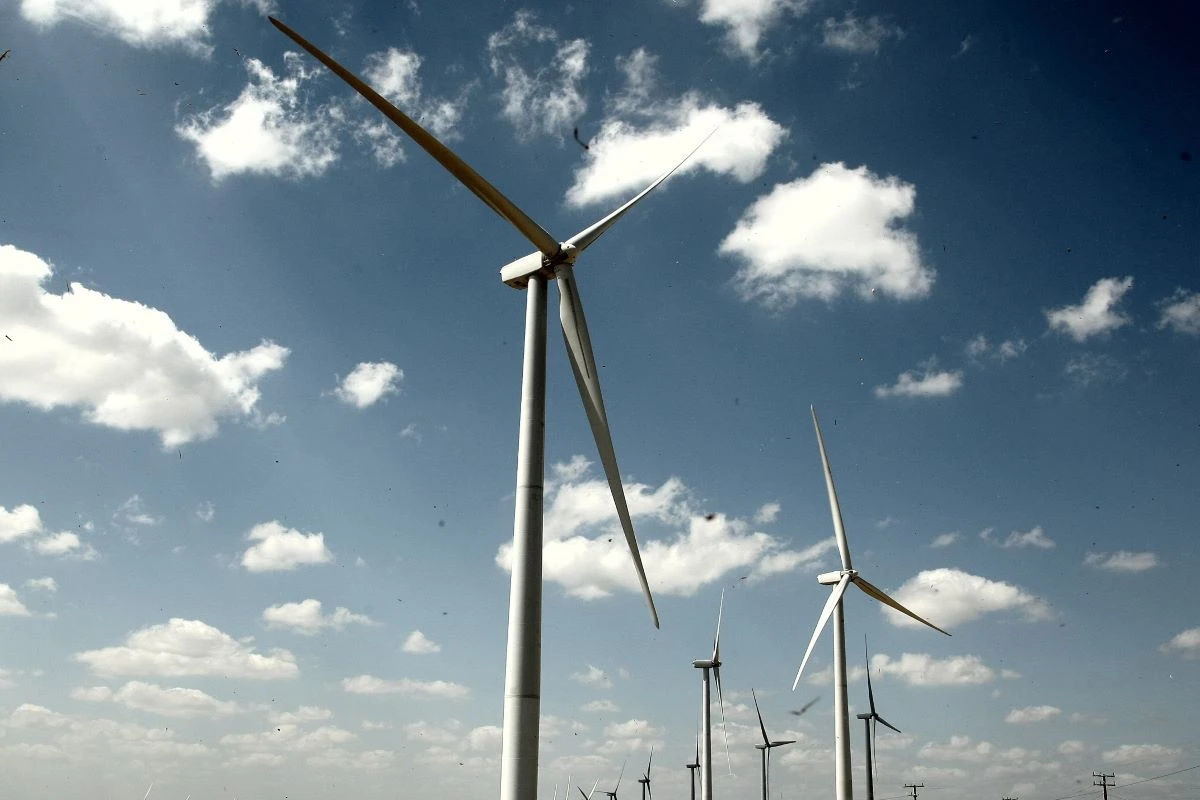
Urgent energy transition: Greenpeace advocates for massive investments and points to Brazil as a global leader in wind energy production in the coming years.
-
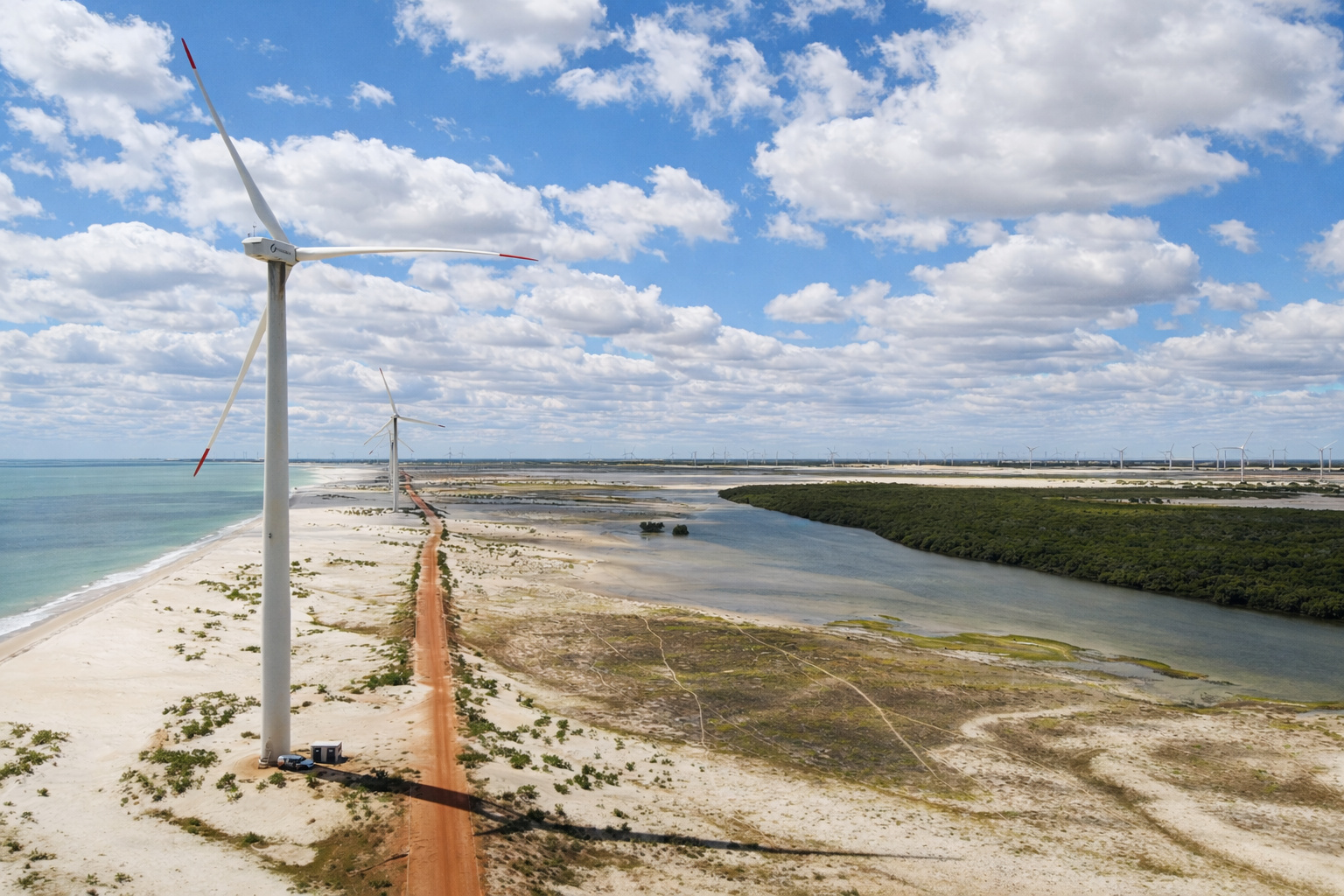
Conflict in the Sertão: Rural communities in Rio Grande do Norte report issues with wind farms and the new challenges of clean energy in the semi-arid region.
-
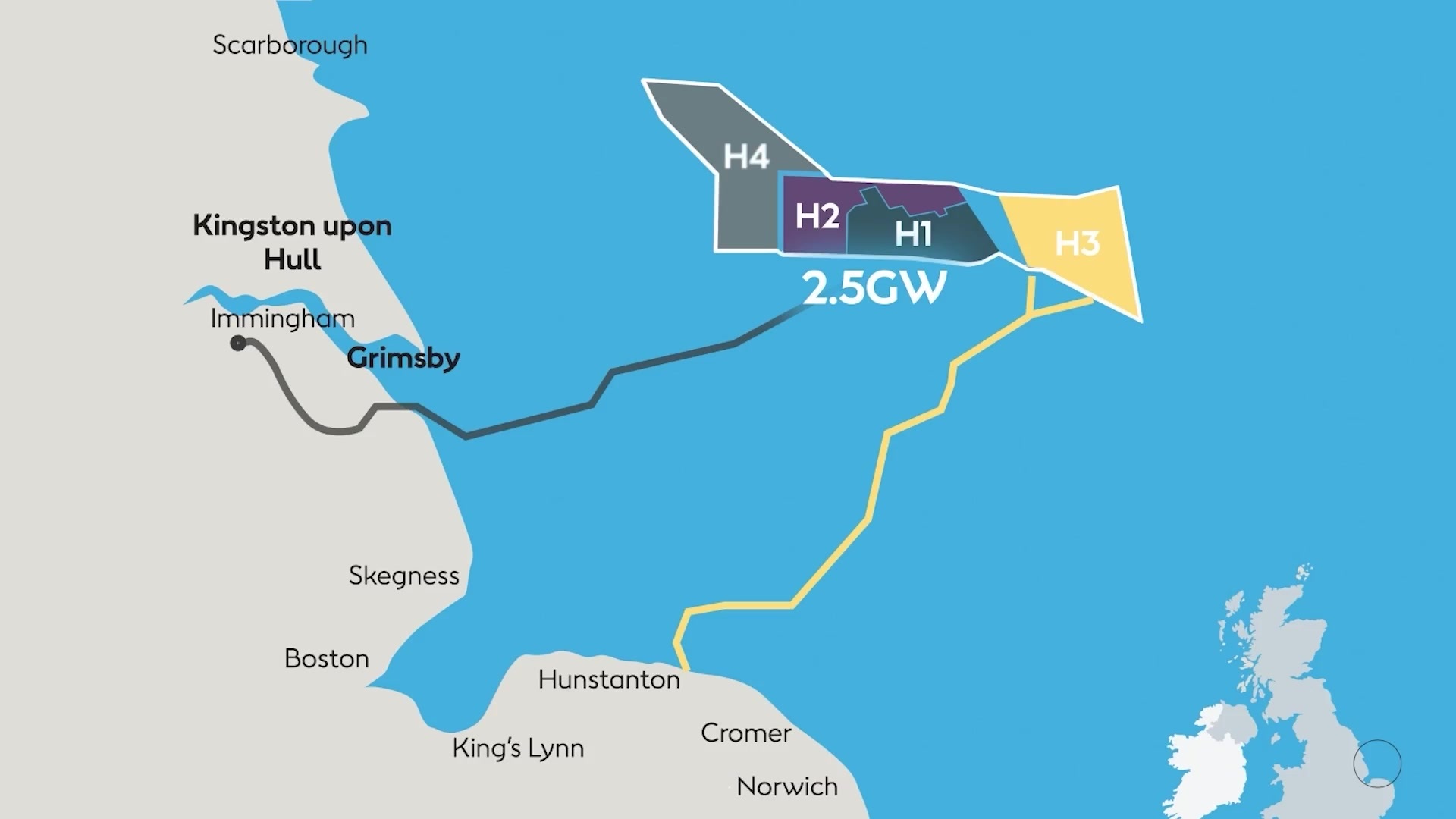
231 turbines of 260 meters at 160 km from the coast, monopiles weighing as much as nine blue whales embedded in the North Sea, and a crane ship taller than the Eiffel Tower: Hornsea 3 will be the largest offshore wind farm on the planet by 2027, and its first components have already arrived in England.
The central government invests billions of yuan in specialized port infrastructure and state-of-the-art installation ships, creating a self-sufficient supply chain that lowers the cost of megawatt-hour (MWh) produced at sea.
International experts note that China’s scale redefines global prices for renewable equipment, forcing European and American competitors to seek new efficiency strategies to avoid losing market share in this new era of clean energy.
The technological leap that allows Chinese leadership at sea
The success of the Chinese strategy lies in the ability to manufacture gigantic components on national soil. China accelerates offshore wind energy by developing wind turbines with a capacity of 18 MW to 22 MW, the largest on the planet.
These machines function as true individual power plants, capable of supplying tens of thousands of homes with just one unit in operation.
China’s naval engineering also plays a crucial role. The country has built a fleet of “jack-up” ships and dynamic positioning vessels that can install towers in locations previously considered unviable due to depth or seabed conditions.
By mastering installation logistics, China reduces the construction time of a wind farm from years to months. This technical mastery attracts neighboring countries seeking Chinese technology to develop their own maritime resources, transforming China into the world’s largest exporter of renewable solutions.
Facts about China’s giant wind turbines
The dimensions of the new turbines installed on the Chinese coast impress even the most experienced engineers. Each blade of a modern 18 MW wind turbine has a sweep area equivalent to several football fields.

When these blades spin, they generate a massive amount of energy, even in low-wind conditions. The material used, usually carbon fiber and high-strength resins, withstands extreme saline corrosion in the marine environment for over 25 years.
Another interesting point involves the weight of these structures. A single nacelle (the upper part that houses the generator) can weigh over 500 tons. Transporting and lifting this equipment 150 meters above sea level requires precision surgical cranes.
China is also testing floating turbines, which do not require fixed foundations on the ocean floor. This technology allows wind farms to advance into open sea areas, where winds are even stronger and more consistent, opening a virtually unlimited energy frontier.
Economic impact: Cost per megawatt in free fall
The industrial scale of China drives down renewable energy prices globally. By producing thousands of units annually, Chinese factories achieve economies of scale that Western competitors still struggle to match.
This makes offshore wind energy competitive against fossil sources, such as natural gas and coal, even without direct government subsidies in some regions.
For China’s coastal provinces, this reduction in energy costs means greater competitiveness for their export industries. Electronics, automotive, and chemical factories use clean electricity to reduce their carbon footprint, meeting the demands of international markets such as the European Union.
China accelerates offshore wind energy not only for environmental reasons but as a powerful economic policy tool that ensures cheap and stable energy to sustain GDP growth.
Integration with the electric grid and energy storage
Generating energy at sea is only half the challenge; the other half involves delivering this electricity to land consumption centers.

China heavily invests in ultra-high voltage submarine cables and offshore substations that convert energy to minimize losses during transport. These smart systems monitor production in real-time, adjusting the flow according to city demand.
To address wind intermittency, China pairs wind farms with large-scale battery storage systems located onshore. Additionally, the country is studying the production of green hydrogen directly on offshore platforms.
In this model, excess electricity generated at night is used to separate hydrogen molecules from water, creating a clean fuel that can be transported by ships or pipelines. This versatility ensures that no gust of wind is wasted, maximizing the efficiency of the entire energy complex.
Environment and preservation of marine biodiversity accelerates offshore wind energy in China
While the main focus is on energy generation, China implements environmental monitoring protocols to protect marine life. New projects include acoustic detection systems that alert about the presence of cetaceans, reducing construction noise during migration periods.
The foundations of the towers also serve as artificial reefs, attracting various species of fish and mollusks, benefiting controlled local fishing.
Replacing coal with offshore wind energy removes millions of tons of carbon dioxide from the atmosphere every year. This visibly improves air quality in Chinese metropolises, thus reducing respiratory problems in the population.
China understands that climate leadership requires concrete actions in the oceans, and the success of the offshore wind sector serves as a showcase for the country’s commitment to the goals of the Paris Agreement, aiming for carbon neutrality by 2060.
The role of artificial intelligence in the management of wind farms
China uses artificial intelligence (AI) algorithms to predict wind patterns days in advance. These systems analyze global weather data and sensors installed on the turbines themselves to optimize the angle of the blades and the rotation of the generator.
Predictive maintenance also utilizes AI; drones equipped with high-resolution cameras fly over the farms and identify micro-cracks in the blades before they become serious problems.
This deep digitization allows a few operators to control hundreds of turbines from a command room on solid ground. The reduced need for human intervention at sea lowers operational costs and increases worker safety.
China accelerates offshore wind energy by transforming wind into data, ensuring that each wind turbine operates at its maximum performance 98% of the time, an enviable availability rate for any energy source.
Logistical challenges and resistance to typhoons
The southeast coast of China frequently suffers from powerful typhoons. Therefore, Chinese engineering has developed “typhoon-resistant” turbines.
These machines have reinforced locking systems and software that guide them to the position of least resistance to wind during extreme storms. Some turbines can withstand wind gusts exceeding 280 km/h without suffering structural damage.

This technical resilience is crucial for the viability of long-term investments. If a wind farm were destroyed with each major storm, the cost of insurance would make the project unfeasible.
By overcoming this climatic challenge, China proves that offshore wind energy is a reliable source even in regions subject to severe weather events. This expertise in resilience attracts the interest of other tropical and subtropical countries facing similar climatic challenges.
The global impact and export of the Chinese model that accelerates offshore wind energy
Chinese leadership directly influences the energy policies of other countries. Nations in Asia, Africa, and Latin America seek partnerships with Chinese companies to develop their wind potential. China offers not only the equipment but also financing and construction expertise, creating a silk road for clean energy.
This energy soft power strengthens Beijing’s geopolitical position. By providing the technology that helps other countries decarbonize their economies, China becomes an indispensable partner for the future of the planet.
The market observes that China accelerates offshore wind energy to set the rules of the energy game in the 21st century. Where control of low-carbon technologies is as valuable as control of oil reserves was in the last century.
The future of energy blows from the sea
China demonstrates that scale and technological innovation are the keys to overcoming the climate crisis. The speed at which the country installs offshore wind farms redefines what is possible in modern engineering.
Offshore wind energy ceases to be an alternative source to become the central pillar of the Chinese electricity matrix, ensuring economic growth decoupled from atmospheric pollution.
For the rest of the world, the Chinese example serves as both a warning and an incentive. Brazil, with its vast coastline and constant winds, has offshore potential that could transform the national economy if it follows similar steps in investment and regulation.
As China leads, the planet gains a new reference for efficiency. The wind blowing over the seas of China today carries the promise of a cleaner and technologically advanced world for future generations, consolidating an energy transition that seems, finally, unstoppable.








Seja o primeiro a reagir!