





 Portuguese
  English
  Spanish
  4 min of reading
  0 comments


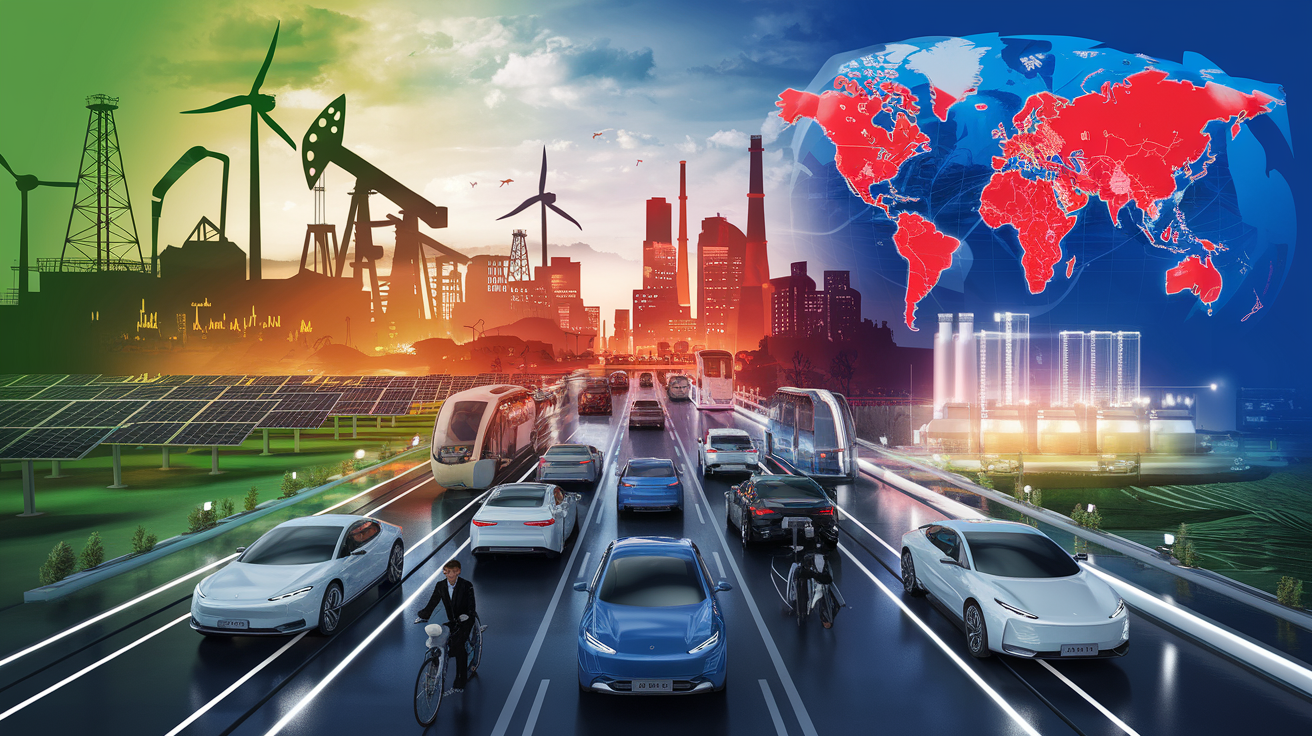
As The World’s Largest Consumer Market, China Drives Transportation Electrification and Transforms the Automotive Industry While Impacting Global Fossil Fuel Consumption.
The revolution of electric cars is transforming the global automotive industry, and China is at the center of this change. As the world’s largest consumer market, the Asian country has been leading the electrification of transportation, and this advance is already having a significant impact on oil consumption. Experts point out that the reduction of Chinese demand for fossil fuels is not just a trend; it is a clear sign of how the global energy market is being reshaped.
Electric and Hybrid Vehicles Surpassed Those Powered by Fuels in China
In recent years, China has significantly accelerated the adoption of electric cars. In 2023, the country reached a historic milestone: one in three new cars sold was electric. This share has grown even further, and by mid-year, electric and hybrid vehicles surpassed those powered by fossil fuels in domestic sales. It is no surprise that China today represents 60% of global electric car sales.
This advance is driven by a series of government incentives. In 2023, Beijing launched a stimulus package that exempts buyers of eco-friendly vehicles from taxes, offering discounts totaling about US$ 72 billion. These measures not only increased demand for electric cars but also bolstered domestic production, creating surpluses that affect even the external market.
-
For R$ 32,000, a brand new Hyundai car is a rival to the Kwid with a 1.2 engine producing 82 hp, 6 airbags as standard, multimedia with wireless Android Auto, up to 391 liters in the trunk, and a refreshed look for 2026 in India.

-
He bought a new car in 1983, locked it in the barn in 1988, and no one opened the door for 38 years until the family discovered what was stored inside and realized it looked like something out of a movie.

-
A 250cc motorcycle that can reach 560 km with a 14-liter tank, features disc brakes on both wheels and is among the most well-known in Brazil.

-
Man finds over 200 rare cars abandoned on a lot and tries to do the impossible in 8 hours with a surprise at the end.


Oil Imports Fell 3.4% in China
The reduction in oil consumption in China is happening sooner than many experts predicted. According to recent data, oil imports in the country fell 3.4% in the first ten months of 2024 compared to the previous year. This serves as a warning to major global suppliers, such as the Organization of the Petroleum Exporting Countries (OPEC), which has already begun adjusting its policies.
OPEC, which initially had no plans to cut production, extended its voluntary cuts in response to the slowdown in Chinese demand. Additionally, it has revised down its consumption estimates for 2024 and 2025. The main concern is maintaining the balance between supply and demand while the price of a barrel of oil is under pressure to stay above US$ 70.
This transformation is not only a result of the advancement of electric cars. China’s economic weakening also contributes to the reduction in consumption. Less gasoline is needed to power a fleet that is increasingly being replaced by electric vehicles.
Challenges in the Transition to Electric Cars
Despite the advancements, the transition to electric cars still faces significant technological and environmental challenges. Battery production requires rare metals such as lithium, cobalt, and nickel, the extraction of which causes considerable environmental damage. For example, the gigantic lithium mines in Chile and Congo consume enormous amounts of freshwater and contaminate the soil.
The disposal of batteries is also a concerning issue. Only 5% of lithium-ion batteries are recycled, and replacing a unit can cost between US$ 15,000 and US$ 20,000, making the maintenance of electric cars still expensive for many consumers. Although electric vehicles are marketed as an eco-friendly solution, the carbon footprint left by their production is still greater than that of combustion cars.
Transforming Oil Market
Although gasoline demand is decreasing, oil still plays a fundamental role in other sectors, such as the petrochemical industry and aviation. Analysts at Morgan Stanley believe that the peak of Chinese oil imports will reach 11.2 million barrels per day in 2025. However, factors such as the trade war between China and the United States and dependency on Russia for energy supply indicate that the market is far from stabilizing.
In 2023, Russian oil supplies to China increased by 24%, solidifying Moscow’s position as the largest exporter to the Asian giant. This relationship not only helps Russia overcome Western sanctions but also reinforces the strategic partnership between the two countries.
The Future of the Automotive Industry and Oil
The rapid adoption of electric cars in China is a watershed moment for the automotive industry and the global oil market. On one hand, this shift reinforces the need to seek cleaner and more sustainable energy alternatives. On the other, it raises questions about how to deal with the technological and environmental challenges associated with this transition.
China is showing the world that the future of mobility lies in electrification, but the impact of this goes far beyond the streets. The decline in demand for oil forces global producers to rethink their strategies and adjust their policies for an increasingly uncertain scenario.
There are still doubts about how the automotive industry and the oil market will evolve, but one thing is certain: the advancement of electric cars is not just a passing trend; it is the harbinger of a profound global transformation. And China, as the protagonist of this change, is setting the pace for the energy future.









Seja o primeiro a reagir!