





 Portuguese
  English
  Spanish
  4 min of reading
  3 comments


Chinese Ambassador’s Statement in Washington Opens Up Space for Resumption of American Imports and Raises Alarm for Brazil, Which Currently Dominates Over 70% of Oilseed Sales to the Asian Country
The dispute between Brazil and the United States for the Chinese soybean market has taken on new dimensions after the Chinese ambassador in Washington, Xie Feng, advocated for increased Sino-American agricultural partnership. The announcement was made during an official meeting in the U.S. capital, reigniting concerns about the direct impact on Brazilian participation, which accounts for about 70% of the grain imports by the Asian giant.
According to Xie, the commercial relationship between Beijing and Washington in the agricultural sector should be strengthened and not politicized. “Agriculture should not be politicized, and farmers should not bear the cost of the trade war,” said the diplomat, highlighting that cooperation between the countries “has benefited the whole world” and can grow again.
The event, held on August 22, was organized by the U.S. Soybean Export Council in conjunction with the China Chamber of Commerce for Import and Export of Foodstuffs and was attended by industry associations, academics, and agricultural companies from both countries.
-
China alone accounts for 70% of trade within the BRICS, while Brazil establishes itself as an essential supplier of food and minerals: understand how the group, which already represents nearly 40% of the world’s GDP, is changing the game.
-
Starting in May, those who do not have registered biometrics will not be able to apply for Bolsa Família, sickness benefits, or unemployment insurance: understand the new rule that changes access to benefits for millions of Brazilians.

-
A new law being voted on in Brazil proposes a minimum fare of R$ 10 per trip and R$ 2.50 per kilometer for Uber and 99 drivers, and promises to ensure they earn as well as taxi drivers did during the golden age of taxis in the country.

-
Bauer Group collapses after failed judicial recovery: 25 years, 800 vehicles, and a network of gas stations leave a debt of R$ 50 million and 100 layoffs, exposing costs, tight margins, and expensive credit in Brazil.
China as the World’s Largest Soybean Buyer
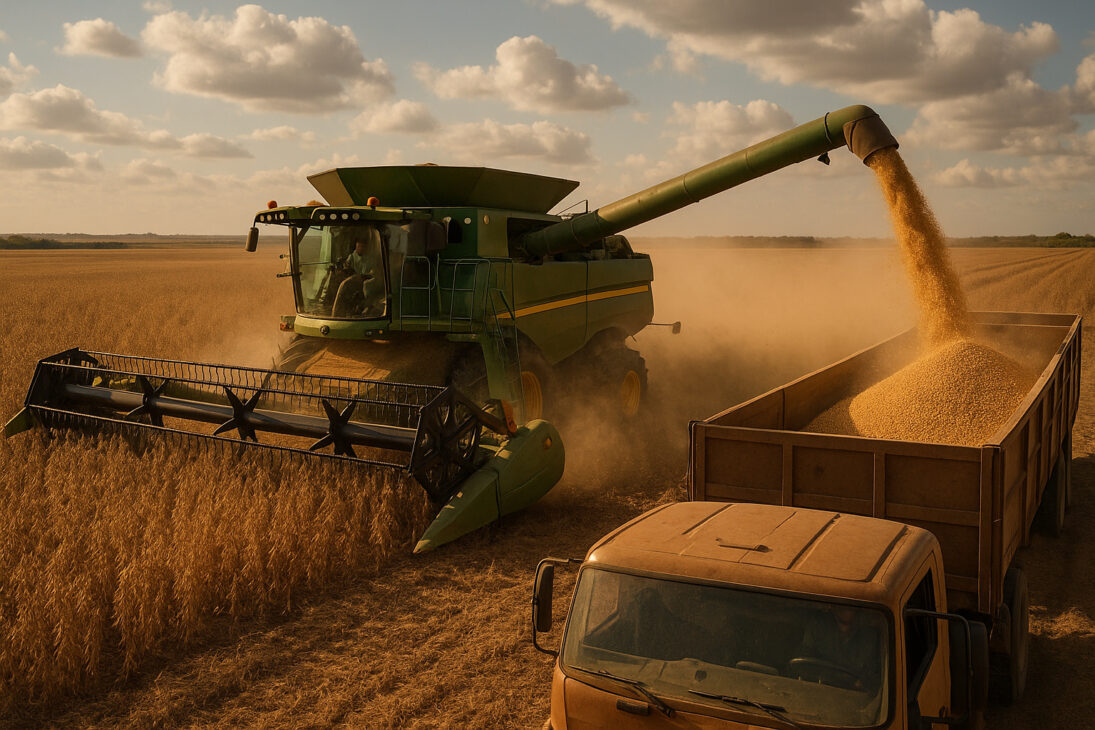
China remains the world’s leading importer of soybeans, consuming 61.1% of all the oilseed traded globally. The input is crucial for animal feed destined for swine and poultry production chains. Only 15% of Chinese demand is met by local production, forcing the country to rely primarily on imports.
In 2024, the Asian country imported 105 million tons, of which 74.6 million came from Brazil and 22.1 million from the U.S., according to the General Administration of Customs of China. Despite Brazil’s leadership, the ambassador’s statement signals a possible repositioning in the balance of future purchases.
Furthermore, according to Xie, the recent decline in American agricultural flow has brought instability to producers. He noted that in the first half of 2025, U.S. exports to China fell by 53% compared to the previous year, with a 51% drop specifically in soybeans.
Impacts of the Trade War and Bilateral Tariffs
The current scenario is a result of the tariff dispute between the U.S. and China, which began during Donald Trump’s first term. Both nations imposed tariffs exceeding 100% on each other’s products, directly impacting soybeans. As a result, the Chinese redirected much of their demand to Brazil, increasing Brazil’s share in the market.
However, in May of this year, Washington and Beijing announced a temporary reduction of tariffs for 90 days, later extended until November. In this context, Trump publicly urged China to rapidly quadruple its purchases of American soybeans, raising expectations for a return of U.S. exports.
According to Gazeta do Povo, this pressure has the potential to reduce Brazilian participation if the Chinese choose to diversify the sources of their main agricultural commodity.

The Position of Producers and the Risk for Brazil
The president of the American Soybean Association, Caleb Ragland, sent a letter to the White House thanking the government’s effort to reopen the Chinese market. “Unfortunately for our soybean producers, China has signed contracts with Brazil to meet its demand for the coming months, avoiding purchases from the United States,” he reported.
“Soybean producers are under extreme financial stress. Prices continue to fall while our farmers are paying significantly more for inputs and equipment,” Ragland continued. “American soybean producers will not survive a prolonged trade dispute with our largest consumer.”
At the same meeting in Washington, Jim Sutter, president of the U.S. Soybean Export Council, stated that he hopes an agreement will be reached by the end of 2025. According to him, the Sino-American cooperation can soon become “mutually beneficial” again.
For Brazil, the Chinese signal represents a warning. The country had consolidated its leadership in exports to Beijing after the tariffs imposed against the U.S. in 2018, reaching a supply of 75% of the soy imported by China. A potential reopening of the market to the U.S. may diminish this advantage and alter the competitive landscape.
Recent History of Agricultural Negotiations
Between 2020 and 2022, after the signing of the so-called “Phase One” of the U.S.-China trade agreement, Beijing committed to buying up to US$ 80 billion in American agricultural products, including soybeans. However, only 73% of the target was met, allowing Brazil to maintain its lead in supply, with competitive prices and favorable logistics.
Nevertheless, experts believe that the new round of negotiations could be decisive in repositioning the United States in the Chinese market if Beijing agrees to raise the quotas for American soybean imports.
Xie Feng ended his speech by highlighting future areas of cooperation, such as biotechnology, smart agriculture, and sustainable irrigation. According to him, “the agricultural partnership between China and the U.S. must flourish in a healthy way,” reinforcing the expectation of a commercial rapprochement.
Do you believe that China will continue to prioritize Brazilian soybeans in the coming years or will it increasingly strengthen its agricultural partnership with the United States?








Neste jogo comercial o nosso Brasil é de uma ingenuidade patética … lamentável !
O Brasil acha que a China vai apoiar o Brasil nesse enfrentamento com os EUA, basta os EUA fazer uma única ligação pra Pequim e de quem vocês acham que a China vai importar a soja, pobre Brasil, pobre povo brasileiro, a ignorância não mata mas achata
É que a china vende muitas coisas de Alto Valor agregado prós EUA eles não vão querer perder o mercado americano que o povo é consumista por isso eles compraram mais soja dos EUA