





 Portuguese
  English
  Spanish
  6 min of reading
  3 comments


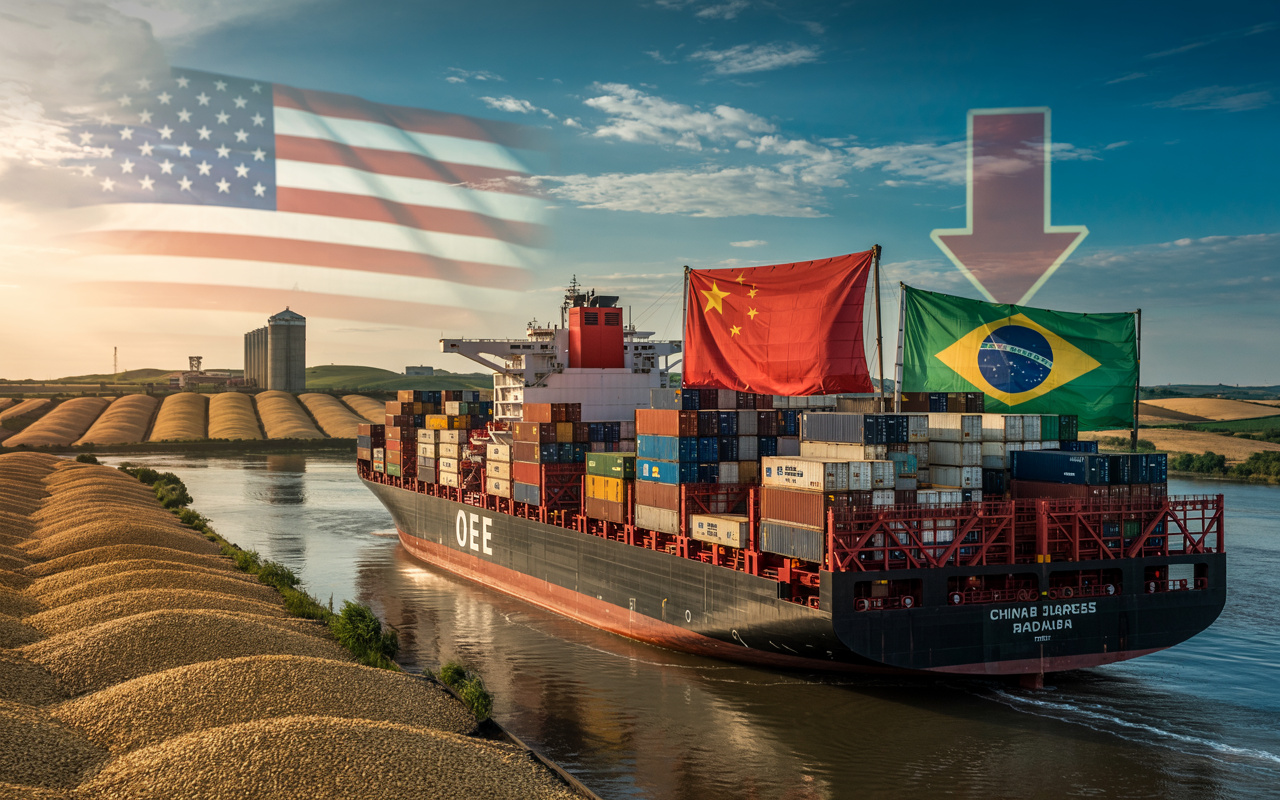


China Surprises and Buys 8 Million Tons of Brazilian Soybeans for September, Affecting the USA and Strengthening Brazil’s Agribusiness Power in the Global Scenario.
The month of September will mark one of the most emblematic chapters in the global agricultural dispute between Brazil, the United States, and China. In an unexpected move, Beijing closed the import of about 8 million tons of Brazilian soybeans, right in the window where American producers traditionally dominate global supply. The operation, estimated at billions of dollars, not only strengthens the national agribusiness but also exposes the fragility of U.S. hegemony in international grain trade.
This scenario goes far beyond simple contract negotiation. It reflects deep changes in the global geopolitical and economic landscape, where Brazil emerges as a key player in a billion-dollar game involving food, energy security, and international power. By opting for Brazilian soybeans during the U.S. harvest season, China sends a clear message: it is willing to reshape its strategic partnerships to reduce dependencies and expand its network of allies in agribusiness.
The Weight of Brazilian Soybeans in Global Geopolitics


Soybeans are the most important agricultural product of Brazil in terms of exports. In 2024, the country harvested about 154 million tons of the grain, consolidating itself as the largest global producer and exporter. Most of this production is destined for China, which consumes over 60% of the world’s soybeans to supply its animal feed and vegetable oil industries.
-
China alone accounts for 70% of trade within the BRICS, while Brazil establishes itself as an essential supplier of food and minerals: understand how the group, which already represents nearly 40% of the world’s GDP, is changing the game.
-
Starting in May, those who do not have registered biometrics will not be able to apply for Bolsa Família, sickness benefits, or unemployment insurance: understand the new rule that changes access to benefits for millions of Brazilians.

-
A new law being voted on in Brazil proposes a minimum fare of R$ 10 per trip and R$ 2.50 per kilometer for Uber and 99 drivers, and promises to ensure they earn as well as taxi drivers did during the golden age of taxis in the country.

-
Bauer Group collapses after failed judicial recovery: 25 years, 800 vehicles, and a network of gas stations leave a debt of R$ 50 million and 100 layoffs, exposing costs, tight margins, and expensive credit in Brazil.

The Chinese move to concentrate its purchases in September in Brazil, rather than intensifying contracts with the USA, broke a decades-old logic in global agricultural trade.
Historically, Americans dominate sales in this window of the year, as their harvest usually reaches the international market first. However, favorable weather conditions in Brazil, coupled with more aggressive logistics strategies and competitive prices, tipped the balance in favor of Brazil.
China’s Decision Will Have a Direct Impact on American Exports
China’s decision will have a direct impact on American exports. September is considered a strategic month for U.S. farmers, who depend on external sales to balance production costs and ensure income amid the harvest.
Beijing’s choice of 8 million tons of Brazilian soybeans drastically reduced the American market share and increased internal pressure on producers, trading companies, and even the government.

This “billion-dollar blow” goes far beyond the agricultural sector. It impacts the American trade balance, which is already pressured by deficits, and weakens one of the main bases of political support in the country: farmers in the agricultural belt, who historically influence presidential elections.
Analysts point out that China’s maneuver was calculated not only to secure supply but also as a geopolitical response to trade tensions with Washington.
Brazil Takes on a Strategic Leading Role
If the impact for the United States will be negative, for Brazil, the Chinese purchase represents the consolidation of its position as the world’s leading supplier of soybeans. The deal generates billions of dollars and strengthens the role of national agribusiness as a driver of the Brazilian economy.
Only in September, soybean exports may inject record amounts into Brazil’s trade balance, expanding surpluses and strengthening the real against the dollar. Additionally, the movement increases Brazil’s bargaining power in international negotiations, as it demonstrates its ability to meet large volumes during strategic periods.
Another key point is logistics infrastructure. To fulfill contracts of this magnitude, the country had to optimize transport through highways, railroads, and ports, especially in the Northern Arc region. This effort reveals how investments in infrastructure can become competitive differentials in global disputes.
The Behind-the-Scenes of the Negotiation with China
The operation of 8 million tons did not happen by chance. The Chinese government has intensified its policy of diversifying agricultural suppliers, seeking to reduce vulnerabilities in relation to the United States. This strategy includes direct investments in producing countries like Brazil and Argentina, as well as logistical and financial partnerships to ensure long-term food security.
In the Brazilian case, there are also favorable climatic factors that ensured an abundant and high-quality harvest, allowing prices to be more competitive than those of the Americans. Major international trading companies established in the country, such as Cargill, Bunge, and Cofco, acted as intermediaries, facilitating the closing of contracts in record time.
Industry sources indicate that China is likely to maintain this posture in the coming months, increasing its volume of advanced purchases from Brazil and gradually reducing dependence on American exports.
Consequences for the Brazilian Producer
For Brazilian farmers, the immediate impact is positive. The closure of major contracts boosts confidence in the sector, ensures liquidity, and increases profit margins, especially in a moment of volatility in exchange rates and international prices.
However, experts warn that this excessive dependence on the Chinese market also represents risks. If Beijing alters its import policy or intensifies internal investments to increase local production, Brazil may face difficulties in maintaining the same level of exports.
Additionally, the concentration of sales among a few strategic buyers may reduce the Brazilian producer’s bargaining power, forcing them to accept lower prices under certain circumstances.
International Reactions and the Agribusiness Dispute
The record purchase of Brazilian soybeans by China did not go unnoticed on the international stage. In the United States, associations of rural producers and lawmakers are pressuring the government for financial support measures and additional subsidies to offset losses. There are also discussions about tightening trade policies against China, in yet another chapter of the economic war between the two powers.
In the European Union, the move is being watched cautiously. The bloc, which also imports Brazilian soybeans, fears losing market share and is already evaluating alternatives to reduce dependence on imported grain. Environmental pressure on Brazil is also expected to increase, with stricter demands regarding deforestation and sustainability.
A Clear Message from China to the World
More than just a simple agricultural transaction, the purchase of 8 million tons of Brazilian soybeans in September should be understood as a strategic message from China. The country demonstrates that it has the capacity to reorganize global supply chains, reduce vulnerabilities, and weaken the position of the United States in world trade.
At the same time, it reinforces Brazil’s importance as a strategic ally in its quest for food security. This alignment may open space for new Chinese investments in logistics infrastructure, energy, and even in agricultural technology within Brazilian territory.
The episode in September marks only the beginning of a new chapter in the global agricultural and geopolitical dispute. While Brazil emerges stronger, expanding its prominence in the global market, it must also deal with the risks of relying on a single buyer and facing external pressures regarding sustainability and market diversification.
Meanwhile, the United States faces the challenge of reclaiming lost ground and managing the economic and political impacts of yet another setback in its trade relationship with China.








Não seria fácil a batalha contra os EUA,mas o Brasil, têm que manter a sua soberania.
Só faltou uma informação que o site não passou e que a China comprou quando despencou o preço a 90 conto a saca e repetiu o que fez o ano passado comprando com o preço em baixa. Então não a muito o que comemorar só liberou um pouco dos silos para estocar a safra desse ano, só lembrando que a China recuou na compra de mercadoria do Brasil. Só não acho motivo de comem
oração porque os EUA sempre compraram quando seu estoque está baixo e a China compra quando o preço despenca com o estoque dos EUA. Acho que faltou uma pesquisa mais apurada de mercado
É ÓBVIO que a China está jogando o jogo dela, a questão não é que a China é “boazinha” ou não. A questão levantada é que se o USA não quer, tem quem queira.