





 Portuguese
  English
  Spanish
  4 min of reading
  2 comments


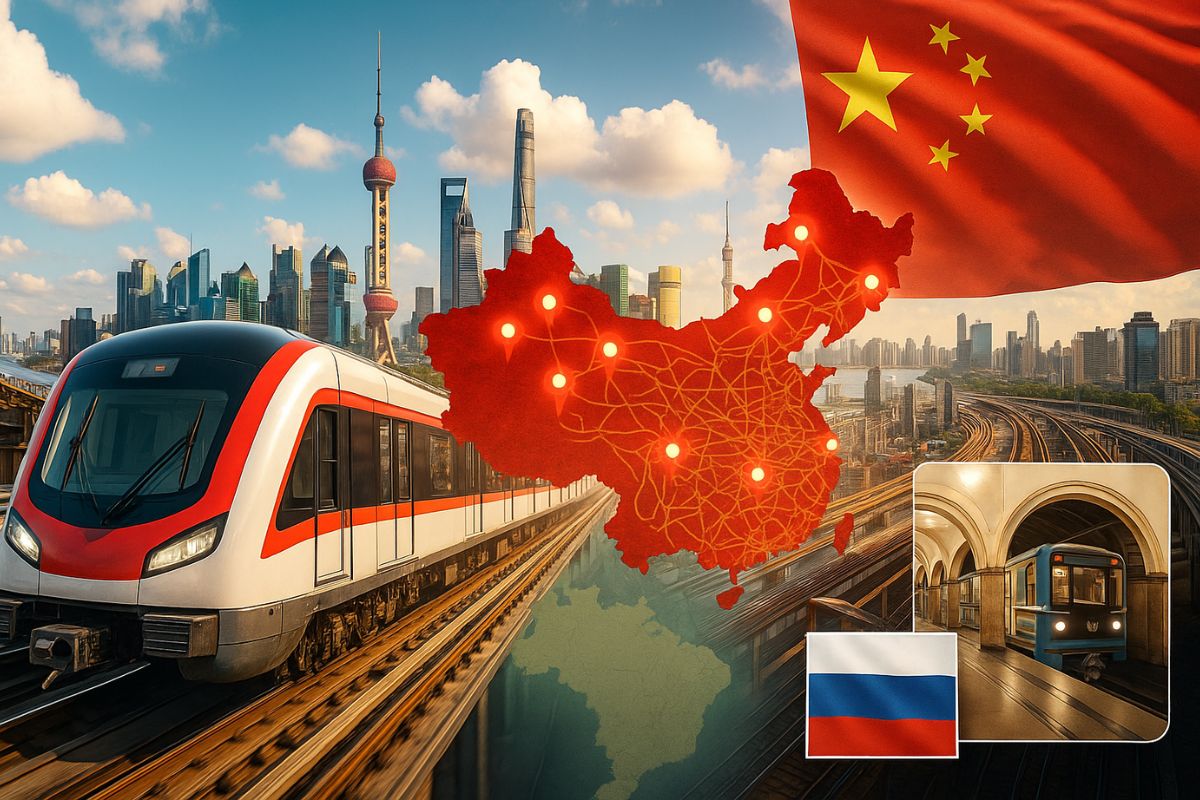


The Claim That China Dominates Subways Is Supported by 9 of the 10 Largest Subway Systems in the World; In Chinese Cities, Subway Systems Operate as Mass Transit That Drives Urban Productivity
The observation that China Dominates Subways represents a shift in the global mass transit landscape, with Asian centers assuming a leading role previously held by New York, London, and Paris. Nine of the ten largest networks are located in Chinese territory, and each of these cities independently exceeds the total length of subway lines in Brazil, creating structural advantage for quick transportation in dense areas.
The result is a mobility pattern that reduces time lost in traffic, enhances access to jobs and services, and supports more efficient economic cycles. Meanwhile, the presence of a tenth large system in Russia completes the global picture, reinforcing that extensive and connected systems are central to contemporary urban transport.
Overview of the Largest Systems
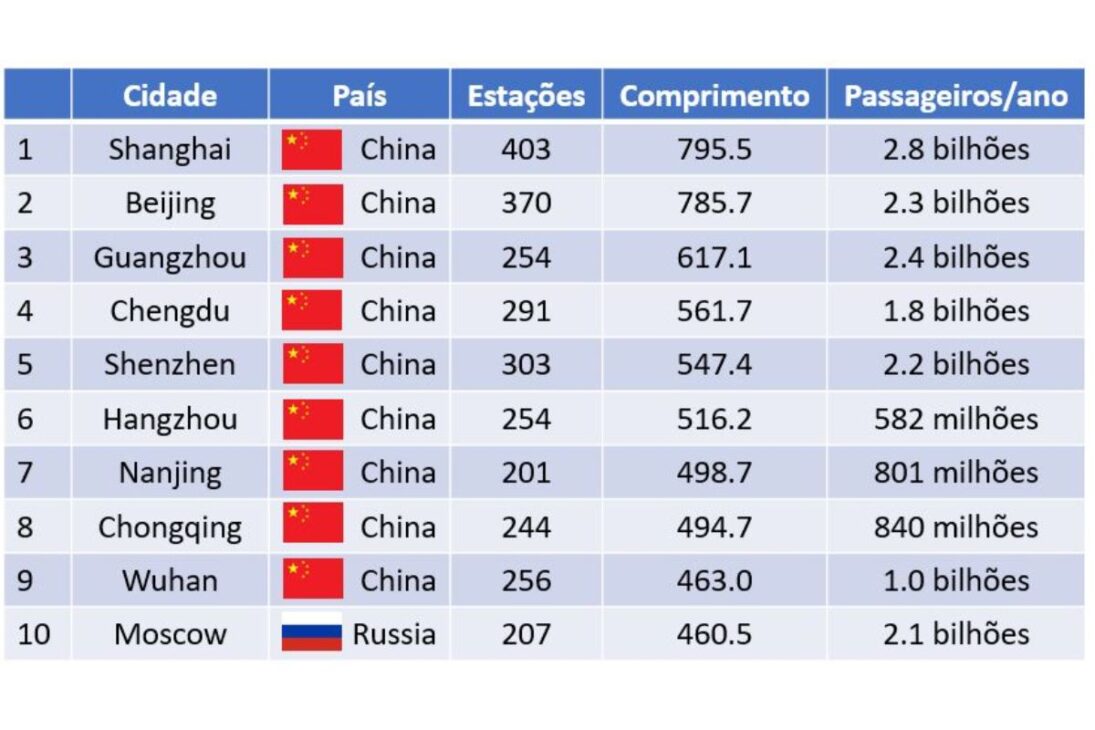
The data is compelling. Shanghai has nearly 800 km of tracks and 403 stations, serving as the backbone of a multipolar megacity.
-
Attracting around 250,000 people a year, a lighthouse 200 meters from the sea, on a 60-meter high cliff, on the North Sea coast in Denmark, becomes one of the most impressive examples of how nature can threaten historical buildings.

-
The narrowest house in the world is only 63 centimeters wide, but inside it can accommodate a bathroom, kitchen, bedroom, office, and even two staircases.

-
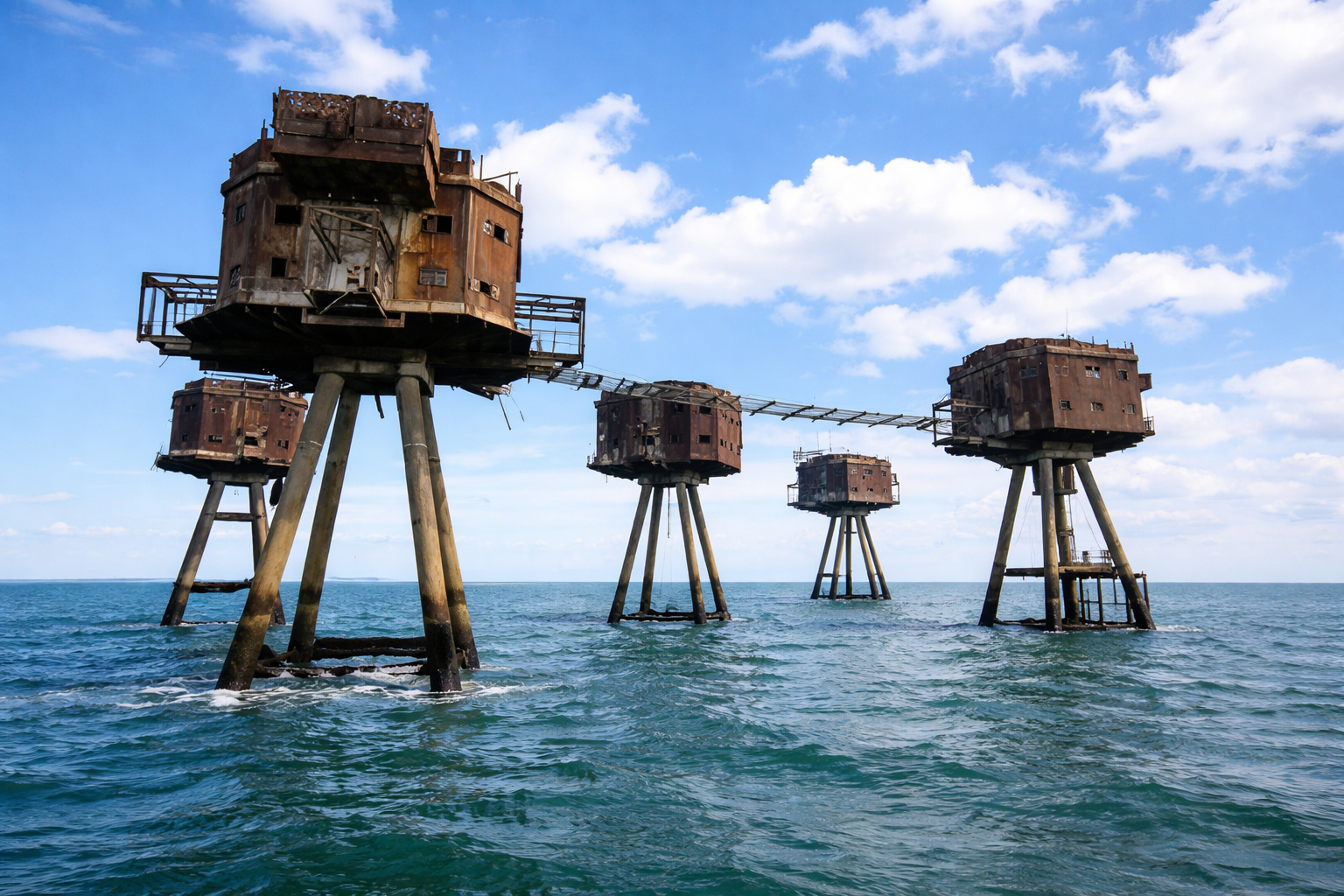
In the middle of the sea, these enormous concrete and steel structures, built by the British Navy to protect strategic maritime routes, look like they came straight out of a Star Wars movie.
-
For years, no one could cross a neighborhood in Tokyo because of the tracks, but an impressive solution changed mobility and completely transformed the local routine.


Beijing, Guangzhou, Chengdu, and Shenzhen also operate massive networks, connecting millions of people daily with planned transfers and extensive territorial coverage.
This advancement occurred within a short time frame, signaling that it is possible to build large projects at a rapid pace when planning, engineering, and investment priorities converge.
In this context, the phrase China Dominates Subways encapsulates both the current scale and the capacity for continuous expansion.
Among the largest subway systems in the world, the Chinese subway systems lead in terms of length and coverage.
Urban Efficiency and Productivity
The provision of an extensive and frequent network shortens travel times, reduces uncertainties, and integrates peripheries with centers of study and work.
Less time spent in traffic translates into more productive hours and a better quality of life, with measurable impacts on the economy and public health.
Meanwhile, in Brazil, millions of people still lose up to four hours a day commuting, which limits the competitiveness of metropolitan regions.
The comparison with the nine Chinese cities, each larger than the total in Brazil, highlights the urgency to prioritize high-impact projects in terms of mass transported per hour.
This mass transit boosts urban productivity by connecting housing and employment.
Recent Scale and Delivery Capacity
Most of these Chinese networks have been built or expanded recently, showing that coordinated decisions can shorten implementation timelines without sacrificing operational standards.
The combination of radial routes and interconnecting lines enables efficient transfers and increased coverage in just a few years.
This technical arrangement avoids bottlenecks common to under-scaled systems, enhancing service reliability and interval regularity.
That is why China Dominates Subways is also a narrative of execution: planning, funding, and construction progress at a pace adjusted to real demand.
The execution explains why the country concentrates the largest subway systems in the world and consolidates mass transit as a policy.
Integration, Sustainability, and Network Design
Extensive subway networks reduce emissions per passenger and shift trips from cars to rails, yielding environmental and public health benefits.
By linking lines with high-capillarity stations and efficient connections, Chinese cities distribute flows and relieve critical corridors.
Integrated operation with other modes, such as buses and metropolitan trains, creates continuous and predictable travel chains.
The combined effect is a more accessible, competitive, and resilient city, anchored by a system that delivers capacity, speed, and reliability on a large scale.
Well-planned subway systems make mass transit more competitive.
Direct Lessons for Brazil
The contrast suggests a pragmatic roadmap: integrated metropolitan planning, prioritization of high-demand corridors, clear definition of executive phases, and a focus on maintenance and operation from day one.
The Chinese experience shows that scale comes from institutional persistence and stable timelines.
To transform urban productivity, the country needs to multiply subway projects with solid governance, technical viability, and future expansion forecasts, ensuring that each new segment adds systemic value.
China Dominates Subways because it treated the network as central economic infrastructure, not as an isolated project.
The scenario in which China Dominates Subways sends a clear message: extensive, frequent, and well-integrated networks define the competitiveness of metropolises.
With nine systems larger than the entire Brazilian subway combined, the lesson is straightforward for public policies, planning, and investment priorities in the country.
Which region of Brazil should be the first to receive a large-scale subway upgrade and why? Share your proposed route or corridor priority.







Acho que o Brasil deveria investir mais em metrôs, VLTs,monotrilhos e trens metropolitanos. O problema é que autoridades locais vão contra isto como foi o caso da linha18 de monotrilho entre São Paulo e São Bernardo e o VLT entre o VLT entre Cuiabá e Várzea Grande. Um arquiteto chinês disse uma coisa para se pensar: “O metrô não apenas leva as pessoas da periferia para o centro, mas também leva o centro para a periferia.” Isto pode ser notado na cidade de São Paulo.
Além de São Paulo e Rio de Janeiro, Brasília também precisaria pelo menos quadruplicar a malha metroviária, pois mesmo com população bem menor do que as metrópoles mais populosas do país, Brasília também é uma cidade muito grande ba qual há também distâncias comparáveis como da zona oeste ao centro do Rio de Janeiro e comparáveis até mesmo com os bairros mais distantes de São Paulo como, por exemplo, a distância entre Plnaltina até o Gama, que chega a superar 80 km e futuras localidades em expansão ser maior ainda como é o caso de Rio Quente bem mais além do Gama que distancia uns 100 km ou mais de Planaltina.