






 Portuguese
  Spanish


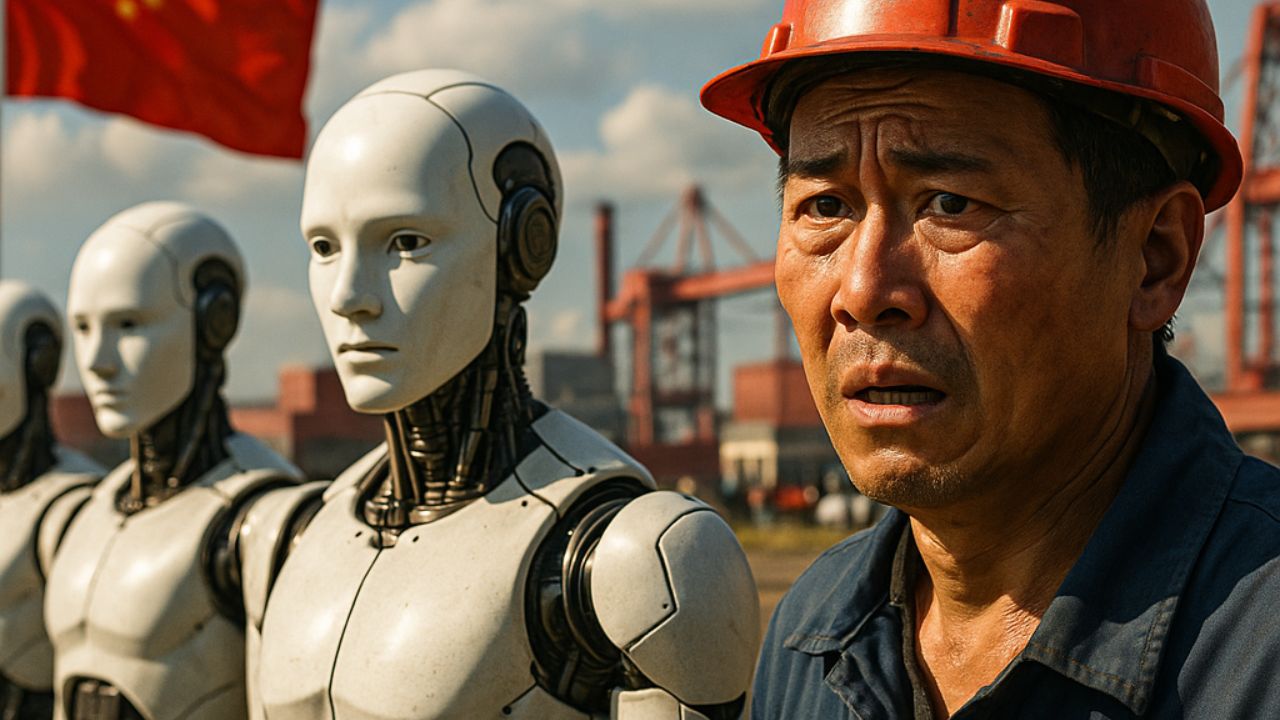


With Robots That Can Operate 24 Hours a Day, Humanoid Robots Begin to Replace Workers on Production Lines, Pressuring Wages and Feeding Projections of Millions of Jobs Extinct by 2030.
In recent months, humanoid robots have begun to replace workers in tasks ranging from industrial operations to basic service activities, while viral videos of mass deliveries in China bring the topic to the forefront of public debate. The combination of specialized robots with artificial intelligence accelerates a transformation that affects both low-skilled functions and creative professions that until recently seemed protected.
Studies cited by experts indicate that each industrial robot can do the work of three people on a production line, and international projections suggest that by 2030 more than 20 million factory jobs could be replaced by machines.
In this scenario, humanoid robots are beginning to replace workers at an increasing pace and raising urgent questions about income, professional retraining, and the future of work in different countries.
-
Xiaomi Unveils Smart Glasses in Brazil with 12MP Camera, 4K Video, and AI Features, Challenging Ray-Ban Meta

-
Volkswagen Unveils Bold Strategy to Compete with Chinese Automakers in Brazil, Featuring 5,000 Parts, 76% Localization, and a Surprising Turnaround
-
Three Teens Win Global Prize for Low-Cost AI Microscope Diagnosing Malaria Species in Seconds for Remote Villages
-
Xiaomi Unveils Revolutionary Fridge: Eliminates Odors in 3 Minutes, Sterilizes in 2, Offers 508 Liters in Compact Design, Operates at 31 dB, and Is Smartphone-Controlled.


Mass Delivery in China Symbolizes a New Stage of Automation
The starting point of the recent discussion was a video released by a Chinese technology company, showing hundreds of robots lined up in a large industrial warehouse, ready to operate. They carry large batteries on their backs, designed to enable shifts of up to 24 hours without interruption.
These humanoid robots were delivered en masse to an industry and are programmed to perform a variety of physical tasks continuously, with precision and without breaks.
For companies, the argument is clear: by automating, they reduce operating costs, increase production predictability, and decrease human risks in repetitive or dangerous tasks.
Experts remind us that private companies do not operate as social assistance entities but as profit-driven organizations.
When technology allows for the replacement of part of the human workforce with automated systems, the trend is for humanoid robots to begin replacing workers in sectors where this exchange is economically viable.
Robots in Factories, Fewer Jobs and Pressured Income


Industrial automation is not new, but the recent advance of humanoid robots expands the scope of this replacement. A study from a U.S. university cited by analysts indicates that, in production lines, each installed robot performs the equivalent of work done by three people.
Another survey, reported by the British press, estimates that more than 20 million factory jobs could be replaced by 2030, only considering the advance of robots in industrial environments.
In practice, this means that humanoid robots are beginning to replace workers primarily in low-skilled functions, in repetitive tasks, and in positions where the cost of human labor weighs heavily in the budget.
At the same time, the reduction of costs for companies tends to increase competitiveness, but it opens a debate about how to maintain income and employment for people who are no longer needed in certain processes.
Experts in labor and technology remind us that historically, automation has primarily replaced physical effort, muscular and hazardous work.
Now, with integrated artificial intelligence, robots and automated systems are beginning to advance into cognitive areas, which deepens the impact on the labor market.
When Artificial Intelligence Affects Creative Careers
The case of illustrator and author Lúcia Lenos illustrates how this transformation is not limited to factories. She started drawing at the age of 7, was already doing professional work by 16, and earned around 6,000 reais per month with illustrations, caricatures, and character creation.
During the pandemic, demand increased significantly, but starting in 2022, the scenario changed. With the emergence of tools capable of generating images through artificial intelligence, orders that were once recurring simply disappeared.
Caricature works, for example, fell from about ten per month to two, then one, until there were no more requests during certain periods.
In 2024, Lúcia clearly realized that the loss of clients was directly linked to the use of these tools. A regular client explained that while she took days to deliver the concept art of a character, the artificial intelligence provided dozens of variations in a matter of moments.
Since then, she has spent about a year without securing steady work as an illustrator and has started selling original drawings at art fairs, in formats like pins and stickers.
This account shows that in many segments, humanoid robots are beginning to replace workers alongside systems of artificial intelligence, altering the way creative services are contracted and consumed, not just low-skilled manual activities.
Countries Leading the Use of Robots and Brazil’s Position
The intensive use of industrial robots is stronger in some specific countries. China, Japan, South Korea, the United States, and Germany account for more than 75 percent of the world’s stock of industrial robots, which corresponds to approximately 3.18 million units in operation. In these markets, humanoid robots are beginning to replace workers on a larger scale and are already part of the long-term strategy of major companies.
In Latin America, Brazil leads in the number of industrial robots, with about 20,000 machines in operation.
Although this volume seems small compared to global leaders, the trend indicated by experts is growth, especially as costs decrease and humanoid robots become more versatile and easier to program.
Technology companies have also begun promoting robots for domestic and service activities, associating the image of these machines with the idea of a “perfect human assistant.” Launch videos show robots with such precise movements that, in one case, it was necessary to open the equipment’s cover to prove that there was not a person inside the suit.
Risks, Uncertainties, and Challenges for the Future of Work
As humanoid robots begin to replace workers in different sectors, the debate over social and economic impacts gains urgency.
Experts warn that large-scale adoption tends to exacerbate already known issues, such as a decrease in formal job vacancies, difficulty in retraining for low-skilled professionals, and pressure on wages in highly automatable areas.
Beyond the economic issue, there is the challenge of dealing with the speed of change. For many workers, replacement by machines is experienced as a painful process, marked by loss of income, professional space, and future perspective.
Meanwhile, governments and companies are still discussing how to reconcile technological innovation, competitiveness, and social protection.
The very evolution of robots also draws attention. With learning based on millions of examples of human movement, these machines refine their ability to manipulate objects, walk, interact, and perform complex tasks.
This broadens the range of functions in which humanoid robots begin to replace workers and reinforces the need for public policies, professional training, and long-term planning.
For now, the scenario is marked by uncertainties: on one side, efficiency gains and new opportunities in high-tech sectors; on the other, doubts about how to ensure inclusion, income, and dignity in a rapidly transforming labor market.
From your point of view, in which areas do you believe humanoid robots will begin to replace workers first, and what type of protection should be a priority for those who may lose their jobs to machines?


O interessante disso tudo é que, as pessoas irão perder seus empregos, com isso não terão renda para comprar então, como esses produtos produzidos por robô serão consumidos? Se não há emprego, não há renda!! O que adianta produzir em massa se não há quem possa comprar/pagar?