





 Portuguese
  English
  Spanish
  5 min of reading
  0 comments


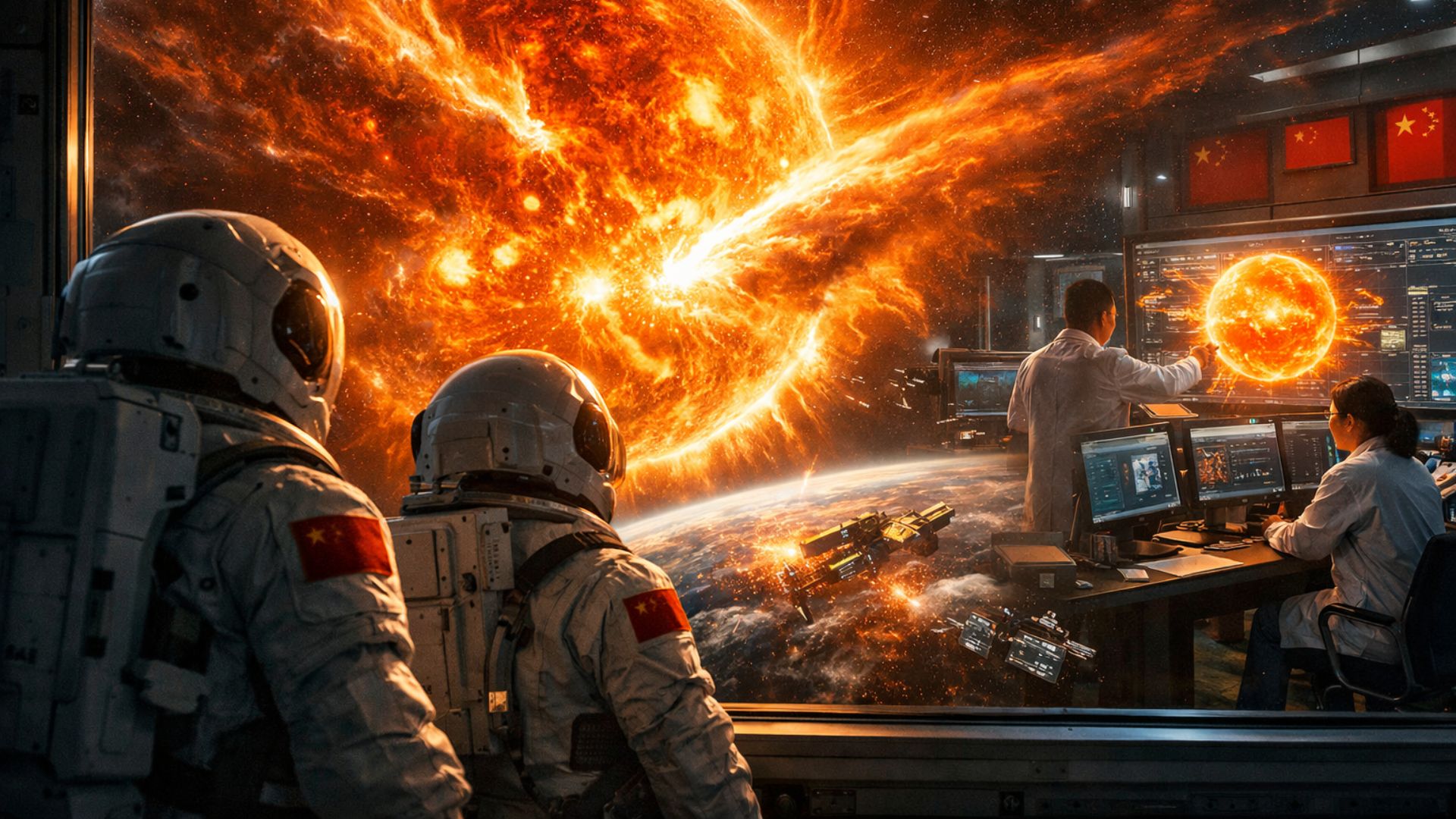
Unprecedented scientific infrastructure expands monitoring of space weather and strengthens protection of critical systems dependent on satellites, communication, and energy, with continuous observation between the Sun and the Earth and advanced capability to predict extreme events.
China announced the completion of the second phase of the Chinese Meridian Project, a scientific infrastructure that, according to the Chinese Academy of Sciences and the state agency Xinhua, has become the first comprehensive ground network capable of continuously monitoring the space environment between the Sun and the Earth, from the solar atmosphere to the near-Earth space.
The structure was nationally accepted on March 21, 2025, and has been presented by the country’s authorities as a strategic base for space weather forecasting and extreme event alerts.
Monitoring of space weather gains strategic status
The reach of this network helps explain why the topic has moved from the strictly academic field into the debate on critical infrastructure.
-
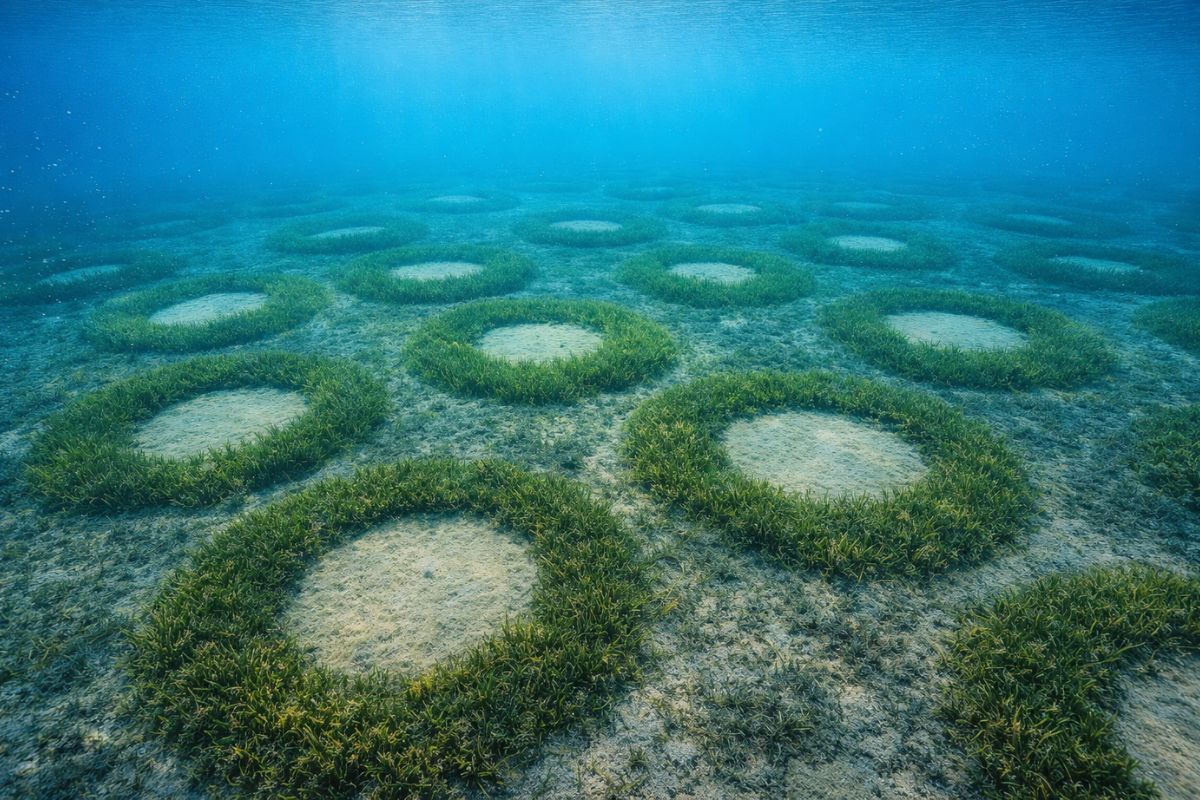
Scientists are baffled by hundreds of perfect circles that have emerged on the seabed in Scotland, formed by living seagrass meadows, and no one can explain whether it is nature self-organizing or something completely unknown to science.
-
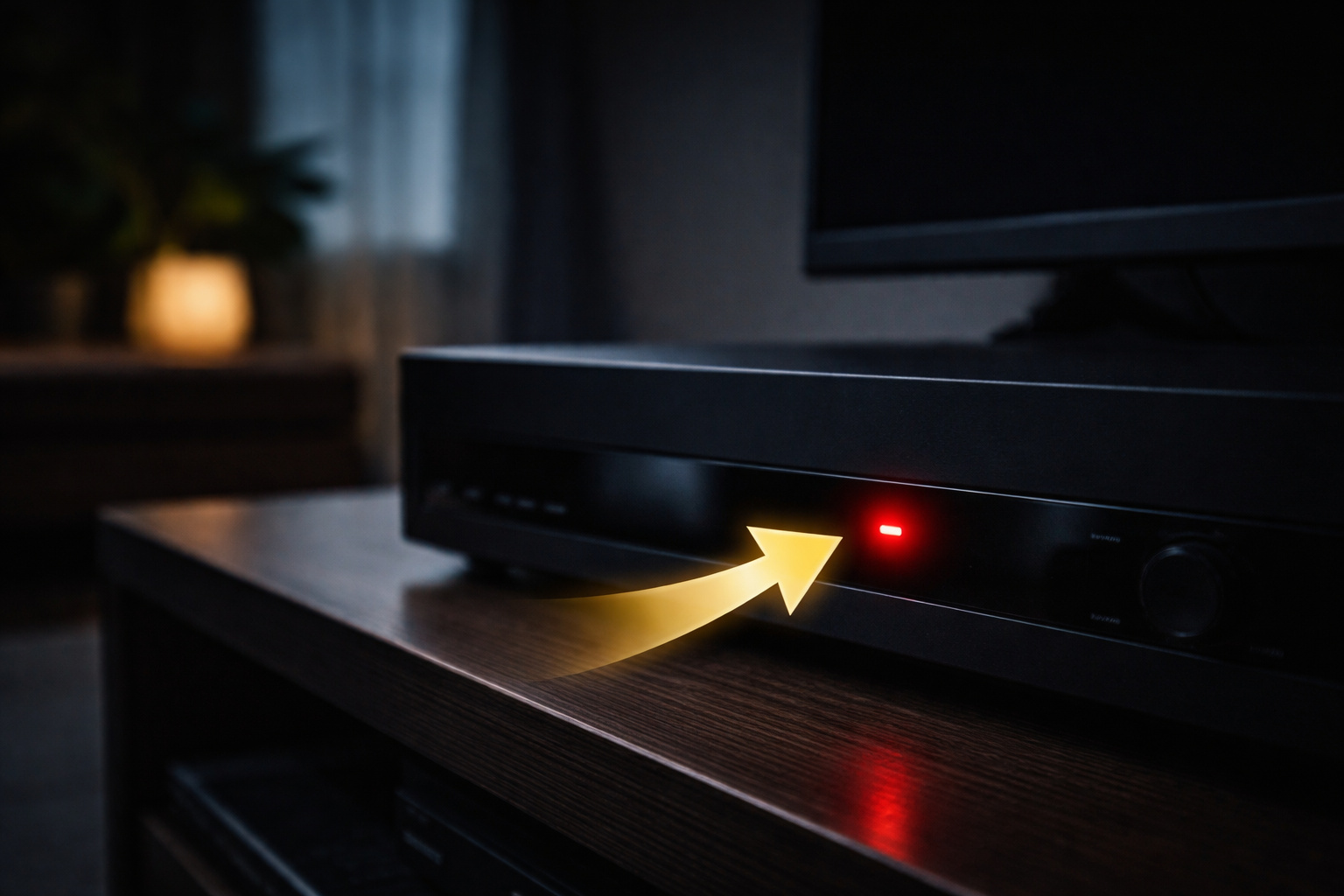
The energy consumption that goes unnoticed in millions of Brazilian homes does not come from the refrigerator or the air conditioner; it occurs even when everything seems to be turned off and can represent up to 12% of the electricity bill according to the International Energy Agency.
-
Hidden giants at the bottom of the North Sea reveal how 18,000-year-old icebergs help predict glacier collapse and rising oceans.

-
For more than 10 years, scientists have observed the ice of Greenland deforming into giant spirals without explanation; they have now discovered that solid ice can “boil” from within like magma, an invisible phenomenon that could alter climate predictions and involves a mass capable of raising sea levels by up to 7 meters.


Severe solar storms can compromise satellites, disrupt communications, divert navigation signals, and affect electrical grids, which is why observation and early warning systems are treated as instruments of technological and operational protection.
How monitoring works between the Sun and the Earth

In practice, the project was designed to track the entire chain of a space weather event, starting from solar eruptions, through the propagation of these disturbances in interplanetary space, and reaching the response of the upper atmosphere and the Earth’s ionosphere.
The official proposal states that this architecture allows for continuous observation, with high temporal and spatial resolution, of the physical processes linking the Sun to the vicinity of the Earth.
Expansion of the Meridian Project over decades
The backbone of the infrastructure began to be formulated decades before the delivery of the most recent phase.
The Meridian Project was proposed by Chinese scientists in 1993 and received official approval in 2006, as part of a phased deployment plan aimed at gradually expanding the observation coverage of near-Earth space.
In the first phase, which started in 2008 and concluded in 2012, 15 stations were installed along the 120° east meridian and at 30° north latitude.
The second phase, which began in 2019, added 16 new units and brought the network to 31 stations distributed in a grid described as “two vertical and two horizontal”, equivalent to a well-shaped arrangement.
Highlighted observation technologies and instruments
This expanded design incorporated a set of equipment that concentrates much of the international interest surrounding the initiative.
Among them is the Daocheng Solar Radio Telescope, a ring-shaped radio telescope that, according to the Chinese Academy of Sciences, can produce three-dimensional tomography of the solar corona with a field of view of up to 10 solar radii.
The technology allows for more detailed tracking of the origin and evolution of disturbances coming from the Sun.

The same phase included the first Chinese installation dedicated to three-dimensional reconstruction of the solar wind structure, a resource used to improve the reading of the interplanetary environment before a disturbance reaches the Earth’s vicinity.
Additionally, the network now includes a lidar system aimed at the continuous detection of metastable helium between 200 and 1,000 kilometers in altitude, a range considered relevant for the study of the upper atmosphere.
Radars and large-scale ionosphere observation
Closer to Earth, the project incorporated the first tri-static network of incoherent scattering radars described by official sources as capable of performing ionospheric tomography and three-dimensional imaging over distances of thousands of kilometers.
In addition, there is the Chinese Dual Auroral Radar Network, a grid of high-frequency radars that maintains continuous observation of ionospheric dynamics in Asia.
The coverage exceeds 4,000 kilometers in the north-south axis and reaches 10,000 kilometers in the east-west direction.
Control center integrates data and forecasts
The operational center that integrates this system was installed in Huairou, Beijing, where the functions of receiving, processing, and distributing data generated by the stations are concentrated.
According to the institutional presentation of the project itself, the unit also coordinates scientific operations, space environment forecasting services, and the production of more than 50 integrated products aimed at research and real-time monitoring.
Super solar storm of 2024 served as a real test
Even before the formal completion of the second phase, the network had already been put to the test during a high-profile episode for the scientific community.

During the geomagnetic superstorm in May 2024, the system recorded in real-time the response of the space environment to increased solar activity.
The event was classified as level G5, the highest category on the operational scale used by international monitoring centers.
The episode served, in the official Chinese narrative, as a demonstration of the reliability of the infrastructure still in experimental operation.
Global impact and Chinese scientific autonomy
The scale of the undertaking also appeared in scientific publications outside the official government communication.
The journal National Science Review classified the project as the largest and most comprehensive ground network ever completed to monitor the solar-terrestrial environment.
This scale expansion reinforces an important shift in China’s position in this sector.
By consolidating its own observation base, the country becomes less dependent on international networks to feed its models and space forecasting services.
At the same time, it strengthens applications aimed at launches, orbital operations, telecommunications, navigation, and protection of energy systems.
Practical applications and protection of essential services
The official website of the Meridian Project states that the data from the network has been structured to support both research on fundamental physical processes and practical applications related to essential services.
In this design, the goal is not limited to observing solar phenomena.
The central objective is to transform these observations into useful operational information, capable of anticipating risks and reducing vulnerabilities in areas increasingly dependent on satellites, positioning signals, and high-availability communications.






Seja o primeiro a reagir!