





 Portuguese
  English
  Spanish
  5 min of reading
  0 comments


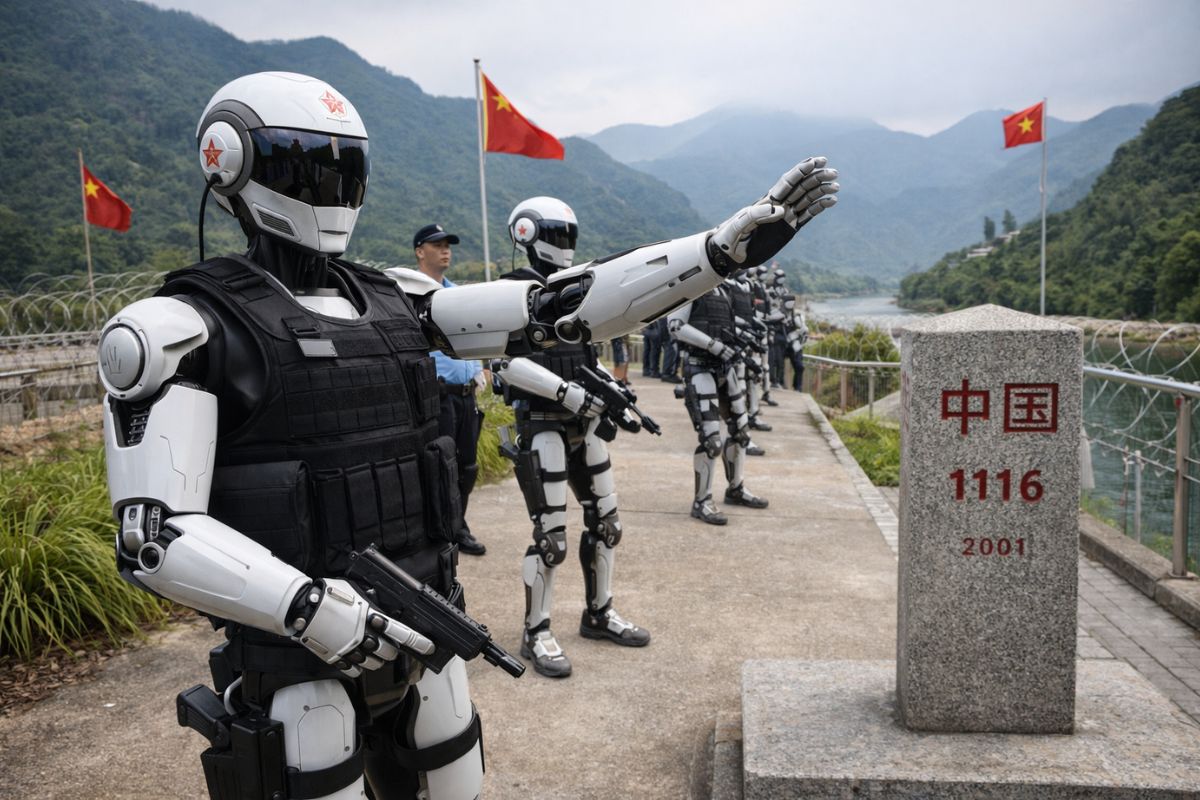
China tests humanoid robots from UBTech Robotics at the border control with Vietnam using the Walker S2 model, capable of changing its own battery for prolonged operation, with a contract of 264 million yuan and a goal of 10,000 units delivered by 2027 after raising nearly 400 million dollars.
While the world debates the future of artificial intelligence in offices and factories, China has decided to test humanoid robots in a scenario few expected: control posts at the border with Vietnam. UBTech Robotics, a Chinese robotics company based in Shenzhen, won a contract worth 264 million yuan, about 37 million dollars, to install humanoid robots at a robotics center in the city of Fangchenggang, located in Guangxi province, near the Vietnamese border. The humanoid robots will assist in passenger guidance, inspections, and logistics at the border posts.
The project is not a laboratory prototype. UBTech has already completed a fundraising of approximately 389 to 394 million dollars on the Hong Kong stock exchange and plans to use three-quarters of that capital over the next two years to invest in supply chain companies, acquire complementary technologies, and scale the production of humanoid robots. The long-term goal is ambitious: to deliver 10,000 units by 2027, a significant leap for an industry that is still in its early stages of application in the real world.
The Walker S2 model: the humanoid robots that China deployed at the border

According to EcoNews, the model chosen for the border project is the Walker S2, launched by UBTech in July 2025.
-
A cave in Morocco reveals jaws, teeth, vertebrae, and a femur dating back 773,000 years that may belong to archaic humans close to the ancestors of Homo sapiens, potentially changing what was known about the origin of our lineage in Africa.

-
Artemis 2 returns in extreme mode: the Orion capsule reenters at over 30,000 km/h, faces 2,700°C, experiences communication blackout, and navigates a narrow corridor, relying on the thermal shield and parachutes to land safely in the ocean.

-
Astronauts from Artemis 2 flew over the side of the Moon that is never visible from Earth and found mysterious formations with such intense brightness that they appeared to be covered in snow.

-
Commercial satellites captured images in the Taklamakan Desert of giant replicas of US aircraft carriers and destroyers, with tracks and precise impact craters, deliberately exposed to demonstrate power and change the global naval game.

These humanoid robots are designed for industrial level and have a capability that sets them apart from laboratory demonstrations: they can change their own battery, allowing prolonged operation without human intervention for recharging. This is crucial at a border post that operates 24 hours a day.
In addition to border control, the Walker S2 humanoid robots are being pointed for use in heavy industry inspections, where dangerous or hard-to-reach environments make human presence risky or inefficient.
The head of branding at UBTech, Michael Tam, stated to the South China Morning Post that the company hopes to deliver 500 units initially and significantly increase production in 2026, with the goal of 10,000 units shipped by 2027. This timeline only works if the humanoid robots prove their reliability outside the controlled environment of a factory.
The nearly 400 million dollars financing the expansion of humanoid robots

UBTech’s fundraising on the Hong Kong stock exchange was completed in December 2025, with the sale of 31,468,000 new shares at 98.80 Hong Kong dollars each.
The net revenue was around 3.06 billion Hong Kong dollars, equivalent to approximately 389 to 394 million US dollars, a capital volume that positions the company to aggressively scale the production of humanoid robots.
Of the total amount raised, about 75% will be allocated to investments in supply chain companies or the creation of joint ventures over the next two years. Another 15% will go to operations, development, and infrastructure, including working capital and facility construction.
The remaining 10% covers payments on existing lines of credit. This breakdown reveals how capital-intensive humanoid robot production is: research, development, and hardware require ongoing investments before revenues from contracts like the one at the Vietnam border start to return.
Why China chose humanoid robots for border control
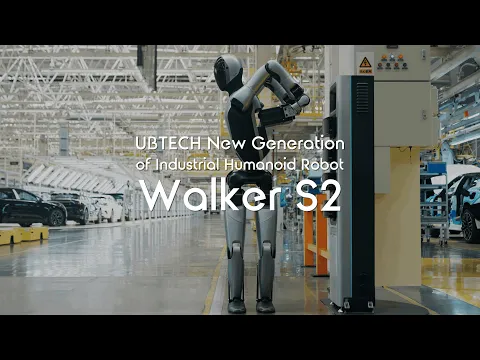

Border posts are high-demand logistical environments that operate continuously. The combination of a constant flow of people, the need for standardized inspections, and 24-hour operation makes border control an ideal scenario for testing humanoid robots in real working conditions, away from the controlled environment of robotics laboratories.
Robots can guide passengers in lines, perform visual inspections, and assist in document logistics without breaks for rest.
For China, the humanoid robot project at the border with Vietnam serves as a technological showcase and a stress test. If the Walker S2 operates reliably at a busy border post, the argument for expanding use in airports, ports, factories, and inspection centers becomes much stronger.
The Fangchenggang contract is small in scale but strategic in visibility: it proves that humanoid robots can work in direct public contact roles, not just on assembly lines.
What separates laboratory demonstrations from humanoid robots in real operation
The humanoid robotics market is still dominated by videos of acrobatics and impressive demonstrations that seem more like entertainment than business. What differentiates humanoid robots in real operation is daily reliability: the ability to function for hours on end, handle unforeseen situations, withstand variable environmental conditions, and require minimal maintenance.
Automatic battery swapping, integration with existing systems, and scalable technical support are the factors that determine whether a customer renews the contract.
UBTech has already conducted several fundraising rounds in the past 12 months, raising amounts ranging from 15 million to over 300 million dollars in different rounds.
This pattern of continuous fundraising reflects the high cost of developing and producing humanoid robots at scale, but also the growing interest from investors who see in the segment a market with explosive growth potential as production costs decrease and reliability increases.
What the goal of 10,000 humanoid robots by 2027 means for the future of work
If UBTech meets the timeline, China will have 10,000 humanoid robots operating in different sectors in less than two years. This volume transforms humanoid robots from a technological curiosity into a working tool that competes with human labor in repetitive, dangerous, or continuous operation roles.
The implications range from the reorganization of border posts to the automation of industrial inspections and public service.
The debate about humanoid robots replacing human workers is no longer theoretical. With contracts signed, units being delivered, and capital being invested at scale, the question now is about the speed of adoption and how societies and labor markets will adapt.
The border between China and Vietnam may be the first place where this transition becomes visible to the general public. And what happens there is likely to be repeated on a much larger scale in the following years.
What do you think about humanoid robots controlling borders? Do you believe this technology will expand to airports and other public services, or will human resistance slow down adoption? Share in the comments. The future of work is being tested now, at a border post between China and Vietnam.








Seja o primeiro a reagir!