






 Portuguese
  Spanish


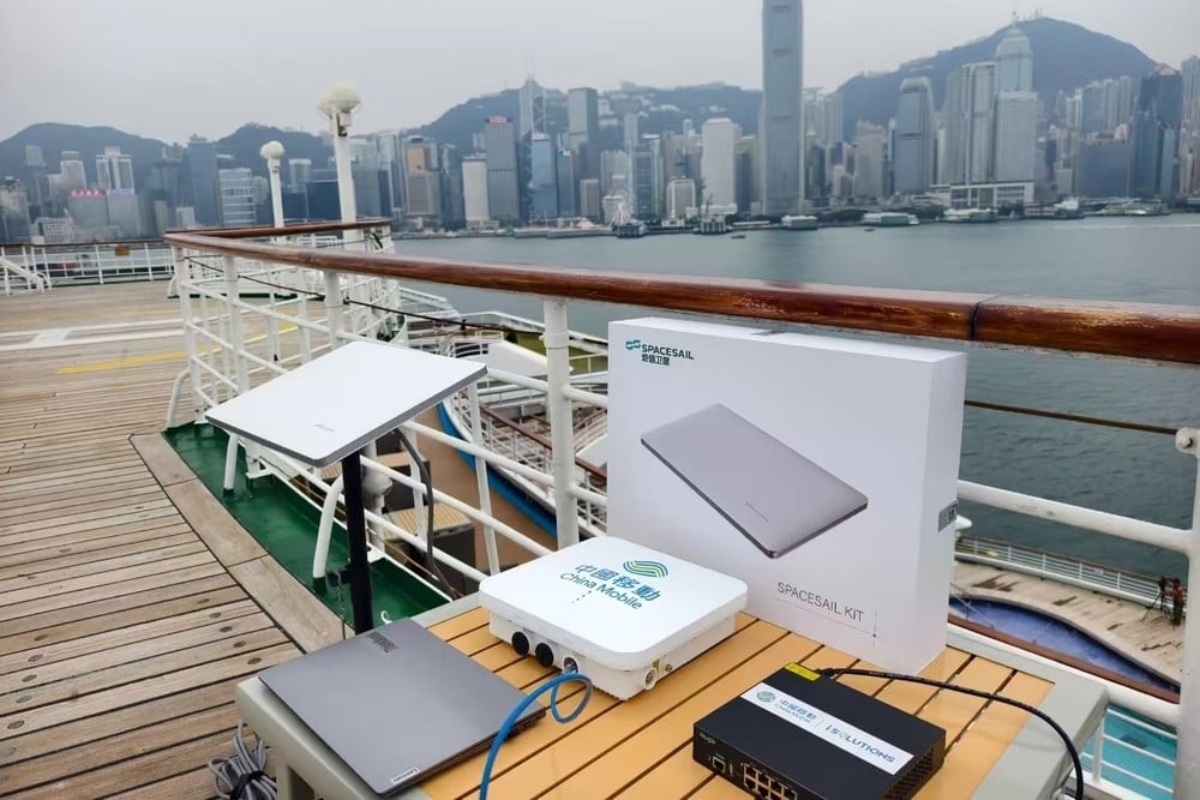


The Arrival of SpaceSail in Brazil Inaugurates Direct Competition with Starlink, Bringing Advanced Satellite Internet, Billion-Dollar Investment, and Focus on Expanding National Connectivity
Brazil has just entered the center of an international dispute that promises to transform connectivity throughout the Southern Hemisphere. The Chinese company SpaceSail, based in Shanghai, has officially started its operations in the country and revealed an ambitious plan to bring ultra-fast satellite internet to the most remote regions of Brazilian territory, directly competing with Elon Musk’s Starlink.
This new phase marks the beginning of a billion-dollar dispute in Earth’s orbit, where the United States and China are engaged in one of the most strategic technological races of the last decade. Experts believe that this competition could redefine how the world connects and pave the way for a new geopolitical balance in the digital sector.
Brazil Receives First Chinese Space Internet Base
-
Digital Transformation Essential in Energy, Oil, and Gas Industries, But IT Infrastructure Often Overlooked

-
Brazilian Students Repurpose Clay Tea Cups to Create Cooler That Lowers Room Temperature by Up to 10°C Without Air Conditioning or Fans
-
353-Year-Old Mystery Deepens as Archaeologist Arrested with Teeth and Bone Fragment Possibly Linked to d’Artagnan, the Real Musketeer Behind Alexandre Dumas’ Inspiration

-
16-Year-Old Invents CoolTowel, a Fitness Towel That Stays Cold for Up to 2 Hours, Wins Global Alibaba Competition with Over 15,000 Participants, Earning $1 Million




The entry of SpaceSail into the country was made possible by an agreement made with Telebras to expand broadband access in areas without fiber optic infrastructure.
The company plans to launch 648 low Earth orbit satellites later this year and expand its constellation to about 15,000 units by 2030. Coverage is expected to reach more than 30 countries, including a large part of South America.

The investment is substantial. In 2024, the company raised 6.7 billion yuan, equivalent to approximately 4.8 billion reais, in a funding round led by a Chinese state fund responsible for promoting space technologies.
According to information from Reuters, part of this amount is being directed toward the construction of control centers and antennas on the ground. One of the first is already operational in Brazil, consolidating the country as a strategic piece of the Chinese operation in the Southern Hemisphere.
A Worthy Competitor to Starlink
Starlink currently has nearly 7,000 low Earth orbit satellites operating and plans to close the decade with a constellation of up to 42,000 units. SpaceSail follows a similar strategy but with an important difference: direct support from the Chinese government as part of a national digital sovereignty project.
China is also developing the Qianfan constellation, called Mil Velas, along with other parallel programs that total more than 43,000 planned satellites.
This set of initiatives is part of the technological autonomy policy promoted by Beijing and has raised concerns among Western countries, which fear a possible export of the Chinese internet information control model.
Why LEO Satellites Are So Important

The satellites used by SpaceSail operate at altitudes ranging from 500 to 2,000 kilometers above the Earth’s surface, much lower than traditional satellites. This proximity allows for much higher speeds and reduced latency, essential characteristics for live broadcasts, online gaming, and stable video conferences.
The technology is the same used by Starlink, which dominates the global remote and rural internet market.
With the entry of the Chinese, analysts believe that the sector could experience a significant price drop and a substantial expansion of coverage, especially in regions where telecommunications infrastructure is still limited, such as the Legal Amazon, rural areas of the Northeast, and mountainous regions of the Southeast.
Other competitors are also trying to advance, such as OneWeb, which has about 630 satellites in operation, and Amazon’s Project Kuiper, which plans to launch over 3,000 units.
None of them, however, present a scale comparable to the mega-constellations planned by China and the United States.
Brazil Becomes a Protagonist in the New Digital Race
With the establishment of SpaceSail, Brazil confirms itself as the first country outside Asia to receive a Chinese space internet base.
The expectation is that, in a few years, the country will become a signal redistribution center for Peru, Bolivia, Paraguay, and other neighboring nations, expanding Chinese influence in the South American orbital space.
For millions of Brazilians who still live without access to stable connectivity services, this dispute could represent a historic turning point.
The expansion of SpaceSail is seen by experts as a decisive step towards a more accessible, modern, and inclusive internet, capable of reducing inequalities and accelerating digital transformation across South America.
The race now advances beyond Earth and establishes itself in the skies. And Brazil emerges as one of the main protagonists of this new phase of global connectivity.
The arrival of this new technology shows how the race in space already directly affects our daily lives. What do you think of this transformation in Brazil’s connectivity? Leave your comment and join the conversation


