





 Portuguese
  English
  Spanish
  6 min of reading
  1 comment


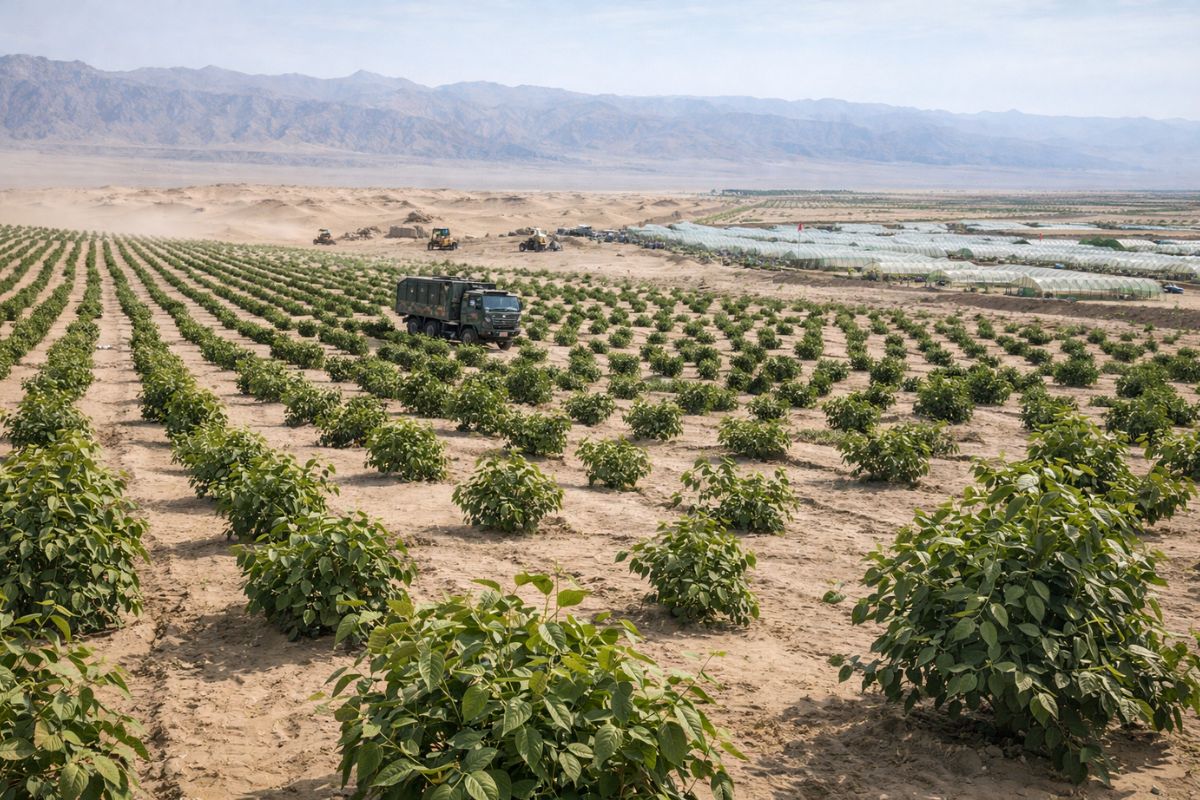


While The Gobi Desert Gains Agriculture Projects In The Desert With Duzhong, China Produces Natural Rubber And Military-Grade Rubber To Reduce External Dependence.
As the war reshapes global supply chains, China is transforming the Gobi Desert into a showcase for strategic agriculture to produce high-value natural rubber. Far from traditional tropical plantations, the country has begun to use the arid region as a laboratory for a little-known crop outside of Asia: Duzhong, a tree capable of providing military-grade rubber and reinforcing the supply security of one of the world’s largest rubber consumers.
Behind the inhospitable landscape of the Gobi Desert, there is a quiet race. China consumes more than 7 million tons of natural rubber per year, and over 85% of that volume still comes from abroad. This vulnerability has led Beijing to bet on Duzhong as a native alternative to supply the automotive, industrial, and defense sectors, in a move that has evolved from a risky test on 14 hectares to a plan to expand cultivation to 3.3 million hectares by 2030.
Why The Gobi Desert Became A Laboratory For Strategic Rubber
The decision to bring Duzhong cultivation to the Gobi Desert has less to do with the romance of “making the desert bloom” and more with state strategy.
-
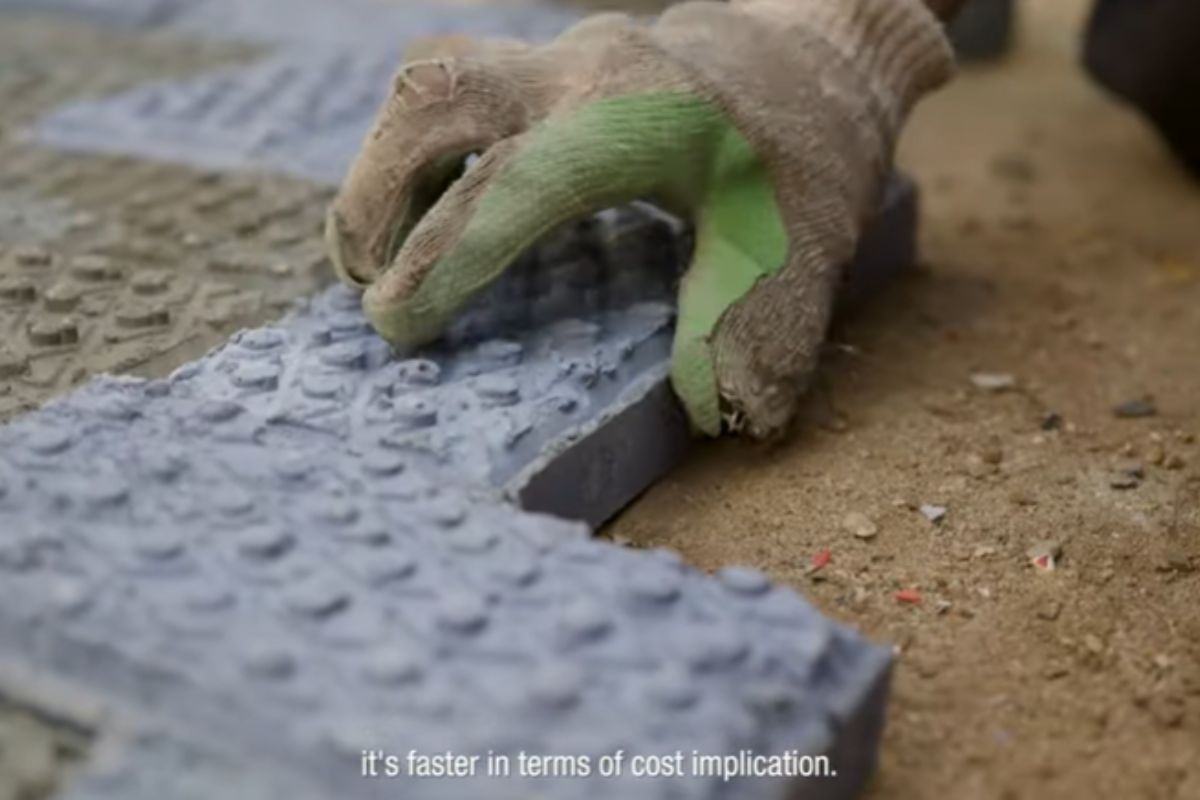
In Kenya, engineer Nzambi Matee created “bricks 2.0” using packaging plastic: a mixture with sand, heated and pressed; they are 5 times more resistant, already have official licensing, and are being used in streets and construction projects.
-
More than 20,000 positions could be opened, and thousands of technicians are starting to be trained in Brazil, as the expansion of data centers creates an urgent race for professionals to keep the internet, cloud, and artificial intelligence running 24 hours a day.

-
China approves the 15th Five-Year Plan 2026-2030 to become a global power: prioritizes brain implants, 6G with AI, humanoid robots, flying cars, quantum technology, and nuclear fusion, while strengthening defense and the economy.

-
HONOR X80i arrives with a massive 7,000 mAh battery, a 120 Hz AMOLED display with a brightness of 6,500 nits, and the new Dimensity 6500 Elite chip, promising up to 22 hours of video playback and impressive performance in casual gaming.


China remains the world’s largest consumer and importer of natural rubber, driven by a massive automotive industry and rubber-intensive industrial sectors.
When over 85% of the raw material comes from abroad, any geopolitical or logistical shock becomes a direct risk to the economy and defense.
It is in this context that Duzhong, or Eucommia ulmoides, comes in. This resilient tree is the only native source of natural rubber in China and represents the second-largest rubber reserve in the world, having been valued for centuries for its bark in traditional Chinese medicine.
Transforming this asset into an industrial-scale crop, adapted to the arid climate, means reducing dependence on tropical plantations abroad and gaining a domestic source of high-performance rubber.
Duzhong: From Traditional Pharmacy To Military-Grade Rubber

For a long time, Duzhong was mainly seen as a medicinal plant. Its bark is used in traditional formulas, and cultivation was concentrated in central and southern China, especially in the Yangtze River Plain.
The rubber extracted from this tree, however, has proven to be far more valuable than previously thought. Adding just 3 to 5% of Duzhong rubber to a common compound significantly increases durability and wear resistance, which is essential for high-performance and puncture-resistant tires.
Furthermore, this rubber is used in advanced composites employed in electromagnetic shielding and next-generation defense systems.
In other words, Duzhong has shifted from being just a pharmacy tree to becoming a critical ingredient for the Chinese military industry, precisely at a moment when the country seeks to reduce external risks in its strategic supply chains.
The problem is that, until recently, production was limited. Yields were modest, and the rubber extraction process was labor-intensive and inefficient, which restricted the role of Duzhong in large-scale industrial and military supply chains.
It was necessary to tackle this limitation with science, genetics, and process engineering for the tree to migrate to the Gobi Desert and large-scale projects.
From A 14-Hectare Pilot To A Goal Of 3.3 Million In The Gobi Desert
The turning point came in 2016 when a team led by Su Yinquan, dean of the College of Forestry at Northwest A&F University, decided to lease 14 hectares of arid land in the Gobi Desert in Xinjiang.
The question was simple and risky at the same time: could Duzhong survive and grow in one of the harshest landscapes in China?
It was the first time the medicinal tree was planted in that region. What initially seemed like a high-risk experiment soon transformed into a dense and productive forest.
The former wasteland became a green mosaic of Duzhong, surprising even the most optimistic researchers.
Professor Zhu Mingqiang, who has been following the project from the beginning, recently stated that the Duzhong industry “is thriving.”
Today, China is already cultivating the tree on about 300,000 hectares, with plans to expand to 3.3 million hectares by 2030, including another 300,000 hectares in Xinjiang alone.
This means that the Gobi Desert is no longer just a testing ground but is consolidating as one of the main fronts of the Chinese strategic rubber project.
Genetic Improvement: Designing A Tree For The Desert
Transforming a medicinal species into a reliable crop for the Gobi Desert required much more than “planting and hoping.”
The first major challenge was genetic. To tackle it, the research team established a specific improvement base in Lueyang County, Shaanxi, where Northwest A&F University is located.
Using indicators of medicinal value and rubber yield, the scientists selected over 50 elite Duzhong germplasms collected from different regions of China.
From this collection, they developed a systematic genetic improvement program, seeking lines that combined high rubber content with the ability to withstand poor soil, low water, and large temperature variations.
The result was the creation of lines adapted to arid and desert conditions, capable of growing in areas that were historically considered unproductive.
In practice, genetic improvement has transformed Duzhong into a “desert-ready” species, able to occupy and stabilize parts of the Gobi Desert, while simultaneously generating high-value strategic raw material.
From Bark To Leaves: Extracting Rubber From Every Part Of The Tree
Even with a tree adapted to the Gobi Desert, the equation would only work out if rubber extraction was efficient throughout the plant.
The National Development Plan for Duzhong Industry in China for the period from 2016 to 2030 shows why. The fruit’s bark contains between 15 and 18% natural rubber, the trunk’s bark between 8 and 10%, and the leaves 2 to 3%.
This means that economic viability depends on exploiting fruit, bark, and leaves in an integrated manner, not just one isolated part of the tree.
In November, Zhu announced a crucial innovation: a rubber-priority extraction process published in the journal ACS Sustainable Chemistry & Engineering.
The method combines eco-friendly low-melting-point solvents with biological treatment in the initial stage, first separating the gum and then isolating the rubber in specific stages.
According to researchers, the new process is faster, more sustainable, and significantly reduces energy and solvent consumption, while still maintaining high yields and elevated purity.
In practice, this makes large-scale production of Duzhong rubber more feasible, especially in extensive plantations in the Gobi Desert, where every efficiency gain counts.
What Is At Stake In Transforming The Gobi Desert Into A Rubber Hub

China’s bet on Duzhong and the Gobi Desert is not just a story of agricultural innovation. It involves national security, reconfiguration of supply chains, productive use of arid areas, and building a domestic base for inputs that feed both industry and defense.
By creating an integrated chain that extends from genetic improvement to advanced extraction, Beijing aims to reduce dependence on foreign tropical plantations and build a strategic cushion for its growing consumption of natural rubber.
At the same time, expansion to millions of hectares raises questions about environmental impacts, water use, balance with other land uses, and the speed of this transformation itself.
In the end, the Gobi Desert ceases to be just an empty space on the map and becomes a symbol of a new type of frontier: the use of science, genetics, and engineering to transform extreme landscapes into platforms for strategic production.
And you, do you think transforming the Gobi Desert into a Duzhong rubber hub strengthens China’s security without major environmental risks, or could this expansion come at a high cost in the future?







Achei ótimo. Parabéns pela iniciativa . Porque se e possível cultivar Árvores para extração de borracha . É possível desenvolver outras plantas para este local árido.