





 English
  Francês
  Alemão
  Italiano
  Japonês
  Norueguês
  Portuguese
  Spanish
  4 min of reading
  0 comments



Ambitious Project of CNSA, in Partnership with More Than 40 Countries, Promises to Revolutionize Space Exploration with a Lunar Base at the South Pole of the Moon
China is getting closer to realizing its plans for space exploration by advancing the construction of the International Lunar Research Station (ILRS). The initiative, led by the China National Space Administration (CNSA), aims to establish a scientific station on the Moon by 2050, with the first phase of the base planned for completion in 2035. The project already has the cooperation of more than 40 countries, including strategic partnerships with the European Space Agency (ESA), according to the website Terra.
Initial Phase of the Project and Chang’e Missions
The CNSA launched the Chang’e-6 mission, responsible for collecting essential materials from ESA, marking the beginning of the first stages of construction. This phase will be crucial for the development of a lunar base at the south pole of the Moon, an area chosen for its valuable resources, such as water, that will be essential for survival and research. The initial base will focus on scientific experiments and the study of the feasibility of using limited lunar resources.


With the first part of the station expected by 2035, the ILRS promises to be an essential infrastructure for lunar exploration and colonization. Construction will be developed in stages, aiming to create a permanent base capable of hosting scientific experiments and establishing strategies for sustainable lunar exploration.
-
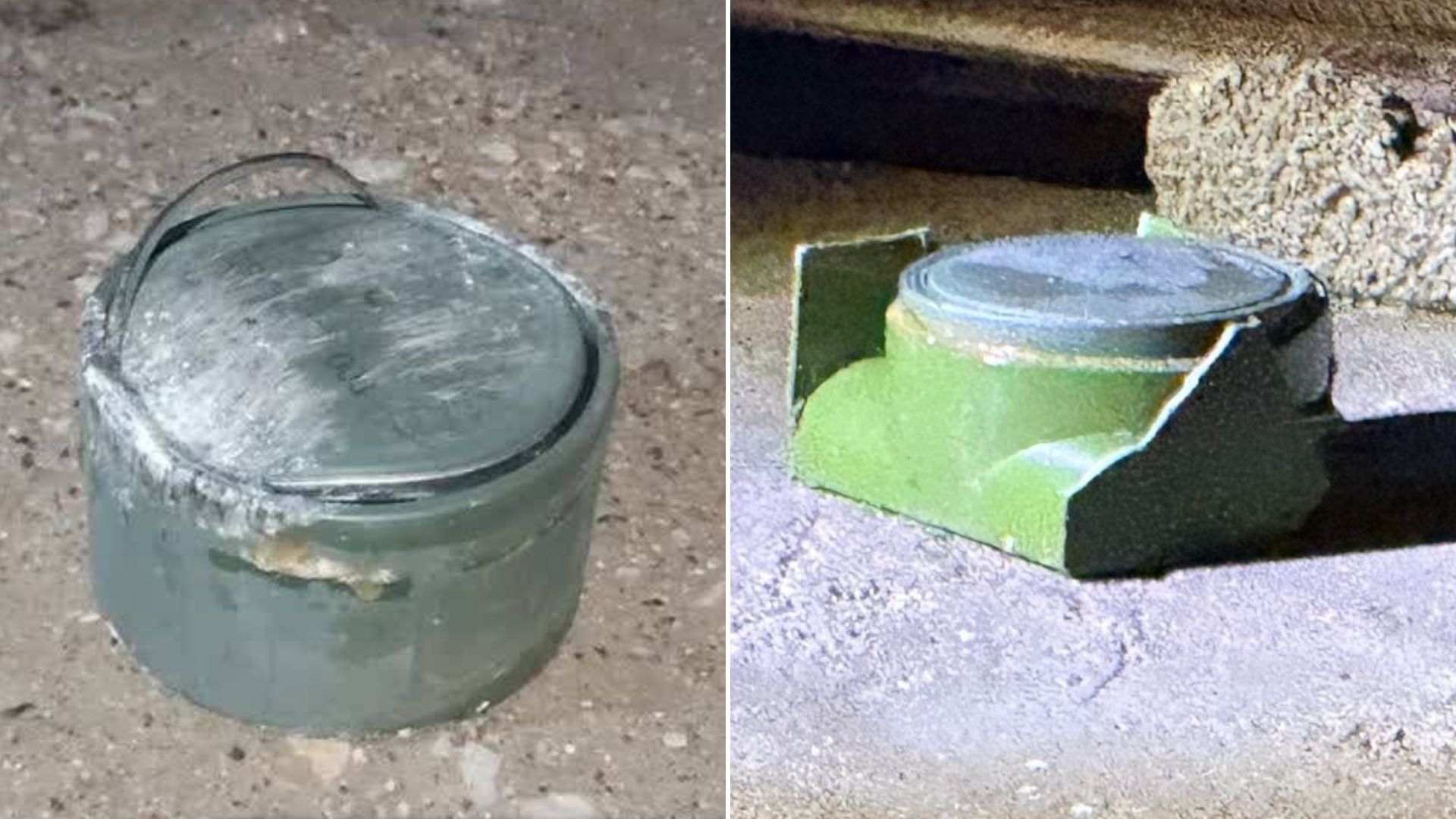
Anti-tank mines appear near a missile base in Iran, causing fatalities and raising suspicion of a new move to block underground launchers.
-
Contaminated water from uranium threatens mining areas, and Chinese scientists have created a solar-powered living filter that could change environmental decontamination.

-
Archaeologists find in Mexico a sacrifice altar over 1,000 years old, surrounded by skulls, human bones, and signs of rituals from the Toltec Empire.

-
Goodbye to the traditional oven? IKEA draws attention with a 3-in-1 microwave that combines an air fryer, grill, and heating in the same compact, affordable appliance designed for small kitchens.


Main Objectives of the Scientific Station
The main objective of the ILRS is to enable fundamental scientific experiments for lunar exploration. The initial phase, expected by 2035, will serve as a base for scientists to develop technologies that allow the utilization of resources available on the Moon. The location at the lunar south pole was strategically chosen for its water ice presence, which can be converted into water, an essential element for future crewed missions and for establishing a permanent human presence.
Another focus of the project will be the development of technologies for sustainable energy production on the Moon. The energy supply will be crucial for maintaining the operations of the scientific station and ensuring the continuity of research. Additionally, the ILRS will act as a starting point for future space missions, including the long-awaited crewed landing on Mars.
The Lunar Station in 2050
By 2050, China expects a significant expansion of the ILRS, which will integrate a transport network connecting the lunar south pole to the equator and the far side of the satellite. This advancement will be essential for the creation of sustainable infrastructure on the Moon, allowing for continuous and self-sufficient operations. Among the planned innovations are:
- Sustainable Energy Supply: An autonomous system to ensure constant energy to the station.
- Central Control and Communication: Advanced communication networks to support operations.
- Advanced Navigation: A navigation system that connects different points on the lunar surface.
- Earth-Moon Transport Management: Efficient logistics for transporting materials between Earth and the Moon.
- Scientific Research Infrastructure: Advanced laboratories and equipment for cutting-edge experiments.
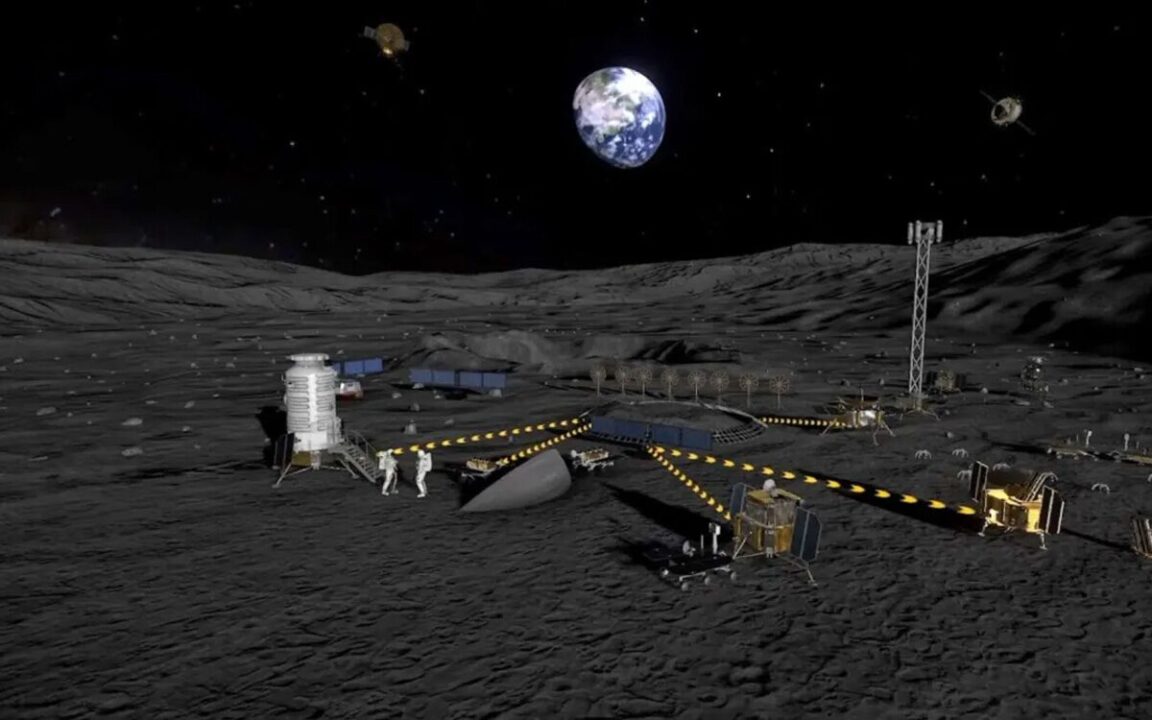
Additionally, a space station in lunar orbit will be installed to conduct scientific research and test essential technologies for future crewed missions. This advancement will be crucial for achieving a crewed landing on Mars, a goal that China aims to reach in the coming decades.
Future Chang’e Missions
The Chang’e-7 and Chang’e-8 missions, scheduled for 2026 and 2028, will play a key role in building the ILRS. These missions are planned to explore the far side of the Moon, conduct environmental surveys and test technologies for lunar resource utilization. The success of these missions will be crucial for the installation of the basic infrastructure of the scientific station and ensuring the project’s progress.
Among the main tasks of these missions are:
- Exploration and Mapping of the Far Side of the Moon: Identifying strategic areas for future operations.
- Environmental Surveys: Collecting data on the geology and composition of the lunar surface.
- Testing Resource Extraction Technologies: Verifying the feasibility of using available resources, such as water and minerals, to support future operations.
These activities will be essential to ensure that the lunar station is equipped with the best technologies and scientific knowledge available, allowing continuity of operations for many decades.
Global Impact of ILRS
The International Lunar Research Station represents a milestone in global space exploration, and China’s leadership in the project highlights the country’s advancement in the aerospace sector. With the participation of more than 40 countries, the ILRS will become an international center for scientific research and innovation, opening new frontiers for space exploration.
The construction of the lunar station will also drive the development of new technologies, creating opportunities for international collaborations and scientific advancements that will benefit not only lunar exploration but also the future of humanity in space. The project is a significant step toward lunar colonization and the exploration of other planets like Mars.







Seja o primeiro a reagir!