





 Portuguese
  English
  Spanish
  2 min of reading
  0 comments


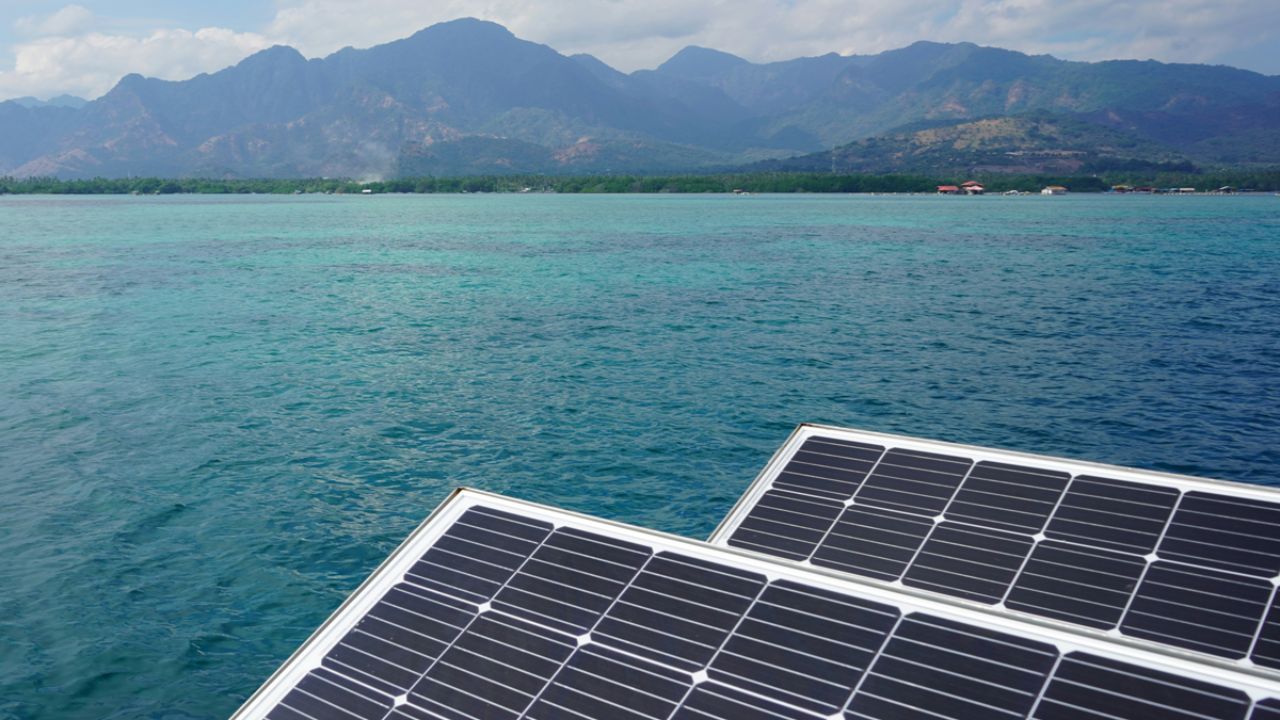
Pioneering Project Uses Technology That Allows Solar Panels To Rise And Fall With The Tides, A Advance To Optimize Energy Efficiency Offshore.
China, through the state-owned State Power Investment Corporation (SPIC), inaugurated its first floating solar park in open sea. Located on the coast of Haiyang, in Shandong Province, the pilot installation represents a bold step for renewable energy generation in one of the planet’s most challenging environments.
Panels That Adapt To The Tides
The great differentiator of this project is its ability to interact with the ocean. The structure has been designed so that the photovoltaic panels rise and fall according to the movement of the tides.
This innovative technology keeps the panels in direct and constant contact with water. The main benefit is naturally cooling the panels, which, in turn, increases their efficiency in producing electricity.
-
A Canadian retiree creates a hydroelectric system on a real river, generating energy continuously throughout the day and demonstrating how the power of water can supply a house with stability even in a simple structure.

-
Petrobras reaffirms its commitment to the market and ensures that it will carry out the energy transition safely to maintain national sovereignty.

-
Researchers discover a possible hydrogen deposit of up to 46 million tons beneath an ancient coal basin, and the volume could exceed half of the entire global production.

-
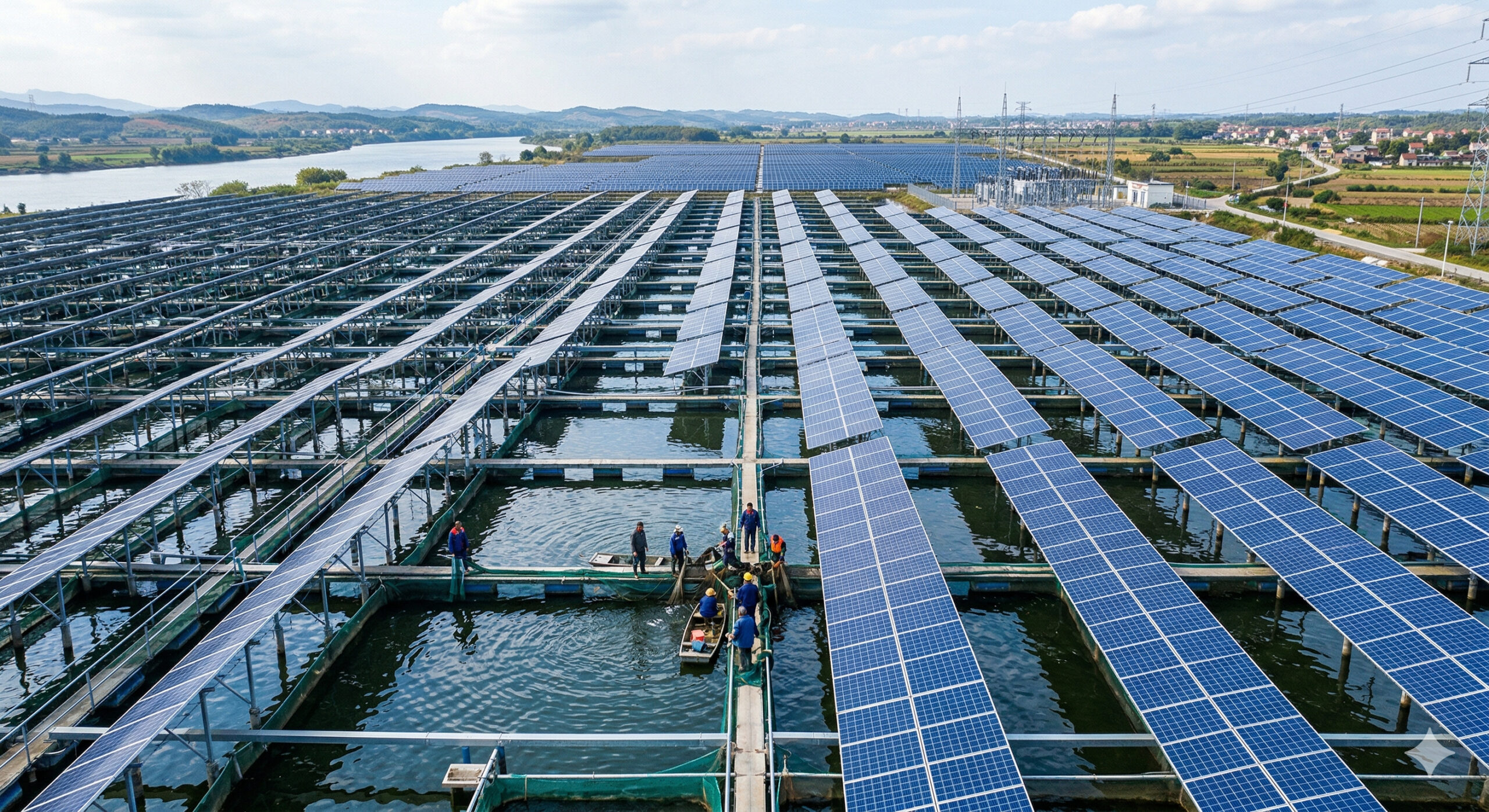
China bets on the Fishery-PV model and transforms fish farms into giant solar plants, covering ponds with panels that generate energy while utilizing the same space for large-scale aquaculture production.

The Challenges Of The Marine Environment For Solar Energy
Generating energy in open sea imposes severe obstacles. Unlike solar farms in calm lake waters, an ocean plant needs to be sturdy enough to withstand waves, typhoons, and the corrosive effect of salt.
The park’s structure has been developed to be highly resistant. With a low profile in the water, it is less exposed to wind forces, being specifically designed to withstand the passage of typhoons.
The Technology Behind The Pioneering Project
The technology enabling the plant was developed by the Norwegian company Ocean Sun. The system is based on conventional solar panels mounted on a special floating membrane. It is this base that ensures mobility with the tides and cooling.
This is the first time Ocean Sun’s solution has been implemented in open sea, serving as a fundamental test for future commercial applications in oceanic conditions.
A Pilot Project With Plans For Large Expansion
Currently, this initial phase of the floating solar park has an installed capacity of 0.5 MW. However, this is just the beginning of a much larger project.
SPIC’s plan is to expand the plant’s total capacity to 20 MW. The success of this pilot is crucial to validate the technology at a large scale and establish the floating solar park as a new and powerful source of clean energy.
With information from Xataka.








Seja o primeiro a reagir!