





 Portuguese
  English
  Spanish
  3 min of reading
  0 comments


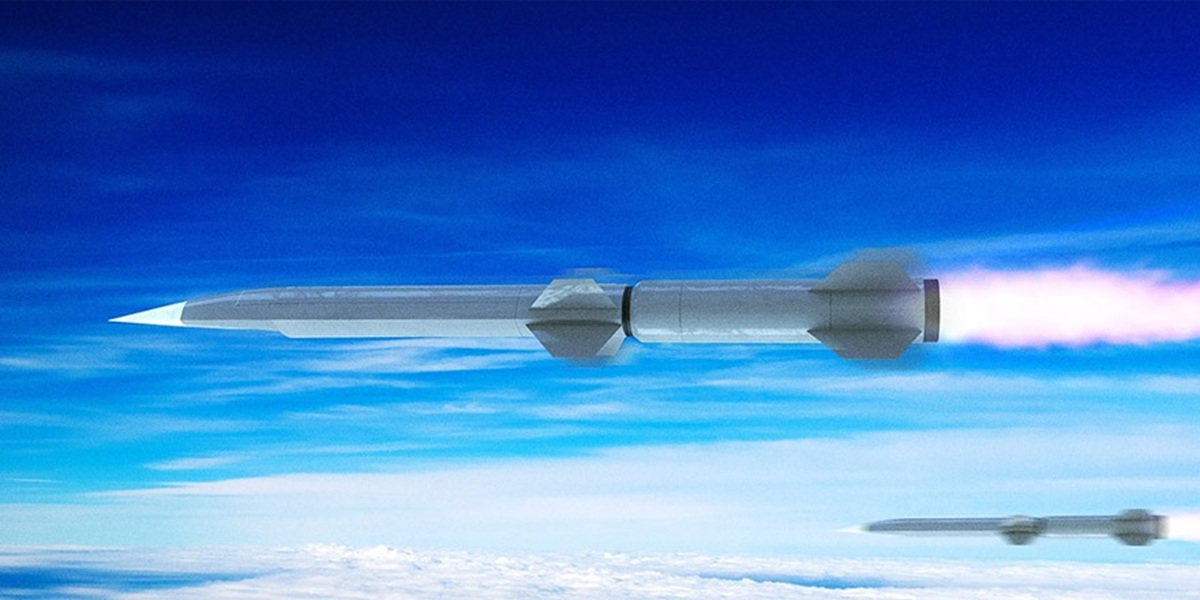
Chinese Military Network Surpasses NATO Link 16 by One Hundred Times, Enabling Real-Time Coordination of Hypersonic Vehicles at Mach 11.
China has introduced a technological innovation that promises to alter the global strategic balance. The country revealed a military communications network designed to tackle the challenges of hypersonic warfare, where aircraft reach Mach 5 and missiles hit Mach 11.
The new system ensures precision timing synchronization of five nanoseconds, surpassing the Western NATO Link 16 by one hundred times.
Developed by China Electronics Technology Group Corporation (CETC), the resource allows secure and instantaneous coordination among hypersonic vehicles, radars, ground commands, naval fleets, and satellites.
-
Four humans are flying towards the Moon inside the Orion capsule launched by the SLS rocket, and on April 6, Artemis II will disappear behind the far side of the Moon without communication with Earth for nearly an hour.

-
Worlds covered by water, atmospheres filled with hydrogen, and the possibility of life beyond Earth: ocean planets are rewriting the map of cosmic search and forcing scientists to rethink where to look.

-
Argentina achieves the unimaginable after more than 110 years and reintroduces the largest native herbivore of South America to the Chaco to restore a lost link in nature.

-
Returning to the Moon now costs a billion-dollar bill and reignites the competition between the USA and China for science, technology, and rare minerals on lunar soil.


Real-Time Coordination
The advancement addresses a central problem of hypersonic warfare: the need for immediate decisions in the face of trajectories that change every fraction of a second. Small timing errors, at speeds exceeding 3.8 kilometers per second, can lead to miss distances of kilometers.
Current networks, created for slower platforms, exhibit deviations of hundreds of nanoseconds under these conditions. Therefore, they become ineffective in combat scenarios involving objects traveling at extreme speeds. The new Chinese solution addresses this critical point.
Network Cooperative Attack
The system does not operate in isolation. It creates a networked attack ecosystem, where multiple platforms operate in synchronization. Thus, a hypersonic cooperative attack framework is formed.
Without similar capabilities, Western forces risk becoming “blind in time.” This means being unable to react to swarms of precision missiles at unprecedented speeds. The South China Morning Post highlighted that the strategic impact for global defense is immediate.
Research and Technical Leadership
The project was led by the team of researcher Chang Jun from the CETC Southwest Electronic Technology Institute. He explains that cooperative attack systems require synchronization of less than ten nanoseconds.
Meeting this requirement is vital for maintaining coordination among platforms in extreme motion. Thus, hypersonic vehicles can operate precisely in high-speed combat environments.
Limitations of Traditional RTT
Chinese researchers emphasize that conventional tactical links depend on round-trip time, known as RTT. This approach works for low-speed aircraft, but fails in hypersonic scenarios.
NATO’s Link-16, for example, achieves precision of about 100 nanoseconds. However, at speeds above Mach 5, the relative motion of the platforms creates asymmetric transmission paths. This drastically reduces the effectiveness of RTT-based synchronization algorithms.
Chinese Solution
To surpass these restrictions, the new network adopts a method based on inertial navigation data. Each platform shares position and speed in real-time via secure links.
This allows for the calculation of transmission delays caused by extreme movements. The approach ensures precise synchronization without relying on traditional timing, which proves insufficient in this context.
Testing and Results
Semiphysical land simulations validated the technology in realistic scenarios. Errors of up to ten meters of positioning, speed deviations of one meter per second, and electromagnetic interference were considered.
Even under these conditions, the average precision was 4.2 nanoseconds, with peaks below nine. Moreover, the tests maintained performance even when relative speed exceeded 15,700 km/h.
Practical Application
Another relevant aspect is feasibility. The technology can be implemented in low-cost, readily available hardware. This paves the way for application in large-scale operations, expanding the reach of Chinese hypersonic forces.
Beijing intends to showcase its most advanced systems in a military parade. The demonstration will underscore the message that the country is rapidly advancing in the integration of communications and hypersonic weaponry, consolidating a strategic leap over rivals.









-

Uma pessoa reagiu a isso.