





 Portuguese
  English
  Spanish
  6 min of reading
  0 comments


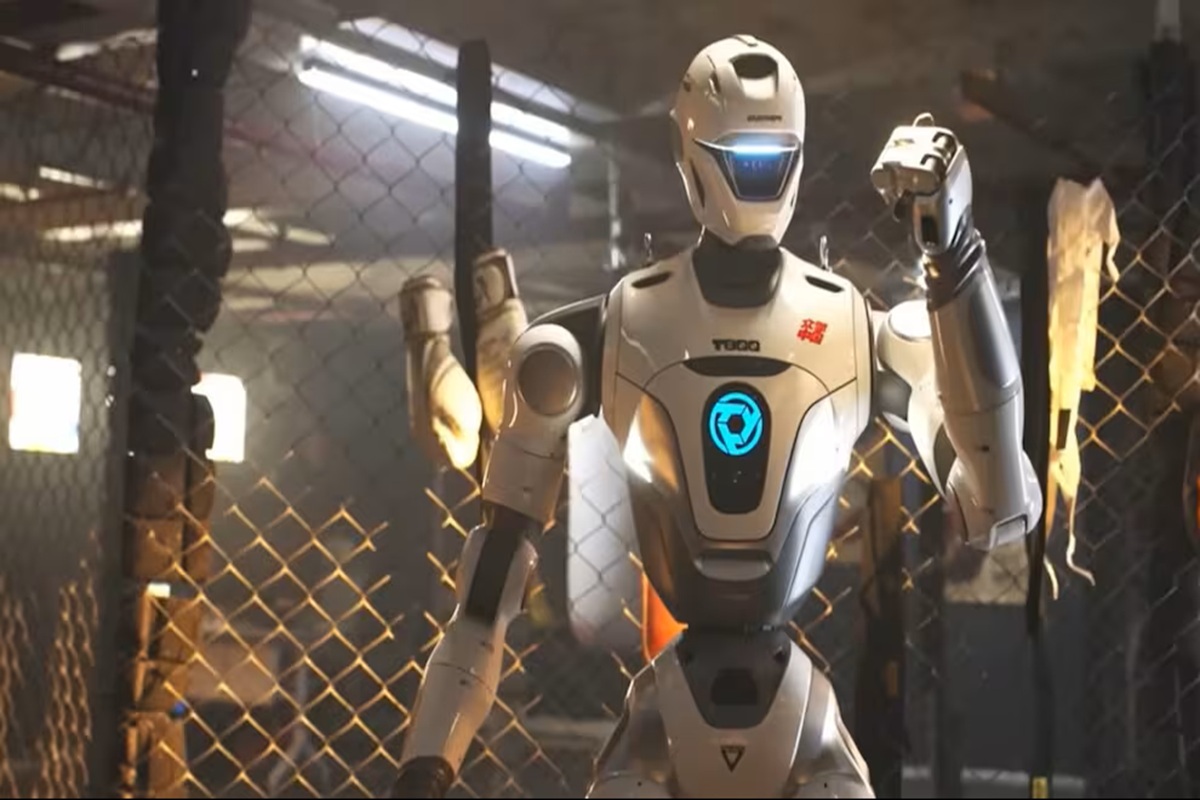
China Presents Humanoid Combat Robot With Sensor Control And Nearly Zero Latency During International Military Event, Expanding The Global Race For Supremacy In AI And Smart Warfare.
China unveiled a humanoid combat robot during the 12th International Army Cadets Week in November 2025 at the University of the People’s Liberation Army Engineering. The system is operated by a human operator equipped with a motion sensor suit that instantly replicates gestures with imperceptible latency. The demonstration brought together military representatives from China and 13 other countries, marking a new chapter in the global military technology race for supremacy in artificial intelligence and robotics.
The robot transforms the human body into a direct interface, unlike drones or robotic arms controlled by joysticks. Every gesture of the operator – walking, rotating the torso, pointing a weapon, or assuming a defensive position – is reproduced by the machine in milliseconds. The technology is part of China’s strategy of “smart warfare” that combines artificial intelligence, automation, and data analysis in military operations, progressively replacing human soldiers with autonomous units.
Operational Cost of The ‘Terminator’ Combat Robot Represents One-Third of A Human Soldier
Chinese startup EngineAI developed the T800 humanoid robot, which stands 1.85 meters tall and weighs 85 kilograms, officially presented in December 2025.
-
The Himalayas continue to grow to this day, with tectonic plates advancing 5 cm per year, mountains rising up to 10 mm annually, and the 2015 earthquake that killed 9,000 people may have increased the risk of an even larger seismic mega-event.

-
At an altitude of 400 km by astronauts from the International Space Station, Paris transforms at night into a golden mesh so precise that it reveals the outline of the Seine River, avenues, and entire neighborhoods like a luminous map drawn over the Earth.

-
iPhone 17 reaches historic low price with 256 GB, 120 Hz display, and drops to R$ 5,703 on Shopee, featuring A19 chip, dual 48 MP cameras, battery life of up to 30 hours, and advanced AI features.

-
Trip to Mars getting closer: Pulsar Fusion, from the UK, advances with plasma ignition in fusion engine and could drastically reduce space travel time, making crewed missions faster, safer, and economically viable.


The company set a launch price of over US$ 25,000, claiming that the operational cost would be approximately one-third of the expenditure on human labor. The commercial proposal includes use in manufacturing, commercial services, domestic functions, and military applications.
The T800 has autonomy of up to five hours with aerospace-grade materials and an advanced perception system, including 360-degree LIDAR and stereoscopic sensors.
Joint cooling allows sustained performance, executing everything from coordinated combat movements to heavy industrial tasks. The multimodal sensory system enables responses in milliseconds with efficiency favorably compared to human workers, according to the manufacturer.
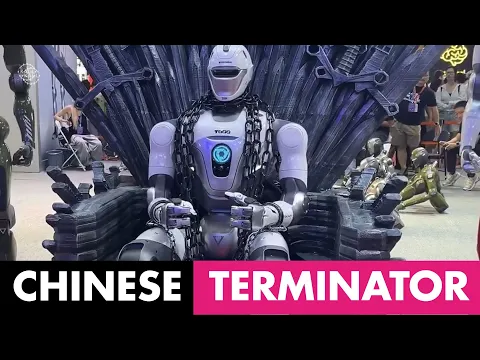

Drastic reduction in operational costs transforms military conflict economics. A professional soldier in the United States costs approximately US$ 200,000 annually, including salary, training, equipment, and logistical support.
A US$ 25,000 robot with a lifespan of 10 years represents an investment of US$ 2,500 annually, plus maintenance and energy costs, totaling an estimated US$ 8,000 annually. The 96% difference in annual costs allows for multiplying military capacity without expanding personnel budgets.
Chinese Army Integrates Robotics Into Long-Term Strategy With The Arrival Of The ‘Terminator’ Combat Robot
The People’s Liberation Army has been developing a shift to a smart warfare model for years, where AI, robotics, and automation not only assist but integrate into the military decision-making process. The strategy envisions robots capable of entering tunnels, cleaning buildings, assessing threats, and carrying out high-risk missions, replacing humans. The official argument is to reduce losses and increase operational efficiency.
During recent military exercises with Cambodia, the Chinese Army presented an armed robot dog equipped with a rapid-fire rifle.
A Chinese soldier explained in a video that the system could serve as a new member in urban combat operations, replacing human members to conduct reconnaissance, identify enemies, and attack targets. The practical demonstration highlights the transition from prototypes to operational systems.

“Mechanical Dog” is considered the world’s largest quadruped military robot capable of carrying loads of up to 160 kilograms and moving at speeds of up to 10 kilometers per hour. Its ability to traverse varied terrains like forests and rocky paths makes it valuable for logistics and reconnaissance missions.
The Lynx robot dog from Deep Robotics combines robotic legs with small wheels at the ends, demonstrating impressive capability in rough terrain.
AI Similar To ChatGPT Will Control Movements And Decisions Of The ‘Terminator’ Robot
Experiments are already underway to utilize algorithms similar to those of ChatGPT to control robot movements and decision-making loops.
The approach includes adapting natural language processing for interpreting complex commands and environmental variables, enabling real-time reactions in dynamic combat situations. It marks a significant departure from traditional systems controlled remotely toward truly autonomous robots.
The history of artificial intelligence shows a recurring pattern: first, the machine imitates, then optimizes, and only then acts with less supervision. The boundary between direct control and partial autonomy begins to blur. Systems that today rely entirely on human operators may tomorrow learn patterns of movement, reaction, and combat, evolving toward increased autonomy.
Forecasts indicate the widespread introduction of genuinely autonomous robots in the ground forces of various world armies between 2025 and 2030, when autonomous humanoid robots become advanced enough and relatively inexpensive for mass use in combat operations. Technological delays in robotics today could have disastrous consequences in the future, increasing military vulnerability.
IDEX 2025 Exhibition Confirms Robotic Arms Race
The 2025 edition of the international defense exhibition IDEX held in Abu Dhabi gathered 1,565 companies from 65 countries with a record presence of 731 newcomers. The event marked a new era for the global military industry with China, Russia, the United States, and Iran at the forefront of warfare equipment based on robotic automation and artificial intelligence.
Serbia presented the Milos N ground robot equipped with a machine gun, thermal sensors, grenade launchers, and night reconnaissance capabilities. Russia developed the Varon robot designed to support troops in heavy missions with a remotely controlled turret and a transportation capacity of up to 1.5 tons. Automation and AI are already a reality in many countries, trending to become the standard in the coming decades.
An international league for combat between biped robots was officially presented, consolidating the so-called “Robot UFC.” The humanoid T800 uses the Roboter L7 platform showcased in 2025 with support from Tsinghua University. Unlike the American Battlebots program, the focus is not on mechanical destruction but on mastering movements that were previously exclusive to human biomechanics.
Trillion-Dollar Chinese Investment Threatens Western Supremacy
China is leading a massive installation of industrial robots with the government pushing investments that accelerate technological adoption. This context facilitates the emergence of advances like the T800 and autonomous military systems. The estimated investment in smart defense technologies reaches hundreds of billions of dollars annually, creating an integrated ecosystem between civil and military development.
The Chinese defense budget announced a 7.2% increase for 2025, set to reach 220 billion euros. A significant portion is allocated to research and development in AI, robotics, and electronic warfare.
The United States proposed a defense budget of US$ 1 trillion for 2026, but China has the advantage in the speed of implementation and integration between the public and private sectors.
The paradigm of war is changing at high speed according to military experts’ analysis. Automation, artificial intelligence, and remote control of combat promise to reconfigure military scenarios and impact the balance of power among nations. The adoption of these tools not only represents a technological advance but a fundamental transformation in the nature of armed conflicts.
International Ethical Debate Intensifies Rapidly
The advancement raises questions about regulation and ethics in the use of military technologies based on AI. As countries invest in increasingly sophisticated systems, the discussion about the limits and control of these tools grows. Delegating dangerous or specialized tasks to combat robots requires debating regulation, safety, and human control, according to experts.
The ability of machines to replicate human movements demands strict protocols. The concern is not the robot itself but the speed of technological evolution. Systems that today operate under total supervision may quickly develop unexpected autonomous capabilities. Recent history shows that military technologies often advance faster than international regulatory milestones.
Western countries face a strategic dilemma between developing similar capabilities or seeking arms control agreements. The absence of effective international treaties allows China to freely develop potentially disruptive technologies. The first-mover advantage can be decisive, establishing technical and operational standards that other countries will need to follow.
Technology is moving from being just a tool to operating as a living ecosystem that learns, reacts, and evolves. The question is no longer whether machines will be autonomous but when that autonomy will become dominant on the battlefield. China is positioning itself to lead this transition by massively investing in military robotics while the West debates the ethical and strategic implications of automation in combat.










-

-

-

5 pessoas reagiram a isso.