





 Portuguese
  English
  Spanish
  3 min of reading
  21 comments


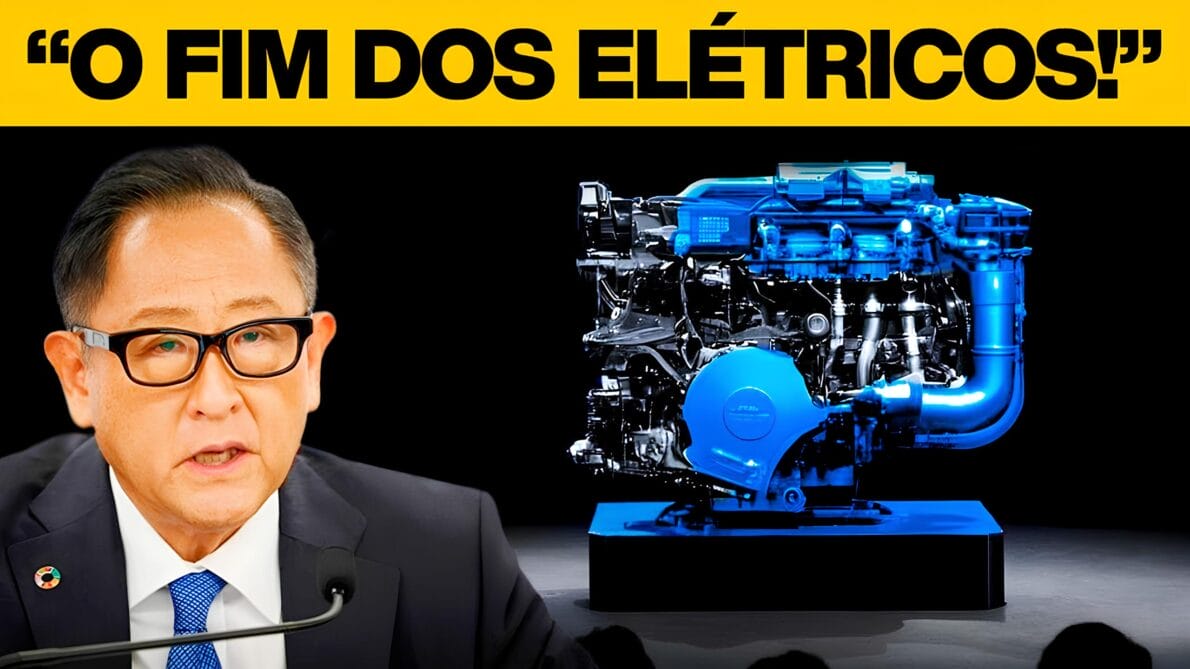


China Aims to Surpass Automotive Industry Giants and Unveils New Ammonia-Powered Engine Delivering Up to 120 kW. Understand How This New Propulsor Works and Its Benefits for the Environment.
China could revolutionize with ammonia engine, promising a new era in the automotive industry:
In a continuous search for more sustainable energy alternatives, China has taken a significant step with the creation of a new ammonia-powered engine. This innovation, revealed by Guangzhou Automobile Group Co. (GAC) during Tech Day 2024, promises to mark a turning point in the automotive industry. According to Bloomberg, the 2.0-liter engine was designed to burn liquid ammonia efficiently and safely, presenting itself as a viable solution to reduce carbon emissions and promote a greener future.
New Ammonia-Powered Engine from China Delivers 120 kW
This innovation promises a reduction of up to 90% in carbon emissions compared to traditional fossil fuels. Historically, ammonia has been used in various sectors, primarily as an agricultural fertilizer; however, its application as a fuel in vehicles is relatively new.
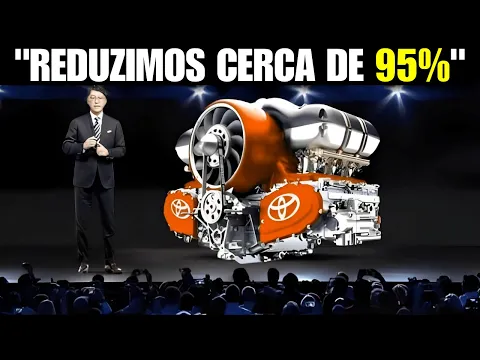

The new ammonia-powered engine from GAC in partnership with Toyota is not a pioneer in this area, as a decade ago, researchers from the Korean Institute of Energy Research had already tested the AmVeh, a car that operated on a mixture of 70% ammonia and 30% gasoline, reducing CO2 emissions by 70%. However, GAC is now leveraging the power of pure ammonia as fuel in the automotive industry.
-
Less than a Tera TSI, up to 710 km of range and charging in 9 minutes: the new BYD Song Ultra expands the Chinese brand’s bet on increasingly faster, more technological, and competitively priced electric SUVs.

-
With a 1.0 engine producing 75 hp and costing less than R$ 70,000, Fiat’s car returns to the podium as the cheapest in the country; a temporary promotion for the 2026 Like version reduces the price of the Fiat Mobi.
-
With a mild hybrid system of 48 V, 176 hp and a price of R$ 175,990 in the Sahara version, the new Jeep Renegade changes mostly on the inside, improves slightly in fuel consumption, and remains almost the same car.
-
With a 293.5 cm³ engine and a range of up to 400 km with a 14.1-liter tank, the Honda CB 300F Twister 2026 has up to 24.7 hp, an initial price of R$ 25,150, and already exceeds R$ 29,000 in the Fipe Table.

The engine boasts a power output of 120 kW (161 hp) and, although it still produces some carbon dioxide, the emission is drastically reduced. This new ammonia-powered engine from China arrives at a crucial moment, given that ammonia can be produced more cleanly than other fuels and transported more efficiently. However, handling ammonia requires caution due to its corrosive nature and danger to humans and the environment.
China Bets on Direct Burning of Liquid Ammonia
Other initiatives in the automotive industry are exploring the disintegration of ammonia into hydrogen and nitrogen, using fuel cells to produce electric power, while others focus on modified combustion engines. However, GAC’s strategy bets on the direct burning of liquid ammonia.
The transition to ammonia as a fuel in the automotive industry involves not only innovation in the design of the new engine. A robust infrastructure for production, storage, and distribution of ammonia is required. This logistical challenge is amplified by the need to ensure safety in the transportation and storage of this highly volatile fuel.
China’s bet with this new ammonia-powered engine as a substitute for hydrogen and fossil fuels reflects a paradigm shift in the search for sustainable energy solutions.
While the global hydrogen market continues to grow, projected to surpass $200 billion by 2025 according to CAS, ammonia emerges as a viable competitor with the potential to redefine emissions and energy efficiency standards in the transportation sector.
Ammonia Could Mark a Turning Point in the Automotive Industry Towards Sustainability
The development and implementation of technologies such as China’s new ammonia-powered engine are essential for achieving significant reductions in carbon emissions. This technological advancement, along with the commitment to building the necessary infrastructure, could mark a milestone in the global journey towards a more sustainable future.
Continuous innovation and collaboration between the commercial, academic, and governmental sectors will be critical to the success of this energy transition. An interesting fact is that ammonia is a colorless gas, toxic, with a strong and unpleasant odor. It has a pyramidal geometry and is the most water-soluble gas known precisely due to the formation of hydrogen bonds.









Precisamos entender que a tecnologia dos carros eletricos é um caminho em busca da evolução e a anos vejo reportagens denegrindo os carros eletricos, Precisamos acreditar que tudo tem que evoluir.
Matéria escrita pelo CHAT-GPT
Bom… se é prejudicial ao corpo e ambiente, com o crescente aumento de veiculos na rua, a probabilidade de acidentes subirá ( talvez não na mesma proporção), e aí, o que acontece?será o custo benefício ótimo?