





 Portuguese
  English
  Spanish
  6 min of reading
  0 comments


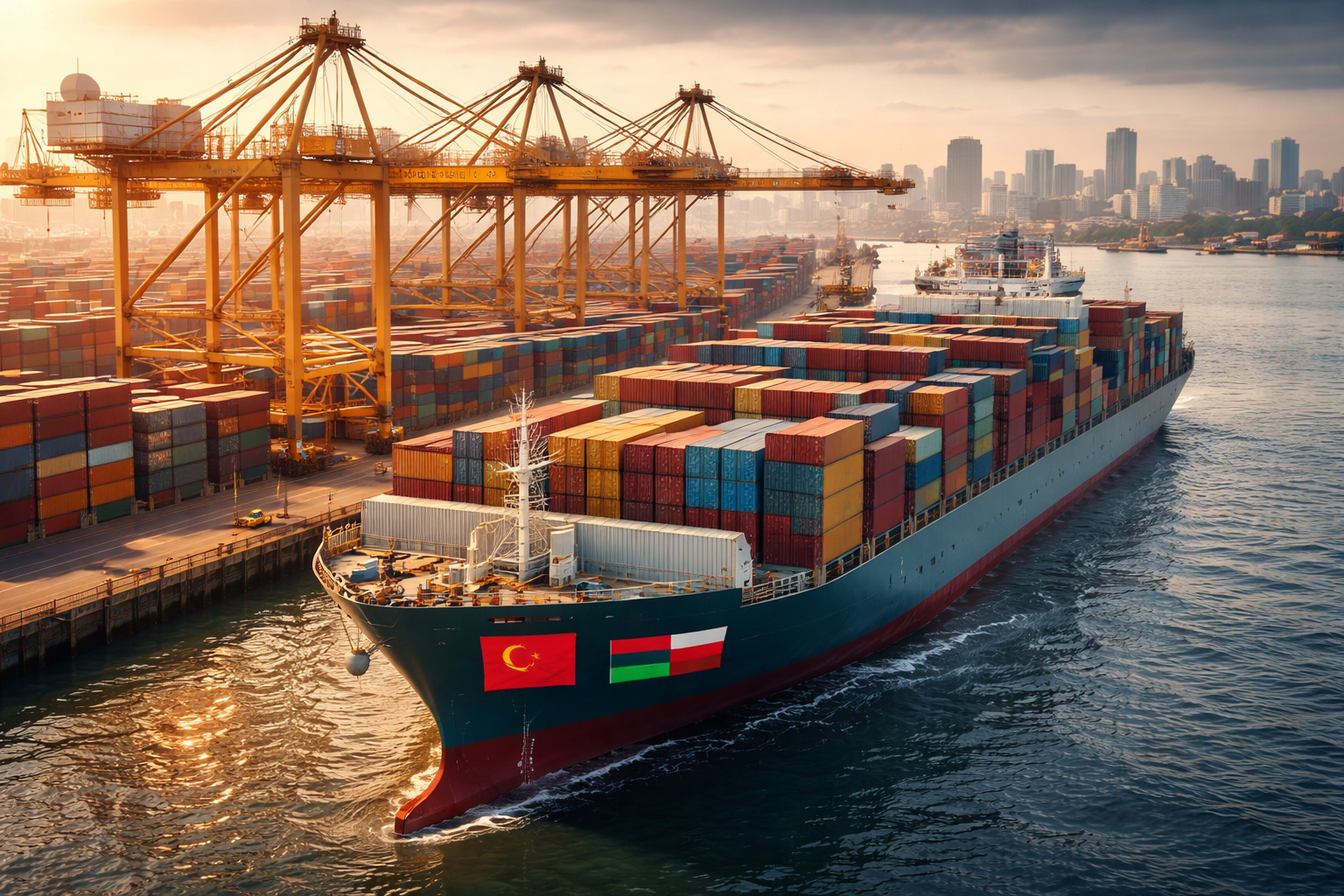
China and Kenya sign historic agreement that lifts up to 98% of exports without tariffs and could transform the role of the African country in global trade.
In March 2026, the government of Kenya, led by President William Ruto, confirmed the completion of negotiations for a trade agreement with China that could significantly alter the position of the African country in international trade. According to a report by Reuters, based on official statements from the Kenyan government (https://www.reuters.com/world/africa/kenya-finalises-trade-deal-with-china-president-says-2026-03-25/), the finalized understanding comes after a preliminary agreement announced in January and provides that 98% of Kenyan exports will have tariff-free access to the Chinese market, an unusual level of openness in bilateral negotiations of this scale.
The agreement comes at a strategic moment for both parties. On one side, Kenya seeks to enhance its foreign exchange generation capacity and reduce the trade imbalance with Beijing. On the other, China continues to deepen its economic presence on the African continent through bilateral agreements and expanded market access. Reuters itself highlighted that trade between the two countries remains heavily tilted in favor of China, which helps explain Nairobi’s interest in boosting its external sales.
More than just a simple tariff reduction, what is at stake is a structural change in how Kenya connects with the global economy. Opening a market the size of China creates a new export axis that could redefine the productive, logistical, and diplomatic priorities of the African country in the coming years.
-
What is behind China’s silence on Iran? An expert shows how chaos in the Middle East could raise oil prices, benefit Putin, and give Beijing the perfect opportunity to grow without direct confrontation.
-
Iran authorizes the passage of ships with essential goods in the Strait of Hormuz, requires coordination and protocols; UN postpones resolution to reopen the oil route, while China, France, and Russia reject the use of force.
-
The Ukraine war exposes the strength of the M113 armored vehicle amid modern warfare with military drones.

-
Maritime geopolitics: China and the USA compete for strategic ports in Peru.
Opening 98% of exports creates almost total access to the Chinese market
The central point of the agreement lies in the breadth of the tariff exemption. In practice, almost the entire export agenda of Kenya will have facilitated entry into China, reducing costs and increasing competitiveness against international competitors.
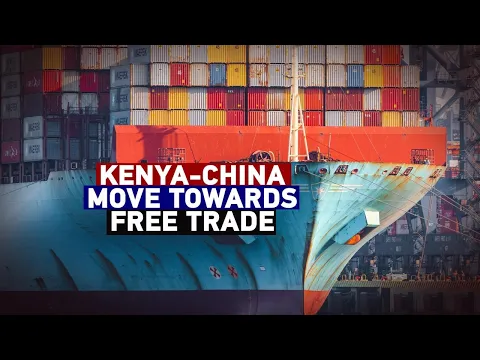

This type of concession is unusual because it involves opening a highly contested market to a developing country. In the Chinese case, it is an environment with enormous demand for food, raw materials, and intermediate products, which expands the growth potential of Kenyan exports.
The removal of tariffs means that products that previously arrived at higher prices can now compete on equal or even advantageous terms against suppliers from other regions, especially in segments where the final cost is decisive.
Additionally, the agreement brings predictability for exporters, allowing for medium and long-term planning, something essential for productive chains that depend on scale.
Agricultural products and raw materials lead the advance of exports
The economic structure of Kenya is heavily based on agricultural production, and this factor should be decisive for the impact of the agreement.
Among the products with the greatest potential for expansion are tea and coffee, which already have international recognition and can gain new volumes with facilitated access to the Asian market. Mass-produced flowers also appear as one of the most promising segments, especially due to the existing logistical capacity in the country.
Tropical fruits and products derived from the livestock sector also enter this movement, expanding the diversity of exports. In parallel, raw materials and strategic minerals will have a more direct path to supply the Chinese industry.
This combination of agricultural products and natural resources places Kenya in a privileged position to take advantage of China’s constant demand, which seeks to diversify its supply sources.
Accelerated growth of China-Africa relations gains new momentum in 2026
The agreement with Kenya does not arise in isolation. It is part of a broader process of intensifying relations between China and the African continent, which has already consolidated over the past two decades.

China is now Africa’s main trading partner and has expanded its presence through investments in infrastructure, financing large projects, and expanding logistical routes. The difference in the movement in 2026 lies in the growing focus on direct trade and market opening.
By allowing almost total access without tariffs, China takes a step beyond the traditional financing model and begins to integrate African economies more deeply into its own system of consumption and production.
This type of integration tends to generate lasting effects, both in trade volume and in economic dependence between the countries involved.
Economic impact could reposition Kenya in East Africa
Internally, the agreement is seen as an opportunity to boost the Kenyan economy at a time when sustainable growth is needed.
The country seeks to increase its exports, reduce the trade deficit, and strengthen productive sectors capable of generating foreign exchange. With expanded access to China, there is potential for significant growth in these areas.
The increase in external demand tends to stimulate local investments, expand agricultural production, and encourage light industrialization aimed at export, creating a multiplier effect on the economy.
Furthermore, the expectation is that the agreement will help stabilize external revenues and reduce vulnerabilities associated with dependence on a few markets.
Infrastructure and logistics gain a central role in the new scenario
For the agreement to yield concrete results, Kenya’s logistical capacity becomes a critical factor.
The country has already received significant investments in infrastructure with Chinese participation, including railways, highways, and port projects. One of the most well-known examples is the railway linking the port of Mombasa to the capital Nairobi, built with Chinese financing.
These works now gain a new role. More than facilitating internal transport, they become key pieces to enable the increase of export flows towards the Asian market.
The expansion of logistical capacity should be accompanied by improvements in storage, refrigerated transport, and port efficiency, especially for perishable products.
Geopolitical dimension increases the relevance of the agreement
Beyond the economic impact, the agreement has a clear geopolitical dimension. China has been consolidating its presence in Africa as part of a global strategy to expand influence.
By deepening trade relations with Kenya, Beijing reinforces its position in a region considered strategic, both for its location and economic potential.
Kenya, in turn, positions itself as one of the main connection points between Africa and Asia, increasing its regional and international relevance.
This movement occurs in a context of global competition for influence, with other powers trying to regain space on the African continent.
Structural transformation could alter the economy in the long term
Expanded access to the Chinese market is not expected to generate only immediate effects. In the long term, the trend is for the agreement to influence the very economic structure of Kenya.
Local producers will have incentives to scale up, improve quality, and adapt products to international market demands. This could elevate the level of competitiveness of the economy as a whole.
Integration with a market the size of China tends to accelerate processes of productive modernization, standardization, and innovation, especially in exporting sectors.
At the same time, experts point out that this type of opening requires attention to avoid excessive dependence on a single trading partner, which could pose risks in scenarios of geopolitical change.
The new phase of the China-Kenya relationship is just beginning
The agreement signed in 2026 represents more than a commercial negotiation. It marks the beginning of a new phase in the relationship between China and Kenya, with a direct impact on trade, infrastructure, and global positioning.
The expectation is that new agreements, investments, and complementary projects will emerge from this foundation, further expanding integration between the two countries.
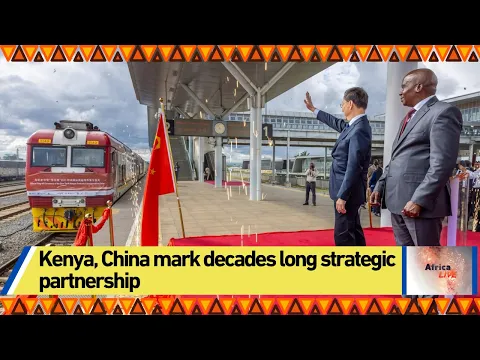
With almost total access to the Chinese market, Kenya will operate on an unprecedented scale of commercial opportunities, which could redefine not only its economy but also its role within the African continent.
Leave your opinion in the comments and tell us if this movement could impact other countries beyond Kenya.










Seja o primeiro a reagir!