





 Portuguese
  English
  Spanish
  3 min of reading
  0 comments


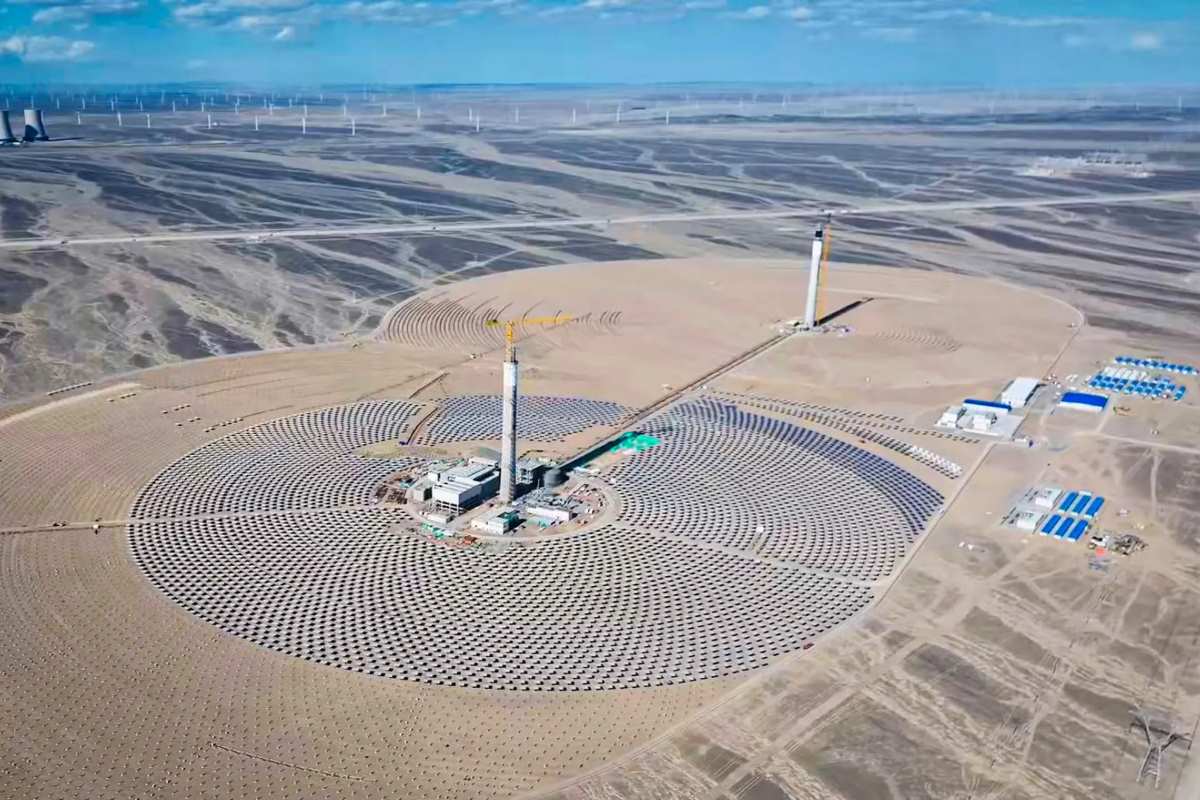
Discover the First Dual-Tower Solar Thermal Power Plant in China, Which Increases Efficiency by 24% with 30,000 Mirrors and 200-Meter Towers. Clean Energy Generating 1.8 Billion kWh/Year
In Gansu Province, China, two 200-meter tall towers have been erected. Along with a set of 30,000 mirrors arranged in concentric circles, this new facility is expected to generate over 1.8 billion kilowatt-hours of electricity per year.
Solar Thermal Energy: A Developing Alternative
Although most people associate solar energy with photovoltaic panels that directly convert sunlight into electricity, there is another method to harness solar energy that has been continuously developed since the early 1980s. Known as solar thermal energy or concentrated solar power (CSP), these systems rely on mirrors called heliostats to reflect sunlight to a central collection point. There, the concentrated rays heat a transfer fluid that, in turn, heats a working fluid. This fluid turns to vapor, spins a turbine, and generates electricity.
Evolution of Solar Thermal Plants
In 2014, the then-largest solar thermal power plant in the world opened in the Mojave Desert, United States. Known as the Ivanpah Solar Electric Generating System, the facility consists of three towers surrounded by fields of heliostats and has a capacity of 392 megawatts. In 2017, Australia announced the construction of the largest single-tower solar thermal plant in the world, with a proposed capacity of 150 megawatts, although the project was canceled in 2019. Currently, the largest solar thermal plant in the world is the Noor Solar Complex, which operates in the Sahara Desert in Morocco and generates 510 megawatts of power annually.
-
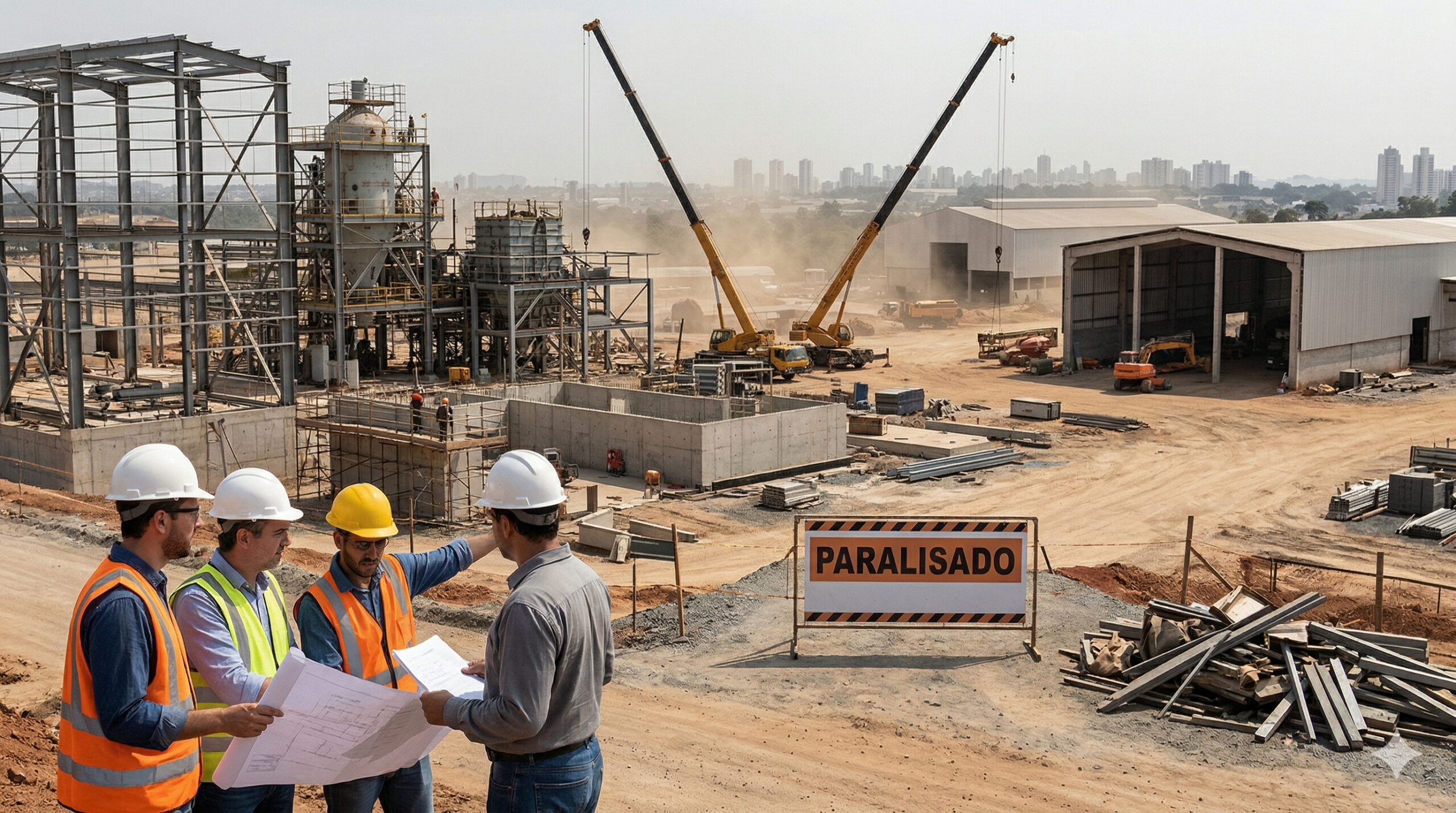
The lack of welders, electricians, and operators becomes a structural threat in 2025, with the construction industry and manufacturing already suffering from delays, cost pressures, and labor shortages in Brazil.
-
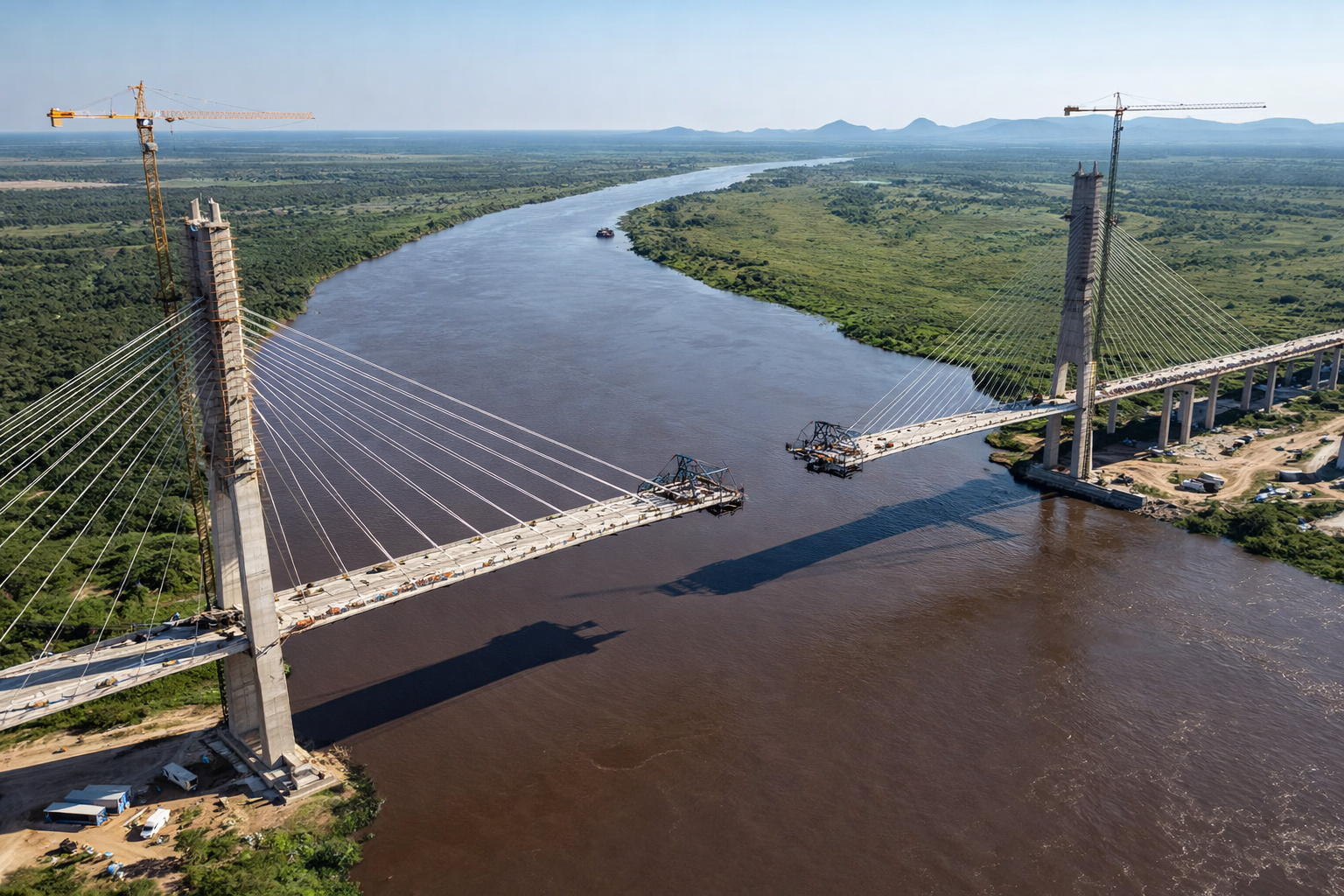
Brazil and Paraguay are just 46 meters away from a historic union on the bioceanic bridge that promises to revolutionize trade between the Atlantic and the Pacific.
-
With 55 km over the sea, a cost of US$ 20 billion, and enough steel to build 60 Eiffel Towers, China’s largest project has connected Hong Kong, Zhuhai, and Macau in a colossal bridge that defies the logic of engineering.

-
A trick with joint compound transforms a Styrofoam ceiling into a plaster-like ceiling: leveled panels, wires and mesh at the joints, sand, paint, and change the environment while spending little today.


Innovations in China
Now, according to a report by China Global Television Network (CGTN), the Three Gorges Group in China has announced another evolution in CSP. Like the facility in the United States, the Ghazhou solar thermal energy storage project will utilize multiple towers: in this case, two of them sharing the same steam turbine.
However, unlike the installation in the United States, where each tower is surrounded by its own heliostat field, the Chinese project will deploy a field of mirrors arranged in overlapping concentric circles. The mirrors will be able to track the sun’s path and reflect light to any of the towers in the most efficient way possible. It is an advancement that will significantly improve the efficiency of CSP, according to project manager Wen Jianghong.
Increased Efficiency
The mirrors in the overlapping area can be used by either of the towers. This configuration is expected to improve efficiency by 24%. Contributing to this efficiency is the fact that the mirrors used have a reflection efficiency of 94%, meaning that most of the solar energy that hits them is reflected toward the power-generating towers.
The two towers of the new plant, which is now 90% complete, will also employ a molten salt method to store heat during the day and release it at night, thus keeping the facility running continuously.
Contribution to Clean Energy
The new CSP system, which is expected to be operational by the end of this year, is set to join the surrounding photovoltaic panels and wind turbines at the facility to provide clean energy. As part of this green energy effort, the solar thermal power towers and mirror arrays are expected to save 1.53 million tons of carbon dioxide emissions per year.
You can see the plant up close in the following CGTN video.

Source: cgtn.com










-

Uma pessoa reagiu a isso.