





 Portuguese
  English
  Spanish
  5 min of reading
  0 comments


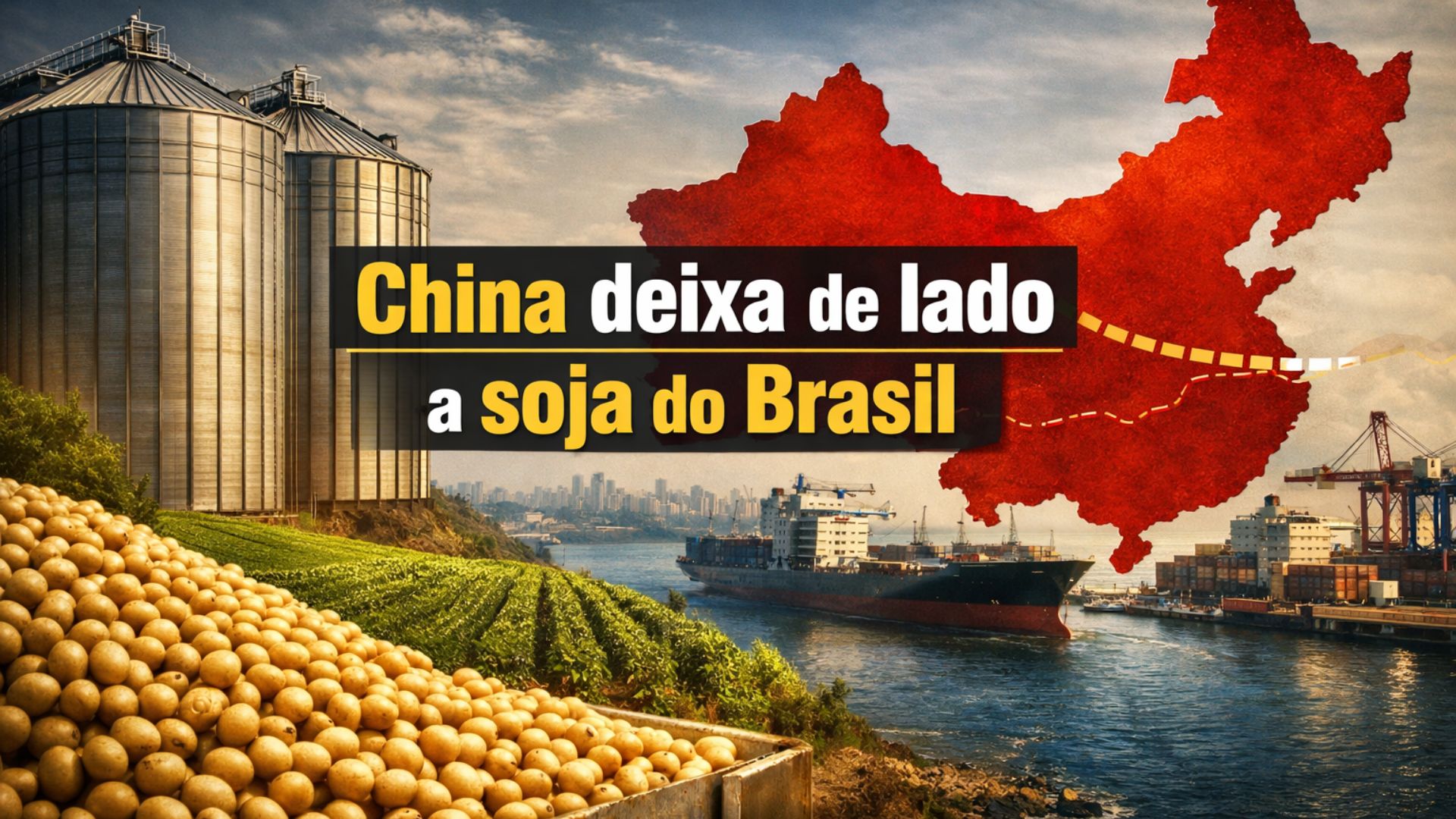
Strategic Movement of China Reignites Attention of Brazilian Agriculture in Light of Signs of Lower External Dependence, Advances in Domestic Soybean Production, and Possible Impacts on Exports That Sustain a Relevant Share of Brazil’s Commercial Balance.
China has indicated that it intends to reduce its reliance on imported soybeans and expand domestic production of grains and edible oils, a guideline that has been closely monitored by Brazilian agriculture.
The Asian country is the main destination for soybeans exported from Brazil, and changes in its agricultural policy have a direct impact on one of the largest sources of dollar inflow in the sector.
The signal was disclosed following a central agricultural policy meeting of the Chinese government, which set a priority on strengthening internal production capacity of oilseeds, including soybeans.
-
“No one will make us change the Pix,” says Lula after the US report.

-
Lula responds directly to Trump and says that Pix is from Brazil and will not change under pressure from anyone, after a report from the United States pointed out the Brazilian payment system as an American trade barrier.

-
Amazon has just announced a new fee on all deliveries, and your online purchases will become more expensive starting April 17, including for those buying from the United States here in Brazil.

-
He sold his share for R$ 4 thousand, saw the company become a giant worth R$ 19 trillion, and missed the opportunity of a lifetime.


The guidance appears in official communications and in reports from the Reuters agency, which attribute the movement to China’s strategy of increasing food security and reducing external vulnerabilities.
China’s Guidelines for Soybeans and Global Trade
According to Reuters, Chinese authorities reinforced the need to stabilize the production of grains and edible oils, with an emphasis on agricultural technology, improved seeds, and modernization of the countryside.
The state media cited by the agency relates these measures to the backdrop of uncertainties in global trade and trade disputes affecting international supply chains.

Agricultural trade specialists interviewed by international media note that the rhetoric does not represent an immediate break with the external market, but indicates a long-term attempt to reduce reliance on foreign suppliers.
Still, any mention of reduced imports tends to resonate strongly among exporting countries.
Official Chinese data shows that domestic soybean production has been gradually increasing.
In 2024, the harvest reached just over 20 million tons, a level that has been maintained above this mark in recent years.
Although the volume is still insufficient to meet domestic demand, it signals a consistent expansion of the country’s productive capacity.
Estimates from the U.S. Department of Agriculture indicate that Chinese production is expected to remain near this level in the short term.
Projections vary slightly above or below 21 million tons, depending on the agricultural cycle and weather conditions.
Internal Consumption and Advancement of Chinese Imports
Soybeans have always had as their main destination the Chinese internal market, particularly for the production of oil and meal used in animal feed.
Over the decades, consumption has grown at a pace exceeding production, driven by urbanization, rising incomes, and the expansion of livestock.
With the economic opening that began in the 1980s and accelerated in subsequent decades, China began to import increasing volumes of the grain.
In the early 2000s, external purchases were still relatively modest.
This scenario changed quickly as the demand for animal proteins intensified.
According to data widely used by the international market, Chinese soybean imports exceeded 100 million tons in recent agricultural cycles.

In 2024, the volume was around 108 million tons.
This level solidified the country as the largest global importer and turned soybeans into one of the main items of global agricultural trade.
Brazil as the Main Supplier to China
The growth of Chinese demand has been decisive for the expansion of soybeans in Brazil.
From the 2000s, the planted area increased continuously.
This advancement was accompanied by productivity gains, investments in logistics, and a greater presence of the country in international trade.
Currently, China accounts for more than two-thirds of the soybeans exported by Brazil, according to recurring data from official agencies and the private sector.
This concentration helps to explain the sensitivity of the Brazilian market to any signaling of change in the Asian country’s purchasing policy.
The latest production estimates for Brazil vary according to the source and the timing of disclosure.
Official projections indicate a harvest above 160 million tons, with numbers that could exceed 170 million in certain scenarios.
The differences reflect distinct methodologies and updates throughout the agricultural year.
Despite this, the data confirms Brazil as one of the largest global producers of soybeans.
Regardless of the exact number, the country operates at a scale much higher than Chinese production.
This condition reinforces its position as a strategic supplier to meet external demand, especially from China.
Higher Chinese Production Does Not Imply Immediate Cuts in Purchases
Agricultural market analysts highlight that the increase in domestic Chinese production does not eliminate, in the short term, the need for imports.
The difference between internal harvest, slightly above 20 million tons, and the volume consumed by the feed and processing industry explains the continued large-scale external purchases.
Furthermore, the guidelines announced by Beijing encompass a broader set of agricultural policies.
The focus includes other crops, investments in high-standard agricultural land, incentives for mechanization, and improvements in seed quality.
These actions are not limited exclusively to soybeans.
Official reports and international news also point out that China has been reinforcing warehousing policies and support for rural production.
The aim is to increase supply resilience.
These initiatives are treated as part of a medium to long-term strategy, without detailed public targets regarding specific cuts in soybean imports.
Political Signaling and Limits of Practical Effects
Although the debate mentions the possibility of significant reduction in imports, there is no official confirmation that China intends to cut external soybean purchases by half.
There is also no public indication that this movement would occur within a defined timeframe.
Experts emphasize that announcements of general guidelines do not necessarily equate to immediate changes in trade flow.
Similarly, there is no public document that directly establishes an automatic impact on Brazilian exports.
What is observed is a political signaling that is being monitored by governments, producers, and companies in the sector.
In this context, Brazilian agribusiness remains attentive to movements from Beijing.
The sector evaluates risks and opportunities in a scenario where China remains the main buyer, while the Asian country seeks to increase its internal production.








Seja o primeiro a reagir!