





 Portuguese
  English
  Spanish
  5 min of reading
  0 comments


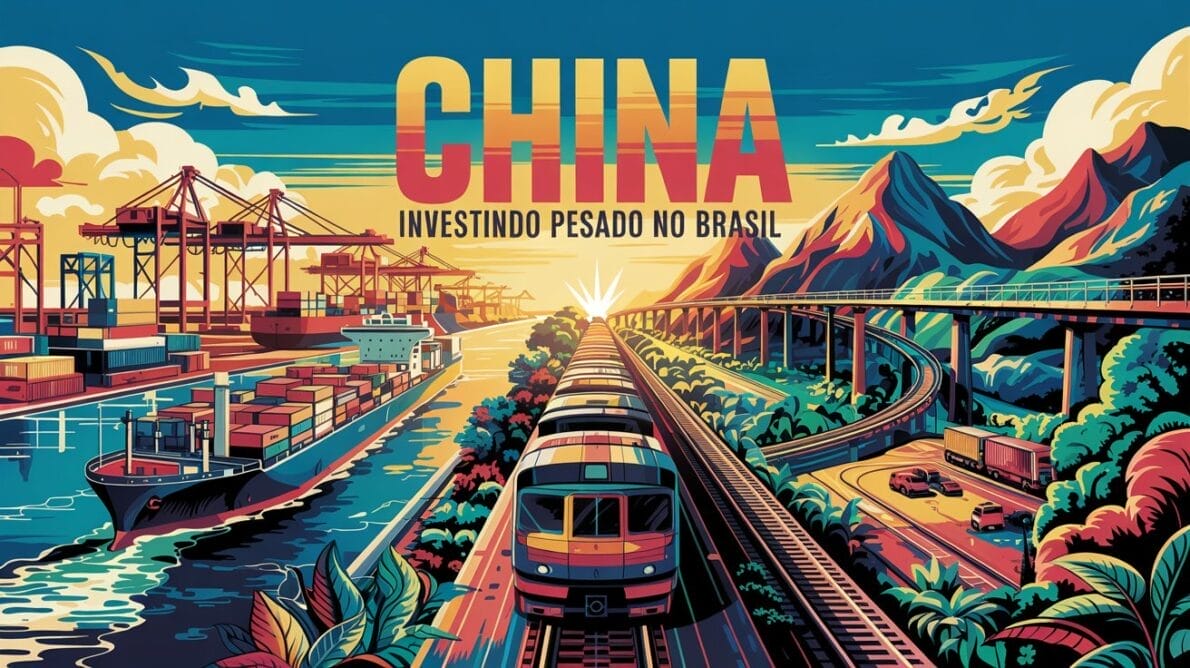
Brazil Could Become One of the Largest Logistical Corridors in the World with the Construction of a China-Backed Transoceanic Railway, Promising to Transform International Trade and Connect the Atlantic to the Pacific with Strategic Tracks.
One of the largest rail infrastructure projects in the world could soon take shape in Brazil.
With an estimated investment of R$ 100 billion, China announced support for an ambitious project promising to connect the Atlantic to the Pacific by rail, shortening commercial distances between Brazil and Asia.
The project, known as Transoceanic Railway, aims to transform the transportation of goods and strengthen Brazil’s role in international trade.
-
The government is considering a temporary subsidy for cooking gas following the spike in oil prices due to the war in Iran and warns about the impact of 20% of imports on the prices paid by families.

-
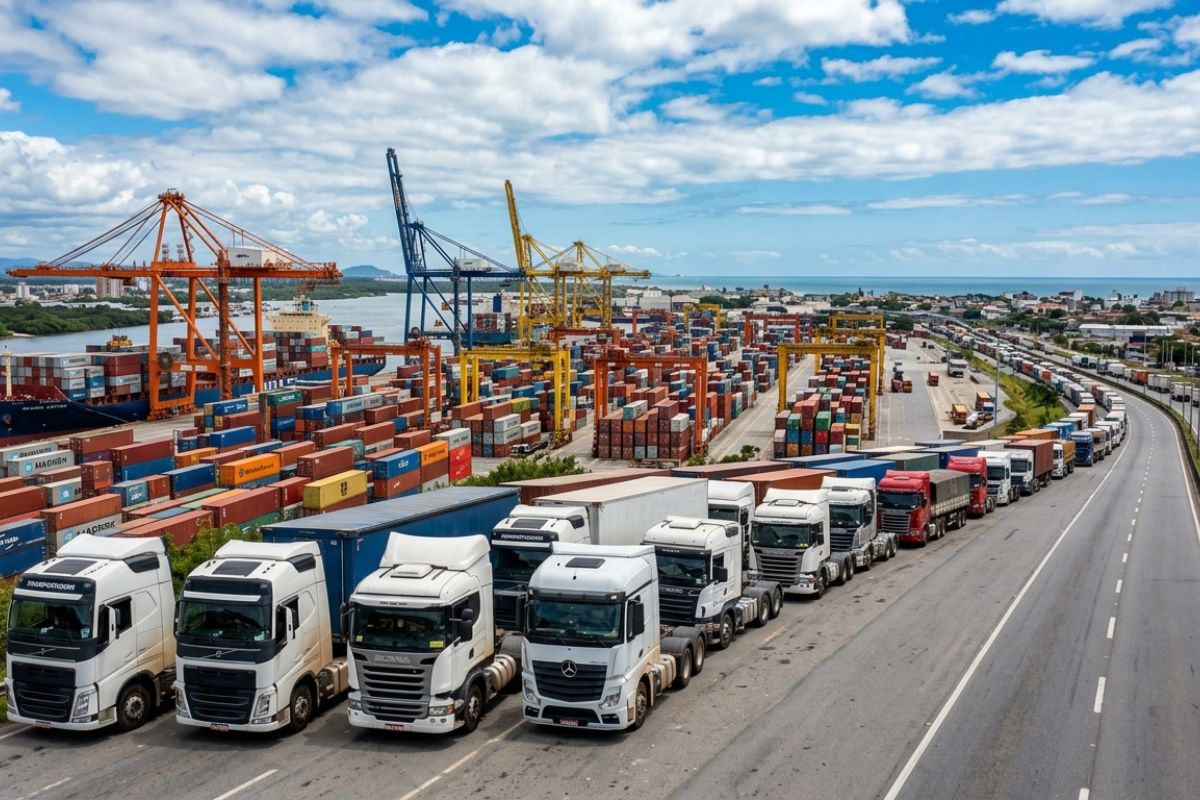
The lack of truck drivers in the country is already halting shipments and threatening deadlines: 88% of transport companies are unable to hire, with an average of eight trucks idle, and the port complex of Itajaí is now feeling the impact.
-
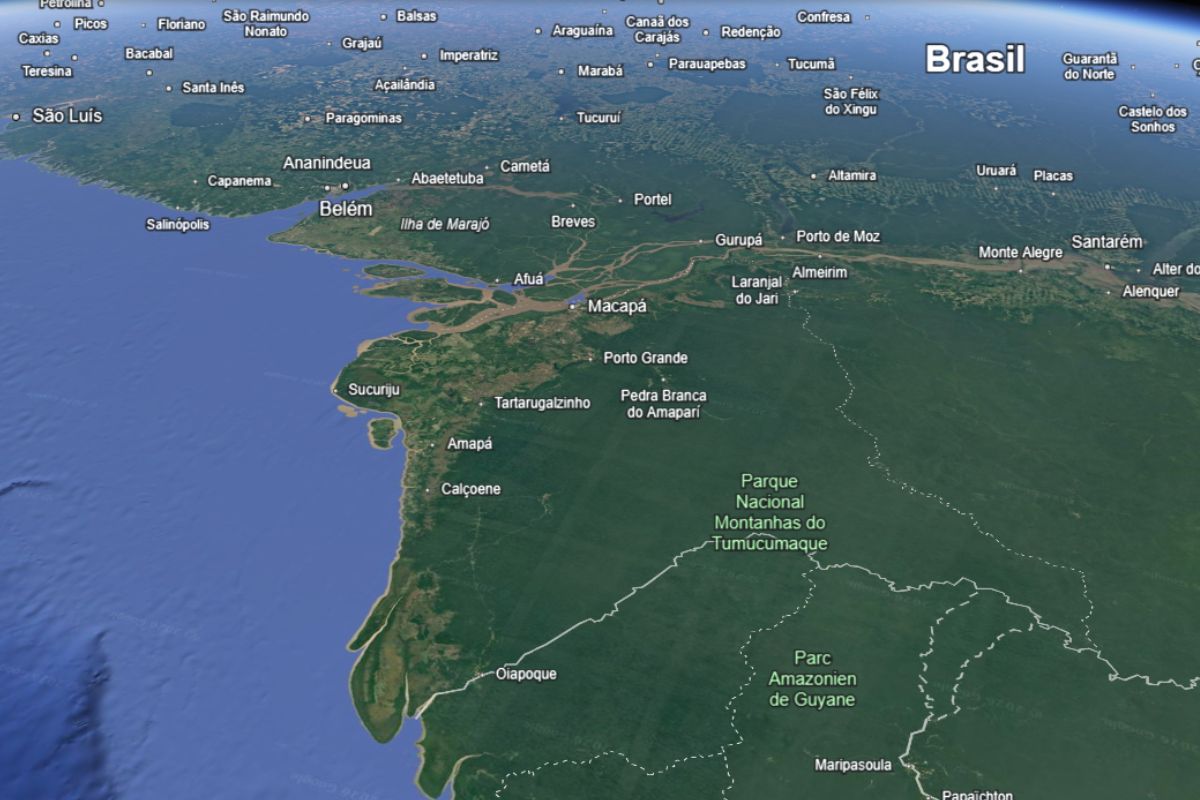
Petrobras is about to transform a forgotten city in the far north of Brazil into the capital of oil: Oiapoque is already feeling the effects even before the first drop of oil comes out from the seabed.
-
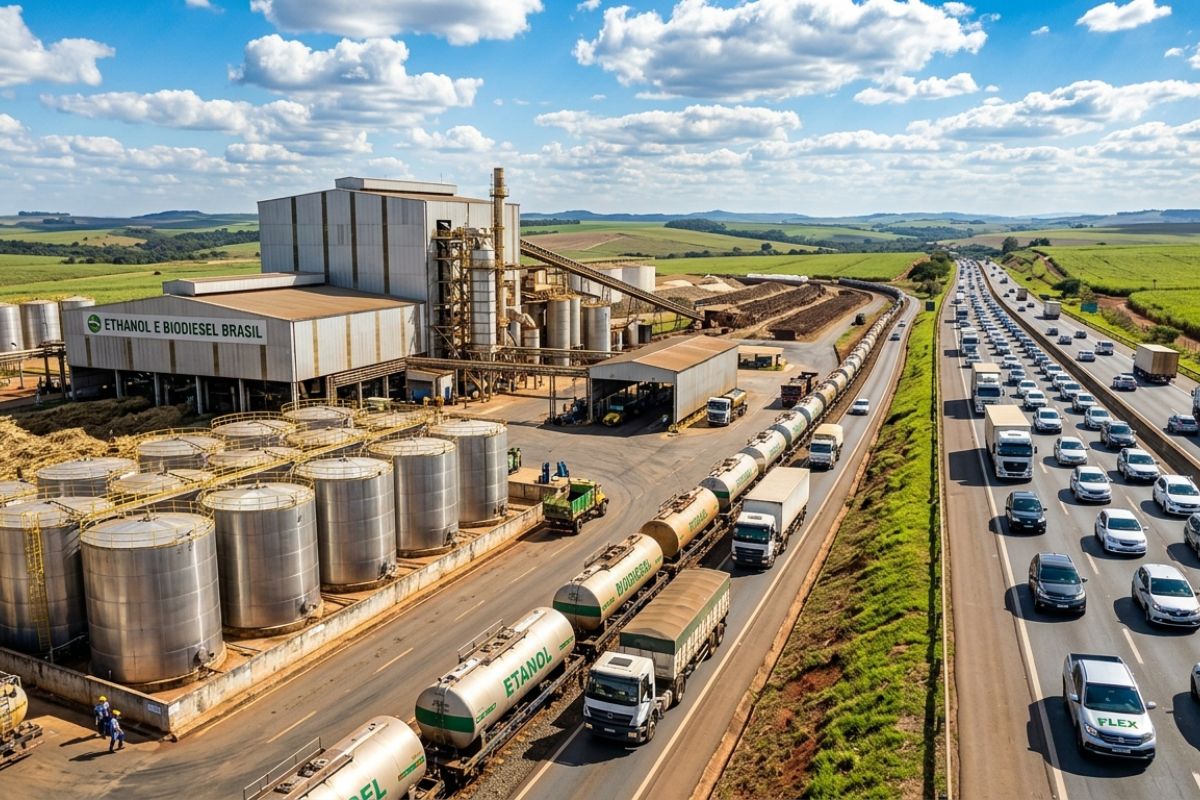
The Economist says that Brazil has a secret weapon in the oil war during this crisis: ethanol, biodiesel, and flex-fuel vehicles. With Petrobras holding costs, fuel prices are rising 10% to 20% here, compared to 30% to 40% in the USA.

The project includes over 4,400 kilometers of railway solely on Brazilian territory, traversing the country from the Port of Açu on the coast of Rio de Janeiro to connect with the Megaport of Chancay on the coast of Peru, which is already under construction.
The initiative, supported by the Brazilian, Chinese, and Peruvian governments, could redefine logistics in South America, offering a new route for the export of commodities such as soy, iron ore, and cellulose directly to large Asian consumer centers.
A Logistical Corridor Between the Atlantic and the Pacific
The goal of the Transoceanic Railway is ambitious: to create an efficient and modern interoceanic connection, facilitating cargo transportation and reducing dependence on maritime routes through the Panama Canal or the southernmost part of the continent.
With the growth of trade between Brazil and China, which generates over R$ 170 billion annually, a solution like this appears to be strategic and urgent to meet the growing demand for infrastructure.
According to Sérgio Vidigal, Secretary of Development of Espírito Santo, the railway is essential for enhancing the competitiveness of Brazilian products in the global market.
“We will reduce logistics costs and transportation time, as well as broaden our access to Asia. This project could redefine how Brazil participates in global trade,” he stated.
The Infrastructure of the Railway Is Already in Motion
Although the project sounds futuristic, some construction is already underway, especially in Goiás, one of the states that will be crossed by the railway.
In addition, technical and economic feasibility studies have been completed, demonstrating the importance and viability of the initiative.
It is expected that more information will be released in the National Railway Plan, which is still pending publication by the federal government.
However, the lack of an official schedule for the EF-118 stretch, which connects Espírito Santo to Rio de Janeiro, generates uncertainties.
According to Fernando Otávio Campos, President of the Brazilian Association of Hotels Industry of the State (Abih-ES), the lack of clear deadlines could compromise the progress of the work and the return on investments.
Chinese Investment and Regional Influence Strategy
The Chinese government has shown strong interest in executing the project since 2015, when a memorandum of understanding was signed between Brazil, China, and Peru.
Despite Brazil not joining the “New Silk Road” in 2024, the bilateral agreements remain strong, reinforcing both countries’ commitment to the railway.
China is strategically investing in infrastructure projects around the world, seeking to strengthen trade ties and expand its geopolitical influence.
Latin America has been a primary target for these investments, with Brazil, as the largest economy in the region, playing a central role in this strategy.
In addition to the railway, the Megaport of Chancay in Peru represents another crucial point of the project.
Under construction by Cosco Shipping, a Chinese state-owned enterprise, the port is expected to cost around R$ 20 billion.
It is predicted to become the main maritime connection between South America and the port of Shanghai in China.
With the capacity to operate large vessels and handle millions of tons annually, Chancay could revolutionize the export of Brazilian products.
Brazilian Mining Companies and International Financing
One of the central points of the project is the Anchieta Branch, a stretch that will be operated by the mining company Vale, which has the primary interest in the rail logistics.
The company will be responsible for the EF-118, which will connect the Espírito Santo railway network to Rio de Janeiro, essential for the success of the Transoceanic Railway.
To enable the investments, the New Development Bank (NDB) — also known as the BRICS Bank — arises as an alternative to traditional financing.
According to Daniel Carvalho, coordinator of the International Relations and Foreign Trade courses at UVV, the terms offered by the NDB are more favorable than those of the World Bank.
“Competitive interest rates and greater flexibility make the project more attractive to foreign investors,” he explains.
This could be decisive in attracting private initiative, which will play a central role in making the project viable.
The involvement of major economic groups and the institutional support of the Brazilian government are seen as prerequisites for the complete realization of the project.
Logistical Challenges and Political Hurdles
Despite the optimism, the challenges are still significant.
Constructing a transcontinental railway requires overcoming environmental obstacles, territorial disputes, and reconciling interests among different Brazilian states.
Furthermore, there is a lack of effective political coordination to ensure the project’s continuity, regardless of changes in state or federal governments.
The absence of a unified long-term plan could delay essential stages and deter potential investors.
Another sensitive issue is the governance of the project, which must ensure transparency and strict oversight of the resources involved.
Projects of this magnitude, when poorly managed, can become a focus of corruption and waste of public funds.
The Railway Is a Watershed Moment for Brazil
If completed, the Transoceanic Railway could transform Brazil into one of the main logistical hubs between Latin America and Asia.
The country would gain a strategic advantage in international trade, shortening the route to the world’s largest consumer markets.
Moreover, historically isolated or underdeveloped Brazilian regions could benefit from the new infrastructure, attracting investments and generating jobs in areas that still lack economic dynamism.
However, the success of the Transoceanic Railway depends on a combination of political will, consistent investments, and strategic planning.
Without these elements, the project risks becoming yet another frustrated promise of continental integration.
Do you think the Transoceanic Railway will be able to make Brazil a logistical hub between Asia and Latin America? Share your opinion in the comments!







-

Uma pessoa reagiu a isso.