





 Portuguese
  English
  Spanish
  5 min of reading
  0 comments


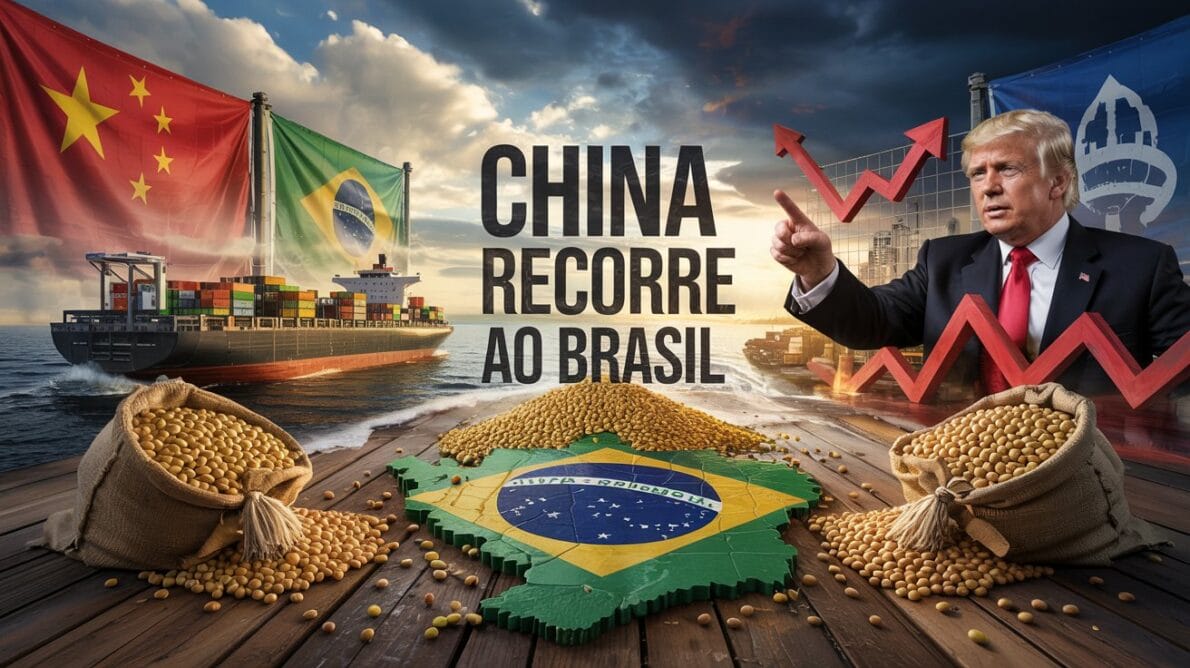
Brazil Takes Center Stage in Global Soybean Exports After US Trade Sanctions Against China, Which Reacts with Record Purchases of Brazilian Grain Amidst an Unstable and Disputed Scenario in International Agricultural Trade.
The intensification of the trade war between United States and China has led to an abrupt change in global grain trade, directly benefiting Brazil.
This week, Chinese companies purchased, in record time, millions of tons of Brazilian soybeans, signaling an immediate response to the new tariffs imposed by the US government.
According to sources in the agricultural sector, at least 40 soybean loads were acquired by Chinese processors in just the first days of the week, totaling about 2.4 million tons.
-
Lula responds directly to Trump and says that Pix is from Brazil and will not change under pressure from anyone, after a report from the United States pointed out the Brazilian payment system as an American trade barrier.

-
Amazon has just announced a new fee on all deliveries, and your online purchases will become more expensive starting April 17, including for those buying from the United States here in Brazil.

-
He sold his share for R$ 4 thousand, saw the company become a giant worth R$ 19 trillion, and missed the opportunity of a lifetime.

-
Elon Musk’s Starship megafrocket puts $8 billion at risk, raises alarms in the market, and could affect technology, mining, and space internet startups in the coming years.


The movement comes after US President Donald Trump announced a tariff increase on Chinese products to 125%, intensifying the trade impasse between the two largest economies in the world.
The response from Beijing came with the implementation of an 84% tariff on North American products, making the import of soybeans from the United States economically unfeasible.
As a result, China turned its focus to Brazil, its main grain supplier since the trade war began during Trump’s previous term.
Atypical Volume in Record Time
The volume of purchases made by the Chinese in recent days deviates from the standard of regular trade.
Typically, China starts its purchases of Brazilian soybeans in February, when the South American harvest begins to dominate the international market.
However, the speed and size of this week’s orders surprised analysts and exporters.
The acquired loads are scheduled for delivery in May, June, and July — a strategic period when China seeks to maintain its stocks without depending on US supply.
The accelerated demand was driven by a recent drop in Brazilian soybean prices, which had risen in previous months due to uncertainties surrounding the trade war.
Brazil Solidifies as the Largest Global Supplier
The rise of Brazil as a leading soybean exporter to China is not new, but the conflict between the US and China has further accelerated this prominence.
Data from the Brazilian Association of Vegetable Oil Industries (Abiove) indicates that the country is expected to export around 98 million tons of soybeans by 2025, of which more than 60% will be destined for China.
Moreover, the profit margin for Chinese processors has increased significantly, propelled by the appreciation of soybean meal in the Chinese internal market — a highly valued byproduct in the animal feed industry.
This has made purchasing Brazilian soybeans even more advantageous, despite higher logistical costs.
The Impact of Trump Tariffs
The new round of tariffs announced by the Trump administration has been viewed by analysts as an aggressive escalation, which could trigger side effects in various global supply chains.
The stated aim of the US president is to reduce the trade deficit with China, but experts warn that this could backfire.
According to information from Bloomberg and Reuters, the Chinese government has been trying to gradually reduce its dependence on American agricultural commodities since the initial trade confrontations in 2018.
Nevertheless, the United States remained a relevant supplier, especially during the gaps between South American harvests.
Possible Scarcity Ahead
Even with the surge in Brazilian purchases, the long-term situation may pose risks for the Chinese.
The seasonal dependence on the new US harvest, which occurs in the second half of the year, could become a problem if relations between Washington and Beijing do not improve.
If tensions remain high, China may face difficulties in ensuring its food security in the last quarter of the year, a period when it would normally return to importing from the US harvest.
One alternative would be to expand purchases in Brazil even further, but this would put pressure on prices and the country’s delivery capacity.
According to the Center for Advanced Studies in Applied Economics (Cepea) at USP, the sudden increase in Chinese demand could lead to even higher soy prices in Brazil in the coming months, which tends to benefit domestic producers but create logistical challenges.
Trump and the Geopolitical Risk for Agriculture
The prospect of Donald Trump being re-elected in 2024 has reignited concerns about the impact of his trade policy on the global agricultural sector.
Since his first term, Trump has adopted a protectionist and belligerent approach towards China, which has already caused billion-dollar losses to the American agribusiness — one of his key electoral pillars.
Agriculture analysts assert that Brazil will continue to gain ground, especially if Trump maintains his aggressive stance, driving China away from American products.
However, this also creates an unstable and unpredictable environment, with direct impacts on prices, stocks, and investments in the sector.
Alternatives and Chinese Strategies
In order to avoid surprises in the future, China has been seeking to further diversify its supplier portfolio.
Countries like Argentina, Paraguay, and even some from Sub-Saharan Africa have recently been examined as potential trade partners.
However, none of them currently possess the same production and logistics structure that Brazil offers.
Additionally, the Chinese government has been encouraging domestic production of oilseeds, such as rapeseed and peanuts, but this transition is slow and still does not meet the growing demand of the animal protein industry.
Prospects for Brazil
For Brazilian agribusiness, this moment is viewed as a unique opportunity to consolidate markets and increase investments in infrastructure.
With increasingly automated ports and improvements in railway logistics, the country positions itself competitively on the international stage.
However, authorities and analysts emphasize that Brazil should not rely exclusively on tensions between global powers to sustain its growth.
Investments in sustainability, traceability, and opening new markets will be crucial for maintaining prominence in the coming years.
And you, do you think that commercial dependency on China could be a double-edged sword for Brazil, even with rising profits in the short term? Comment below and join the discussion!






Seja o primeiro a reagir!