





 Portuguese
  English
  Spanish
  6 min of reading
  0 comments


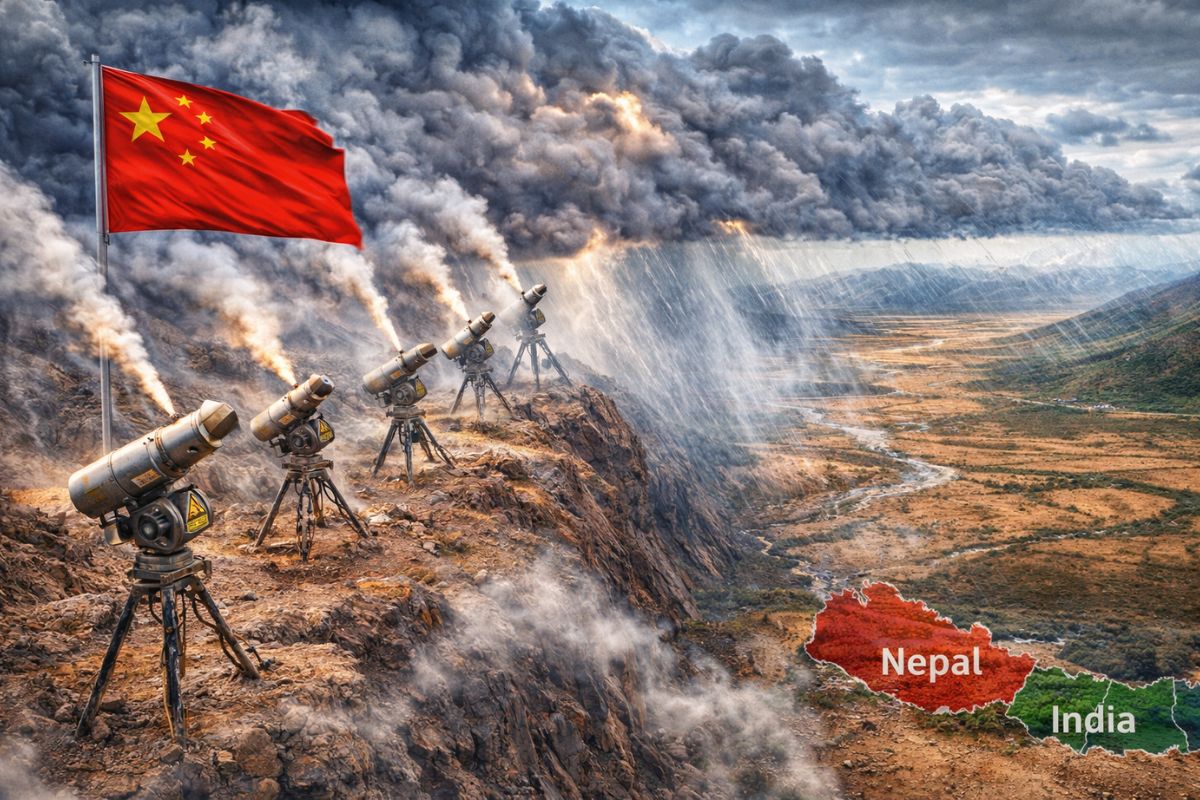
China operates the largest climate modification program on the planet, with 30 aircraft, drones, and over 250 ground generators launching silver iodide into the sky to provoke artificial rain, and now wants to install thousands of generators on the Tibetan plateau to create a system capable of transporting moisture to dry regions, which worries neighboring countries like India, Nepal, and Bangladesh.
According to the portal BBC, in March 2025, China mobilized a fleet of 30 aircraft and drones to launch silver iodide particles into the sky over the northern part of the country. At the same time, over 250 ground generators were firing rockets with the same particles. The goal was to provoke artificial rain over China’s grain belt, a region suffering from recurring droughts. The operation was considered a success and reportedly produced an additional 31 million tons of precipitation. But the impressive numbers hide a more complex and controversial reality.
China is not satisfied with isolated operations. The country has developed the largest climate modification program in the world over the past few decades and now plans something even more ambitious: the “Sky River” project, which aims to install thousands of silver iodide generators in the mountains of the Tibetan plateau to transport atmospheric moisture to dry regions in northern China. The scale of the project worries scientists and neighboring countries like India, Nepal, and Bangladesh, which depend on rivers originating in that very region.
The accidental discovery that gave China the power to make it rain

The technology that China uses today to manipulate the climate was born from a laboratory accident in the United States. In the 1940s, researcher Vincent Schaefer was working at General Electric investigating ice formation on aircraft wings.
-
A highly powerful solar explosion is heading towards Earth and could jeopardize the historic launch of NASA’s Artemis II mission in April 2026.

-
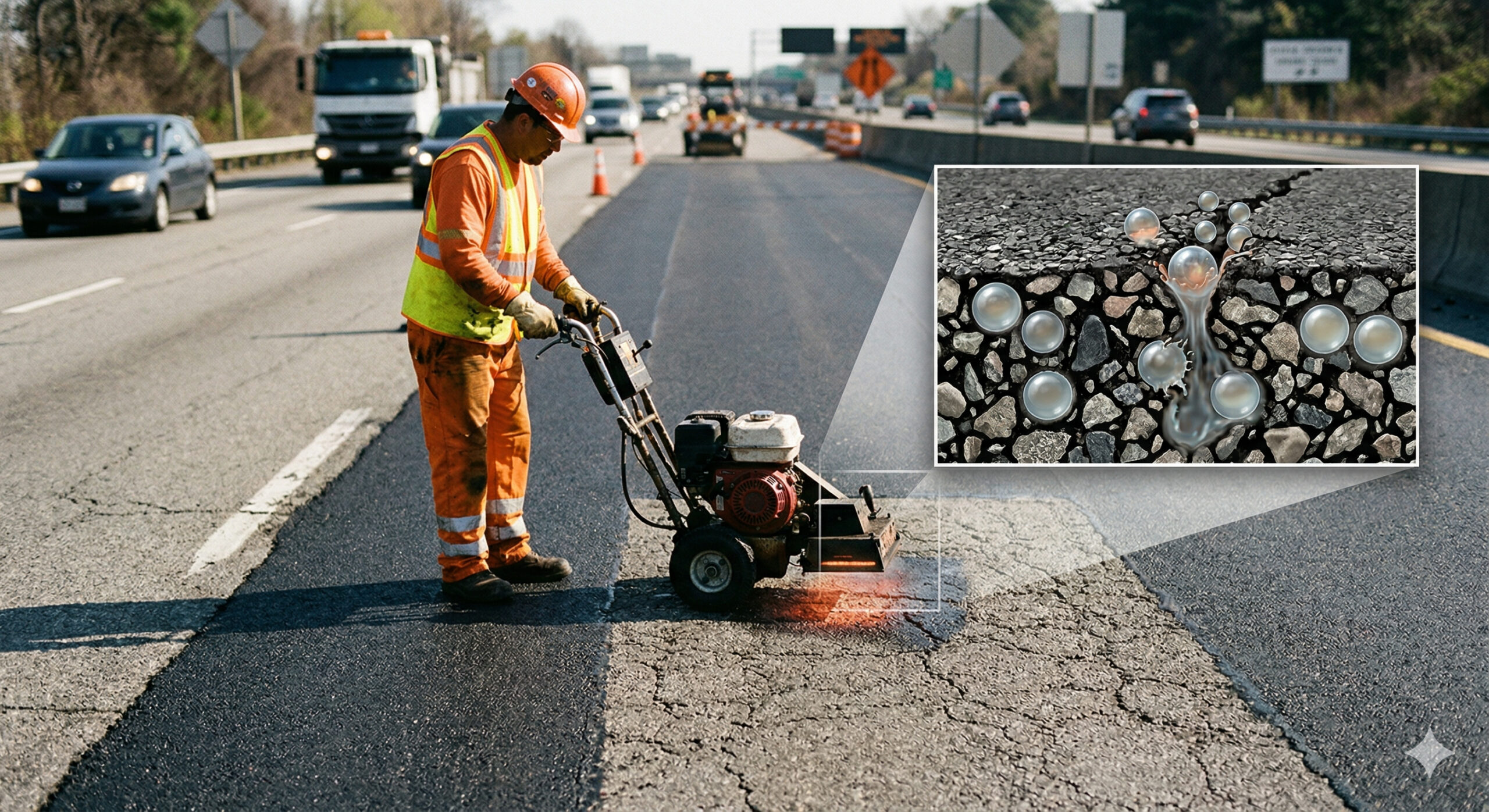
Scientists are developing a self-repairing asphalt that can close microcracks on its own before they turn into potholes, a technology that could drastically increase the lifespan of roads and reduce billions in maintenance worldwide.
-
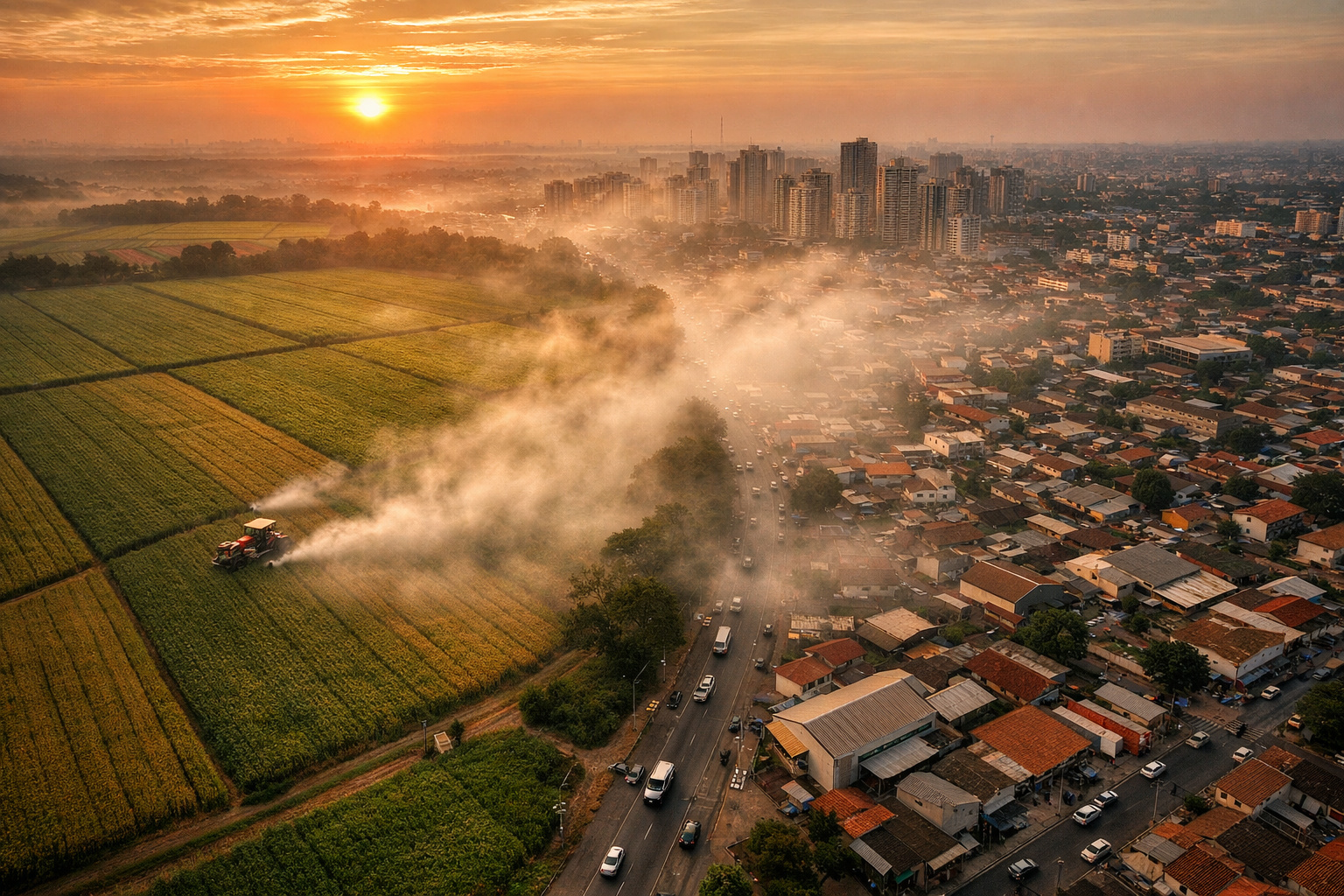
Scientists from USP issue a warning about the air in the countryside after a study indicates that breathing outside of São Paulo may conceal silent risks, with evidence that worries experts about health impacts.
-
The change in weather arrives tomorrow: heavy rains and storms return to the Central-South after a hot week, with a cold front along the coast bringing instability between Santa Catarina, Paraná, and the Southeast, affecting capitals strongly until Thursday.


By placing a piece of dry ice inside a device that simulated the environment of a cloud, he observed that ice crystals began to form spontaneously as if a small cloud was producing snow inside the laboratory.
In 1946, Schaefer decided to test the discovery outside the laboratory. During a flight over the Adirondack Mountains in New York, he released about 6 kilograms of dry ice over a supercooled cloud. Shortly after, snow began to fall beneath the cloud the first documented example of artificially induced precipitation in history.
From this discovery, the concept of cloud seeding was born, a technique that China would later transform into national policy decades later.
How cloud seeding works and why China uses it in half of its territory

The principle behind cloud seeding is relatively simple. Some clouds contain liquid water even at temperatures below zero a phenomenon called supercooled water.
When silver iodide particles are released into these clouds, they act as condensation nuclei because their molecular structure is very similar to that of natural ice crystals. The crystals that form around these particles capture more water vapor, grow, become heavy, and fall as rain or snow.

China began experimenting with this technique in 1958 when an aircraft induced rain over Jilin province during a severe drought. Since then, the government has continuously invested in the program.
Today, it is estimated that cloud seeding operations occur in more than half of China’s territory. The use goes beyond agriculture: during the Beijing Olympics in 2008, China used the technique to provoke rain before the clouds reached the capital, trying to ensure a clear sky for the opening ceremony.
The “Sky River” project: China wants to transport moisture through the air on a continental scale
China’s most ambitious plan in this area is the so-called Tianhe project, which can be translated as “Sky River.” The initiative aims to create a gigantic system capable of increasing atmospheric moisture transported from the Tibetan plateau to drier regions in northern China, using thousands of silver iodide generators installed in mountainous areas.
The particles released by these generators would be carried by air currents to the clouds, stimulating rain formation in regions that naturally receive little precipitation.
The scale of the project is unprecedented. While most countries that practice cloud seeding do so in a localized and targeted manner, China proposes an atmospheric intervention on a continental level something that no other country has attempted.
If implemented as planned, the “Sky River” would be the largest climate modification system ever built, capable of altering precipitation patterns over an area equivalent to several European countries. It is precisely this scale that worries the international scientific community and neighboring countries.
Why India, Nepal, and Bangladesh are concerned about what China is doing on the Tibetan plateau
The Tibetan plateau is called the “water tower of Asia” because it is the source of some of the continent’s largest rivers, including the Ganges, Indus, and Brahmaputra, which supply billions of people in India, Nepal, Bangladesh, and other countries.
Any intervention by China in the atmospheric dynamics of this region could, in theory, alter the amount of rain that reaches neighboring countries and this possibility is at the center of the geopolitical concern surrounding the Chinese program.
So far, there is no conclusive evidence that the cloud seeding practiced by China is affecting rainfall patterns in other countries.
But the lack of international agreements on climate modification is a topic of discussion: there is no treaty regulating what a country can or cannot do to alter the climate in its territory when the effects may cross borders. It is a legal gap that becomes more concerning as China scales its operations.
Does cloud seeding really work or is China exaggerating the results?
Despite the impressive numbers released by the Chinese government, the effectiveness of cloud seeding is still a topic of debate among scientists.
The fundamental problem is that there is no way to exactly replicate the same atmospheric conditions twice if a cloud produces rain after a seeding operation, it is not possible to definitively state whether that rain would have occurred anyway.
One of the most rigorous studies on the subject is the SNOWIE project, conducted in the mountains of Idaho, USA. Using advanced radars and sensors, scientists monitored the behavior of particles within the clouds and compared them with areas where the technique was not applied.
The results showed that seeding did indeed produce additional snow, but the increase was relatively small far from the 31 million tons that China claims to have generated in a single operation. This raises doubts about the actual scale of China’s results, although it does not invalidate the technology itself.
Manipulating the planet’s climate: the line between solution and risk that China is testing
China is experimenting with a technology that until recently seemed like science fiction and doing so on a scale that no other country has dared to attempt.
With climate change making droughts more frequent in various regions of the planet, the interest in solutions capable of increasing water availability is only likely to grow. Even if the increase in rain is small, it can make a difference in vulnerable agricultural regions.
But the question that remains is: what happens when a country decides to manipulate the climate on a continental scale without international rules governing it?
China moves forward, neighbors watch, and the world has yet to decide where one country’s climate sovereignty ends and where the rights of others begin.
Do you think provoking artificial rain is a legitimate solution to drought or too dangerous an intervention in nature? And if China manages to make it rain more in its territory, who is left without water? Leave your opinion in the comments.





Seja o primeiro a reagir!