





 Portuguese
  English
  Spanish
  4 min of reading
  1 comment


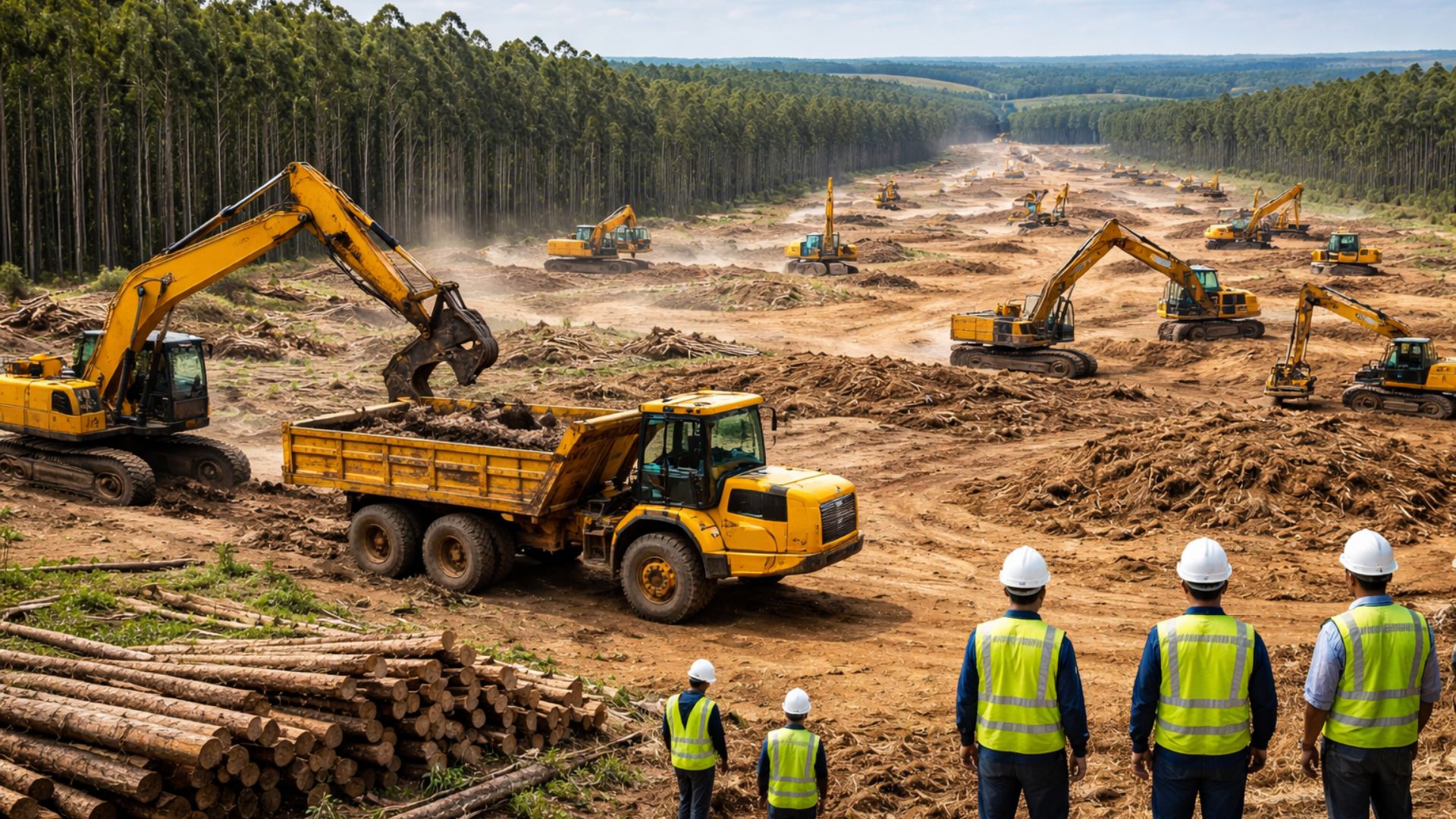


Billion-Dollar Mega Investment in the Interior of Rio Grande do Sul Promises to Transform Local Economy, But Faces Legal and Environmental Questions Following Recommendation from the Federal Public Ministry to Suspend Licensing Until Potentially Affected Indigenous Communities Are Consulted According to International Standards.
A town of about 12,000 inhabitants in Rio Grande do Sul has come under the radar of a mega industrial investment, but the advancement of the project has stumbled on a legal requirement: the FPM recommended the immediate suspension of the environmental licensing of the Nature Project, from CMPC, until potentially affected indigenous peoples are formally consulted.
With an investment reported around R$ 25 billion, the initiative plans to install a kraft pulp factory and associated structures at Fazenda Barba Negra, an area of approximately 10,000 hectares in the municipality of Barra do Ribeiro, south of Porto Alegre.
The recommendation was sent to the Ministry of Indigenous Peoples, Funai, and Fepam, the state’s environmental agency, demanding that a Free, Prior, and Informed Consultation, as provided by ILO Convention 169, be conducted before any administrative decision affecting traditional communities.
-
“No one will make us change the Pix,” says Lula after the US report.

-
Lula responds directly to Trump and says that Pix is from Brazil and will not change under pressure from anyone, after a report from the United States pointed out the Brazilian payment system as an American trade barrier.

-
Amazon has just announced a new fee on all deliveries, and your online purchases will become more expensive starting April 17, including for those buying from the United States here in Brazil.

-
He sold his share for R$ 4 thousand, saw the company become a giant worth R$ 19 trillion, and missed the opportunity of a lifetime.


Environmental Licensing Hits a Stalemate

In the document sent to Fepam, FPM advised that the licensing process be halted, warning that specific technical studies or informal meetings do not replace the formal consultation required by international protocols and applicable laws.
Additionally, FPM recommended that the environmental agency not treat the Indigenous Component Study as equivalent to the consultation procedure and, if any prior licenses were granted without indigenous input, they should be rendered void.
FPM’s position has a direct impact on the project’s timeline because it links the advancement of licensing to a stage that depends on federal coordination, with a defined methodology and participation from leadership, as recognized format for consultations with indigenous peoples.
Funai and the Ministry of Indigenous Peoples Must Conduct Consultation
To the Ministry of Indigenous Peoples and Funai, FPM requested the coordination of the consultation process with the Mbyá Guarani people, presenting, within 30 days, a methodological work plan developed together with local leadership.
In the same vein, the two agencies were directed to notify Fepam to formalize the request for suspension of the licensing, emphasizing that the consultative stage must occur prior to decisions that authorize, consolidate, or enable the installation of the industrial complex.
FPM also indicated that the results of the consultation should be treated as binding within the procedure, meaning that any express rejection from the communities would lead the indigenous agencies to issue an unfavorable technical opinion regarding feasibility.

Mbyá Guarani Villages Are in the Area of Influence of the Project
According to the administrative procedure cited by FPM, the analyzed documentation points to the existence of at least eight Mbyá Guarani villages in the Direct Area of Influence and 18 in the Indirect Area of Influence of the planned industrial complex.
The agency also noted concerns related to land pressures, risk of water contamination, and logistical effects, in a scenario where the enterprise was described as a vector for the expansion of eucalyptus plantations in the Pampa biome.
When addressing the issue, Federal Prosecutor Ricardo Gralha Massia emphasized that prior, free, and informed consultation is a right guaranteed by Convention 169, with a need for respect for the protocols and culture of each community.
Billion-Dollar Investment and Regional Economic Impact
The Nature Project has been presented as one of the largest private investments announced in the state, with figures ranging in official disclosures and reports between R$ 24 billion and R$ 25 billion, depending on the context and timing.
In a corporate statement, CMPC itself described Barra do Ribeiro as a municipality with about 12,500 inhabitants and detailed that Fazenda Barba Negra is located approximately 15 kilometers from the city center, in an area already used by the company for eucalyptus-related activities.
IBGE data indicates that the municipality had 12,225 inhabitants in the 2022 Census and an estimate of 12,475 residents in 2024, numbers close to the level cited in the public debate surrounding the enterprise.

Pressure from Environmentalists and Request for Public Hearing
While the licensing was advancing, representatives from environmental groups and politicians presented a set of documents to Fepam with criticisms of the project, including technical opinions on potential environmental impacts and effects on neighboring communities.
The group also pointed out, among the arguments presented, alleged flaws and omissions in the EIA-Rima, as well as requesting that a public hearing be held in Porto Alegre to broaden the discussion on the enterprise and its possible developments.
With FPM’s recommendation, the process now revolves around a central point: the validity of licensing without the formal consultation provided for in Convention 169, a stage that, according to the agency, must occur before approvals affecting territories and ways of life.
The discussion puts into tension the pace of the largest investment announced for the region and the state’s obligation to ensure the consultative procedure appropriately, with effective participation from the communities and institutional communication between federal and state agencies.








De onde são estas fotos que ilustram a matéria?