





 Portuguese
  English
  Spanish
 5 min of reading
  2 comments


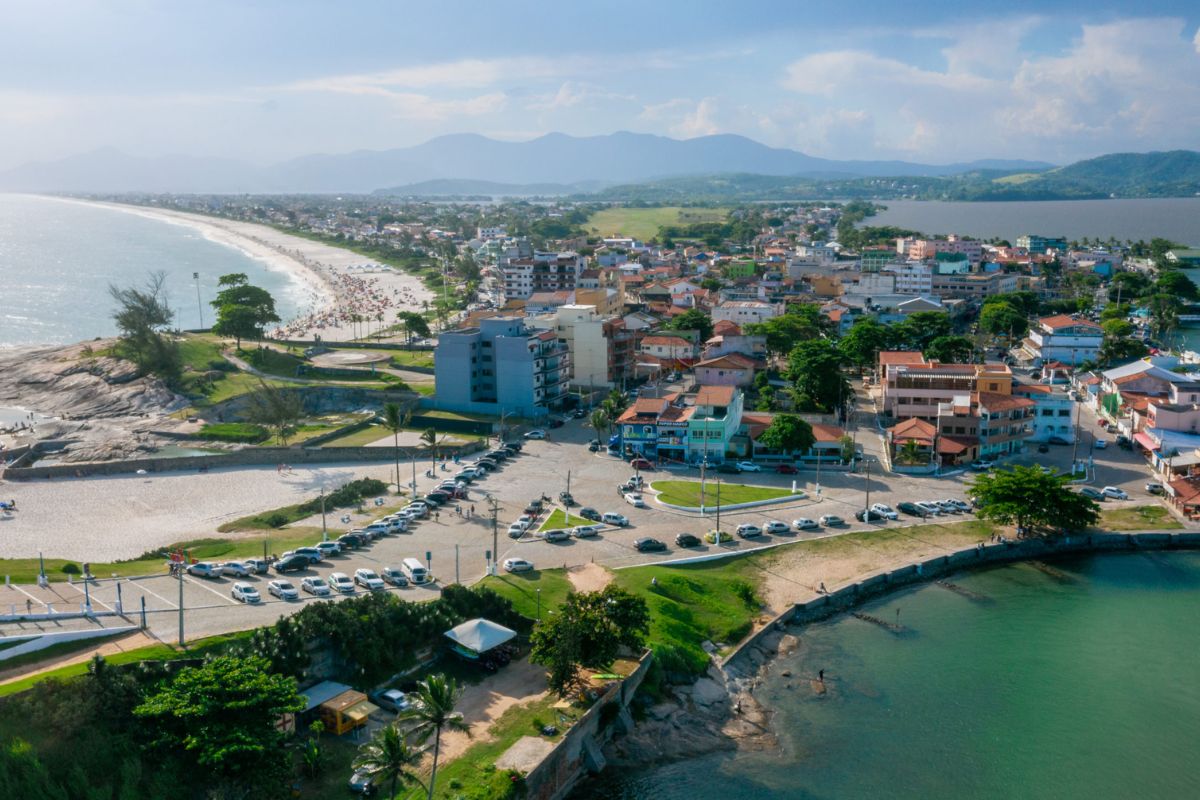


In The Lagos Region of Rio de Janeiro, Saquarema Became a Symbol of the Oil Boom: Per Capita GDP of R$ 722,441.52 in 2023, Jump of 1,398% Since 2010. Royalties from the Santos Basin Fund Works, but the 2022 Census Shows Income of R$ 2,310 and Informal Work in Almost Half
Saquarema, in the Lagos Region of Rio de Janeiro, in the Southeast, has emerged at the top of the country because of oil. In 2023, the municipality recorded a per capita GDP of R$ 722,441.52, the highest in Brazil, boosted by substantial transfers of royalties linked to exploration in the Santos Basin, which transformed the local budget and accelerated works.
The contrast is that formal wealth has not translated, to the same extent, into income and economic security for the majority. The 2022 Census indicates an average monthly income of R$ 2,310, while an economic study shows almost half of jobs in informality, a scenario that increases inequality, weakens rights and feeds fears of a fiscal shock when oil money loses strength.
Record Per Capita GDP and the Jump of 1,398% Between 2010 and 2023

The milestone that put Saquarema at the center of the debate was the per capita GDP of R$ 722,441.52 in 2023, the national leader. The figure draws attention due to its magnitude and growth rate: a study conducted by economist Mauro Osório and regional development master’s degree holder Henrique Rabelo from the Institute of Studies of Rio de Janeiro indicates that the local per capita GDP jumped 1,398% between 2010 and 2023.
-
“No one will make us change the Pix,” says Lula after the US report.

-
Lula responds directly to Trump and says that Pix is from Brazil and will not change under pressure from anyone, after a report from the United States pointed out the Brazilian payment system as an American trade barrier.

-
Amazon has just announced a new fee on all deliveries, and your online purchases will become more expensive starting April 17, including for those buying from the United States here in Brazil.

-
He sold his share for R$ 4 thousand, saw the company become a giant worth R$ 19 trillion, and missed the opportunity of a lifetime.


The difference from the rest of the country makes the case even more extreme. In the same period, growth was 6.2% in the State of Rio de Janeiro and 8.2% in Brazil. In practice, Saquarema has become an example of a municipal economy surging due to transfers associated with oil, without that meaning, automatically, distributed well-being.
The most visible change in Saquarema is linked to the continuous influx of resources. The royalties from oil, with mandatory allocation, have started to fill the city hall’s coffers and made the municipality operate as a large construction site, with interventions in different areas and pressure for service expansion.
This cycle accelerates urbanization and exposes typical bottlenecks of rapid growth. Among residents, there are criticisms of the accelerated growth of peripheral neighborhoods, the precariousness of basic sanitation, the number of unpaved streets, and the lack of professionals to fully operate new health and education structures. At the same time, physical construction advances and raises expectations for delivering permanent results.
Average Income of R$ 2,310 and Informality: Wealth Doesn’t Arrive Equally
Despite being at the top of the rankings, money does not appear equivalently in everyday life. The 2022 Census indicates an average monthly income of R$ 2,310, which is less than R$ 28,000 per year, below state and national averages. It is a picture of income that does not match a per capita GDP in the hundreds of thousands of reais.
The economic study also indicates that almost half of jobs are in informality, which weakens the social structure, reduces income predictability, limits access to rights, and increases vulnerability during periods of instability. In a municipality with a budget inflated by royalties, this mismatch amplifies the ambivalent feeling: pride in historical numbers and unease about what happens outside macroeconomic statistics.
The fragility of the model is clearly evident in public accounts. According to data from the city hall itself, 79.37% of expenses executed in 2024, totaling R$ 2.49 billion, originated from oil royalties. For 2025, the forecast is to reduce dependency to 71.71%, which highlights concerns about sustainability but maintains a very high exposure.
The message embedded in these percentages is direct: Saquarema finances most of its spending with royalties, and this creates fiscal risk if there is a drop in revenue, fluctuations in transfers, or structural changes in the oil cycle. The anxiety about a possible collapse when the money dries up arises precisely from this concentration of revenue in a source that the municipality does not fully control.
Hospital Above Capacity and Competition for 1,794 Positions to Try to Fill the Gap
Even with investments, the pressure on public services remains. One cited example is the Municipal Hospital Porphírio Nunes de Azeredo in the Bacaxá district, which has undergone renovations and added an annex, but continues to operate above capacity. This points to a recurring challenge: expanding physical structure is only part of the solution, as full operation depends on staff, scale, and continuous management.
In response to the shortage of professionals and population growth, the city hall announced its intention to open a public competition with 1,794 positions in the areas of education, health, and security later this semester. The measure aims to tackle a central bottleneck of the construction cycle: without people to work, new infrastructure does not turn into consistent services for the population.
Saquarema already exceeds 95,000 inhabitants, according to estimates from IBGE for 2025. More residents mean more demand for sanitation, paving, schools, medical care, and security, precisely the areas where criticisms arise when the city grows rapidly.
In this context, oil acts as both a driver and a risk. It supports the leap in budget and works but also raises the cost of maintaining services and reducing inequalities, as the municipality is charged as if macroeconomic wealth were automatically in every family’s pocket, which income data do not confirm.
Saquarema, in the Lagos Region of Rio de Janeiro, has become a portrait of Brazil powered by oil: leading the per capita GDP with R$ 722,441.52 in 2023, saw the indicator grow 1,398% between 2010 and 2023, and executed R$ 2.49 billion in expenses in 2024, with 79.37% coming from royalties. At the same time, it coexists with average income of R$ 2,310, high informality, pressure on services like the Bacaxá hospital, and the need for 1,794 positions to try to sustain public machinery.
If you live in Saquarema or follow the region, the most realistic step is to monitor royalty dependency monthly, demand long-term planning, and track the execution of works and competitions, as the greater risk is not the boom, but what remains when the oil cycle weakens.
In your assessment, will Saquarema be able to turn oil royalties into formal jobs and stable services, or will the municipality first feel the pinch in income and quality of life when the cash tightens?









Tá certo é isso mesmo trata-se do pré-sal que fica na bacia de Santos
Existe um equívoco da matéria falando sobre Saquarema como parte da Bacia de Santos, quando, na verdade, deveria ser dito: Bacia de Campos.