





 Portuguese
  English
  Spanish
 6 min of reading
  0 comments


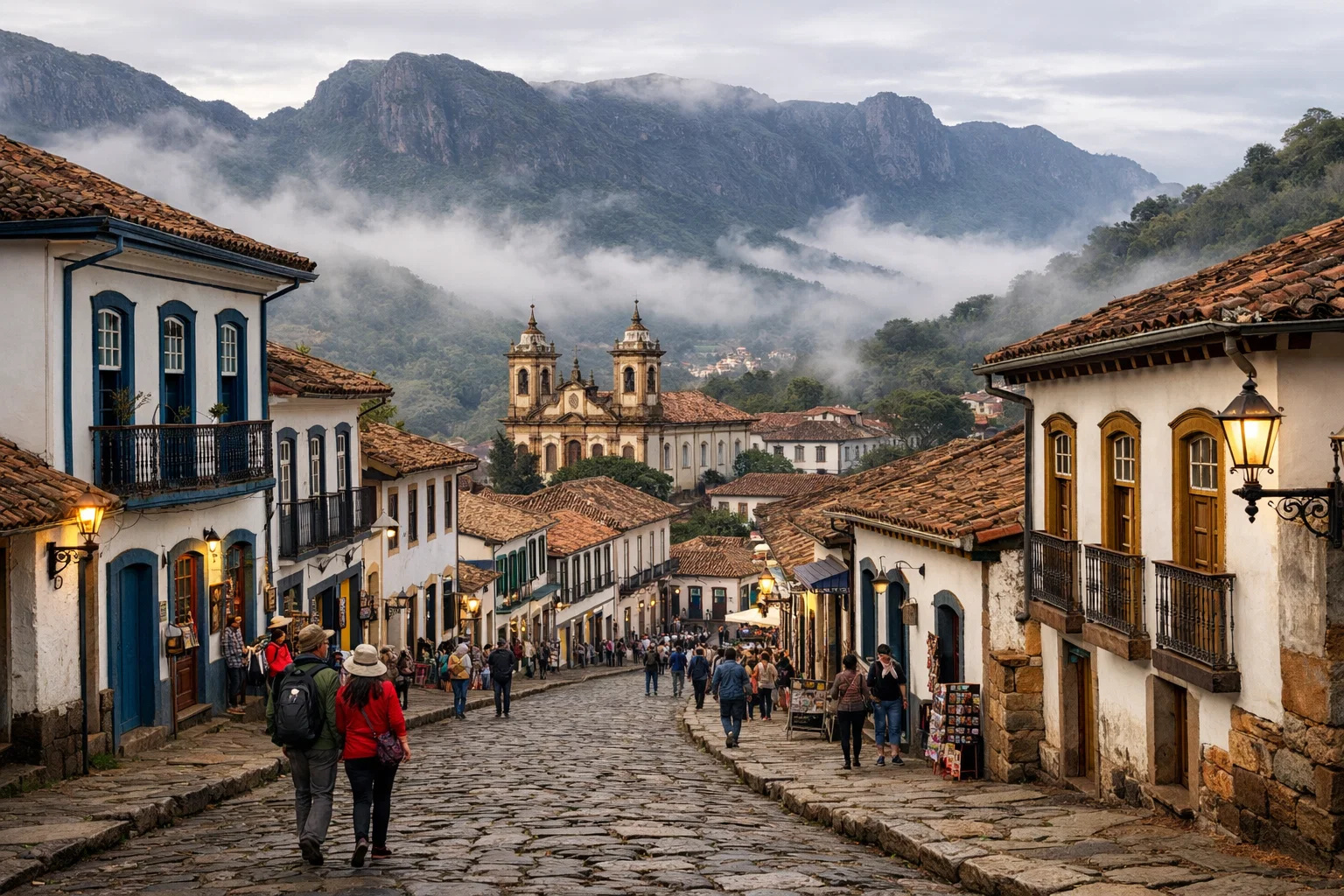
Among Mountains And Fogs Of Serra Do Espinhaço, Historical City Preserves Colonial Architecture, Century-Old Culture And One Of The Most Famous Gastronomic Traditions Of Brazil
Located amidst the mountains of Serra do Espinhaço, in Minas Gerais, there is a city that seems to have resisted the passage of time. With stone streets, colonial mansions, and cultural traditions that span generations, Serro has become a destination that enchants tourists and researchers interested in Brazil’s history. More than just a historical municipality, the city represents a true Brazilian cultural heritage.
The information was disclosed by the website “O Antagonista,” which highlighted the historical and cultural value of Serro, a city that preserves century-old traditions, colonial architecture, and one of the most emblematic cuisines of Minas Gerais.
How Serro Became The First Registered City In Brazil
To understand the significance of Serro, it is necessary to go back in time. In 1938, when IPHAN (Institute of National Historical and Artistic Heritage) decided to protect an architectural ensemble for the first time in Brazil, many imagined that more famous cities, such as Ouro Preto or Diamantina, would receive this recognition. However, the choice surprised historians: the title was granted to Serro.
-
The village where two rivers run side by side without mixing in Santarém and Alter do Chão reveals some of the most beautiful freshwater beaches on the planet.

-
Brazil’s nuclear submarine with a speed 5 times greater than normal advances after nearly 50 years and R$ 40 billion spent.

-
A Brazilian island charges R$ 0.50 to receive visitors and prohibits any new residents.
-
Why was the Great Wall of China built? The truth that many are unaware of!


At that time, the city was known as Vila do Príncipe and already carried a history deeply linked to the Brazilian colonial period. The municipality is located at almost one thousand meters above sea level in the Serra do Espinhaço, in the northeastern central region of Minas Gerais, an area marked by mountainous landscapes and a mild climate.
Before the arrival of colonizers, Indigenous peoples called the area Ivituruí, a term of tupi-guarani origin that can be translated as “cold hill wind.” The name described the region perfectly, as a frequent fog tends to cover the higher parts of the mountains, bringing cooler temperatures even during the hottest months of the year.
The history of the city began to change in the early 18th century. In 1702, bandeirantes led by Antônio Soares Ferreira discovered gold in the headwaters of the Jequitinhonha River. The discovery triggered rapid population growth and economic development in the region.
A few years later, in 1714, the location had officially transformed into Vila do Príncipe, becoming the seat of one of the four first districts of the Captaincy of Minas Gerais. During this period, the city established itself as an important administrative and economic center.
However, when gold and diamonds began to run out, Serro ended up drifted away from the new economic centers that were emerging in other regions. Curiously, it was precisely this isolation that helped to preserve a large part of the colonial architecture from the 18th and 19th centuries.
For this reason, the historical ensemble of the city was officially registered in April 1938, becoming the first architectural heritage protected by the federal government in Brazil.


What Is It Like To Live In A City That Preserves The Past
Currently, Serro maintains a calm rhythm typical of the historical cities in the interior of Minas Gerais. The stone streets and slopes shape the daily life of residents, while local commerce meets the everyday needs in a simple and welcoming manner.
One of the main meeting points in the city is Praça João Pinheiro, which was formerly known as Largo da Cavalhada. The space features colonial buildings, imperial palm trees, and an atmosphere that invites residents and visitors to slow down.
In addition to the preserved history, the municipality’s economy also has strong traditional roots. A large portion of rural families relies on family farming, but one of the region’s greatest symbols is the artisan cheese from Serro.
This cheese is produced using techniques passed down from generation to generation and is part of the city’s cultural identity. Many farms in the region continue to use traditional methods that have lasted for centuries.
Every year, in July, the city also celebrates the traditional Festa de Nossa Senhora do Rosário, an event that brings together cultural manifestations such as congado, dances with colorful costumes, and religious processions that blend Catholic faith and Afro-Brazilian traditions.
During this time, Serro comes even more alive, and its historical streets become the stage for celebrations that involve the entire community.
The Cheese From Serro That Gained National And International Recognition
If there is something that represents Serro beyond its colonial architecture, it is certainly the famous Queijo do Serro. This typical product gained recognition over the last few decades and became a symbol of Minas Gerais cuisine.
In 2002, IEPHA-MG officially recognized the cheese as the first cultural asset registered as tangible heritage of the state of Minas Gerais. This type of recognition aims to protect living traditions and production methods that are part of the cultural identity of a region.
Subsequently, in 2008, the product also received the national registration from IPHAN, consolidating its importance within Brazilian culture.
More recently, in December 2024, came an even greater recognition: UNESCO declared the Methods of Making Artisan Minas Cheese as Intangible Cultural Heritage of Humanity. It was the first time that a Brazilian food received this international title.
The cheese is produced with raw milk, rennet, natural starter culture, and salt, following a traditional method that requires a minimum maturation of 17 days. During this process, the product develops a yellowed rind and a striking flavor, characteristics that have won over enthusiasts across the country.
Today, many rural properties in the region welcome visitors interested in witnessing the artisanal production process up close.
What To Visit In Serro Among Baroque Churches And Natural Landscapes
For those visiting the city, the historical center of Serro can be easily explored on foot. However, to experience the natural attractions of the region, it is best to use a car or hire a local guide.
Among the main tourist spots is the Chapel of Santa Rita, located at the highest point of the historical center. The chapel’s steps offer a privileged view of the Pico do Itambé, which has 2,052 meters of elevation. The travel guide Lonely Planet describes the structure as one of the city’s most distinctive buildings.
Another highlight is the Mother Church of Our Lady of Conception, considered one of the largest baroque churches in Minas Gerais. The temple features perspective paintings on the ceiling and is also registered with IPHAN.
The House of Ottoni Museum operates in an 18th-century manor and holds a collection of over 500 pieces, including historical furniture, antique utensils, and works of art.
Besides the historical center, visitors can also explore nearby districts, such as Milho Verde, located 25 km away, and São Gonçalo do Rio das Pedras, which is 30 km from the municipal seat.
Milho Verde, for example, is known for its tranquil atmosphere, the Church of Our Lady of the Rosary, and the Cachoeira do Moinho, which has natural pools ideal for bathing.
Pleasant Climate And Historical Tourism Make Serro A Special Destination In Minas Gerais
Sited at over 700 meters above sea level, Serro has a mild climate throughout almost the entire year. Temperatures typically range between 15°C and 29°C, creating pleasant conditions for historical tours and nature trails.
The summer, from December to February, features temperatures between 18°C and 29°C and is marked by more intense rainfall. Despite this, it is a good period to visit the waterfalls in the region.
The autumn, between March and May, has temperatures ranging from 15°C to 27°C, with a gradual decrease in rainfall and ideal weather for exploring trails and cheese farms.
During the winter, from June to August, temperatures vary between 12°C and 25°C, and the dry climate favors ecotourism activities, coinciding with traditional cultural events.
Finally, spring, from September to November, shows temperatures between 15°C and 29°C, when rains begin to return and refresh the watercourses of the mountains.
A Historical Destination That Reveals The Essence Of Minas Gerais
Located about 90 km from Diamantina and integrated into the Diamonds Circuit, Serro is also part of the historical Estrada Real, an ancient route used during the colonial period to transport mineral wealth between Minas Gerais and Rio de Janeiro.
Today, the municipality continues to attract visitors looking for cultural tourism, traditional cuisine, and contact with nature.
Walking through the stone slopes, observing the baroque churches, and tasting artisan cheese produced for over three centuries is an experience that helps to understand why Serro remains one of Brazil’s most fascinating historical destinations.
Source: O Antagonista





-

Uma pessoa reagiu a isso.