





 Portuguese
  English
  Spanish
 4 min of reading
  0 comments


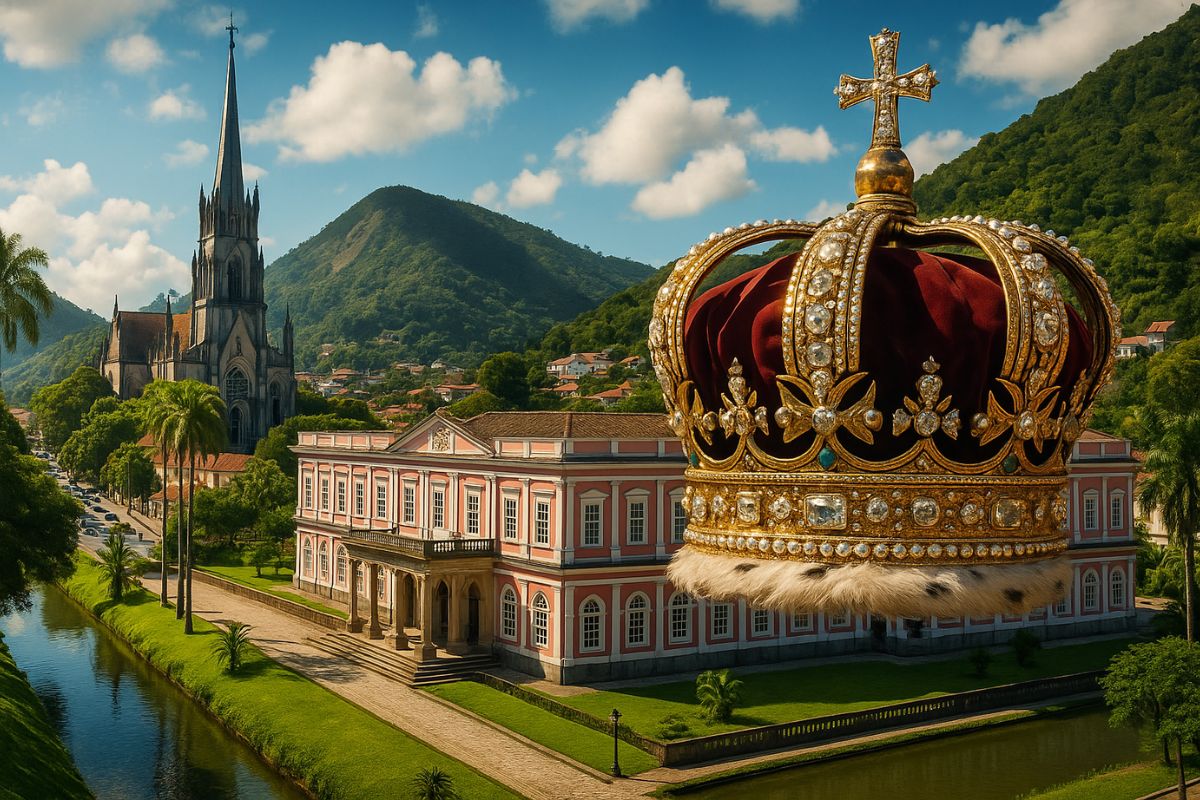
The City In The Mountains Of Rio That Was The Summer Residence Of Emperor Dom Pedro II Houses The Imperial Museum, Preserves Crown Jewels And Keeps Alive The Atmosphere Of Brazilian Monarchy With Unique Architecture, Culture And Traditions
The city in the mountains of Rio that symbolizes Brazil’s imperial past is Petrópolis, founded in 1843 by order of Dom Pedro II. Planned to be the royal family’s refuge during the warm months, the city was shaped with European traits, meticulously designed gardens, and a mild climate, ideal for escaping the intense heat of the capital.
The Imperial Palace of Petrópolis, the official summer residence of the court, is now the Imperial Museum, which houses the original crown of Dom Pedro II, royal family jewels, carriages, and historical documents. The collection is one of the most complete in the country and transforms the space into a true time capsule of the Brazilian Empire.
The Historical And Cultural Heart Of The Empire
In addition to the Imperial Museum, Petrópolis is filled with buildings that narrate Brazil in the 19th century.
-
Attracting around 250,000 people a year, a lighthouse 200 meters from the sea, on a 60-meter high cliff, on the North Sea coast in Denmark, becomes one of the most impressive examples of how nature can threaten historical buildings.

-
The narrowest house in the world is only 63 centimeters wide, but inside it can accommodate a bathroom, kitchen, bedroom, office, and even two staircases.

-
In the middle of the sea, these enormous concrete and steel structures, built by the British Navy to protect strategic maritime routes, look like they came straight out of a Star Wars movie.

-
For years, no one could cross a neighborhood in Tokyo because of the tracks, but an impressive solution changed mobility and completely transformed the local routine.

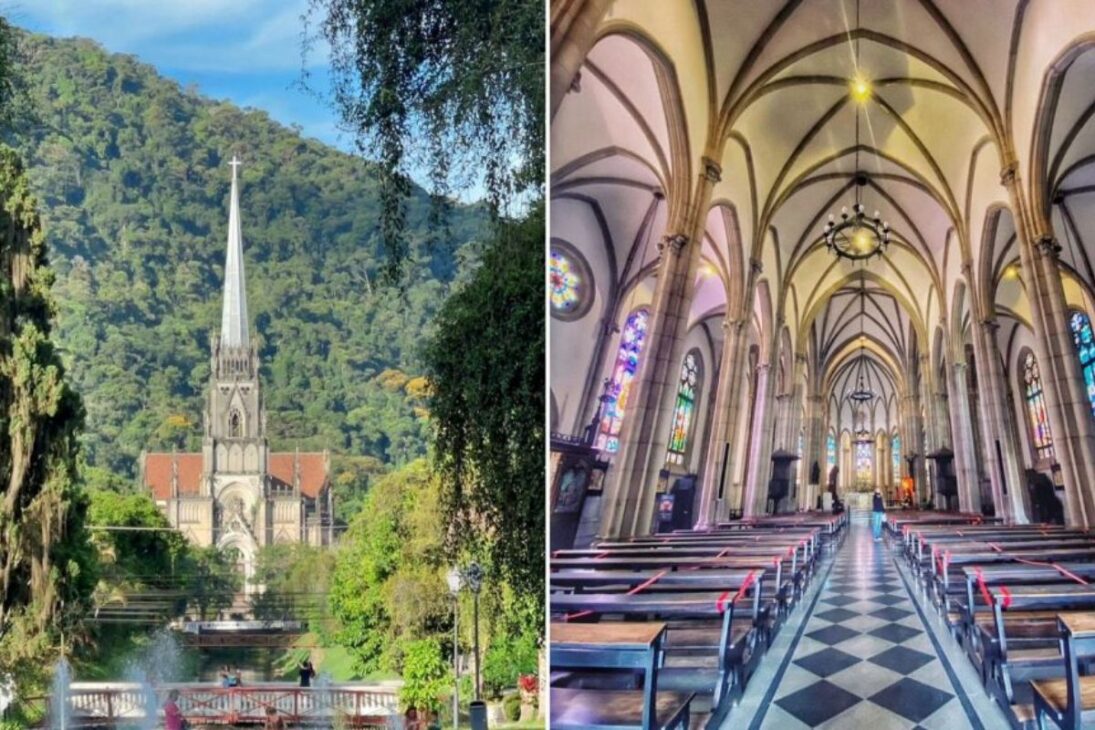
St. Peter of Alcântara Cathedral, in Neo-Gothic style, houses the Imperial Mausoleum, where Dom Pedro II, Empress Teresa Cristina, Princess Isabel, and Count d’Eu rest.
Another icon of the city is the Crystal Palace, a glass and iron structure opened in 1884 and inspired by the Crystal Palace in London.
Built to host parties and agricultural exhibitions for the court, the building has become one of the main postcards of the city.
The Legacy Of Santos Dumont And The Elegance Of Quitandinha
The history of Petrópolis is also intertwined with that of Santos Dumont, the Brazilian inventor who made the city his summer refuge.
His house, known as The Enchanted, is one of the most visited in the country and holds creative peculiarities, such as the staircase that only allows one to ascend with the right foot and descend with the left.
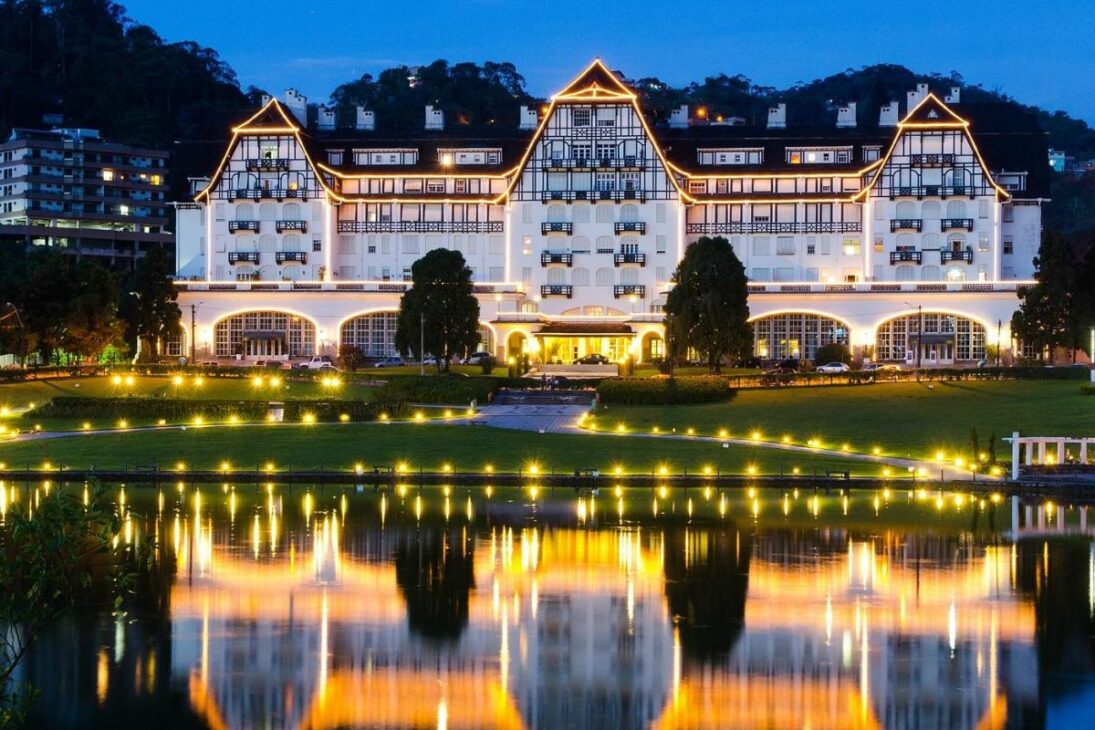
Meanwhile, the Quitandinha Palace, an old casino and luxury hotel from the 1940s, impresses with its Norman-French style and having hosted celebrities and politicians of the time.
Today, the space belongs to Sesc and functions as a cultural center, preserving the glamour of the golden era of the Fluminense mountains.
The German Culture And Gastronomy In The Imperial City
The German colonization has strongly marked the city in the mountains of Rio, leaving visible traces in architecture, customs, and gastronomy.
Restaurants and breweries offer typical dishes such as Eisbein (pork knuckle) and artisanal sausages, along with local beers, a tradition that began with the Bohemia Brewery, the oldest in Brazil, founded in 1853.
Walking through the streets of Petrópolis is like traversing an open-air museum, with historic mansions, tree-lined squares, and buildings inspired by European design.
The charm and air of royalty blend with the tranquil rhythm of the mountains, making the city a perfect destination for those seeking history, nature, and good food.
Curiosities That Keep The Imperial Soul Alive
The Prince’s Tax: some properties still pay the so-called laudêmio, an annual fee of 2.5% on the property value intended for the Real Estate Company of Petrópolis, controlled by the imperial family since the 19th century.
The name inspired by Russia: the butler of the Imperial House, Paulo Barbosa, suggested the name Petrópolis, inspired by St. Petersburg. It literally means “City of Peter,” in honor of the emperor.
The last photo of the monarchy: one of the last images of the imperial family before exile was taken on the staircase of Princess Isabel’s house, in Petrópolis, shortly before the Proclamation of the Republic.
The emperor’s journey: in the 19th century, the journey from Rio to Petrópolis took a whole day and involved a steamboat and horseback climbing through the mountains.
The safest city in Rio: to this day, Petrópolis is recognized as one of the safest cities in the state, reinforcing its vocation as a prestigious and tranquil tourist destination.
When To Visit The Imperial City
The best times to explore Petrópolis are between April and June and July and October, when the weather is mild and there’s less rain.
Two or three days are enough to visit the main historical points, but those seeking gastronomic experiences and trails can extend their stay and explore the National Park of Serra dos Órgãos, filled with waterfalls and scenic trails.






-

-

-

-

-

16 pessoas reagiram a isso.