





 Portuguese
  English
  Spanish
  5 min of reading
  1 comment



Cachoeiro de Itapemirim Appeals to Trump for Help with Official Letter After 50% Tariff: City in Espírito Santo Lost Exports, Cut Jobs, and Fears Economic Collapse
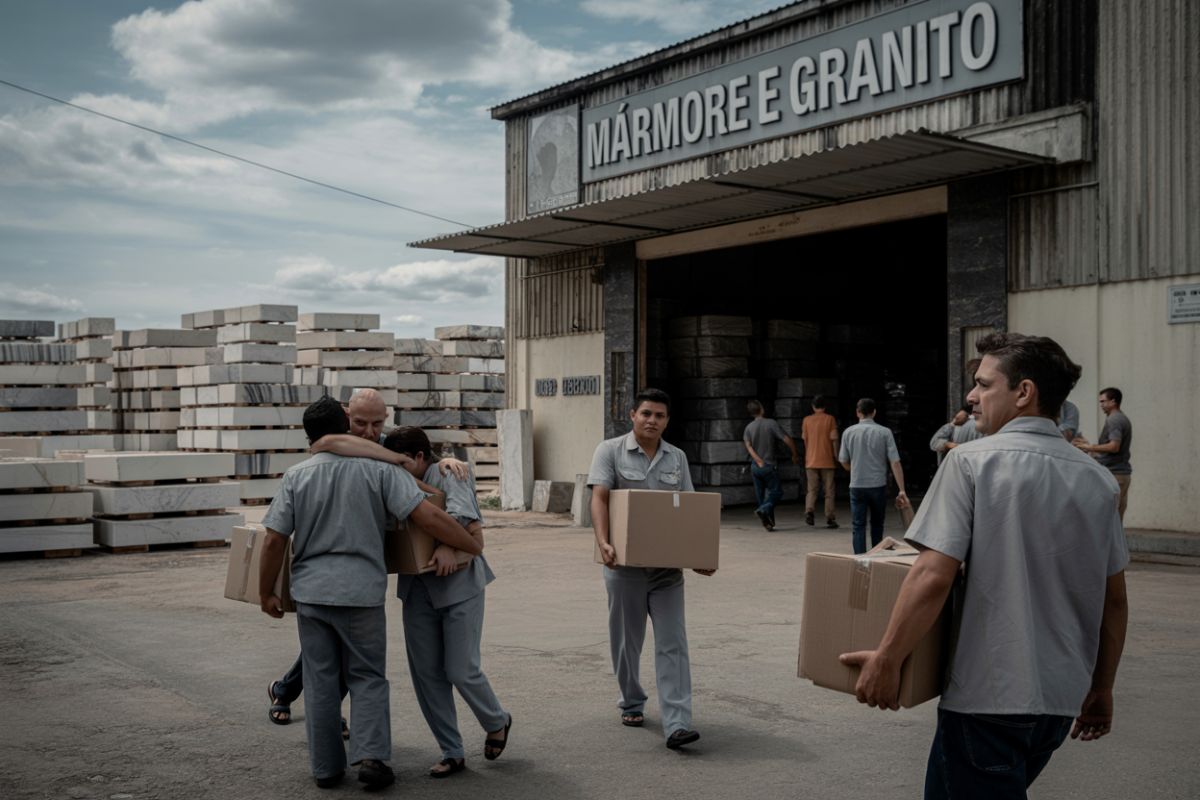
The city of Cachoeiro de Itapemirim, in southern Espírito Santo, has become the most dramatic portrait of the immediate economic consequences of the new massive tariff imposed by the United States against Brazil. With an almost total dependence on the American market for the export of ornamental stones, the municipality has already begun to feel the impacts of the measure even before it officially came into effect.
Since former President Donald Trump sent a letter to the Brazilian government in early July announcing the creation of a 50% tariff on Brazilian products, more than 1,200 containers with blocks and slabs of granite, marble, and quartzite have stopped being shipped. Most of these products would have headed to the U.S. construction industry, one of the main consumers of Brazilian stones.
The interruption in exports has caused direct layoffs in local companies, such as Lime Stone, which cut 31 of its 57 employees in just one week. Founded in 2024 by a traditional family in the extraction sector, the company decided to pause exports and seek alternatives, refocusing on the domestic market and studying possibilities in Europe and Oceania.
-
“No one will make us change the Pix,” says Lula after the US report.

-
Lula responds directly to Trump and says that Pix is from Brazil and will not change under pressure from anyone, after a report from the United States pointed out the Brazilian payment system as an American trade barrier.

-
Amazon has just announced a new fee on all deliveries, and your online purchases will become more expensive starting April 17, including for those buying from the United States here in Brazil.

-
He sold his share for R$ 4 thousand, saw the company become a giant worth R$ 19 trillion, and missed the opportunity of a lifetime.


“It’s a very sad situation; we’re not happy about this,” said the businessman in charge of Lime Stone, who does not rule out rehiring employees if commercial relations between Brazil and the United States normalize. For him, the climate of uncertainty recalls the chaos experienced during the worst moments of the pandemic.
City Sends Direct Appeal to Trump: “Hope and Despair”
The mayor of Cachoeiro de Itapemirim, Theodorico Ferraço (PP), took an unusual step: he drafted and sent a letter directly to Donald Trump’s office, asking that the stone sector be spared from the tariff increase. In the document, Ferraço cites local cultural icons such as singer Roberto Carlos and writer Rubem Braga in an attempt to sensibilize the former U.S. president.
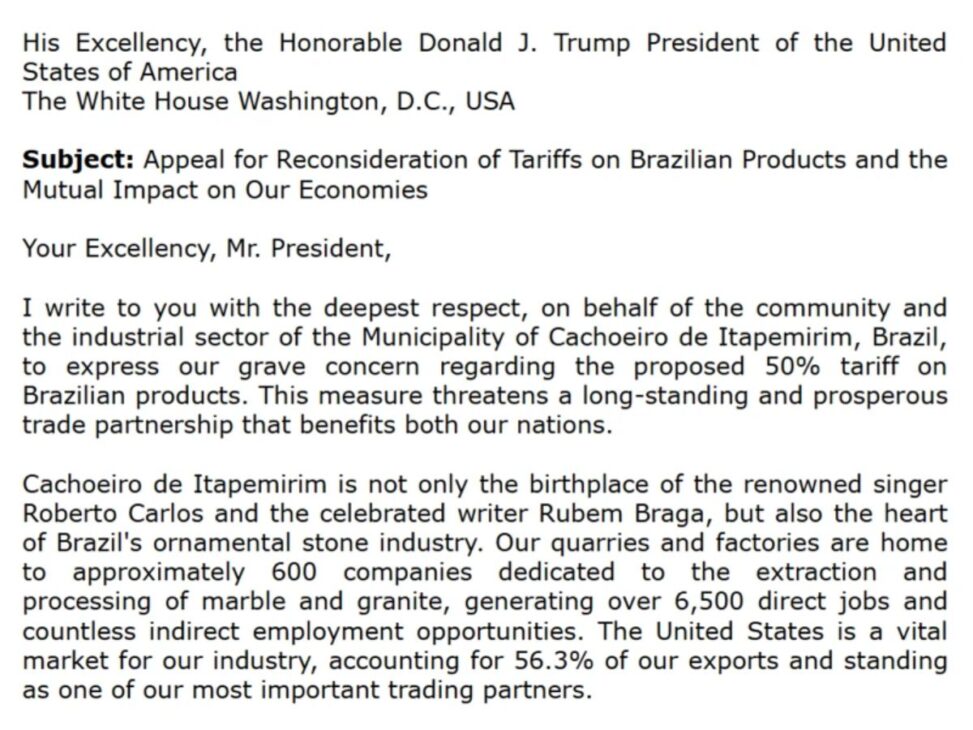
According to him, nearly 700 companies in the city work directly with marble and granite processing, employing about 9,500 people — a number that corresponds to approximately 20% of the municipality’s economically active population. The production chain is so relevant that a longer interruption could compromise up to 30% of local revenue.
“If you can’t remove the tariff from everything, at least take it off our marble and granite. Hope and despair are very high among business owners, and this automatically transmits to the employees,” Ferraço stated in an interview.
Although there is still no official definition regarding which products will be affected starting August 1, the uncertainty is already enough to paralyze operations. This week, U.S. Secretary of Commerce Howard Lutnick stated that some items — such as coffee and mango — could be exempt from the new tax, but he did not explicitly mention Brazil or ornamental stones.
In addition to Espírito Santo, other states are also expected to be affected by the measure, such as Ceará, which leads fish exports. Ferraço estimates that, in the ranking of losses, Espírito Santo ranks just behind.
Companies Seek Alternatives to Survive the Tariff
Among the companies that operate almost exclusively focused on the U.S. market, Brothers in Granite is an emblematic example. With an industrial headquarters in Serra (ES) and its own distribution center in Houston, Texas, the company ships up to 15 containers of natural stone slabs to the U.S. each month.
“We depend 110% on the U.S.,” declared Daniel Salume, one of the company’s founders, explaining the vulnerability of the business in light of the new taxation. He and his brother founded the company in 2007 after leaving a stone export company where they worked.
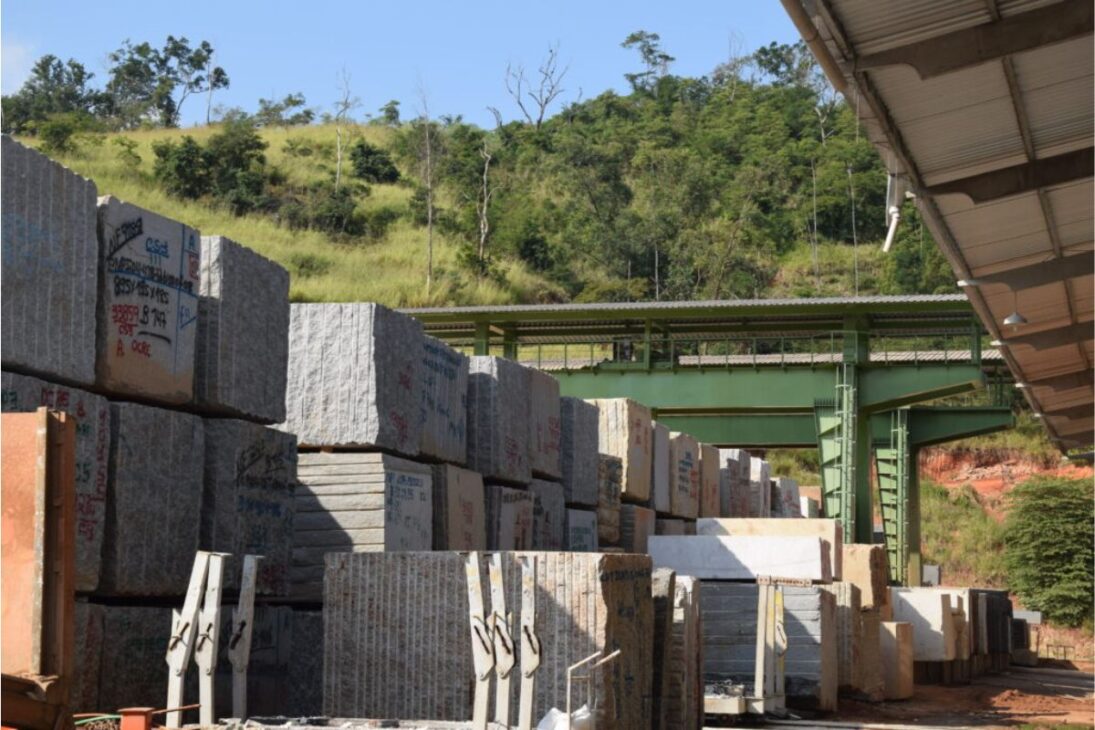
With 30 employees in Brazil and seven in the United States, Brothers in Granite has already put part of its team on collective vacation, taking the opportunity to replace machinery. However, the company is also analyzing a Plan B: importing stones from other countries and maintaining distribution from its base on American soil.
According to Salume, there are still many doubts regarding the practical application of the 50% tariff. “No one knows exactly what date counts for taxation: if it’s when it leaves the port in Brazil, when it enters the first port in the U.S., or when it arrives at the final destination. So far, this is unclear for us.”
Sector Mobilizes Internationally for a Solution
The Brazilian Association of Natural Stones (Centrorochas) has been leading an international effort to try to stop or at least postpone the application of the tariffs. Representatives of the entity traveled to Washington this Wednesday, where they will participate in a meeting at the Brazilian embassy.
The strategy also involves support from American entities interested in maintaining the flow of Brazilian imports. Among them, the Natural Stone Institute (NSI), which represents the natural stone industry, and the National Association of Home Builders (NAHB), linked to the construction sector, stand out.
Fábio Cruz, vice president of Centrorochas, explains that the idea is to negotiate a 90-day extension for the implementation of the measure. This period would be crucial for establishing a new agreement with tariffs more compatible with those applied to competing countries like India and Turkey.
“I would really like to believe that this is still possible,” Cruz declared. “The proposal is to ensure that Brazil remains competitive in the international game.”
For many companies in the sector, especially medium and large-sized ones, the possibility of quickly redirecting their production to other markets is limited. “You have an entire structure dedicated exclusively to exporting. And losses are already happening,” he added.
With the new tariff implementation date approaching, there is an ambiguous sentiment among Espírito Santo businessmen: hope for a last-minute deal and despair in the face of the threat of a widespread crisis in the sector.









QUANDO O.BOLZANARO ESTAVA . “COMANDANDO” O PAIS .. A METADE DAS LOJAS DA MINHA CIDADE FECHARAM. . MUITOS DESEMPREGOS EM SEGUIDA . COM AJUDA DO NOVO GOVERNANTE .NOSSA CIDADE VOLTOU A CRESCER.. MAIS O ,*EX TEM O PRAZER DE DESTRUIR O PAIZ ABERTAMENTE. ECONOMICAMENTE. * TRAI A NAÇÃO DA MANEIRA MAIS VIL. E O POVO AINDA PERECE COM A SOMBRA DO MAL.!!..