





 Portuguese
  English
  Spanish
  3 min of reading
  0 comments


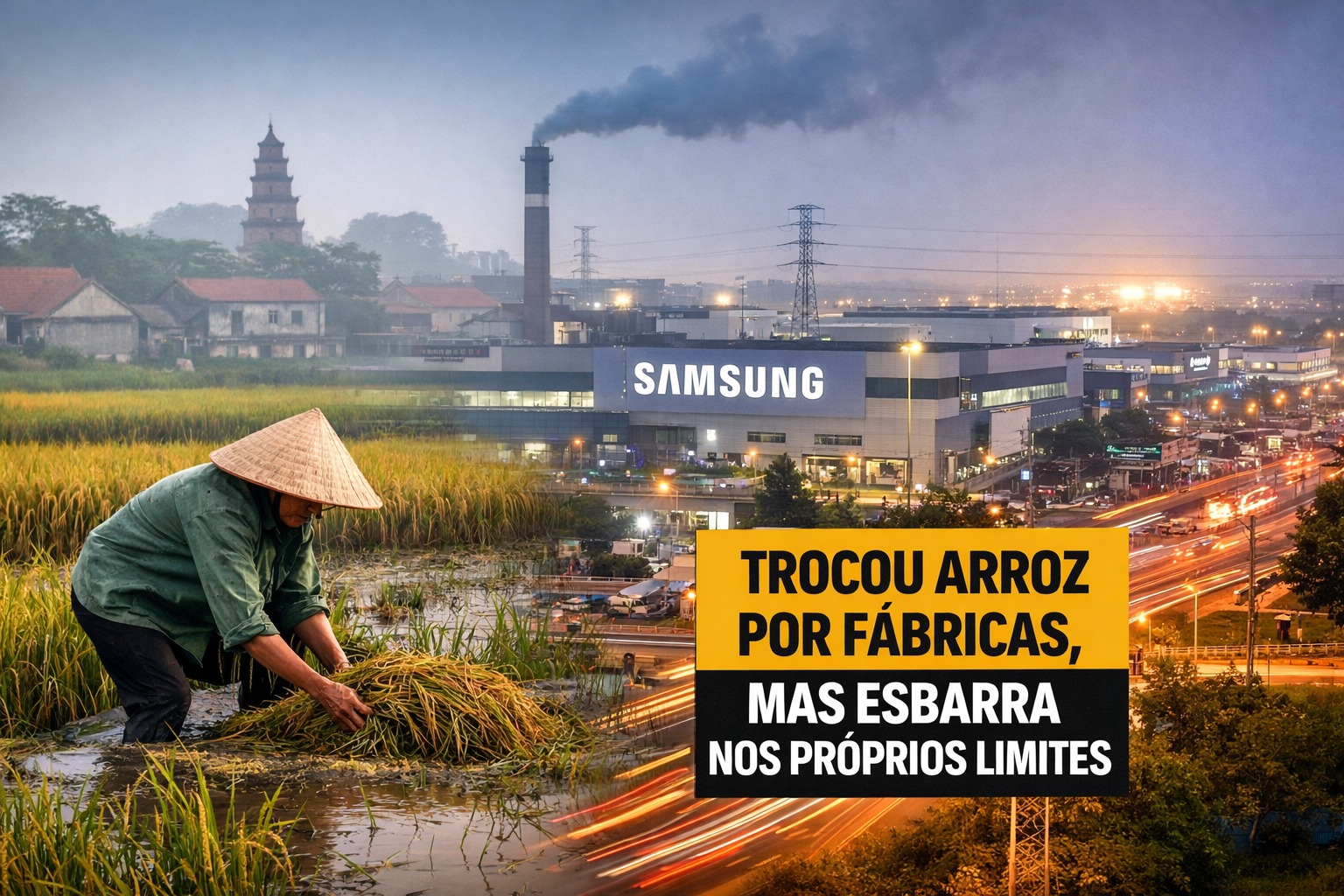
Bac Ninh Left The Agricultural Profile And Became A Symbol Of Vietnamese Industrialization, Attracting Multinationals, Foreign Investment And Production Moved From China, While Facing Costs Labor Challenges And Infrastructure Limits
The Vietnamese city of Bac Ninh, located north of Hanoi, has become a symbol of Vietnam’s accelerated industrialization by attracting multinationals and billion-dollar investments following the exit of factories from China, a movement driven by the trade war with the United States, altering global production chains.
Transformation Of An Agricultural Pole Into An Industrial Center In Vietnam
Once marked by rice fields and folk traditions, Bac Ninh has undergone a profound transformation by rapidly integrating into the industrial dynamics of Southeast Asia.
Strategically located north of Hanoi, the city gained logistical and productive relevance, becoming a point of interest for global companies seeking efficiency.
-
He sold his share for R$ 4 thousand, saw the company become a giant worth R$ 19 trillion, and missed the opportunity of a lifetime.

-
Elon Musk’s Starship megafrocket puts $8 billion at risk, raises alarms in the market, and could affect technology, mining, and space internet startups in the coming years.

-
Airfare prices may rise with increasing fuel costs, and the government is considering urgent measures to avoid a direct impact on the wallets of Brazilians.
-
Chocolate prices soar nearly 15% and become a luxury item for Easter 2026, with increases surpassing inflation and changes in Brazilian consumption habits.


The shift occurred amid the relocation of factories from China, which faced trade tariffs imposed by the United States during the escalation of bilateral tensions.
This productive displacement redirected foreign investments to Vietnam, creating a favorable environment for the establishment of large industrial complexes in Bac Ninh.
The information about this transformation process and its economic effects was reported by ABC News, cited as the source of the survey.
Entry Of Multinationals And Accelerated Expansion
The arrival of large international groups marked a turning point in local development, driving jobs, income, and urbanization at an accelerated pace.
Among the established companies, the presence of Samsung symbolized the beginning of a cycle of industrial expansion linked to the electronics and technology sectors.
With new factories, the city of Bac Ninh began to integrate into the global manufacturing chain, absorbing part of the production previously concentrated in Chinese territory.
The movement consolidated Vietnam as one of the main beneficiaries of the trade disputes between Washington and Beijing, according to recurring economic assessments.
In addition to foreign capital, the country incorporated complex productive processes, increasing its participation in international trade and strengthening exports.
Growth Pressures And Structural Limits
The rapid growth brought significant challenges, especially related to rising labor costs and a shortage of skilled labor.
Companies began to compete for workers by offering higher salaries, bonuses, and additional incentives, putting pressure on margins and increasing operating expenses.
At the same time, infrastructure limitations began to become more visible, despite investments in highways, railways, and industrial zones.
Experts point out that decades of Chinese investments in production chains created an ecosystem that is difficult to replicate quickly in Vietnam.
These restrictions expose the need for adjustments in the development model based solely on volume and competitive costs.
Regional Competition And Vietnam’s Future Strategies
While facing internal challenges, Vietnam is also dealing with increasing competition from countries like Indonesia and the Philippines in attracting industry.
These nations offer tax incentives and legal changes to attract foreign investments, intensifying the regional competition for factories.
In light of this scenario, Vietnamese authorities seek to direct the country towards higher value-added sectors, including advanced electronics and clean energy.
The government also bets on diversifying export markets, reducing dependence on the United States and expanding global sales.
The official goal is to transform Vietnam into a high-income economy by 2045, inspired by the trajectory of the Asian Tigers.
With information from A Referência.







Seja o primeiro a reagir!