





 Portuguese
  English
  Spanish
  3 min of reading
  0 comments


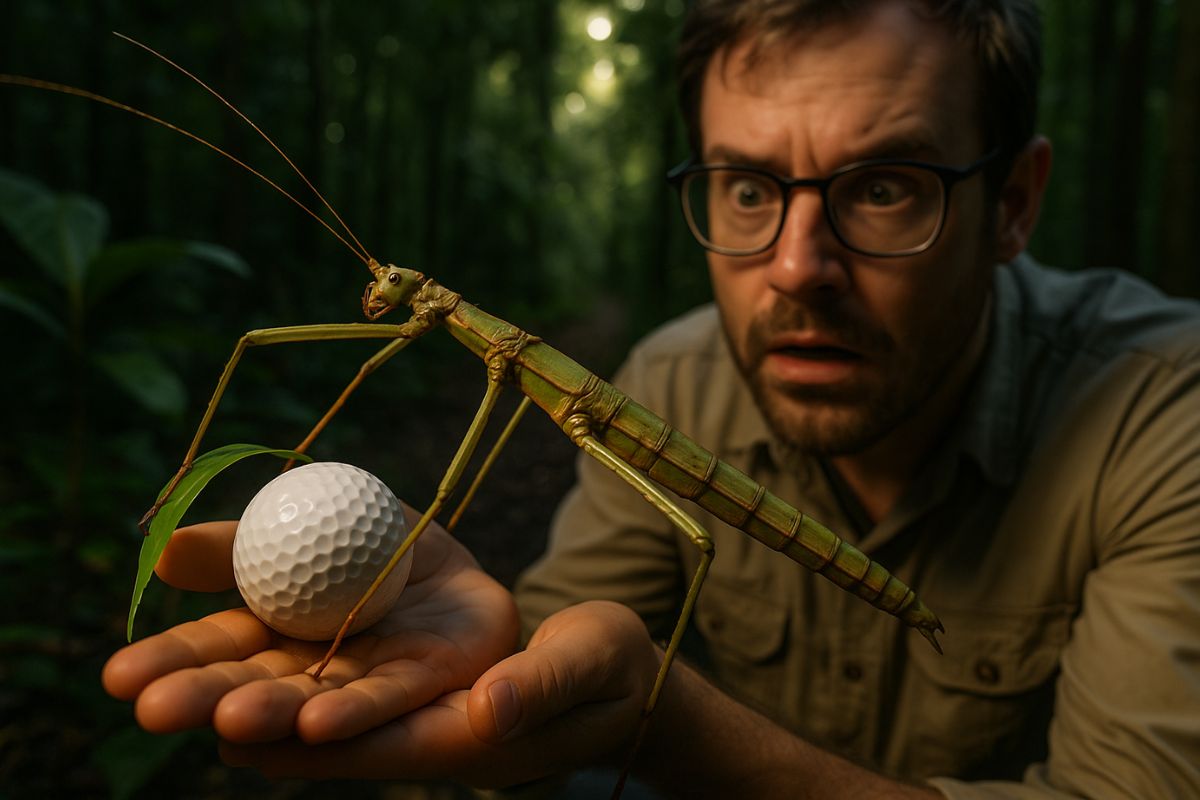
With 40 cm in Length and 44 Grams, the Acrophylla alta May Be the Heaviest Insect Ever Recorded in the Country
A team of researchers from James Cook University announced the discovery of a new species of giant insect in Australia, which may be the heaviest ever recorded in the country. Named Acrophylla alta, the insect measures about 40 centimeters and weighs 44 grams — equivalent to a golf ball. The discovery was made in a rainforest in northern Queensland and is already attracting the interest of the international scientific community.
The insect belongs to the family of “stick insects” and was found after a photo published on social media caught the attention of researcher Ross Coupland. From the image, Coupland and biologist Angus Emmott began a search at the sighting location and managed to capture a female specimen between Millaa Millaa and Mount Hypipamee, in an area of dense forest and difficult access.
How the New Species of Giant Insect Was Discovered
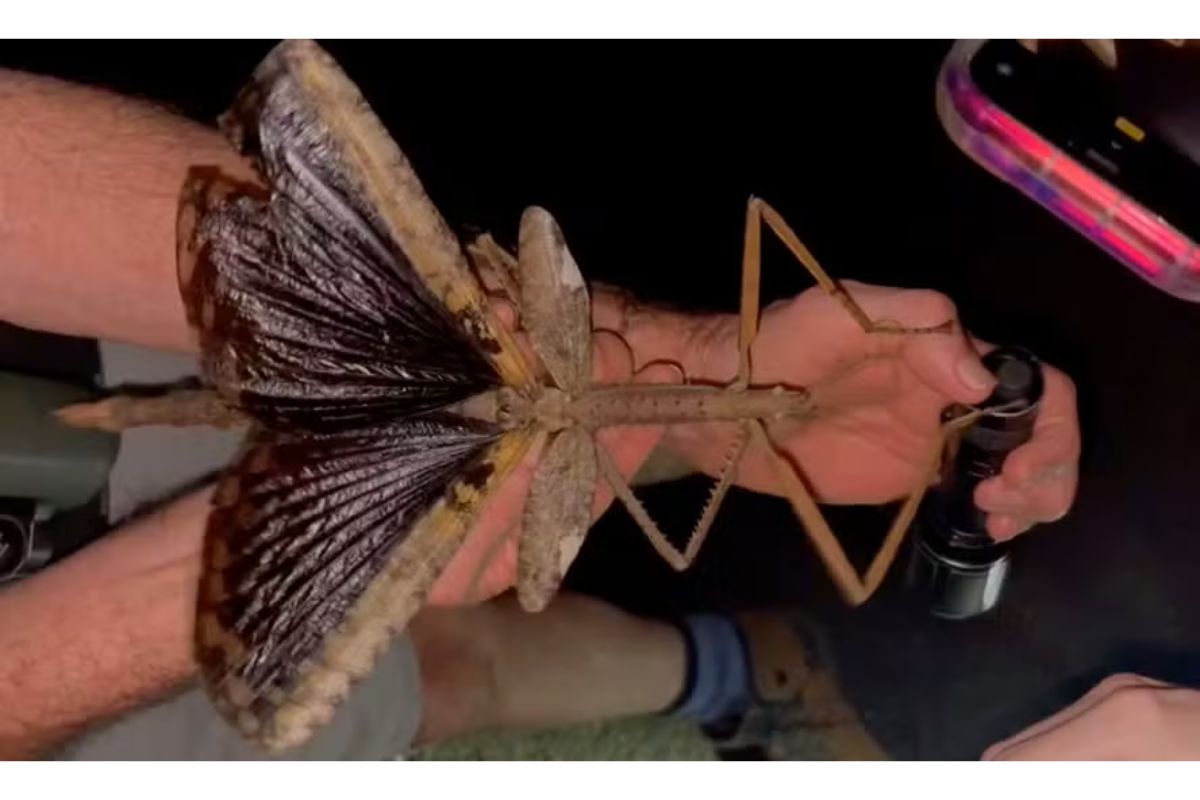
According to Professor Angus Emmott, cited by The Guardian, the species went unnoticed for so long because it lives high in the tree canopies, where it is rarely seen by humans. “Unless a cyclone or a bird brings it down, very few people can find it,” he explained.
-
Sprinkling dry baking soda directly on the carpet neutralizes odors from sweat and food without wetting the fibers, allowing you to forget about the vacuum cleaner for weeks using a product that costs less than five reais.

-
A bottle thrown into the sea by two Australian soldiers in 1916 on their way to the trenches of World War I was buried in the sand for over 100 years, and the letters inside it were still legible when they were found.

-
China invests over R$ 4.2 trillion, builds the largest water network in the world with 95,000 reservoirs and 1 trillion m³, expands piped water access to 96% of rural areas, attracts R$ 565 billion in foreign investments, and advances with the “longevity gene” in rice.

-
Heineken’s factory in Brazil surprises the world by reducing water consumption for beer production from nearly 10 liters to just 2.2 liters per liter produced, achieving a 23% decrease with real-time technology.


The discovery was only possible thanks to the spontaneous sharing of an image on social media. Intrigued by the animal’s appearance, Coupland recognized that it could be a new species and initiated field research that confirmed the hypothesis.
Why Is the Insect So Large
The body mass of the Acrophylla alta may be related to its environment. Researchers believe that the large size helps the insect survive in cold climate conditions in the high regions of Queensland. “This development occurred over millions of years of adaptation to the environment,” Emmott stated.
The insect already surpasses in weight other known native species, such as the Australian giant cockroach (Macropanesthia rhinoceros), which weighs on average 35 grams. The identification of the Acrophylla alta paves the way for new research on the hidden biodiversity in the canopies of the country’s tropical forests.
What Is the Next Step for Scientists
Now, researchers are looking to find the male of the species, which may be much smaller and visually different from the female. So far, only one specimen has been captured for analysis. The identification of a second individual could confirm sexual variations and help better understand the insect’s life cycle.
The discovery will also undergo formal taxonomic review, with samples sent to museums and specialized universities. The scientific name Acrophylla alta refers to the elevated habitat where the species lives — “acrophylla” means “high leaf” in Latin.
Australia: A Territory Still Little Explored
Despite being known for its lush fauna, Australia still holds unknown species, especially in isolated regions like the tropical forests of Queensland. According to estimates from James Cook University itself, thousands of species of insects and arthropods have not yet been formally described in the country.
The case of the Acrophylla alta shows how technology, social media, and field science can complement each other, revealing species that escaped human eyes for centuries.
Would you dare to encounter a 40 cm insect in the middle of the woods? Do you think there are other giant species still hidden out there? Leave your opinion in the comments — we want to know what you think of this discovery.







-

-

-

-

-

-

14 pessoas reagiram a isso.