





 Portuguese
  English
  Spanish
  5 min of reading
  1 comment


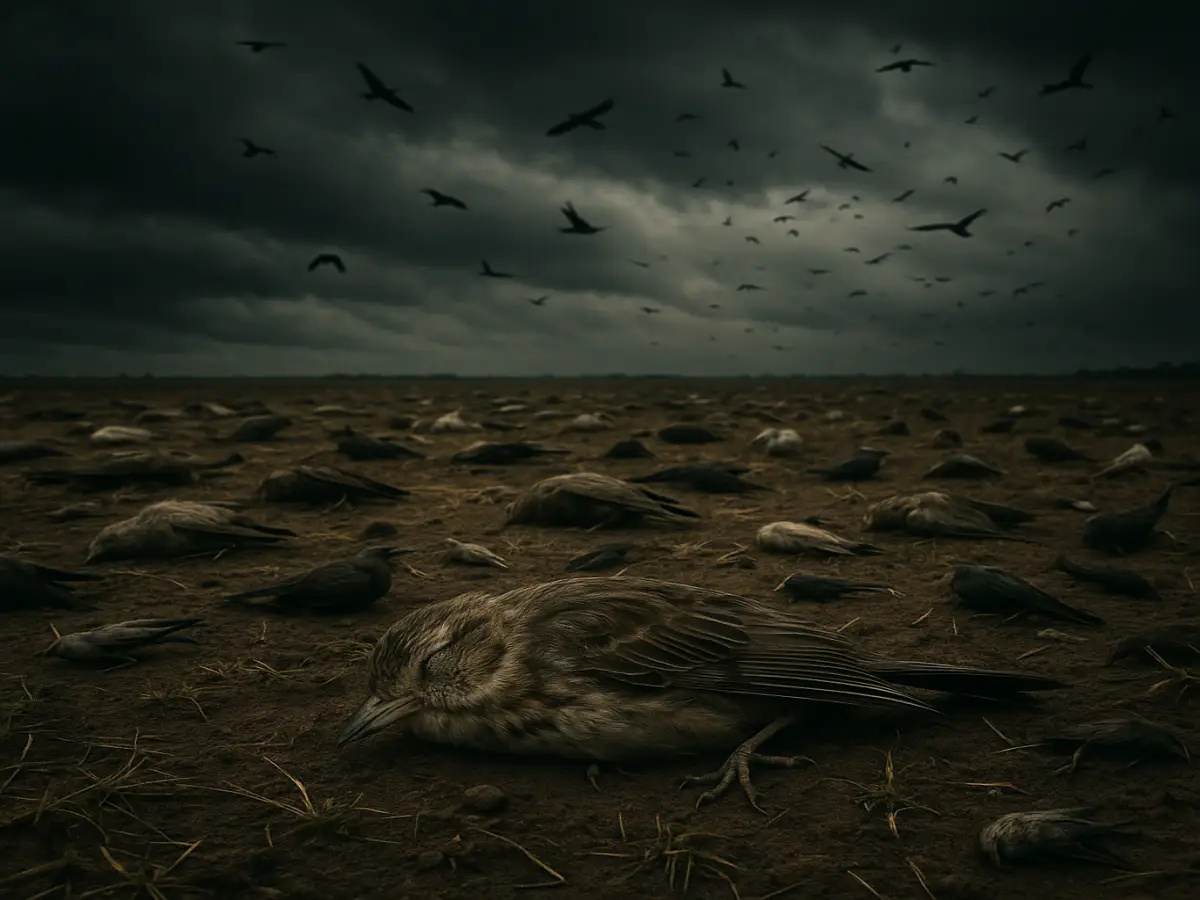


The Extinction of Birds Advances: Know the Causes, Practical Solutions, and Why 250 Species Already Depend on Urgent Actions
A study from Nature Ecology & Evolution reveals that over 500 bird species are on the brink of extinction by 2125, a number three times greater than all documented losses since 1500. Although this figure may seem distant from everyday reality, signs of this collapse are already perceptible in forest regions and coastal areas increasingly affected. The research analyzed nearly 10,000 species based on data from the IUCN Red List and highlighted the main threats: climate change, habitat destruction, and hunting. Even in a scenario of reduced human impact, scientists warn that about 250 species remain in critical danger.
Which Are the Most Vulnerable to Extinction?
Researchers, while analyzing data from the IUCN Red List, identified a concerning pattern: large birds are particularly vulnerable to hunting and the stress caused by climate change. Meanwhile, species with broad wings, which depend on large areas to fly and feed, are rapidly losing space as forests give way to plantations or dense urban areas. This loss is not just numerical. It compromises the balance of ecosystems, as many of these birds play crucial roles, including pest control, pollination, and seed dispersal. Among the most critical cases are the Helmeted Hornbill (Rhinoplax vigil, Buceros vigil), the Yellow-Bellied Sunbird (Nectarinia jugularis), and the Bare-Necked Umbrellabird (Cephalopterus glabricollis), whose populations are in sharp decline.
Beyond Traditional Conservation: Urgent Interventions
Even if we eliminated deforestation, hunting, and the effects of climate change, sophisticated models indicate that about 250 species would still be condemned. Some populations are already so small that only special programs, such as captive breeding and habitat restoration, can keep them alive. This is emphasized by Kerry Stewart, the study’s lead: “Many birds are already so threatened that reducing human impacts alone will not save them. These species need special recovery programs, such as breeding and habitat restoration projects, to survive.” Even under full protection, the risk remains. The solution, according to the authors, requires comprehensive ecological rescue plans: active management, prioritization of unique species, and systemic restoration of natural environments.
-
Home environment can influence the brain, mood, and well-being: studies indicate an increase of up to 15% in productivity, a reduction of 12% in stress with plants, and a direct impact of the circadian rhythm on the 24 hours of the day.

-
A Brazilian millionaire couple restores a farm over 150 years old in the interior of São Paulo and transforms the historic property with Portuguese tiles, antique furniture, and new spaces into a refuge that blends tradition, comfort, and sophistication.

-
Submerged city in a lake in Minas reveals intact streets, preserved vehicles, and houses after more than 60 years, impressing divers.

-
Yellowstone has started to rise again in an area of the caldera, and the movement rekindles fears surrounding the U.S. supervolcano, as scientists monitor the deformation and try to understand what is happening underground.


Collapsing Territories: Between Waves and Protected Boundaries
Marine birds, such as albatrosses (family Diomedeidae) and penguins (order Sphenisciformes), are among the most vulnerable, with about 12% of these species likely to disappear by 2100. In addition to climate change, factors like overfishing and pollution add layers of pressure that compromise their flights, migratory routes, and even their fundamental ecological role in nutrient circulation between ocean and land. This crisis is not limited to remote areas: in the United States and Canada, recent research indicates that 75% of monitored species experienced population declines between 2007 and 2021, even in traditionally protected areas. This data adds to the 2019 report that highlighted the loss of nearly 3 billion birds since 1970, showing that the crisis extends to regions known for conservation. This data raises doubts about the effectiveness of current conservation strategies and reinforces the urgency for more robust measures.
Priorities in the Distribution of Environmental Resources
It is not just about counting species, but about preserving functional diversity; the shapes, behaviors, and ecological roles that keep ecosystems in balance. The study shows that saving just 100 of the most unusual species could conserve up to 68% of the variety of bird forms and sizes on the planet. According to Professor Manuela Gonzalez‑Suarez, this type of approach is essential: “Stopping threats is not enough. Between 250 and 350 species, mainly the most unusual ones, require complementary measures. If we prioritize 100 of these, we can save 68% of the functional diversity of birds.” In other words, by concentrating efforts on the rarest species, the return in biodiversity is disproportionate and decisive for the resilience of ecosystems.
Beyond the numbers, it is crucial to understand the functional impact of the loss of these species. The mass extinction of birds threatens much more than the diversity and beauty of these animals: it compromises essential ecological functions such as pollination, seed dispersal, and natural pest control. These services support the balance of ecosystems, and their loss can cause severe environmental imbalances. Therefore, managers and conservationists need to adopt an approach that goes beyond simply counting extinct species, focusing instead on preserving the functional diversity that sustains natural systems.
Saving Species: The Urgency of Concrete Measures
The California Condor (Gymnogyps californianus), extinct in the wild in 1987, has been successfully recovered. Today, there are about 350 individuals in the wild. In the UK, the Bittern (Great Bittern, Botaurus stellaris) has returned to restored habitats, with around 280 males ‘booming’, its best result in 200 years. However, the situation in North America is alarming: about 75% of the 495 local species have suffered declines between 2007 and 2021, coupled with the loss of nearly 3 billion birds since 1970, according to the 2019 report.
In the face of this crisis, some of the priority actions are:
- Expand protected areas, reducing hunting, deforestation, collisions, and climate effects;
- Implement breeding and restoration programs for species in collapse;
- Protect critical zones such as forests, coastal areas, and migratory corridors;
- Promote monitoring through citizen science, using tools like eBird, which enables local decision-making, along with more advanced techniques such as automatic call classification, especially useful for detecting rare species in remote areas;
- Communicate results clearly to mobilize public support and political pressure;
- Allocate resources strategically, prioritizing unique species before they disappear.
We are on the brink of an unprecedented avian extinction. Acting now is imperative: only aggressive policies, effective ecological rescues, and collective engagement can reverse this situation, or we will be condemning entire ecosystems to irreversible loss.
What else worries you in this scenario? Do you know of any local action or project with real potential for impact? Leave your comment or share this article to raise awareness—there is still hope, but only if we act in time.









A autora desse artigo tem predileção por aves marinhas. Deve ser por causa do sobrenome…
Eu admiro os urubus, aves que não estão em lista alguma de extinção, especialmente nos países do terceiro mundo onde os lixões são verdadeiros restaurantes sel service daquelas importantes aves, responsáveis por limparem nossos pastos de carcaças que poderiam contaminar o lençol freático.
É muito fácil falar das aves branquinhas como albatrozes, pelicanos e fragatas e ignorar os urubus e corvos. Sobre os corvos, consta que é uma das aves mais inteligentes, personagem do poema “O Corvo” de Edgar Allan Poe.