





 Portuguese
  English
  Spanish
  3 min of reading
  1 comment


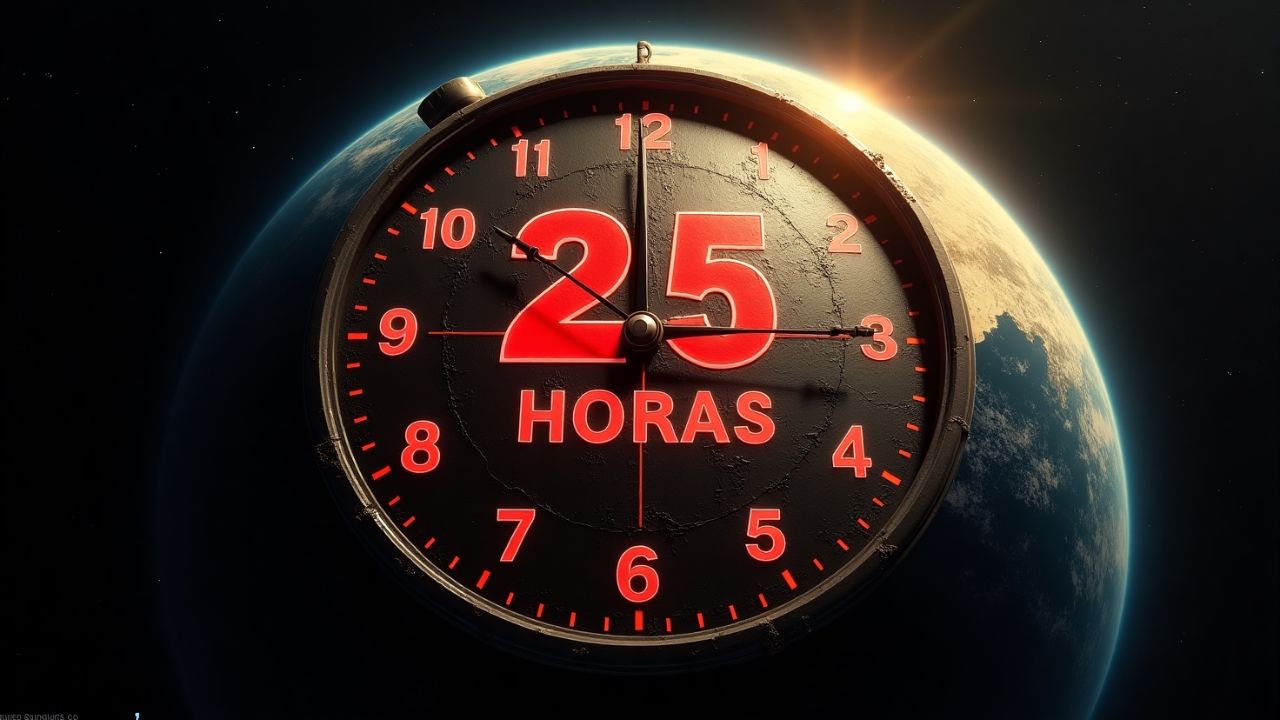


Have You Ever Imagined Having a Day with 25 Hours? It Sounds Like Science Fiction, But a Study Conducted by Researchers at the Technical University of Munich (TUM) in Germany Suggests That This Change Could Happen Due to Fluctuations in the Earth’s Rotation. According to the Research, Internal and External Factors Are Gradually Altering the Time It Takes for the Planet to Complete One Full Rotation.
The Earth’s rotation is not fixed and can be influenced by various factors. Among them are the movement of the planet’s liquid core, tectonic plate movements, and gravitational interaction with the Moon. Over thousands of years, these small variations accumulate and can affect the total length of a day, leading to great news: a day with 25 hours.
According to scientists at the Technical University of Munich, these fluctuations could add approximately an extra hour to the daily cycle, creating a day with 25 hours. This change, while it may seem minimal in the short term, could have significant impacts on human life and modern technology.
The Study That Detected the Possible Change
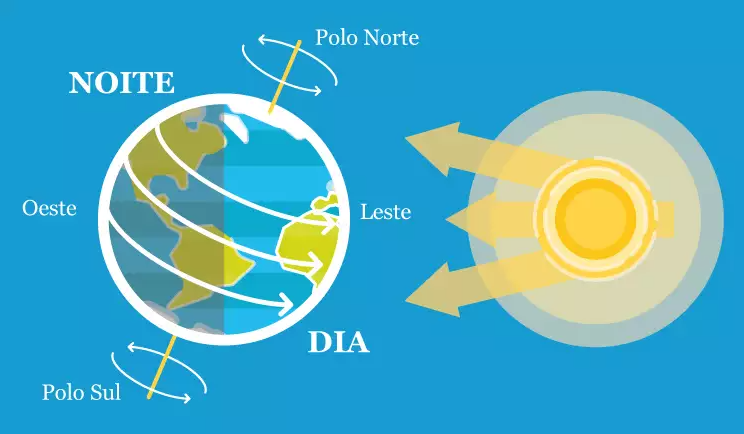
The scientists used a ring laser at the Wettzell Observatory to accurately measure the Earth’s rotation. In just two weeks of analysis, they identified a variation of six milliseconds. Although it may seem insignificant, this difference adds up over the years and can result in a noticeable increase in the duration of days.
-
Expedition 501: Scientists drill into the ocean floor and discover a giant reserve of fresh water hidden beneath the sea, extracting nearly 50,000 liters and revealing an invisible system that could reshape the map of water scarcity.

-
Archaeologists find an intact tomb over 2,500 years old, with more than 100 preserved objects, weapons, jewelry, and human remains never touched.

-
Volcanic lava transforms into threads as fine as human hair that travel over 30 kilometers by wind and fall like cutting rain on roofs and backyards in Hawaii and Iceland.

-
NASA issues a warning for the feared Godzilla El Niño that could change the planet’s climate in 2026 with extreme warming of the Pacific capable of causing devastating droughts in some regions and historic floods in others simultaneously.

The expectation is that the largest variation recorded since 2019 will occur in March 2025, when days may stretch by up to 1.63 milliseconds. This phenomenon is already being monitored by the International Earth Rotation and Reference Systems Service (IERS), which tracks changes in universal time.
How Could This Change of a Day with 25 Hours Impact Human Life?
If the duration of days really increases, the impacts could be felt in different areas. The first effect would be on the human biological clock, known as the circadian rhythm. This internal mechanism regulates the sleep-wake cycle based on sunlight. With longer days, our bodies would need to readjust, which could affect productivity and well-being.
Another relevant impact would be on the tides, which are influenced by the gravitational interaction between the Earth and the Moon. A study from Peking University, published in the journal Nature Geoscience, suggests that changes in the Earth’s rotation could alter the intensity of the tides, causing transformations in the global climate. The research also indicates that the melting of polar ice caps is redistributing the Earth’s mass, contributing to these variations in rotation.
Does Technology Need to Adapt?
Today, many systems rely on precise time measurements, including GPS, communication networks, and financial systems. Small changes in the Earth’s rotation can impact the accuracy of these systems, requiring constant adjustments.
One of the solutions currently used to compensate for these variations is the insertion of “leap seconds,” which help to maintain the synchronization of atomic clocks with astronomical time. If the Earth does indeed start having days with 25 hours, the need for corrections to time systems could become more frequent.








❤️Aqui você pode colocar seu rosto em qualquer vídeo ou foto) Por favor, avalie-o ➤ Ja.cat/gosea