





 Portuguese
  English
  Spanish
  4 min of reading
  1 comment


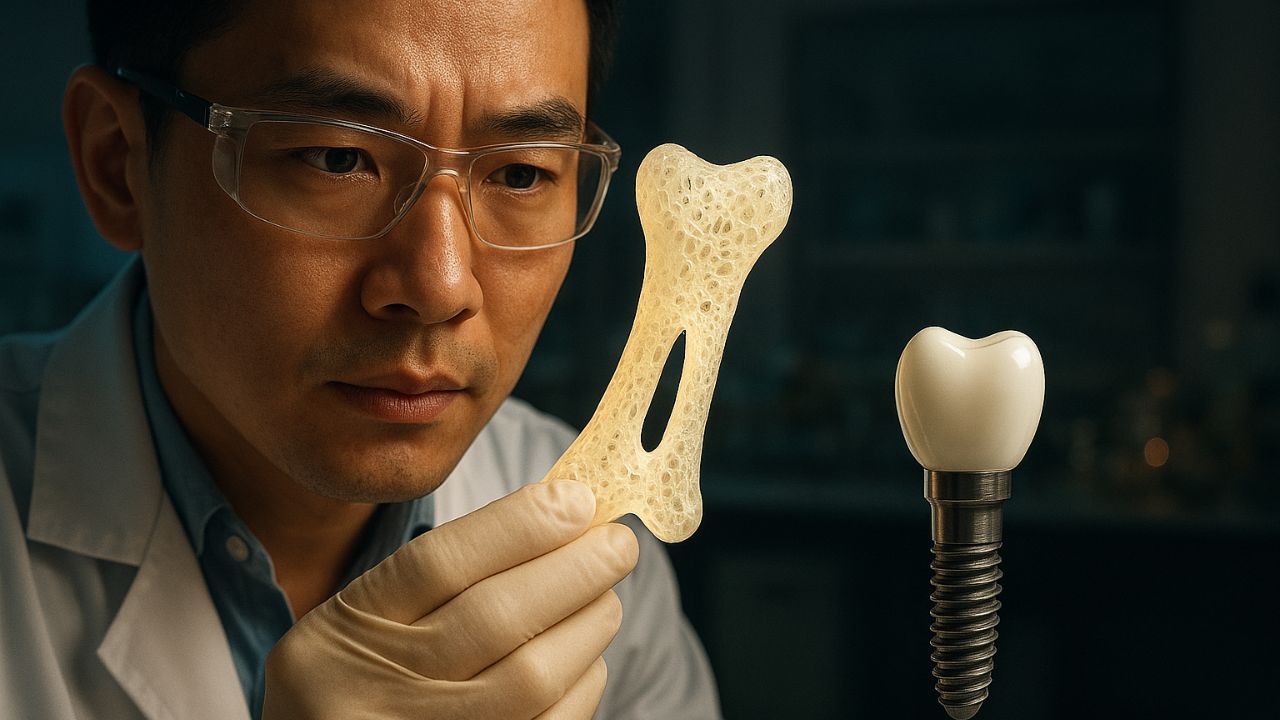


The New Technology Developed by Chinese Scientists Uses 3D Printing to Create a Safer, Cheaper, and More Durable Material than Current Dental Implants, with the Potential to Revolutionize Regenerative Medicine.
A team of Chinese scientists has achieved a significant milestone in tissue engineering by developing a 3D printable bioglass that not only mimics bone structure but also shows potential to surpass materials used in dental implants. The innovation, detailed by the Interesting Engineering magazine, promises to be a cheaper and safer alternative to traditional bone grafts, paving the way for personalized and accessible medical treatments.
The historical challenge in using glass for medical purposes was in the production methods, which required extreme heat and potentially toxic additives. The new Chinese method circumvents these obstacles with a “green” printing technique, which operates at lower temperatures and without the need for plasticizers, resulting in a biocompatible and resilient material capable of promoting sustained and lasting bone growth.
What Is Bioglass and Why Does It Exceed Expectations?
Though it may seem counterintuitive, glass and bone share a fundamental structural characteristic: both resist compression much better than stretching. The base of glass is silica, a material that, when in the right state, can be precisely molded. This malleability, according to Interesting Engineering, is the key to creating custom implants that fit perfectly into damaged bone areas, a huge advantage over prefabricated grafts.
-
Comet C/2025 R3 (PanSTARRS) is starting to shine brighter each night and may become visible to the naked eye in April; this rare phenomenon promises to transform the sky into one of the biggest astronomical spectacles of the year.

-
After a devastating fire that left 3 injured and 200 intoxicated by smoke in the Red Sea, the most expensive warship ever built — $13.3 billion — returns to the front in Iran after quick repairs in Croatia.

-
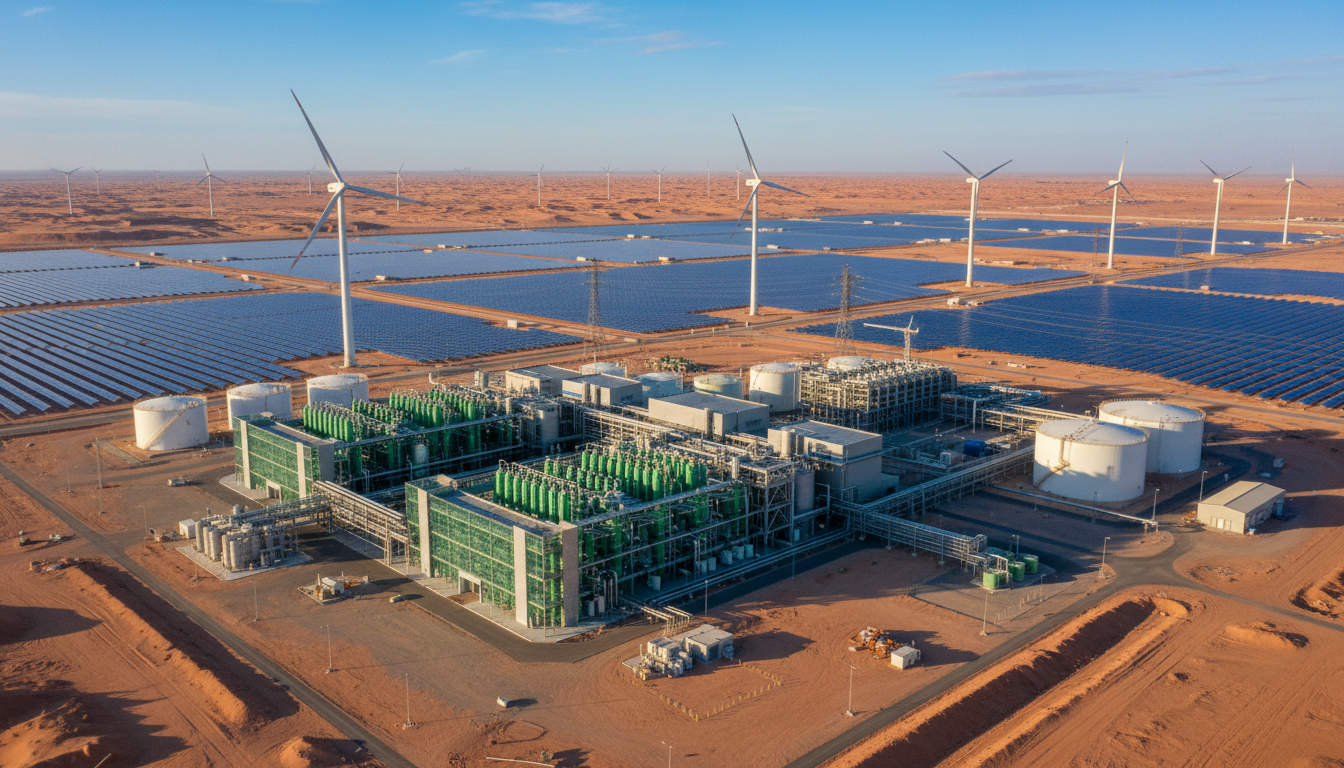
In the Saudi Arabian desert, the world’s largest green hydrogen plant is 80% complete and will use 4 gigawatts of solar and wind energy to produce 600 tons of clean fuel per day when it opens in 2027.
-
Sixteen years after the largest environmental disaster in oil history, BP has just received approval to open its first new field in the Gulf of Mexico, and the 10 billion barrels are 10 kilometers below sea level.

The advance made by Chinese scientists, led by Jianru Xiao, Tao Chen, and Huanan Wang, lies in the composition and process. They created a special “ink,” combining silica particles with calcium and phosphate ions, elements known to stimulate bone cell formation. This mixture resulted in a printable gel that hardens at a temperature of 690 degrees Celsius, much lower than the over 1,000 degrees required by conventional methods, making the process more viable and economical.
Animal Testing: Proof of the New Material’s Efficacy
To validate the discovery, the team conducted comparative tests on rabbits with skull defects, a standard methodology for assessing bone regeneration. Three distinct materials were applied: the new bioglass, a common silica glass, and a commercially used bone substitute in dental implants. The results, published in the prestigious scientific journal ACS Nano, were revealing and encouraging for the future of technology.
While the commercial product showed faster initial bone growth, the bioglass proved superior in the long term. After eight weeks of observation, analysis revealed that the majority of the new bone cells had robustly integrated with the bioglass structure. In contrast, common silica glass exhibited minimal or no growth. This proves that the material developed by the Chinese scientists is not just a passive structure but a bioactive scaffold that supports regeneration more effectively and durably.
The Revolution of ‘Green’ and Low-Cost 3D Printing
The key differentiator of this research, as pointed out by Interesting Engineering, is the printing strategy. Traditional manufacturing of ceramics or glasses for medical use depends on organic plasticizers to shape the material and a high-temperature sintering (heating) process. These methods not only drive up cost and production time but can also reduce the bioactivity of the implant and introduce toxic residues.
The approach taken by Chinese scientists eliminates these issues by using inorganic colloidal gels that self-organize through electrostatic attraction. This technique allows printing of complex and strong structures without the need for chemical additives and finishing them with a low-temperature sintering process. The result is a material with a compression modulus of 2.3 MPa, strong enough for bone structural applications, and that maintains its bioactive ability intact.
Unlimited Potential: From Dentistry to Engineering
The impact of this research goes far beyond tooth replacement. The researchers state that the “green inorganic 3D printing strategy allowed for the economical manufacturing of bioglass-based bone substitutes”, leading to an “improvement in osteogenesis and osteointegration in vivo”. In other words, the body not only accepts the implant but utilizes it to regenerate more efficiently.
This ability to create customized, cheap, and safe structures opens up a range of possibilities for regenerative medicine, including treatment of complex fractures, degenerative bone diseases, and facial reconstructions. Furthermore, the team of Chinese scientists believes that the printing method could be adapted for other industries requiring advanced materials, such as mechanical engineering and the energy sector, demonstrating that the innovation can have a global reach.
Do you agree with this change? Do you think it impacts the market? Share your opinion in the comments; we want to hear from those experiencing this in practice.








Somebody essentially help to make significantly articles Id state This is the first time I frequented your web page and up to now I surprised with the research you made to make this actual post incredible Fantastic job