





 Portuguese
  English
  Spanish
  3 min of reading
  8 comments


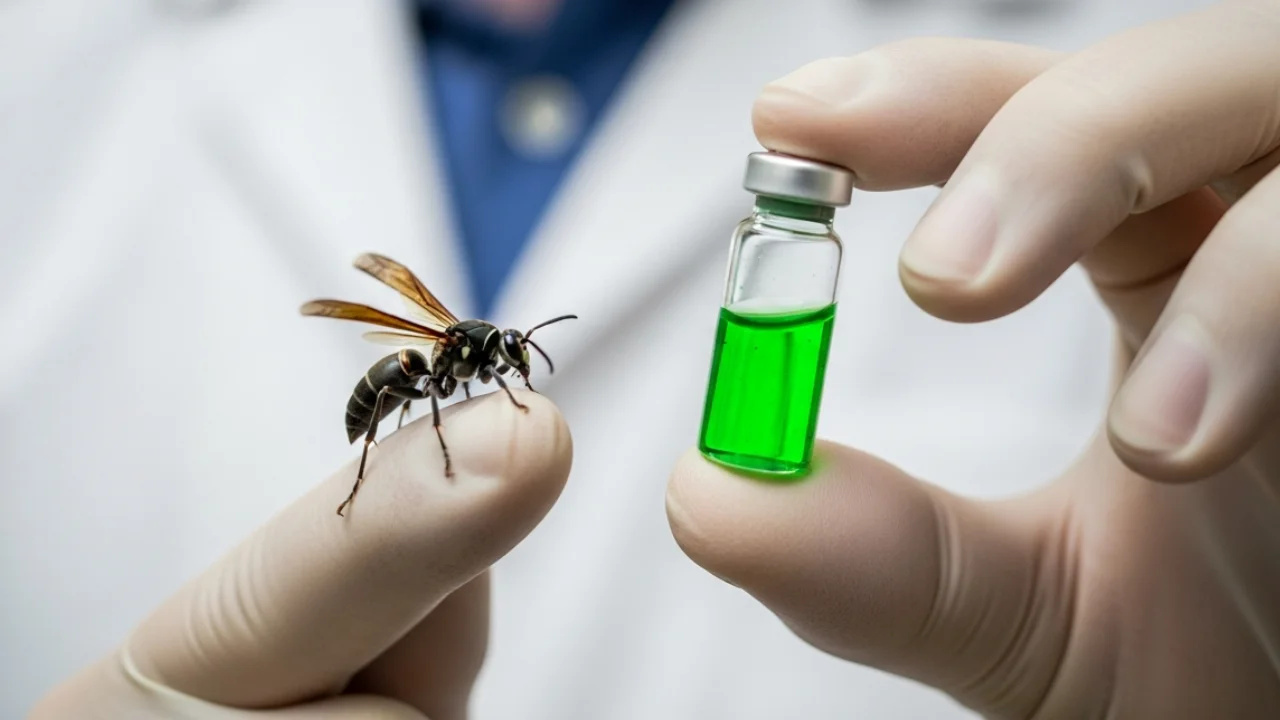


Wasp Venom May Pave The Way For Alzheimer Treatment: Brazilian Scientists Use Modified Venom To Block Protein Linked To The Disease And Advance To Human Testing
Researchers at the University of Brasília (UnB) are developing an experimental substance against Alzheimer using the venom of the social wasp Polybia occidentalis, popularly known as wasp. The study gained momentum after positive results in laboratory tests with animals, showing improvement in cognitive deficits associated with the disease.
The project is coordinated by researcher Luana Cristina Camargo from the Institute of Psychology at UnB and includes specialists from the fields of Physics, Pharmacy, Nanotechnology, and Neuropharmacology. Initial funding came from the FAP-DF Learning 2023 program of the Research Support Foundation of the Federal District.
How The Venom Was Transformed Into A Therapeutic Molecule
The central compound of the research is octo vespina, a peptide found in the venom of the wasp. Scientists modified this substance in the laboratory so that it structurally mimics the beta-amyloid protein.
-
They were brilliant! Scientists discover that our ancestors in China were already making super advanced tools 160,000 years ago, changing everything we knew.

-
Scientists unveil 3 million years of climate secrets hidden in the ice of Antarctica.

-
Ancient farmers created “aggressive plants” that changed nature forever.

-
Astronomers find a “backward” solar system that ignores all the rules of space and leaves scientists scratching their heads!


This protein is one of the main culprits behind the formation of plaques that accumulate in the brains of Alzheimer’s patients, impairing communication between neurons. The new molecule created by the researchers acts specifically to prevent this aggregation process.
In animal tests, the results were deemed promising, with significant reduction of cognitive deficits associated with the disease.
Why Direct Application To The Brain Was Discarded
Initially, studies considered the direct application of the substance to the brain. However, this route proved unfeasible, as the compound degrades rapidly upon contact with neural tissue.
Therefore, researchers began testing safer and more viable alternatives. The intranasal route emerged as one of the most promising options because it allows the substance to reach the central nervous system without undergoing immediate degradation.
This stage of the project receives intense support from bioinformatics, which helps simulate how the molecule behaves in the human body before advancing to clinical trials.
The Financial And Structural Challenges Of Research In Brazil
Despite the scientific advancement, the project faces common obstacles to national research. The team reports difficulties with equipment acquisition, costs of computational simulations, and the purchase of imported chemical compounds.
According to the coordination, support from the Research Support Foundation of the Federal District (FAP-DF) has been essential to keep the study active and expand its scientific maturity.
Without this type of public funding, the research would have already been interrupted in its early stages.
When The Treatment Can Be Tested On Humans
The researchers are now working to meet all regulatory requirements so that the substance can be tested on human volunteers. This stage depends on authorization from Anvisa.
Only after ethical approval, toxicological safety tests, and validation of protocols can clinical trials begin. Even so, the scientists themselves warn that this is still a medium to long-term process.
The Doctors’ Warning About Early Diagnosis
Neurologist Lucas Cruz from Hospital Anchieta highlighted that early diagnosis remains one of the most decisive factors for the patient’s quality of life.
Symptoms such as:
- progressive memory loss
- disorientation
- difficulties with simple daily tasks
are often confused with natural aging, delaying the start of treatment.
Today, in addition to anticholinesterase medications, Alzheimer’s treatment also involves psychological support, physical therapy, family support, and constant cognitive stimuli.
What This Discovery Really Represents For The Future Of Alzheimer
It is important to make it clear: there is currently no definitive cure for Alzheimer. What Brazilian scientists are developing is a promising path to slow the progression of the disease by blocking one of its main biological mechanisms.
If tests on humans confirm the results obtained in the laboratory, Brazil may finally join the map of major global research on neurodegenerative diseases.
A molecule created from the venom of a wasp could, in the future, represent one of the greatest advances in combating Alzheimer ever recorded in the country.







Doenca ingrata e de carater genetico na maioria das vezes se torna incuravel perdi minha mae com esta enfermidade …tomara que este composto se torne esperanca para muitos num futuro proximo…que Deus ilumine estes pesquisadores
Muito feliz por essa excelente notícia! Parabéns aos nossos cientistas e obrigada, pois cada avanço na pesquisa, já é um grande passo em descoberta pra cura.
Excelente notícia para os portadores de Alzheimer, a ciência busca novas formas de combater estas doenças e o remédio esta na própria natureza.
Meu pai tem demência começou com 63 anos de idade hj ele está com 68 é muito difícil ver ele naquelas condições de não lembrar das coisas e misturar o presentes com o passado e repetir as mesmas coisas espero que este novo tratamento sereia bom p milhares de pessoas que tem este tipo de doença e melhorando a vida de todos