





 Portuguese
  English
  Spanish
  4 min of reading
  0 comments


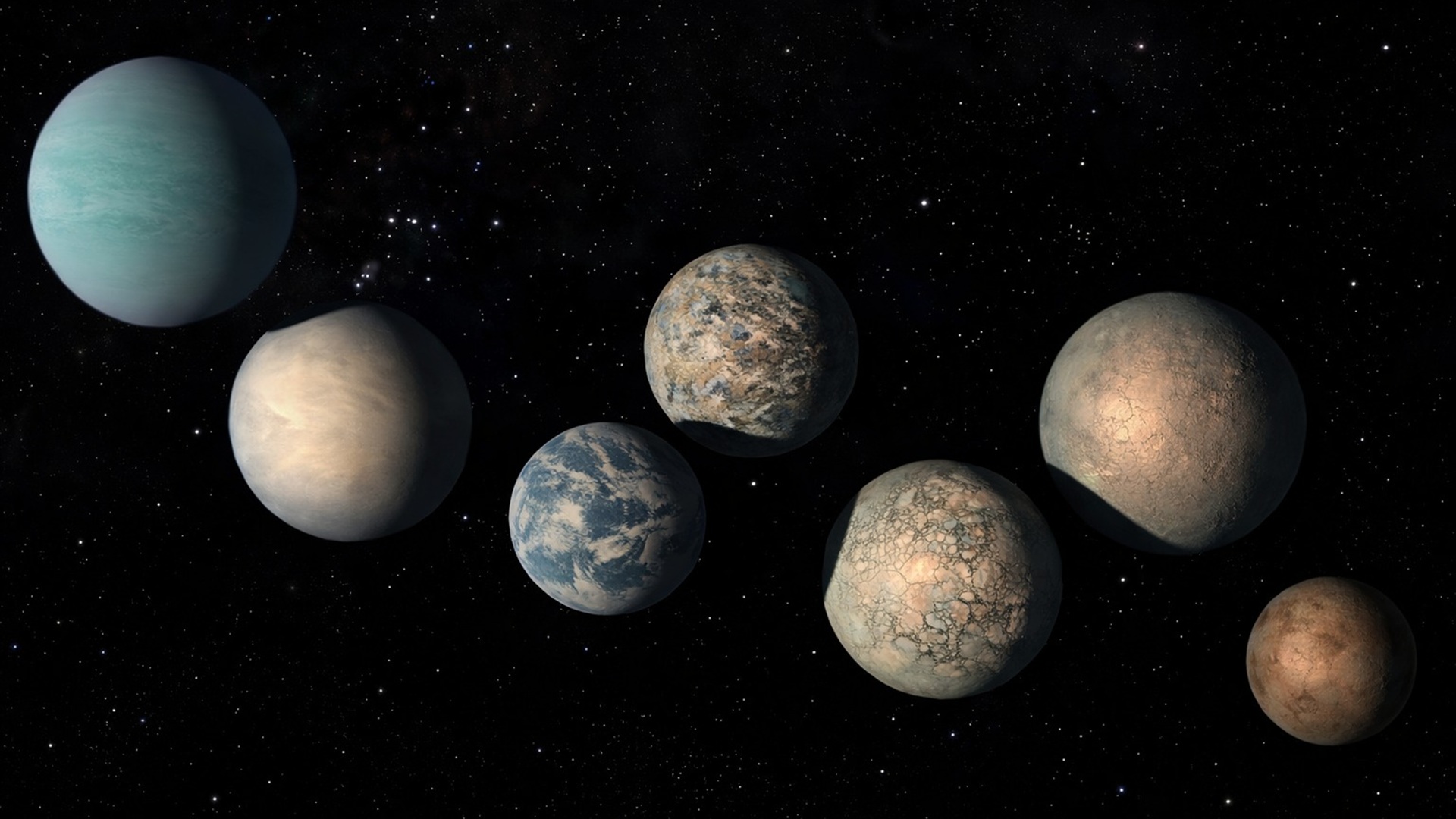
Study Published on February 28 in the Periodical Monthly Notices of the Royal Astronomical Society Shows That Specific Signals in the Light of Stars with Low Magnetic Activity Can Indicate Systems with Nearby Exoplanets, Allowing to Estimate up to 300 Undetected Planets
Scientists have identified weak signals in the light of stars that may indicate the presence of yet unknown planets. The technique has already allowed for the detection of several exoplanets and suggests that hundreds of new worlds may be hidden in nearby stellar systems.
Signals in Stars May Reveal New Planets
Researchers have developed a method that analyzes specific signals in the light of stars to identify systems that may harbor exoplanets. The technique is based on the detection of absorption patterns caused by debris generated by planets very close to their host stars.
This debris is primarily composed of gases released from intensely irradiated planets. As it orbits the stars, this material absorbs part of the stellar light at specific visible frequencies, creating signatures that may indicate the presence of yet undetected worlds.
-
Scientists have finally discovered where the plastic that disappeared from the oceans went, and the answer is frightening: it fragmented into such tiny particles that they became invisible and now there are 27 million tons of nanoplastic just in the North Atlantic.

-
The Artemis II mission will take the Orion capsule back to the vicinity of the Moon with four astronauts, a private bathroom with a curtain, a system adapted for men and women, and a level of comfort that highlights how the Apollo era operated at the rawest limits of space exploration.

-
Giant structures on the seabed precisely control oil and reveal how high-tech underwater valves work.

-
China has just tested a giant drone the size of a fighter jet with a wingspan of 25 meters that carries 6 tons, flies for 12 hours, and the most frightening part: it can launch entire swarms of smaller drones directly from the air.


According to Matthew Standing, a researcher at the European Space Astronomy Centre of the European Space Agency in Madrid and the lead author of the study, this absorption can make certain stars appear magnetically less active than they really are.
How the Observation of Stars Was Conducted
To test the hypothesis, the team initially analyzed a set of 24 stars that displayed apparently low magnetic activity. These stars were selected within the Dispersed Matter Planet Project, known as DMPP.
The researchers collected visible light spectra of these stars using telescopes from the European Space Observatory in Chile. The spectra correspond to the light curves associated with the wavelengths of electromagnetic radiation visible to humans.
Each star was observed at least ten times over periods that lasted up to two weeks. If there were planets orbiting these stars, the gravitational pull exerted by these bodies would cause detectable oscillations in the light spectra.
This detection method is known as the radial velocity technique. It allows for the identification of small variations in the movement of stars caused by the presence of planets orbiting around them.
Results Show Dozens of Exoplanets Around the Stars
After data collection, the team utilized a computational algorithm to analyze the changes observed in the light curves of the stars. The system evaluated whether these variations could indicate the presence of up to four planets in each stellar system.
The results showed that 14 analyzed stars hosted a total of 24 exoplanets. Among them were seven newly discovered planets distributed across five different stellar systems.
The analysis also indicated that the frequency of exoplanets around these stars was significantly higher than in traditional radial velocity surveys. The occurrence was estimated to be between eight and ten times higher than observed in other similar studies.
Exoplanets Close to the Stars Are Not Considered Habitable
Many of the more than 6,000 known exoplanets orbit extremely close to their host stars. This proximity exposes their surfaces to intense stellar radiation, which normally precludes conditions considered favorable for habitability.
Some of these worlds release material that forms debris tails similar to those of comets. One example cited in the study is the exoplanet K2-22b, analyzed by the James Webb Space Telescope in 2025.
This debris may linger for millions of years as a cloud orbiting the host star. Despite the extreme environment, this material helps scientists identify systems where nearby planets are disintegrating.
Survey Points to Hundreds of Hidden Planets in the Stars
The researchers also assessed the efficiency of the developed method. The survey was able to identify almost 95% of exoplanets that have more than ten times the mass of Earth and complete orbits around their stars in five days or less.
The team expanded the analysis to a larger region of space, compiling a list of about 16,000 stars located up to 1,600 light-years from the solar system. One light-year is the distance that light travels in a year, approximately 9.46 trillion kilometers.
Among these stars, scientists identified 241 with similar signatures of low magnetic activity. Based on the proportion of exoplanets found in the study, the researchers estimate that these stars may harbor approximately 300 undiscovered planets.
Standing stated that the potential of the technique still needs to be confirmed with larger samples. According to him, if the results hold, the method could make the search for exoplanets more efficient.
The team plans to expand the size of the analyzed sample and continue monitoring radial velocity data. The goal is to identify new signals of planets orbiting stars that exhibit these characteristic signatures.









Seja o primeiro a reagir!