





 Portuguese
  English
  Spanish
  3 min of reading
  0 comments


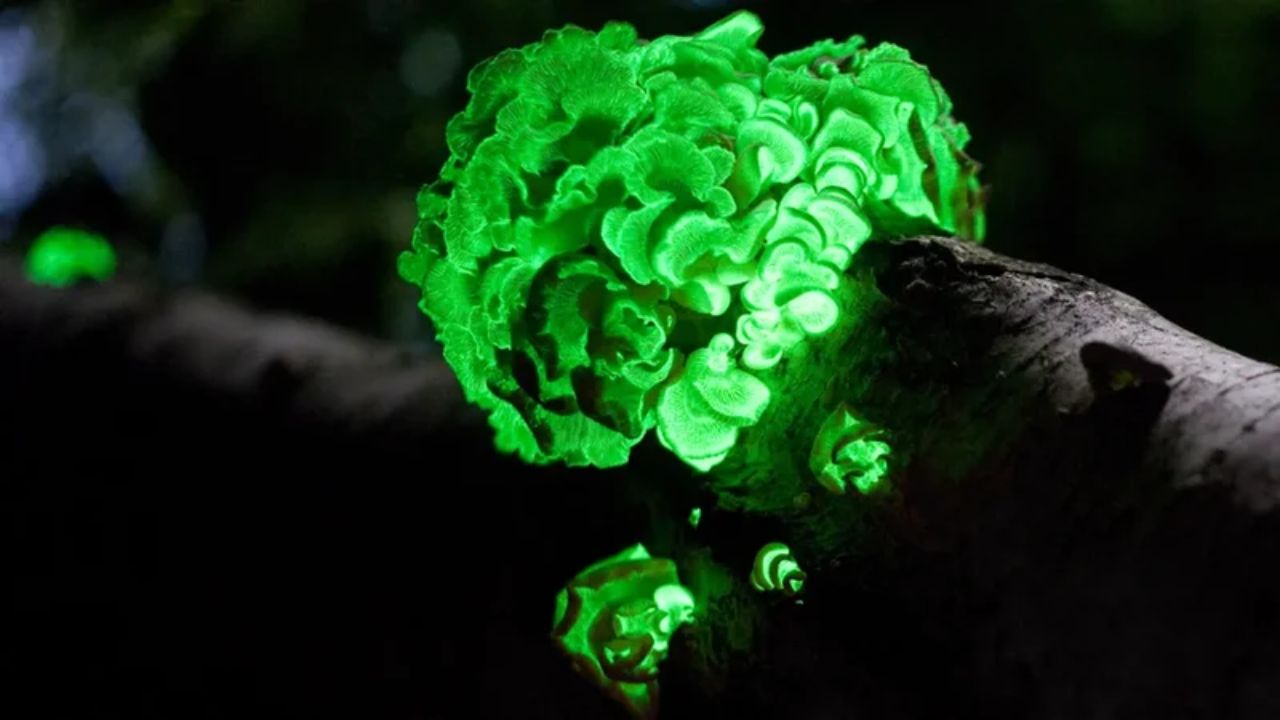
Researchers Develop Bioluminescent Wood with Natural Fungus. Discover How the Wood That Glows in the Dark Works.
Imagine wood that emits light without the need for electricity or external sources. It sounds like a scene from a science fiction movie, but this innovation is already a reality. Scientists from Switzerland have successfully developed bioluminescent wood by incorporating a natural fungus into its structure, creating a sustainable, functional material that glows in the dark and has great decorative and urban potential.
The Secret Behind the Wood That Glows in the Dark: Bioluminescence
Bioluminescent wood was created from foxfire, a natural phenomenon observed in forests where certain woods glow due to the action of fungi.
Inspired by this magic of nature, researchers applied the technique in the lab.
-
Scientists caught a water vapor explosion on Mars exactly when it shouldn’t have happened: an unexpected dust storm launched the water to an altitude of 80 kilometers and accelerated the escape of hydrogen into space by 2.5 times.

-
The Brazilian Navy launched the NPa Mangaratiba (P-73) on April 27: a 54.2 m Macaé-class patrol vessel, with 43 crew members, 6 days of autonomy, and a range of 4,000 km to monitor the entire Blue Amazon.

-
Chinese scientists have identified 122 viable asteroids for large-scale asteroid mining and outlined the Tiangong Kaiwu plan to explore space water ice and metals throughout the Solar System by 2100.

-
Does compulsive lying exist? What does science know about mythomania and why does it go beyond ‘lying too much’?


The protagonist of this innovation is the fungus Desarmillaria tabescens. It can infiltrate the wood and release luciferin, a compound that generates light through natural chemical reactions.
The emitted light has a greenish hue, with a wavelength of 560 nanometers.
How Does the Process Work?
During the experiment, the fungus colonizes the wood for about three months.
During this period, it degrades lignin (one of the components of wood) but preserves cellulose, which is responsible for the material’s strength. The result is wood that is still solid but now luminous.
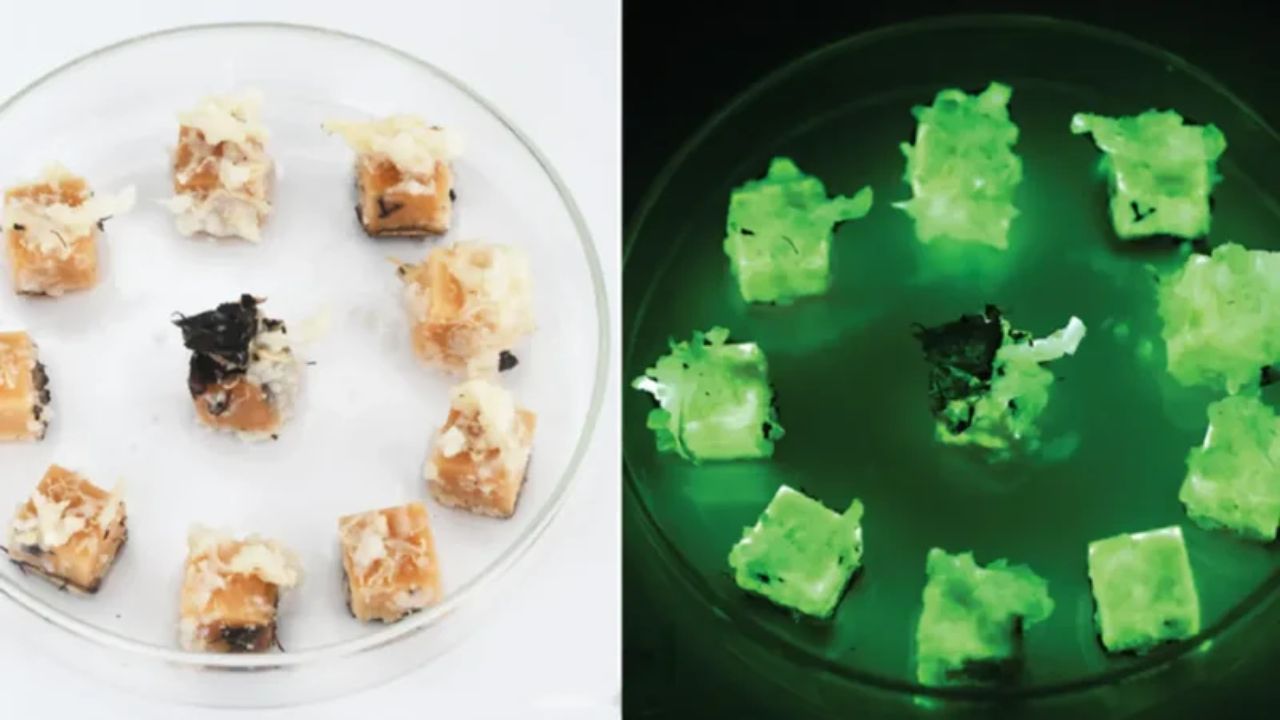
When exposed to air, the bioluminescent wood reacts with oxygen, producing a soft and continuous light that lasts up to 10 days.
Although the glow isn’t eternal, scientists are looking for ways to increase its durability and intensity.
Besides the impressive visual effect, bioluminescent wood represents an ecological alternative.
As the process involves only a natural fungus, without chemicals or electricity, it stands out as a greener solution compared to conventional lighting and decoration methods.
The idea, according to scientists, is to use wood more intelligently, going beyond its use as fuel or construction material.
“We are optimizing laboratory parameters to further increase luminosity,” said Giorgia Giovannini, a researcher on the team.
Potential Applications
The possibilities for using bioluminescent wood are vast. Among the applications envisioned by researchers and designers are:
- Nighttime signaling in parks and trails
- Urban furniture with built-in lighting
- Interior decoration with an ecological touch
- Safety elements in dark environments
- Sensory environments in exhibitions and museums
These uses show that wood can go far beyond the traditional, taking on a prominent role in innovative and sustainable projects.
Currently, there are more than 70 known species of bioluminescent fungi. This opens the door for new research and combinations, making the material even more versatile.
The team led by Francis Schwarze continues to explore these possibilities. With advances in laboratory testing, it is expected that soon this technology will hit the market with more durable, intense versions adapted to different types of wood.
Bioluminescent wood proves that nature and science, when working together, can create innovative and sustainable solutions.
Source: IFL Science







-

Uma pessoa reagiu a isso.