





 Portuguese
  English
  Spanish
  3 min of reading
  33 comments


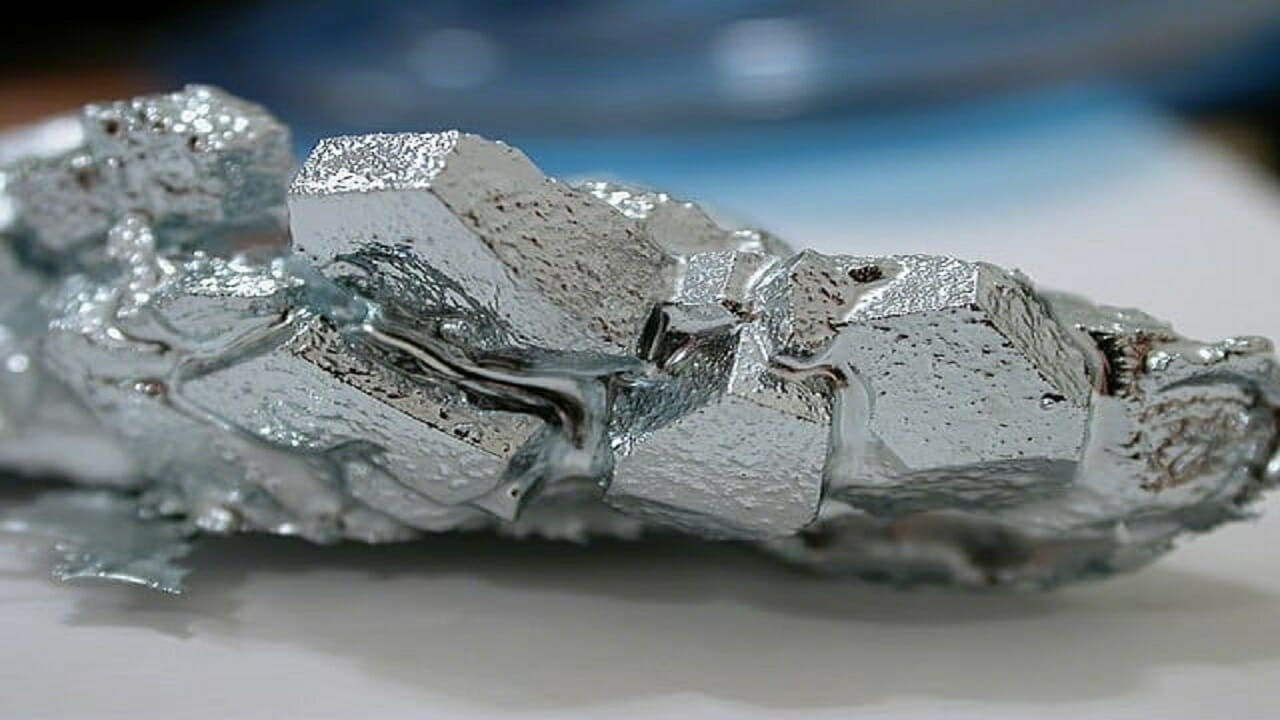


Scientists At Sandia National Laboratories have successfully made a metal regenerate on its own for the first time. This discovery happened by accident and promises to revolutionize the engineering field.
A metal that regenerates? For the first time, scientists witnessed pieces of metal regenerating without any human intervention, overturning essential scientific theories. If the discovered phenomenon is harnessed, it will initiate a major revolution in engineering, a revolution where engines, bridges, and airplanes can self-repair based on wear data, making them safer and more durable.
Understand How The Discovery Of The Regeneration Of The Metal That Regenerates Happened
The research team from Sandia National Laboratories and Texas A&M University described their findings in the journal Nature. According to one of Sandia’s materials scientists, Brad Boyce, it was absolutely impressive to witness the metal’s regeneration firsthand.
The researcher emphasizes that it was confirmed that metals have their own intrinsic and natural ability to heal, at least in the case of nanoscale fatigue damage. The damage caused by fatigue in metals is one of the ways machines wear out and eventually break. Stress or repeated movements create microscopic cracks. Over time, these cracks grow and spread until the entire device breaks or fails.
-
A new technology attached to the helmet can detect motorcycle accidents in seconds, assess the severity, and send the location to emergency services; meet Quin, a small smart device.

-
The bizarre train that uses Cold War jet fighter engines to blast air at over 1,000 km/h, melting ice walls and freeing frozen tracks in minutes where ordinary machines would take hours.

-
Japan is transforming dirty diapers from babies and the elderly into an ambitious and surprising project that could forever change the way the world deals with one of the most difficult types of waste to dispose of.

-
Goodbye to waste: a Brazilian created a revolutionary brick that uses construction debris, has already entered the markets of the United Kingdom and the USA, and promises to shake up the global construction industry.


The fissure that Boyce and his team of scientists saw disappear was one of those tiny but consequential fractures measured in nanometers. Boyce states that from the solder joints in electronic devices to the engines of their vehicles and the bridges they cross, these structures often fail unpredictably due to cyclic loading that leads to the onset of cracks and eventual fracture in the metal. When they fail, there are costs associated with replacement, loss of time, and in some cases, even injuries or loss of life in the Engineering sector.
The Theory Of The Metal That Regenerates Was Discovered In 2013
Although scientists have developed some self-repairing materials, mainly plastics, the notion of a self-repairing metal has largely been the realm of science fiction. The estimate was that cracks in metals would get larger, not smaller.
Even some of the basic equations we use to describe crack propagation exclude the chance of such healing processes. In 2013, Michael Demkowicz, then an assistant professor in the Department of Materials Science and Engineering at MIT, began to challenge conventional materials theory.
The scientist published a new theory, based on findings from computer simulations that, under certain conditions, the metal should be able to weld cracks generated by wear. The discovery that his theory was true came inadvertently at the Integrated Nanotechnologies Center, a facility of the Department of Energy operated in conjunction with Sandia and Los Alamos national laboratories.
Metal Can Regenerate After 40 Minutes Of Testing
The scientists intended only to evaluate how cracks formed and spread in a piece of nanoscale platinum using a specialized electron microscopy technique they developed to pull the ends of the metal repeatedly 200 times per second.
Surprisingly, after about 40 minutes into the experiment, the damage changed course. One end of the crack fused as if retracing its steps, leaving no trace of the previous damage. Over time, the crack started growing in a different direction.
Boyce, who was aware of the theory, shared the results with Demkowicz. The professor said he was very pleased with the news and then recreated the experiment on a computer model, proving that the phenomenon witnessed at Sandia was the same as he had theorized years earlier. His work was supported by the Department of Energy’s Office of Science, Basic Energy Sciences, the National Nuclear Security Administration, and the National Science Foundation.







De cara me lembrei do exterminador do futuro.
Tecnologia reversa alienígena, uma nave cai na terra nos anos 60. Nessa época não muito distante, a nossa tecnologia estava na idade da pedra, computadores de última geração da época, fazia menos que uma calculadora de hoje. De repente, um salto em poucas decadas, muda toda história da humanidade.
Os governos devem investir em árvores frutíferas nos parques e praças
Nós estamos falando de um metal que se regenera, não de árvores!!!